What Happened to Tulum: A Case Study in How Luxury Coastlines Get Destroyed And What Comes Next
 Namrata Parab
- 21st May 2026
- 1952
- 0
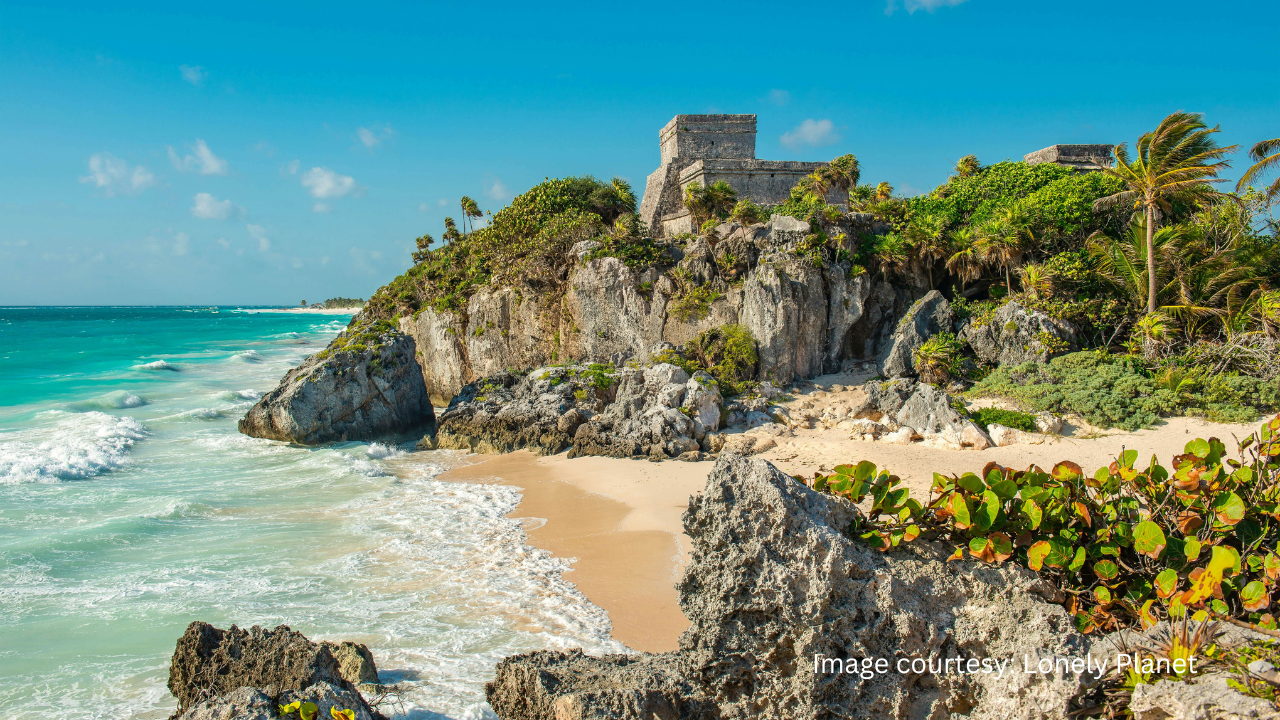
The useful thing about a disaster that has already happened is that it can be studied. Tulum, on Mexico's Yucatán Peninsula, is the most thoroughly documented case of a luxury coastline's destruction in recent travel history — a sequence that unfolded fast enough to be traced almost week by week, yet slowly enough that at every stage someone was saying it was fine.
It was not fine. And the sequence Tulum followed is not unique to Tulum. This piece is not a lament for what Tulum was. It is an analytical framework for what happens to every coastline in this position — and a calibration tool for anyone trying to assess which contemporary destinations are where Tulum was in 2013. For those actively planning travel to the destinations that are still in Phase Zero or Phase One of this sequence, our companion piece on the last unspoiled luxury coastlines and the development clocks already ticking maps the current opportunity with real access costs and development timelines.
Phase Zero: The Condition That Makes Destruction Possible
Every coastline that gets destroyed has a prior condition: genuine scarcity and authentic character. If there is nothing there worth destroying, the process does not begin.
Tulum in 2008 was a genuine thing. A small Mexican Caribbean town with a Mayan ruin on a cliff above the sea, a strip of unpaved beach road lined with 15–20 small palapas — open-sided, thatched-roof beach huts converted into rooms — and almost no electricity south of the town centre. Most properties ran on generators until a certain hour, then went dark. The roads were sand. Meals were fish caught that morning. Room rates at the better properties were $80–$150 per night.
The people who found Tulum in this phase were not wealthy in the conventional sense. They were early-moving cultural arbiters — artists, fashion photographers, food writers, architects — who tolerated physical discomfort in exchange for aesthetic authenticity. They brought the photographs that began the next phase.
This is Phase Zero: the destination exists as a genuine, fragile, self-sustaining ecosystem with no mechanism to protect itself from what comes next.
Phase One: Discovery and the First Wave (2009–2014)
The Tulum travel feature went mainstream around 2010–2011. The New York Times Style section discovered it. Vogue followed. The combination of Mayan ruins, warm water, cenotes (limestone sinkholes filled with fresh water connected to the Caribbean aquifer), and the prevailing eco-bohemian aesthetic produced a kind of media feedback loop that, in a pre-Instagram era, still moved fast.
The first wave of new development was, ironically, the most careful. The properties that opened in 2010–2014 — Azulik, Be Tulum, La Valise, Papaya Playa Project — genuinely tried to operate within the environmental constraints of the site. They used limited jungle clearing, elevated structures to preserve the forest floor, managed their own water and waste. Papaya Playa Project, partnering with the Design Hotels group, set out to establish a one-of-a-kind resort that would set the region's standard for eco-conscious design. All resort structures were designed for minimal impact, leaving some 93 percent of the original jungle landscape intact.
The problem is not what the first wave did. It is what the first wave made possible for the second. For a sense of what genuine eco-luxury looks like when it is executed with integrity — and the certification standards that separate authentic sustainability from greenwashing — our feature on Raffles Udaipur setting a benchmark for eco-luxury with its prestigious Green Key Certification illustrates the standard that Tulum's first-wave properties aspired to, and that the second wave abandoned entirely.
Room rates in this phase: $300–$700 per night at the better properties. Visitor profile: predominantly American and European, culturally discerning, willing to accept operational inconsistency in exchange for authenticity. Environmental impact: real but contained.
Phase Two: Instagram and the Scaling of Desire (2014–2019)
The transformation of Tulum from discovery destination to global luxury brand happened between 2014 and 2019, with 2016 as the inflection point. This is when Instagram reach in the travel category began to drive booking decisions at scale. The visual language Tulum had developed — the cenote photograph, the ruin at sunrise, the palapa silhouette against a pink sky — was perfectly calibrated for the platform. Images of Tulum from 2015 were circulating to audiences of tens of millions. Each one generated demand. The demand generated supply. The supply was not built to the standards of the first wave.
In the last decade, Tulum's exponential growth in tourism led to the proliferation of hotels, resorts, and other infrastructure, altering the landscape dramatically. Large-scale construction projects, often lacking proper planning or even permits and consideration for environmental impact, resulted in the clearing of mangroves, deforestation, and the destruction of natural habitats — including cenotes.
This is the structural problem with Phase Two: the regulatory architecture that should constrain development in an ecologically sensitive coastal zone was insufficient for the speed and volume of incoming capital. By 2019, Tulum had approximately 200 accommodation properties where there had been 20 in 2010. The beach road, previously a sandy track, was a paved thoroughfare with traffic. Room rates at the premium end had reached $800–$1,200 per night. The demographic had broadened substantially. This precise dynamic — a pristine destination whose character changes permanently once institutional capital arrives — is why the timing question in our analysis of 5 secret luxury travel destinations affluent travellers are quietly booking in 2026 is framed with such urgency.
Phase Three: The Brand Captures the Destination (2019–2022)
Phase Three is when the destination no longer drives the brand — the brand drives the destination. This is the point of no return. By 2019, Tulum was a global luxury brand in the way that Ibiza or Mykonos are brands: a word that conveys a set of associations regardless of what the physical place is actually like in any given year. Hospitality groups — W Hotels, Six Senses, Nobu — announced Tulum properties. Celebrity culture embedded itself. The music festival circuit arrived. The clientele transformed from discerning early adopters to status-motivated mainstream luxury consumers.
Average room rates reached $450 per night in 2025, a 25% increase from 2023. Some luxury hotels saw rates drop from $971 in 2021 to $678 in 2024 as demand weakened. Yet visitors say the services don't match the prices. The gap between price and experience is the diagnostic signal of Phase Three. When a destination charges for its brand rather than its actual character, the underlying character is usually gone. This same dynamic is now playing out in some of the world's most beautiful Maldivian properties — our coverage of the Maldives' hidden gems and what 2025 luxury travel trends reveal explores how even the most managed destination ecosystem must work constantly to stay ahead of its own brand.
Two structural consequences became visible in Phase Three. First, sewage: Tulum's beach zone has no municipal sewage system. Two hundred properties, at combined occupancy of several thousand guests, generate wastewater that the geology cannot absorb. The cenotes began showing contamination from human waste. The coral reef system was degraded. Second, security: as economic inequality in the corridor sharpened, organised crime found its economic logic. Cartel presence in Tulum's hospitality economy became documented from approximately 2022.
Phase Four: The Collapse (2023–2025)
By 2023, the destruction was complete enough that it began to destroy the economics. Tulum, once a thriving haven for eco-tourism and an icon of bohemian luxury, is now facing one of the darkest periods in its history. Hotel occupancy in Tulum's coastal zone has plummeted, with town-centre rates dipping as low as 15% in summer 2025.
Airlines responded by cutting service: both United and JetBlue have suspended or reduced flights, while Air Canada canceled its seasonal route entirely. Tulum Airport reported 3,514 international operations between January and July 2025, compared with 5,026 for all of 2024. The economics of overdevelopment produced their own correction. "We've always known Tulum was the exception," said Matteo Luthi, COO of Journey Mexico. "You'd spend a lot of money, but the return was huge. People loved it because you'd arrive, kick off your shoes, forget your watch and relax." The description of what Tulum was is now a description of what it is not.
"It's charging New York prices but delivering less comfort and reliability" — the phrase that encapsulates Phase Four in any destination. Prices stay high because the fixed costs of overdeveloped infrastructure must be serviced. Quality collapses because the authenticity that justified the prices no longer exists. The guests who can afford the prices go elsewhere. This is precisely the kind of premium-price, declining-experience dynamic that the Indian traveller of 2026 is actively seeking to avoid — as documented in our definitive report on why Indian travellers are choosing luxury over budget trips this summer, where the search for experiences that justify their price is the defining consumer behaviour of the decade.
The Tulum Timeline: What Actually Drove Each Phase
The common narrative of Tulum's destruction is that it was a victim of its own popularity. This is partially true and mostly useless as an analysis. Every popular place is popular. The specific mechanisms matter.
| Phase | Years | Trigger | Who Benefited | What Was Lost |
|---|---|---|---|---|
| Zero | Pre-2008 | Isolation, inaccessibility | Locals, pioneering travellers | Nothing yet |
| One | 2009–2014 | Media discovery, first boutique development | Small operators, early investors | 10–15% of jungle and beach character |
| Two | 2014–2019 | Instagram scaling, inadequate regulation | Large-scale developers, Mexican real estate capital | Mangroves, reef, architectural coherence |
| Three | 2019–2022 | Brand capture, international hotel groups | Global hospitality brands, cartel-adjacent capital | Security, sewage infrastructure, authenticity |
| Four | 2023–2025 | Economic correction, declining demand | Nobody | Airport routes, occupancy, reef ecology |
The specific preventable moments were in Phase Two. The permit enforcement failures of 2015–2018, had they been different — had SEMARNAT had the resources and political backing to enforce the coastal construction laws that existed — would not have stopped Tulum's development. But they might have kept it at 80 properties rather than 200. That difference, in a fragile ecosystem, is the difference between a destination that evolves and one that collapses.
Applying This Framework to 2025's Frontier Coastlines
The Tulum sequence is not a Mexican peculiarity. It is a template. The differences between Tulum and the coastlines currently in Phase Zero or Phase One lie in three variables.
Regulatory capacity: Tulum's regulatory failure was a Mexican institutional failure. It is not universal. The outer Andamans' protection under India's tribal protection legislation is constitutionally grounded. Príncipe Island's protection has been genuine because one person controlled the development pipeline. The Quirimbas National Park has real enforcement. These are stronger protections than Tulum had — but not invulnerable.
Infrastructure prerequisite: Tulum's destruction was enabled by the Cancún–Tulum highway and a functioning international airport 130 kilometres away. The Quirimbas and Príncipe require multi-hop flights on small aircraft. Musandam currently has only one international-standard luxury property. Lakshadweep has no runway for commercial jets larger than an ATR. When infrastructure arrives — and it always eventually does — the clock accelerates. For those who understand this dynamic and want to know exactly how the infrastructure picture looks for each of the remaining Phase Zero destinations, our analysis in the last unspoiled luxury coastlines and the development clocks already ticking provides the full breakdown with development horizon estimates for each.
Capital source: Tulum's Phase Two and Three capital came primarily from Mexican domestic real estate groups and, latterly, international hospitality brands. The capital looking at Albania's coast, at Musandam, at São Tomé, is institutional — global private equity and sovereign wealth funds. Institutional capital moves faster and at larger scale than Mexican hotel developers. When it lands, the timeline compresses further. The mechanics of how this capital flows — and how to read its signals — are explored in our guide for investors and industry experts on India's rising luxury real estate market, which maps the same capital dynamics playing out in domestic Indian coastal destinations.
The indicator to watch is always the same: the moment a destination gets its first direct international flight to a hub city, or its first internationally recognised hotel brand flag, or its first mention in the Condé Nast Traveller Hot List. Each of these is a Phase Two trigger. In Tulum's case, all three happened within about three years. In destinations with weaker infrastructure, the interval between triggers is longer — which is the time available for the experience that will not exist afterward.
What Tulum Got Wrong That Could Have Been Different
Three interventions, had they been made in 2015–2016, would have produced a materially different outcome for Tulum. They are worth naming because they apply directly to current frontier destinations.
Hard carrying capacity by zone: Tulum's beach road should have been capped at a property count with binding legal force before the second wave of development began. The Maldives' resort island model — one resort per island, with strict limits on room count — is the closest working example of this. Lakshadweep's SPORTS model is an imperfect version of it. None of these are economically perfect solutions. All would have been better than no constraint. Bhutan's entire regulatory architecture for tourism — which is explicitly built around the lesson of destinations that did not constrain capacity — is the most sophisticated working version of this logic, as explored in our report on Bhutan unlocked — the BIG-designed airport, royal-backed city and 168 km trail redefining Himalayan luxury.
Sewage infrastructure as a condition of permitting: No property should have received a building permit without a solution to wastewater disposal that did not involve the cenote aquifer. This was technically known and practically ignored. In Príncipe, this is currently the primary infrastructure gap.
Community economic stake: Tulum's local Maya population received almost none of the economic benefit of the tourism boom. The workforce was largely imported from other Mexican states. When the destination deteriorated, the communities that remained had no stake in its quality. In Quirimbas, the Vamizi Island Project's community employment model is doing this differently; time will determine whether the broader archipelago follows suit.
None of this is nostalgic. Tulum's original character could not have been preserved indefinitely; it would have evolved. The question was never whether it would change. It was whether the change would be managed or catastrophic. It was catastrophic.
The Harder Truth
The travellers who destroyed Tulum did not consider themselves destroyers. The person who flew from New York to photograph themselves in a cenote in 2016, who posted the image to 80,000 followers, who contributed to the demand signal that justified the next hotel — they were having a holiday. They did not think of themselves as a force. They were one.
The UHNW traveller has more individual weight in this system than the average tourist. A post on a private WhatsApp group of fifty Mumbai industrialists recommending a destination generates fifty reservation enquiries at luxury lodges. A mention in a Davos corridor generates ten. The amplification factor for peer communication among HNI networks is substantially higher than for social media because the recipients actually act on the recommendation and have the means to do so immediately. For a map of where the most discerning Indian luxury travellers are now pointing their attention — before the amplification network reaches these destinations at scale — our guide to the evolving Indian luxury buyer's 7 key trends documents the deliberate pursuit of authentic, uncrowded destinations as one of the defining behaviours of 2026.
This is not a reason to not travel. It is a reason to be deliberate about what you recommend, and when, and to whom. The destinations on the current Phase Zero list are there because so far the amplification network has not reached them at scale. The window exists. The Tulum sequence tells you exactly how it closes.
FAQ
Is Tulum still worth visiting for luxury travel in 2025?
The honest answer is: not in the way it was. Hotel occupancy in the coastal zone has fallen dramatically, with some properties running below 30% in summer 2025. Coral and cenote degradation is documented. Security incidents continue. The properties that survived with their integrity intact — Azulik, a small number of original boutique operators — still deliver a quality experience. The destination as a whole is in Phase Four decline, and no government intervention announced to date addresses the structural causes. Travellers who want what Tulum used to be should look elsewhere.
What are the fastest warning signs that a coastline is in Phase Two of the Tulum sequence?
Three signals reliably indicate Phase Two onset: (1) the first international hotel brand flag, (2) a direct commercial flight from a major hub that did not previously serve the destination, (3) a travel feature in Condé Nast Traveller, New York Times Travel, or equivalent mainstream luxury media. Any one of these signals suggests Phase Two is beginning. All three within 24 months suggest it is accelerating. Albania's Riviera currently shows all three.
Can any regulatory mechanism genuinely protect a luxury coastline from overdevelopment?
Constitutionally grounded protection — India's tribal protection laws in the outer Andamans, UNESCO Biosphere Reserve designations with genuine enforcement — provides the most durable protection. Weaker forms — national park designations, environmental impact assessment requirements — can be overridden by legislation when capital is sufficiently motivated, as Albania demonstrated in 2024 with the Sazan Island case. No regulatory mechanism is permanent when sovereign governments can change their own laws. The most durable protection is structural inaccessibility.
How long did Tulum's full destruction sequence take?
From first international media discovery (roughly 2010) to Phase Four collapse (2023–2025) is approximately 13 years. From the Phase One boutique development to Phase Four is approximately 10 years. The interval appears to be compressing for subsequent destinations as social media accelerates Phase Two and institutional capital moves faster into Phase Three. Contemporary analysis suggests the equivalent sequence could run in 5–8 years for a destination with better infrastructure access than Tulum had in 2010.
What is happening to Tulum now?
The Mexican federal government and Quintana Roo state tourism authorities formed working groups in 2024–2025 to address the decline. Several property groups offered discounted beach access and lowered minimum spend requirements. The Felipe Carrillo Puerto international airport opened in late 2024 with high hopes and immediately faced reduced utilisation as international carriers cut routes. The reef system and cenote aquifer contamination are not reversible on any human timescale. The economics may stabilise at a lower equilibrium — a cheaper, more accessible, less pristine version of the destination — but the original character is gone.
Comments
No comments yet.
Add Your Comment
Thank you, for commenting !!
Your comment is under moderation...
Keep reading luxury post