Dolomites or Patagonia First? The New Math of Retirement Travel
 Pradeep Dhuri
- 20th Sep 2026
- 1266
- 0
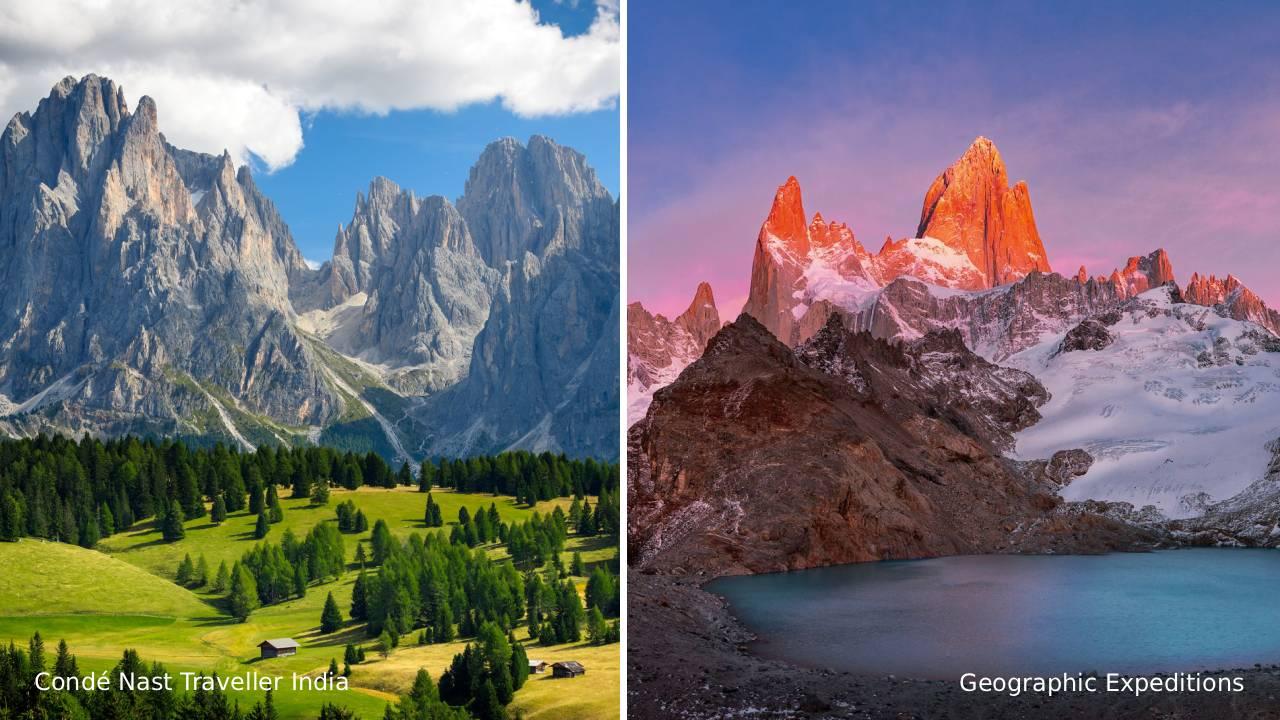
For most of a working life, the logic of the big trip runs one way: defer it. The knees are fine, the calendar is not, so the expensive, physically demanding journeys wait for the season when there is finally time. Retirement, in that telling, is the reward that unlocks the bucket list.
There is a quieter calculation now running underneath that one, and it inverts the order. A traveller approaching retirement, weighing a first serious hiking holiday, recently framed the choice between the Dolomites and Patagonia not around cost or weather or crowds, but around a single variable: how many strong-knee years remain. Difficult treks, diving, altitude and expedition travel move to the front of the queue, the same instinct behind smart ways to redefine your bucket list with luxurious escapes. Cultural cities, cruises and resort weeks, the things a body can still do at seventy-five, move to the back.
This is not frugality and it is not fear. It is asset allocation applied to the body. Money, for this reader, compounds. Mobility depreciates, and unlike money it cannot be topped up. The rational move is to spend the depreciating asset while it still has value and let the renewable one keep working.
The data underneath the anecdote is real. AARP's 2026 Travel Trends research finds that nearly two-thirds (64%) of adults age 50-plus expect to travel in 2026, and that bucket list trips make up 20 percent of international trips planned in 2026. The same body of research is blunt about the constraint that shapes it: health considerations and accessibility needs do not deter travel among the 50-plus population, they shape how people travel, not whether they do, with mobility the most frequently cited limitation. The American dataset does not map perfectly onto Indian UHNW behaviour, but the physiology does not care about passports. The question this article answers is the practical one the framing raises: if you are going to sequence two demanding treks by remaining physical capacity, which one goes first, and what does each truly cost to reach from India.
The Concept Nobody Prices: Healthspan, Not Lifespan
Longevity medicine draws a line between lifespan, the number of years lived, and healthspan, the number of years lived without the disability and decline that make ambitious travel impossible. The gap between the two is where bucket lists go to die. You can have a decade of life left and none of it usable for a 22-kilometre day with a thousand metres of climb.
What the mobility-sequencing traveller has understood, without necessarily using the vocabulary, is that healthspan is the binding constraint on experience, and that it does not decline linearly. Descending stairs, carrying a pack, absorbing the pounding of a long downhill on a rocky trail: these are the first capacities to go, often well before anything a doctor would flag. This is the same logic drawing affluent travellers to programmes like Six Senses Vana's wellness resort in the Himalayan foothills, where the entire premise is protecting the years a body can still perform. The trips that depend on capacity, therefore, have the shortest window. A Venetian palazzo and a Kyoto garden will still be walkable at eighty. A moraine field below a granite tower will not.
The counter-intuitive conclusion is that the harder, more remote, more physically punishing trip is the one to bring forward, precisely because it is the one the body will surrender first. Comfort travel is patient. Expedition travel is not.
Two Treks That Look Similar and Behave Completely Differently
On paper, the Dolomites and Patagonia are cousins: dramatic rock, alpine trekking, a hut-or-lodge culture, a peak season a well-off traveller can build a two-week trip around, not unlike the appeal behind why New Zealand's Alps to Ocean Trail is a rare luxury adventure. In the body, they are different animals.
Altitude. The Dolomites sit high. The classic high routes, the Alte Vie, spend most of their length above 1,300 metres, and the marquee sections top out meaningfully higher: Alta Via 1 crests at Lagazuoi, 2,752 m, and Alta Via 2 reaches Forcella Marmolada, 2,885 m. This is not Himalayan altitude and acute mountain sickness is uncommon, but thinner air does tax an unconditioned cardiovascular system, and it is a variable a sixty-five-year-old should respect. Patagonia, by contrast, is effectively at sea level. The iconic Base Torres day hike starts from an elevation of 140 metres above sea level and climbs to the final lookout point at 982 metres. There is no altitude problem in Torres del Paine. There is a wind problem, and a weather problem, and a remoteness problem.
Terrain and the knee question. The Base Torres hike is the honest stress test. It runs 22 km round trip with roughly 1,280 metres of positive elevation gain, and the sting is in the finish and the return: the most grueling part is the final 400 m, done over a 1 km section of large loose stones, which you then have to descend on tired legs. Operators grade it plainly as high difficulty and set a minimum age of 14 for a reason. The Dolomites can be dialled. The same range that offers exposed, cabled sections for the strong also offers cable cars that lift you past the ascents and let you walk the ridgelines and descend by gondola, converting a brutal day into a civilised one, a comfort that already draws collectors to the best luxury stays in the Dolomites. That single feature, the ability to subtract the climb and keep the view, is the most important practical difference between the two for an older traveller.
Weather and remoteness. The Dolomites in high summer are benign and serviced: villages, restaurants, mountain rescue, a hospital within a manageable drive. Patagonia is not benign. Wind gusts routinely exceed 100 km/h, four seasons pass in an afternoon, and the nearest real medical infrastructure is hours away over bad ground. A guided luxury lodge mitigates this, but it does not repeal it, the same trade-off that shapes remote luxury journeys like Aramness Gir's ultimate luxury safari experience, where distance from care is part of the design. If something goes wrong on a trail in Torres del Paine, the response is slower and the stakes are higher than anywhere in the Alps.
Access from India. This is where the sequencing logic sharpens. The Dolomites are close: a one-stop flight to Venice, Verona, Milan or Innsbruck, then a two-to-three-hour transfer to Cortina or Ortisei, a route that also passes through the world covered in Milan's timeless Mandarin Oriental wellness retreat. Patagonia is among the hardest places on earth to reach from India: no efficient routing exists, so the journey runs India to a European or Gulf hub, onward to Santiago, a domestic flight to Puerto Natales or Punta Arenas, then a road transfer of ninety minutes to two hours. Door to door, 35 to 40 hours is normal. Long-haul multi-leg travel is itself a physical event. The trip that demands the most from a body before the trekking even begins is the one with the shortest usable window.
The Dolomites vs Patagonia Matrix
Illustrative, for a first-time luxury trekker travelling from India. Individual routes within each destination vary enormously.
| Variable | Dolomites (Alta Via, guided luxury) | Patagonia (Torres del Paine, luxury lodge) |
|---|---|---|
| Max altitude | 2,750-2,885 m on marquee sections | Under 1,000 m (no altitude issue) |
| Signature day effort | 4.5-6 hrs hut-to-hut, dial-able | Base Torres: 22 km, ~1,280 m gain, 8-10 hrs |
| Terrain stress on knees | High on cabled/steep sections; avoidable via gondola | High and unavoidable: loose-rock moraine descent |
| Weather risk | Low-moderate in Jul-Sep | High year-round; extreme wind, rapid change |
| Access from India | 1 stop plus 2-3 hr transfer (~14-18 hrs) | 2-3 stops plus domestic and road (~35-40 hrs) |
| Medical / rescue proximity | Strong; hospital within reach | Remote; evacuation slow and costly |
| Ability to reduce difficulty | Excellent (cable cars, shorter stages, rest days) | Limited (weather and distance are fixed) |
| Season | Late June to mid-September | October to April (Southern summer) |
| Recovery days advisable | 1 per 3-4 trekking days | 1 per 2 trekking days, plus weather buffers |
| Verdict for mobility sequencing | Can wait: forgiving and dial-able | Do first: hard to reach, hard to soften |
The matrix produces a clear editorial call. If you are sequencing by remaining physical capacity, Patagonia goes first. It is the trip that punishes waiting, because none of what makes it hard (the distance, the wind, the unavoidable descents, the thin medical margin) can be engineered away by spending more. The Dolomites are the trip that rewards patience, because money and infrastructure can soften them almost indefinitely, the same reason so many buyers now treat buying ski chalets in the right property as a long-horizon decision rather than a rushed one. You can trek the Alta Via with a private guide, sleep in a four-star valley hotel, and cable-car past every climb you no longer want at seventy. There is no cable car to the base of the Torres.
Shadow Price: What Each Trek Actually Costs to Land From India
Every published brochure price is a floor. The real number for an Indian traveller includes the routing premium, the gear, the insurance a remote trip demands, the tax mechanics, and the buffer days weather forces you to build in. Below is an illustrative per-person landed cost for a first-timer travelling in business class, not a quote against any specific operator. Foreign-exchange assumptions: approximately INR 88 to the US dollar and INR 96 to the euro, September 2026.
Patagonia (Torres del Paine, 4-night luxury lodge)
| Line item | Illustrative cost (per person) |
|---|---|
| Lodge, all-inclusive, 4 nights (explora-tier, double occupancy) | INR 5.4 lakh |
| International airfare, business, India-Santiago return | INR 6.0 lakh |
| Domestic Chile flights and non-included transfers | INR 50,000 |
| Technical gear and clothing (first-timer) | INR 1.0 lakh |
| Travel, medical and evacuation insurance | INR 35,000 |
| Weather buffer (extra nights, Puerto Natales/Punta Arenas) | INR 50,000 |
| Landed cost before recoverable TCS | ~INR 13.8 lakh |
Stays of this calibre are the reason luxury operators now market direct access, including offers to fly to a luxury lodge in South America with Explora on a private jet.
Dolomites (Alta Via, 7-day guided luxury)
| Line item | Illustrative cost (per person) |
|---|---|
| Guided luxury trek, 7 days (Alta Via, luxury hotels) | INR 5.3 lakh |
| International airfare, business, India-Venice/Milan return | INR 4.5 lakh |
| Airport transfers plus pre/post luxury hotel night | INR 55,000 |
| Technical gear and clothing | INR 70,000 |
| Travel and medical insurance | INR 20,000 |
| Cable-car passes, incidentals, wine | INR 40,000 |
| Landed cost before recoverable TCS | ~INR 11.6 lakh |
The headline surprise is how close the two are. Patagonia's lodges are more expensive per night and its airfare premium is real, but a well-guided luxury Dolomites week is not the cheaper cousin people assume, and the real estate around it tells a similar story: values in the enchanting world of luxury real estate in Italy have climbed alongside demand for exactly this kind of alpine access. The gap, roughly INR 2 lakh, is dwarfed by the difference in what your body has to survive to collect the experience. On a value-per-strong-knee-year basis, Patagonia first is not the extravagant choice. It is the disciplined one.
The India-Specific Line That Changes the Arithmetic
For Indian residents, two regulatory facts sit on top of the price. First, the overall ceiling: under the Liberalised Remittance Scheme, a resident individual may remit up to USD 250,000 per financial year, which comfortably covers either trip and does not bind at these amounts. Second, and more relevant to cash flow, is Tax Collected at Source, an area readers have followed closely since the new TCS rule began affecting luxury purchases over Rs 10 lakh.
From 1 April 2026, the mechanics shifted in the traveller's favour. An overseas tour package (a bundled product with two or more components, such as flights plus lodging) now attracts a flat 2% TCS with no threshold. A DIY structure, where you buy flights separately and load a forex card, attracts nil TCS up to INR 10 lakh of LRS spend in the year and 20% above that. On a INR 14 lakh Patagonia trip, the difference in upfront cash is the difference between roughly INR 28,000 (package route, flat 2%) and 20% on the slice above INR 10 lakh (DIY forex route). Neither is a real cost: TCS is fully creditable against your income-tax liability and refunded through your return. But it is your money parked with the tax department for 12 to 18 months, and for a couple travelling together the cash-flow choice between the package and DIY routes is worth a deliberate decision rather than an accident at the point of booking. Route the forex through each traveller's own PAN to use each individual's threshold.
The larger point for LuxuryAbode readers is that the binding constraint on these trips has never been the LRS limit or the tax. It is the calendar the body keeps.
The Closing Insight: You Are Spending Down a Wasting Asset
The wealth-management instinct is to preserve capital and spend income. Applied to the body, that instinct is exactly wrong. Mobility is capital that cannot be preserved, only spent or forfeited. The affluent travellers now reordering their bucket lists have grasped that the highest-return decision is to deploy the wasting asset first, at the point of maximum remaining value, and to let the renewable asset (money, which for this reader is not the scarce input) do the work it is good at.
That reframing produces a specific, defensible rule, not a mood. Do the trips that depend on descent, distance, altitude, remoteness and long-haul endurance while the body still absorbs them, and defer the trips that a chauffeur, a gondola and a good hotel can rescue at any age. By that rule Patagonia is a trip for your fifties and sixties and the Dolomites can wait into your seventies, not because Patagonia is better, but because Patagonia is less forgiving of delay. It is the same forward-planning mindset behind lists of the best places to live in Italy for a slower later chapter, once the harder journeys are already behind you.
Two cautions keep this honest. Chronological age is a poor proxy for individual capacity: a conditioned sixty-eight-year-old will out-trek a sedentary fifty-year-old, and the sequencing logic is about your body, not your birth year. And routes within both destinations span the trivial to the technical, so "the Dolomites" and "Patagonia" are not single difficulties but menus. The discipline is not to rush every hard trip forward in a panic. It is to stop assuming the hard ones will keep. They will not, and the returns on doing them while you still can are the only returns on this list that cannot be earned back.
Frequently Asked Questions
Is Patagonia or the Dolomites harder to trek?
Patagonia is generally harder for a first-timer, despite being at lower altitude. The signature Base Torres hike in Torres del Paine is 22 km with roughly 1,280 m of climb and a punishing loose-rock descent, and Patagonian weather (extreme wind, rapid change) and remoteness add risk you cannot buy away. The Dolomites reach higher altitude (up to about 2,900 m on marquee routes) but can be made much easier using cable cars, shorter hut-to-hut stages and built-in rest days.
Which bucket-list trek should I do first if I am worried about my knees?
Patagonia, then the Dolomites. Patagonia's difficulty comes from fixed factors (distance, wind, remoteness, unavoidable steep descents and a 35-40 hour journey from India) that money cannot soften. The Dolomites can be dialled down almost indefinitely with private guides, valley hotels and gondolas, so they remain accessible well into later life.
How much does a luxury Patagonia trek cost from India?
Illustratively, around INR 13-14 lakh per person for a 4-night luxury-lodge trip, business class, before recoverable tax. That includes roughly INR 5.4 lakh for an all-inclusive lodge stay, about INR 6 lakh for India-Santiago business airfare, plus domestic Chile flights, gear, insurance and weather-buffer nights. A comparable 7-day guided luxury Dolomites week lands near INR 11-12 lakh, mostly because the airfare is far cheaper.
Do you need to be very fit for the Torres del Paine base hike?
You need genuine hiking fitness. It is a full-day effort of 22 km and about 1,280 m of elevation gain, graded high difficulty by operators, with a steep, rocky final kilometre and a demanding descent. Trekking poles, proper boots and conditioning in the months before are not optional. Non-hikers can still enjoy Patagonia through lodge-based lower-intensity excursions (boat trips, wildlife watching, gentler trails).
What is the best age to do a Patagonia trek?
There is no fixed age, because conditioning matters more than birth year. The practical answer for most people is to do the demanding Patagonia routes while the body still absorbs long descents and multi-leg long-haul travel comfortably, which for many falls in the fifties and sixties. Gentler, lodge-based Patagonia itineraries remain feasible later.
What TCS applies to these trips for Indian travellers in 2026-27?
From 1 April 2026, a bundled overseas tour package attracts a flat 2% TCS with no threshold. Buying flights separately and loading a forex card attracts nil TCS up to INR 10 lakh of LRS spend per person per financial year and 20% above that. In all cases TCS is fully creditable against your income tax and refunded via your return, so it is a cash-flow item, not a real cost. The overall LRS limit remains USD 250,000 per individual per year.
Comments
No comments yet.
Add Your Comment
Thank you, for commenting !!
Your comment is under moderation...
Keep reading luxury post