The Invisible Relationship Economy Behind the World's Best Luxury Holidays
 Namrata Parab
- 8th Sep 2026
- 1308
- 0
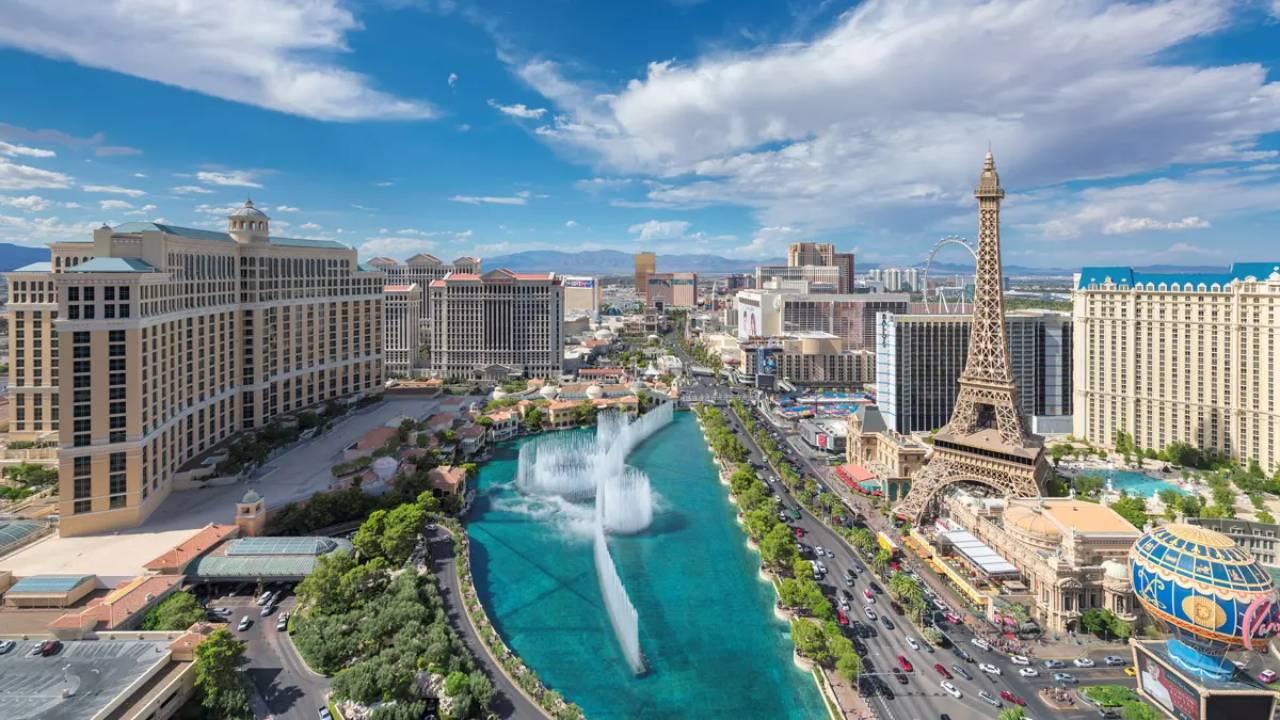
Every August, several thousand people who do not appear in any brochure gather in Las Vegas to decide who will get the best suite at Amanpuri over New Year, which family's daughter will have her wedding blocked at the Crillon before it goes on sale, and whose flight cancellation will be quietly absorbed by a hotel rather than charged. More than 4,800 attendees from 105 countries attended this year's 38th annual Virtuoso Travel Week, spread across the Bellagio, Aria, Cosmopolitan and Vdara. Almost none of the guests whose holidays were shaped there will ever know it happened.
That is the point. The luxury travel industry has spent fifteen years telling its clients that booking is frictionless, digital and disintermediated. The reality is that the outcomes wealthy travellers actually value, the corner suite rather than the category booked, the table at a restaurant that is "full", the general manager who calls back within the hour when something goes wrong, are still allocated by people, to people, on the basis of accumulated trust. The booking engine handles the room. The relationship handles everything the room does not include.
This matters more now than it did five years ago, for two reasons. First, the top of the market has become genuinely scarce. Bookings at hotels with average daily rates above $1,500 are growing 37%, twice as quickly as lower-priced bookings, and when demand outruns supply, allocation stops being a pricing problem and becomes a judgement problem. Second, the arrival of capable AI has forced the industry to say out loud what it always knew privately: that the administrative half of the adviser's job is automatable, and the other half is not.
What follows is a map of that other half. Who the counterparties are, what they trade, how it is priced (and hidden), where the money flows, and what it means for a traveller who spends ₹40 lakh to ₹4 crore a year on hotels and wants to know whether the person in the middle is earning their keep.
What actually happens at Virtuoso Travel Week
Virtuoso is not a travel agency. It is a network of roughly 1,200 travel agency locations with more than 20,000 travel advisors in 58 countries, doing annual sales of $35 billion, with preferred relationships with 2,800 of the world's top hotels and resorts, cruise lines, airlines, tour companies and destinations. Travel Week is its annual market, and the core of it is not the keynote. It is the appointment grid.
For four days, advisers and hotel sales directors sit across small tables in a schedule of short, pre-matched one-to-one meetings. Virtuoso has also tweaked the format for 2026, including fully matched networking appointments and a streamlined schedule designed to leave more room for conversations and connections. A single hotel's director of sales may take 300 or more meetings in the week. An adviser at a top agency will take a similar number. The content of each is remarkably consistent: what did you sell us last year, what are you sending us this year, what do you need from us to send more.
The numbers behind those meetings are the reason the week exists. Preferred sales are outpacing non-preferred sales in every market. Hotels are leading by product type, up 24.5%, followed by cruise at 22.4%. In plain terms: hotels that maintain relationships with this network are growing faster through it than hotels that do not, and the network is projecting sales this year will be up 20.8% year over year. Lead times are lengthening too. Preferred bookings one to two years out are already up 50% compared with the same point last year, helped by multigenerational and celebration travel. That is the wedding-at-the-Crillon booking, and it is exactly the kind that no algorithm secures.
What the trade press does not print is the second layer of the week: the private dinners hosted by hotel groups for their top twenty producing advisers, where allocations for peak dates are informally agreed months before inventory opens. Four Seasons, Rosewood, Aman, One&Only and Marriott's luxury division all run some version of this, a dynamic not far removed from how a property like Four Seasons Bora Bora earned its top ranking from luxury travel advisors. The dinner is where an adviser's book of business is converted into an implicit line of credit with the brand.
Two announcements from the stage this year are worth reading as a pair. Virtuoso CEO Matthew Upchurch said that Virtuoso has spent the past seven months developing a proprietary intelligence capability using AI models grounded in Virtuoso's own data, and separately, with the growth of the independent contractors sector, Virtuoso has sought to tighten regulations to protect its brand. Translation: the network intends to automate the research and administration layer, and simultaneously to police who is allowed to trade on its relationships. That is a business that understands where its value sits.
Why the wealthy still use a human adviser
The lazy explanation is nostalgia. The data says something more specific. When Virtuoso surveyed its own high-net-worth clients across 17 countries, 75 percent of Virtuoso clients say safety and security are of leading importance when planning travel, with 65 percent citing an added layer of protection as a top benefit of using an advisor, surpassing perks, upgrades, exclusive access and VIP accommodations.
Read that ranking carefully. The people who could most easily secure their own upgrades rank protection above upgrades. What they are buying is a counterparty who is accountable when the trip fails, and who has enough leverage with the supplier to make the failure disappear. A cancelled charter flight into Malé at 11pm is a logistics problem for a booking platform and a phone call for an adviser whose agency sent the resort $4 million last year, not unlike the personal-scale problem-solving described in this overview of luxury concierge services for wealthy travellers.
The second reason is that the affluent traveller's demand has become harder to serve. Europe is now booked in September rather than August, and paid for accordingly. Bookings to Europe this fall climbed 49 percent even as rates rose more than seven percent, lifting overall sales 64 percent and showing that travellers are choosing the season for what it offers rather than what it saves. Multi-generational trips with four rooms, two dietary regimes and one grandparent who needs a ground-floor suite are not a search query. They are a negotiation, and negotiations need a negotiator with something to trade.
The third reason is the one the industry is least comfortable discussing. Advisers are free at the point of use. Hotels pay them. Which brings us to the money.
Booking a room versus unlocking access
Every major luxury brand now runs an invitation-only adviser programme that sits above its public rate. The names are known to anyone who has read a good adviser's website: Four Seasons Preferred Partner (FSPP), Marriott STARS and Luminous (covering Ritz-Carlton, St. Regis, EDITION, W, and Luxury Collection), Hyatt Privé (Park Hyatt, Andaz, Alila), Rosewood Elite, Mandarin Oriental Fan Club, Aman, Peninsula, Waldorf Astoria, and Fairmont. Add Belmond's Bellini Club, Dorchester Collection's Diamond Club, Oetker's Pearl Partner and Shangri-La's Luxury Circle, and you have the top of the market covered, a market Rosewood itself has continued to expand into through additions such as Rosewood's Schloss Fuschl property in Austria.
The mechanics are consistent. When a guest books through one of these advisors, the hotel automatically enhances the stay with complimentary perks, including daily breakfast, hotel credits, room upgrades, and VIP recognition, at no additional cost beyond the standard published rate. The rate is identical to the hotel's own website. The difference is entirely in what is layered on top, and in where the guest sits in the hotel's internal priority order when something scarce, a suite on a sold-out weekend, is being allocated.
That priority order is the real product, and it is not published. One FSPP-accredited agency states plainly that when you book a Four Seasons Preferred Partner rate, you are awarded the highest upgrade priority available on any booking platform, higher than those booking via Virtuoso, Amex FHR or the official hotel website. Whether that hierarchy holds at every property on every night is a question for the hotel, not the adviser, but the existence of a hierarchy at all is the point. A direct booking at full rate is, in upgrade terms, the bottom of the pile.
Then there is a tier above the tier. Four Seasons recognises a small group of top producers globally; one such agency describes its status as an exclusive club within a club, where our clients enjoy top-tier VIP status and recognition under the Preferred Partner program, thanks to our exceptional relationships and top-producer standing. An adviser who has been formally recognised as one of the brand's top global sellers is, in effect, carrying a corporate-level relationship into every booking. The guest inherits it without ever knowing it exists.
The commercial reality behind all of this is straightforward. Standard hotel commissions run 5 to 10% of the total booking, and agencies with preferred agreements do better: some host agencies have preferred partnerships with certain hotel groups that might provide a 15% commission instead of a standard 10%. On top of that, the biggest producers earn volume overrides, and host agencies that aggregate booking volume across their advisor network can secure override tiers that an individual advisor couldn't reach on their own. The hotel is paying 10 to 15 percent of the room rate to a third party in exchange for a guest it would otherwise have to find through marketing, a guest who arrives pre-qualified, pre-briefed and unlikely to leave a one-star review over a delayed check-in.
The True Cost of a five-night stay, three ways
The table below is illustrative. It models a $2,000-per-night suite for five nights at a top-tier city hotel, booked three ways. Figures are estimates based on typical programme terms; individual properties vary.
| Line item | Direct booking | Adviser with preferred-partner status | Card programme (e.g. Amex FHR) |
|---|---|---|---|
| Room rate paid by guest | $10,000 | $10,000 | $10,000 |
| Breakfast for two, five days | Paid, approx $600 | Included | Included |
| Property credit | None | $100 typical | $100 typical |
| Room upgrade | Not prioritised | Highest priority, subject to availability, indicative value $2,500 to $7,500 over five nights | Prioritised, but below preferred-partner tier |
| Early check-in / late check-out | Request only | Typically confirmed | Typically confirmed |
| Commission paid by hotel (invisible to guest) | Nil | $1,000 to $1,500 | Paid to card issuer, not disclosed |
| Planning fee paid by guest | Nil | $0 to $500 for a simple stay; $350 per week to $2,000-plus for complex itineraries | Nil |
| Recovery when things go wrong | Guest negotiates alone | Adviser escalates via sales director or GM | Card concierge, limited leverage |
| Net value differential versus direct | Baseline | Approximately $3,000 to $8,500 in delivered value, before counting recovery | Approximately $700 to $2,500 |
Two observations. The guest pays the same room rate in all three columns, and the adviser column delivers the most value, funded almost entirely by the hotel. The only scenario in which the adviser costs the guest anything is when a planning fee is charged, and every advisor sets their fees differently, so they can range from $50 for basic hotel or airline bookings to $350 for one-week itineraries and up to $2,000 or more for complex group planning, like destination weddings. Against a ₹1.5 crore multi-generational European summer, a ₹1.5 lakh planning fee is noise.
How the adviser-hotel relationship changes the stay itself
Here is what the guest never sees. When a top adviser books a client into a hotel where the relationship is real, three things happen before arrival that do not happen on a direct booking.
First, the reservation is tagged. Luxury hotels code guests in their property management system by importance, and the code determines which department is notified and what is pre-set in the room. A booking from a top-producing agency arrives with a higher code than the same guest would receive booking direct for the first time. That is not favouritism toward the guest. It is the hotel protecting a revenue relationship worth seven figures a year.
Second, the adviser writes to a named person. Not to reservations, but to the director of sales or, at the top of the market, to the general manager, with a two-paragraph brief: who the client is (without indiscretion), why the trip matters, what would delight them, what would ruin it. Hotels act on these notes because the adviser has sent fifty guests before and will send fifty more, and because the adviser will hear immediately if the note is ignored.
Third, ownership matters, and this is where the brand-versus-property distinction the mainstream press glosses over becomes decisive. A Four Seasons or Rosewood is almost always owned by someone other than the brand, and the general manager reports to both. Complimentary upgrades, waived fees and comped nights are owner-approved costs, and a GM extends them where the relationship justifies the expense to the owner. An adviser's leverage is therefore property-specific, not brand-specific. The best advisers know which GMs have latitude and which are on a tight leash, and they route clients accordingly. That knowledge is not in any database.
And when the trip fails, which at the margins of luxury it regularly does, the difference between an adviser and a booking is the difference between a policy and a person. Recovery in luxury hospitality runs on an informal ledger: the hotel remembers the adviser who absorbed a no-show gracefully, and the adviser remembers the hotel that upgraded a client at 1am without being asked. Both sides keep score, and the score determines what happens the next time.
Can AI replicate access, or only improve administration?
The honest answer, and one the trade is now arriving at, is that AI is superb at the half of the job that was never the valuable half.
Consider what is being deployed. Accor is already deploying AI concierge services that can complete in one minute tasks that take a human employee 40 minutes. At the top of the market, Alliants covers the luxury and enterprise end of this market and works with brands including Four Seasons. Its approach keeps human agents closely involved. Virtuoso's own AI, announced this August, is explicitly positioned to help advisers find hotels faster and help agency owners train staff, not to book on the client's behalf. Every one of these is an administration tool.
The travellers themselves are drawing the same line. Expedia Group's 2026 research describes what it calls an "AI Trust Gap." Travelers may embrace AI for planning and discovery, but nearly 70% still prefer to complete bookings through trusted travel brands rather than AI chatbots or agents. And in ultra-luxury the resistance is structural rather than cultural: the luxury independents largely resist app-only AI concierges, keeping human concierges as the front line. Properties such as Aman Tokyo, Belmond Hotel Cipriani and Mandarin Oriental Paris treat the concierge relationship as part of the product, and where they use AI at all, it supplements rather than replaces the human.
Why can AI not replicate access? Because access is not information. It is an allocation of a scarce resource made by a human who is deciding whom to favour, and that decision is made on the basis of a relationship that carries obligation in both directions. A hotel gives an adviser the last suite on New Year's Eve because the adviser will remember, and because the adviser sends $3 million a year. An AI agent booking on a traveller's behalf can present the same request, in perfect prose, at scale. It cannot be owed a favour, and it cannot return one. Hotels do not extend credit to entities that cannot reciprocate.
There is a second, subtler point. The signal in this economy is the adviser's willingness to spend their own capital. When a top adviser calls a GM about a client, the GM knows the adviser has finite calls of that kind and has chosen to spend one. A machine that can make infinite calls sends no signal at all. In an access economy, cost is information, and AI removes the cost.
Where AI genuinely changes the picture is in the middle of the market, where the adviser's value was mostly research and paperwork. That segment is being commoditised now. Virtuoso's tightening of independent-contractor rules and the rise of low-fee platforms should be read together: every advisor gets access to our 8,000+ preferred hotel partners for $299 per year at Fora, and the platform's own messaging concedes that as AI tools make basic itinerary research more accessible, fees tied to concierge-level support, on-the-ground coordination, and exclusive access are more likely to hold their weight. The bottom of the adviser market is becoming a software product. The top is becoming a private bank.
How luxury travel distribution will evolve
Four things are likely over the next three to five years.
The booking layer commoditises completely. Rate, availability, cancellation terms and standard preferred-partner amenities become fully machine-readable and machine-bookable. A traveller's AI assistant will secure breakfast, the $100 credit and a request for upgrade without a human touching it. The adviser who was only ever doing this loses the client, and should.
The access layer prices itself explicitly. As commission-funded advising thins out below a certain client value, top advisers move to retainers and fees that reflect what they actually deliver. Expect a bifurcation: sub-$50,000 annual travel spend served by platforms, above it by named advisers on retainer, with $5,000 to $25,000 a year not unusual for a family that travels four or five times. The Virtuoso data already shows the pull toward the top: all travel bookings in the $50,000-plus category are up 35 percent, a shift consistent with the broader trend patterns explored in this look at 2025 luxury travel trends at OZEN LIFE MAADHOO.
Hotels build their own relationship desks. Brands are already experimenting with private-client teams and owner-level membership for their highest-value direct guests, partly to reduce commission leakage. This will work for guests who are loyal to one brand and fail for the guests who matter most, who are loyal to nobody and want the best property in each destination. The multi-brand adviser remains the only honest broker for that traveller.
Networks become data businesses. Virtuoso's proprietary AI, trained on its own $90 billion transaction history, is a signal that consortia intend to own the intelligence layer between advisers and hotels. The adviser who sits inside that system inherits its leverage. The one outside it competes on personal relationships alone, which works at the very top and nowhere else, not unlike the relationship-driven brokering described in this definitive guide to luxury yacht chartering.
The principle behind the data
Luxury is a scarcity market, and scarcity markets are governed not by price but by allocation. Prices clear the ordinary room. Relationships clear the extraordinary one. The entire architecture described above, the Las Vegas appointment grid, the invitation-only programmes, the sales-director dinners, the commission overrides, the GM notes, exists to allocate the extraordinary inventory to the people most likely to value it and least likely to abuse it, and to compensate the intermediaries who make that judgement.
The digital narrative of the past fifteen years has told wealthy travellers that intermediation is friction. In this market it is the opposite. Intermediation is the mechanism by which a hotel decides whom to trust, and a traveller who removes the intermediary is not saving money (the rate is the same) but removing the only party in the transaction who is accountable to both sides.
AI will strip out the administrative cost of that intermediation, and it should. What remains is a small, expensive, human layer of people who are owed favours by the world's best hotels and who spend those favours on behalf of clients. That layer has always been invisible, and it has always been where the best holidays were actually made. The only thing changing now is that its price is about to become visible.
Frequently Asked Questions
Is it worth using a travel advisor for luxury hotels?
For stays at the top of the market, yes, and the case is financial rather than sentimental. The room rate through an adviser with preferred-partner status is identical to the hotel's own website, but the booking carries daily breakfast, a property credit, priority for upgrades and confirmed early or late check-in, typically worth $500 to $1,500 per night in delivered value. The hotel funds this through commission of roughly 10 to 15 percent. The adviser also provides escalation and recovery when a trip goes wrong, which the hotel's clients rank above upgrades as the primary benefit.
What is Virtuoso and what is a Virtuoso travel advisor?
Virtuoso is a global network of about 1,200 luxury travel agencies and 20,000 advisers with roughly $35 billion in annual sales and preferred relationships with around 2,800 hotels, cruise lines and operators. A Virtuoso adviser is an individual working within a member agency; the affiliation gives their bookings network-level amenities and, at top-producing agencies, priority access negotiated at events such as the annual Travel Week in Las Vegas.
How do travel advisors get room upgrades at Four Seasons, Rosewood or Aman?
Through invitation-only brand programmes: Four Seasons Preferred Partner, Rosewood Elite, and Aman's adviser programme, among others. Bookings made through accredited agencies are tagged in the hotel's system with a higher priority than direct bookings. Upgrades remain subject to availability at check-in, but a preferred-partner booking sits at or near the top of the queue, and advisers with top-producer status carry additional recognition.
Do travel advisors cost more than booking direct?
Not on the room rate, which is the same. Some advisers charge planning fees, typically $350 per week of travel for complex itineraries and up to $2,000 or more for group or wedding travel; simple hotel bookings are often uncharged. Advisers are primarily paid by hotels via commission.
Can AI book luxury hotel upgrades?
AI can request them, and can secure the standard published preferred-partner amenities where an adviser's platform is connected. It cannot replicate the discretionary allocation that top hotels extend to advisers on the basis of volume and history, because that allocation depends on a reciprocal relationship between named people. Current AI deployments in luxury hospitality (Accor, Four Seasons via Alliants, Virtuoso's own tool) are administrative, not access-granting.
What happens at Virtuoso Travel Week?
Over one week each August, roughly 4,000 to 4,800 advisers and hotel or supplier executives from over 100 countries hold pre-matched one-to-one appointments in Las Vegas, alongside trend briefings, training and private supplier dinners. It is where annual sales targets, peak-date allocations and adviser-hotel relationships are set for the coming year.


Comments
No comments yet.
Add Your Comment
Thank you, for commenting !!
Your comment is under moderation...
Keep reading luxury post