The Tatras: Why Poland's Forbidden-to-Develop Mountains Are Europe's Last Honest Alpine Escape
 Anishka Kataria
- 9th Aug 2026
- 1296
- 0
The most telling number about the Polish Tatras is not a price.
It is a prohibition.
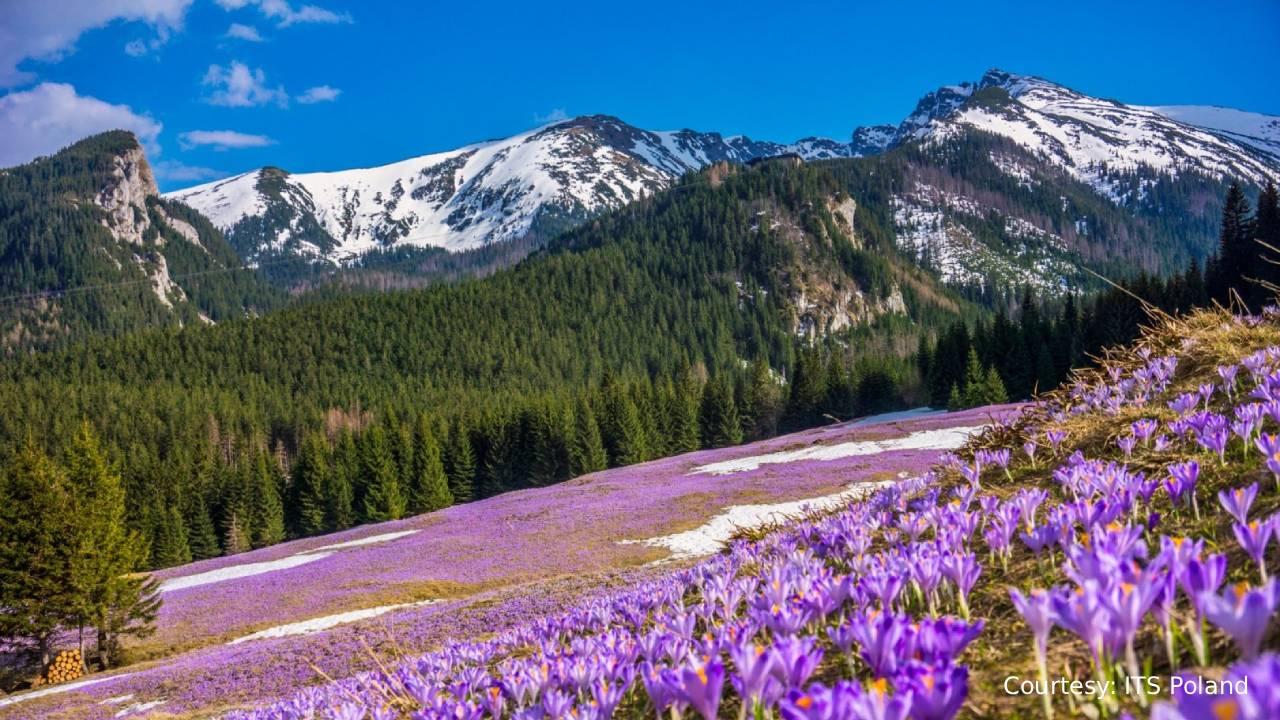
The entire massif, all 211 square kilometres of the Polish side, sits inside a national park established in 1954 and jointly designated with Slovakia as a UNESCO transboundary biosphere reserve in 1992. No new hotels inside the park. No private chalets on the slopes. No heliskiing, ever: drones are banned outright and the only helicopter permitted above the peaks belongs to TOPR, the mountain rescue service. The lift system at Kasprowy Wierch has been fighting expansion battles with conservationists for decades and mostly losing.
This is precisely what makes the Tatras interesting to a reader who has already done Courchevel, already owns the Verbier week, already knows that a February spent skiing near St Moritz's Engadin Valley hypercar events is a networking calendar with snow attached. The Alps solved the problem of access seventy years ago and in doing so destroyed the thing access was supposed to buy. The Tatras never solved it. The result is a genuine alpine wilderness two hours from Kraków's private jet terminal, where the constraint is not money but knowledge, timing, and the right guide's phone number.
There is a catch, and it is a serious one: the Tatras are simultaneously one of Europe's most visited national parks, drawing roughly 4 to 5 million visitors a year, over a million of them walking the single asphalt road to one lake, Morskie Oko. The mass market and the wilderness coexist within minutes of each other. The entire skill of doing the Tatras well is knowing which side of that line you are standing on. Most visitors never learn there is a line. This guide is about the line.
What the Tatras Actually Are
The Tatra range is the highest section of the Carpathians, a compact granite alpine massif on the Polish-Slovak border. The Polish side tops out at Rysy, 2,499 metres. That sounds modest against Mont Blanc until you stand under the north wall of Mięguszowiecki above Morskie Oko: 1,000 vertical metres of granite rising directly from the lake, alpine in every meaningful sense. The range holds around 300 brown bears, 250 wolves, a recovering lynx population, reintroduced marmots and the Tatra chamois, with 25 confirmed golden eagle breeding pairs in the park's 2024 survey. No Alpine resort valley can offer that, because Alpine resort valleys traded their large carnivores for chairlifts generations ago, a trade that hasn't happened at India's own protected wildlife retreats such as Aramness inside Gir National Park, where legal protection has similarly kept luxury and wilderness genuinely intact.
The gateway town is Zakopane, permanent population around 27,000, seasonal population several multiples of that. Zakopane is Poland's Chamonix and its Blackpool simultaneously: the birthplace of the Zakopane Style, a genuinely important early modernist wooden architecture movement created by Stanisław Witkiewicz in the 1890s, and also home to Krupówki street, a pedestrian strip of grilled oscypek cheese, fairground attractions and stag parties. The town is not the destination. The town is the airlock.
The Infrastructure Paradox
Here is the honest assessment mainstream coverage avoids: there is no true five-star grande dame in Zakopane. No Aman, no Badrutt's, no Cheval Blanc, nothing on the level of what Six Senses has built into Alpine elegance at Crans-Montana. The top of the market is a cluster of Polish owned properties: Aries Hotel and Spa, the design forward choice, timber and antler alpine modern, roughly PLN 900 to 2,500 per night depending on season, exceptional by any market's standards at that price, Bachleda Resort, owned by the Bachleda family, Zakopane's closest thing to aristocracy, whose name appears on half the town's history, Nosalowy Dwór Resort near the Nosal slope, and the Radisson Blu Hotel and Residences, the first international flag of consequence, whose branded residences sold largely to Warsaw money as second homes.
By Alpine luxury standards these are four star plus properties with five star spas, a tier not unlike what the Franz Ferdinand Mountain Resort offers in Carinthia, Austria. And this is where LuxuryAbode's standing editorial position applies in its purest form: infrastructure quality and genuine rarity are inversely correlated. Gstaad has perfect infrastructure and nothing left to discover. The Tatras have imperfect infrastructure and a wilderness the law will not allow anyone to buy. The travellers getting the Tatras right are not booking the best hotel in Zakopane. They are booking private architect designed chalets in the villages along the park boundary, Kościelisko above all, where a full service contemporary timber house with mountain wall views, sauna, chef service and seven bedrooms runs PLN 8,000 to 20,000 per night in peak season, a figure that would not cover the breakfast bill for the equivalent house in Megève.
The Statute Premium: a working framework
| Destination Behaviour | The Alpine Model (money buys separation) | The Statute Model (law preserves separation) |
|---|---|---|
| How scarcity is maintained | Pricing, membership, private clubs | National park statute, UNESCO designation, guide licensing |
| Development trajectory over decades | Progressive build-out, infrastructure absorbs the premium | Development legally frozen regardless of demand |
| What separates crowd from connoisseur | Money, membership, invitation | Knowledge, timing, a licensed guide's relationships |
| Long-term trajectory of the experience | Erodes as access commercialises (Courchevel, Aspen) | Structurally protected from erosion |
| Contrast row: what ultimately gets sold | A managed version of wilderness | Wilderness itself, gated only by information |
The Statute Premium describes destinations where genuine scarcity is preserved not by price or membership but by law, meaning the experience cannot be progressively commercialised away no matter how much capital or demand arrives.
The Morskie Oko Problem, and Its Solution
Morskie Oko, the glacial lake beneath Rysy, is Poland's single most visited natural attraction at over a million visitors annually. The approach is an 8 kilometre paved road from the Palenica Białczańska car park, which sells out online days in advance in summer, roughly PLN 45 to 55 per day, booked on the park's site, lined in season with a procession of horse carriages and several thousand walkers a day. Peak weekends put 800 to 1,200 hikers a day on Rysy itself. Seen at 1 pm in August, it is an argument against travel.
Seen at 6 am in late September, it is one of the most beautiful places in Europe, and nearly empty. The mechanics of the crowd are rigid and therefore exploitable. The crowd arrives between 9 am and 11 am, walks the road, photographs the lake from the hut terrace, and leaves. It does not circle the lake, an hour's walk that sheds 90 per cent of the people, it does not climb the 40 minutes to Czarny Staw pod Rysami, the black tarn in the cirque above, and it does not come in the shoulder windows. The park itself runs on a hard seasonal clock: crowds collapse after the first week of September while every high route stays open and the larch forests turn gold through October.
The wealthier solution is structural: stay at the Morskie Oko mountain hut itself. The schronisko is a historic timber refuge on the lakeshore, booked by phone, basic in the extreme, and it grants the one thing no money can otherwise buy inside the park: presence at the lake before the first minibus arrives and after the last one leaves. One deliberately spartan night there, folded into an otherwise chalet based itinerary, is the single highest value move in Tatra travel. The contrast is the luxury.
What It Really Costs to Do the Tatras Properly
The Tatras are cheap. That is not the point, the point is where the money actually goes. In the Alps the spend is on hardware: the hotel, the table, the lift pass, the kind of hardware on display at Zurich's best luxury hotel addresses. In the Tatras the spend is on people, because access here is human, not infrastructural.
The critical line item is the guide. Off the marked trails, movement in Tatra National Park legally requires a licensed Tatra guide, przewodnik tatrzański, a certification with roots going back to the 19th century and one of the hardest mountain qualifications in Central Europe. A private licensed guide runs roughly PLN 800 to 1,500 per day for hiking, more for winter climbing or ski touring with IFMGA credentials. This is the entire game. A licensed guide converts the park from a crowded corridor system into a private alpine estate: unmarked valleys, caving routes in Kościeliska's karst, winter ski touring lines, and the timing knowledge that puts you at Czarny Staw alone. There is no VIP lane in the Tatras. The guide is the VIP lane.
| Cost item, couple, five nights (2026 season) | PLN | Approx INR |
|---|---|---|
| Private chalet, Kościelisko, full service | PLN 40,000-75,000 total | Rs 9-17 lakh |
| Alternative: Aries or Bachleda top suite | PLN 10,000-17,500 total | Rs 2.3-4 lakh |
| Private licensed Tatra guide, 3 days | PLN 2,500-4,500 | Rs 58,000-1.05 lakh |
| Private chef or full board | approx PLN 8,000-12,000 | Rs 1.9-2.8 lakh |
| Private transfer, Kraków airport to Zakopane, each way | PLN 800-1,500 | Rs 19,000-35,000 |
| One night, Morskie Oko hut (two beds) | under PLN 300 | under Rs 7,000 |
| Park entries, cable car, thermal spa private zones | PLN 1,000-2,000 | Rs 23,000-47,000 |
| Helicopter | not available at any price inside the park | N/A |
Realistic all in, chalet route: PLN 55,000 to 95,000, approximately EUR 13,000 to 22,000, roughly Rs 12 to 21 lakh, for five nights. The same programme in the Swiss Alps, adjusted for equivalent privacy, of the kind evoked by an invitation to a private Swiss ski lodge, is a EUR 60,000 to 100,000 trip. The delta is not because the Tatras are a lesser experience. It is because Poland has not yet learned to charge for what it has, and because the law prevents anyone from building the things that usually absorb the money.
The Winter Question
Honesty requires stating this plainly: the Tatras are not a serious downhill skiing destination for anyone calibrated to the Alps. Kasprowy Wierch is one cable car and a handful of lifts with genuine high alpine terrain but trivial capacity, the rest of Zakopane's skiing is beginner hills. Anyone selling the Tatras as a ski resort alternative to the Three Valleys is lying to you.
What the Tatras offer in winter instead is ski touring and winter alpinism of real quality, guided, quiet, and consequential, the same self earned philosophy that makes trails such as New Zealand's Alps to Ocean route a genuine luxury adventure rather than a packaged one. TOPR helicopter rescue can cost non-covered visitors up to EUR 3,000 per operation, carry insurance with at least EUR 50,000 of mountain cover. Winter here is for people who earn their descents. That filter, again, is the point. The absence of lift infrastructure is the velvet rope.
The Closing Insight: Scarcity by Statute
Every luxury destination in the world is engaged in the same losing battle: monetise access without destroying the scarcity that made access valuable. Courchevel lost. Aspen lost. The Amalfi Coast lost spectacularly. The Tatras cannot lose that battle because they are legally forbidden from fighting it. The national park statute, the UNESCO designation, the guide licensing regime and the helicopter ban together function as the most effective luxury preservation mechanism in European travel, achieved entirely by accident, through conservation law rather than pricing.
This creates an unusual asymmetry. In the Alps, money buys separation from the crowd. In the Tatras, money cannot buy separation, only knowledge can. The crowd and the connoisseur walk through the same gate and pay the same PLN 9 entry fee. Two hours later one of them is queueing for grilled cheese on an asphalt road and the other is alone at a black tarn under a granite wall with a licensed guide who knows where the chamois winter. The entire difference was information.
That is why the Tatras belong on a serious traveller's map now, and specifically now. The Radisson residences sold. International flags are circling Zakopane, part of a wider Central European hotel investment pattern visible in the continued expansion of luxury hotels in Warsaw. Kraków's airport keeps adding routes. The park's protections will hold the mountains, but the access economy around them, the guides, the chalets, the quiet shoulder seasons, is in its final years of being underpriced. The Tatras will never become Courchevel. But they will stop being a secret, and the version of them described in this article has perhaps a decade left.
FAQ
Are the Polish Tatras worth visiting for luxury travellers?
Yes, with correct framing. The Tatras offer genuine alpine wilderness, legally protected from development, at a fraction of Alpine cost. Luxury here means private chalets in Kościelisko, licensed private guides and shoulder season timing, not five star hotel infrastructure, which the region largely lacks.
How much does a luxury trip to the Tatras cost?
A well executed five night trip for two, with a full service private chalet, private licensed guide, chef and transfers, runs roughly PLN 55,000 to 95,000, EUR 13,000 to 22,000. An equivalent privacy programme in Switzerland typically costs three to five times more.
What are the best luxury hotels in Zakopane?
Aries Hotel and Spa for design and spa quality, Bachleda Resort for heritage, Nosalowy Dwór for resort scale, and Radisson Blu Hotel and Residences as the leading international flag. All are four star plus by global standards, private chalets in Kościelisko exceed all of them for privacy.
How do you avoid crowds at Morskie Oko?
Arrive before 7 am or after 4 pm, visit mid September to October, walk the lake circuit, continue up to Czarny Staw pod Rysami, or sleep at the Morskie Oko mountain hut, phone booking only, to have the lake before the day crowd arrives. Book the Palenica Białczańska car park online days ahead.
Can you take a helicopter or heliski in Tatra National Park?
No. Only the TOPR rescue helicopter may fly over the park, drones are banned, and heliskiing does not exist in the Polish Tatras at any price. This prohibition is central to why the range remains uncommercialised.
Do you need a guide in the Tatras?
Marked trails are open to all. Anything off marked trails legally requires a licensed Tatra guide, przewodnik tatrzański, at roughly PLN 800 to 1,500 per day. For serious visitors the guide requirement is a feature: it is the only mechanism that converts the park into a private experience.
This article discusses travel costs and pricing for informational purposes only. Figures are indicative estimates for the 2026 season based on reported rates and INR conversions are approximate. Prices for chalets, guides, park entries and transfers fluctuate by season and should be independently confirmed before booking, and travellers should carry adequate mountain rescue insurance given the costs outlined above.
Comments
No comments yet.
Add Your Comment
Thank you, for commenting !!
Your comment is under moderation...
Keep reading luxury post