The Nordic Summer Cabin: What It Really Costs to Buy Into Scandinavia's Most Guarded Ritual
 Namrata Parab
- 31st Jul 2026
- 1954
- 0
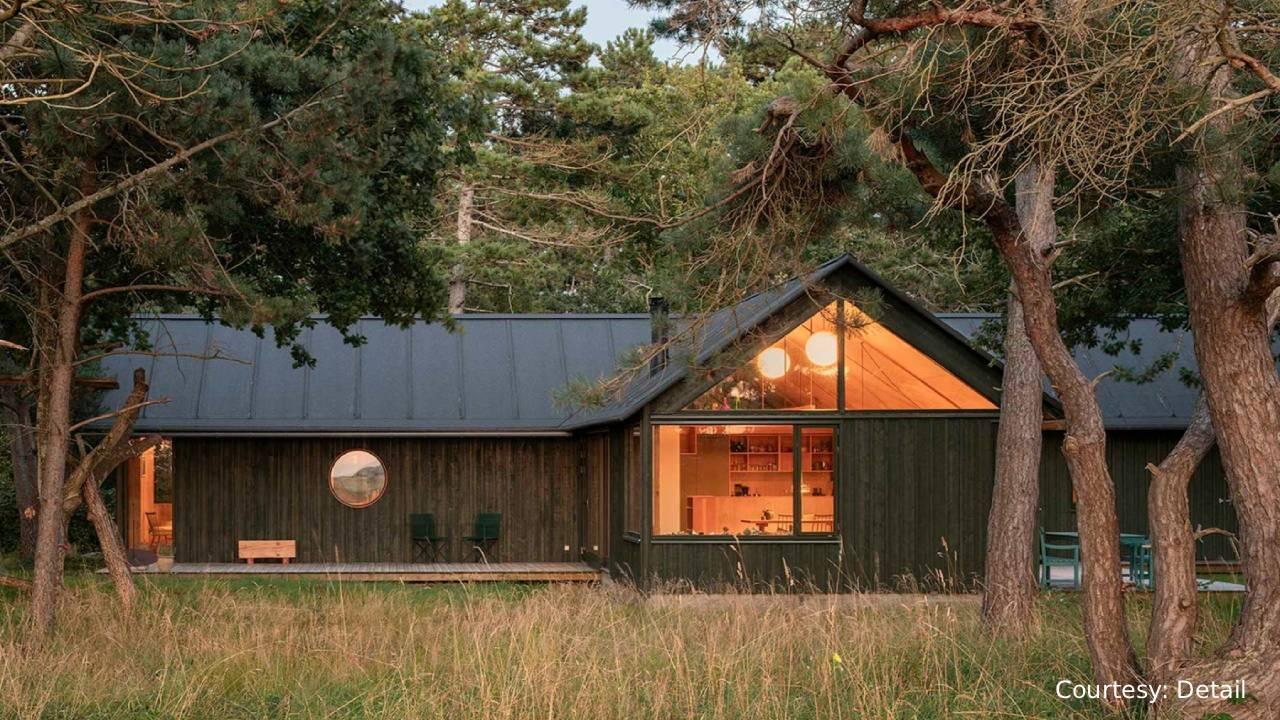
There is a category of property that does not behave like real estate. It behaves like citizenship. The Nordic summer cabin, hytte in Norway, sommarstuga in Sweden, mökki in Finland, sommerhus in Denmark, is the most emotionally defended asset class in Northern Europe. In 2026 it has become, quietly, one of the most interesting cross-border purchases available to a wealthy Indian family.
The numbers behind the ritual are striking. Roughly one in six Norwegians owns a hytte, and Finland counts over half a million mökit for 5.6 million people. These are not investment properties in the local imagination. They are where three generations argue about whether the sauna is hot enough. Which is precisely why the market is opaque, why the best waterfront plots almost never reach open listing, and why the mainstream coverage, all turf roofs and hygge, tells you nothing about what a serious buyer actually needs to know.
Three things have changed the calculus. First, the coolcation shift is real: foreign interest in Nordic cabins has surged since the pandemic, with buyers from the UK, Germany and the Middle East drawn to cooler-summer lifestyle, and Indian UHNW travel patterns confirm the same drift away from a 42-degree European July. Second, security politics has redrawn the rulebook: Finland amended its property acquisition law in 2025 to let the Ministry of Defence block purchases on national security grounds, and the regime is being actively used. Third, and least discussed: at ₹2 crore to ₹8 crore for genuinely good stock, this is one of the few prime-lifestyle purchases in Europe that fits inside a family's pooled Liberalised Remittance Scheme envelope without exotic structuring.
This is the reference piece: what each country actually costs, which of the four is effectively closed to you, what boplikt means before you wire money, and the shadow costs no listing portal publishes. Readers building a wider picture should read it alongside our comprehensive guide to luxury second home destinations worldwide.
The LuxuryAbode Coastal Enclosure Spectrum
Before the country detail, the structural point. The four Nordic states are not four separate rulebooks. They are four positions on a single spectrum, defined by how tightly each guards summer coastline against outside ownership.
| Position | Jurisdiction | Gate Mechanism | What It Costs the Foreign Buyer |
|---|---|---|---|
| Open Access | Sweden | None on residential property. Permits apply only to agricultural land, for everyone | Nothing legally. The barrier is social and competitive, not statutory |
| Open With Conditions | Norway | No nationality bar, but boplikt residence obligations attach to certain property categories | Diligence risk. Buy the wrong registration category and the asset is unusable |
| Permit Gated | Finland, mainland | Ministry of Defence permit required for non-EU and non-EEA buyers of land | A fee, a delay, and a discretionary decision that can go against you |
| Closed | Denmark, and the Åland Islands | Residence qualification, reinforced in Denmark by a 1992 EU treaty protocol | Everything. There is no compliant purchase route at any price |
The Coastal Enclosure Spectrum grades Nordic jurisdictions by the mechanism each uses to keep summer coastline in domestic hands, on the principle that these are not unrelated national quirks but a single regional instinct expressed at four different intensities. Denmark is not an outlier. It is the endpoint the others are positioned along.
Norway: The Deepest Market, With a Trap in the Fine Print
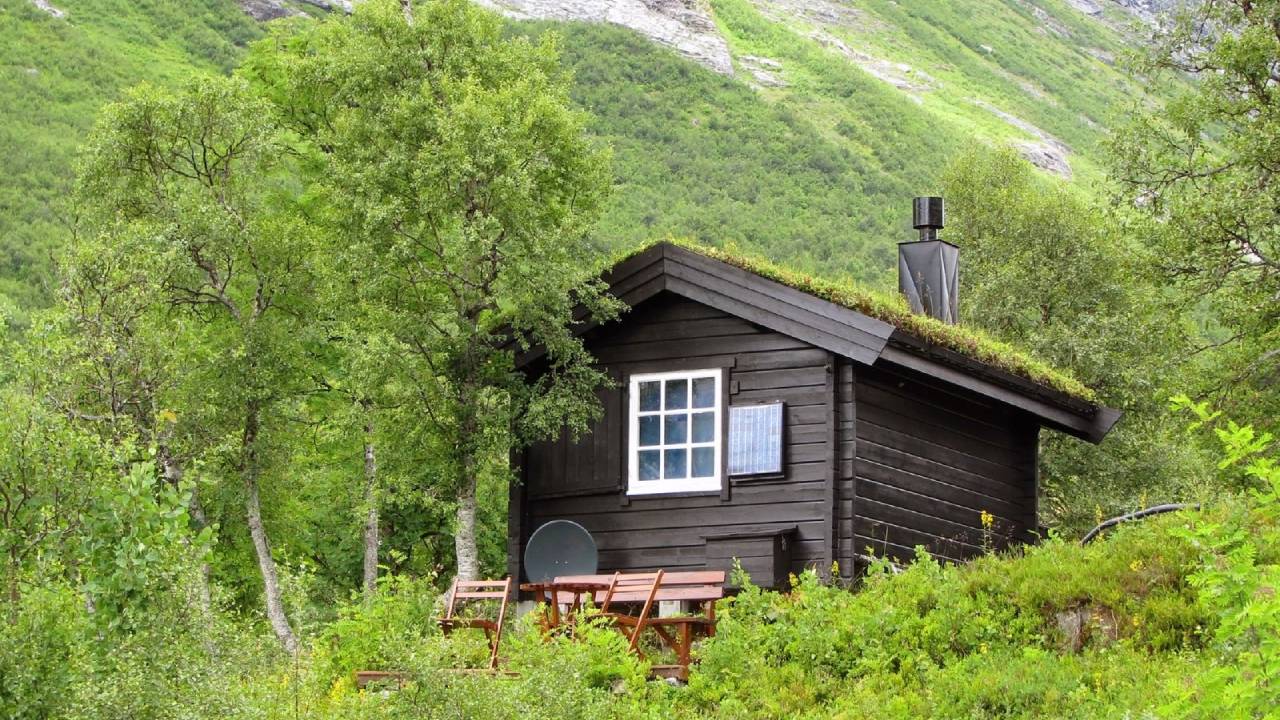
Norway is the largest and most liquid cabin market in the Nordics, roughly 440,000 hytter split between mountain and coast. The mountain market, Geilo, Hafjell, Kvitfjell and Norefjell, is the winter story. The summer story is the southern coast: the stretch from Hvaler through Kragerø to the Blindleia channel near Lillesand, which Norwegians call their Riviera and defend accordingly.
Entry maths first. Authentic traditional cabins in inland Norway still trade from around €57,500, and the broad market runs from roughly £70,000 for traditional units to £350,000 and above for high-specification four-bedroom builds. That is the national picture. The coastal prime picture is different by an order of magnitude: waterfront cabins in Blindleia and inner Kragerø routinely clear NOK 15 to 30 million, roughly ₹12 to 25 crore, and trophy properties with private deep-water docks have crossed NOK 50 million.
The dock is the point. Shoreline law, strandsonen, prohibits new construction within 100 metres of the sea, so a legal pre-existing boathouse and jetty is a non-replicable asset. You are not paying for square metres. You are paying for a grandfathered right that Norway will never issue again.
Boplikt: The Trap
Boplikt is the residence obligation. Several coastal municipalities require year-round residency for certain properties to prevent towns becoming summer ghost settlements. A property registered as a leisure home, fritidsbolig, is exempt. One registered as a dwelling, helårsbolig, may not be. Buyers who miss this distinction have been forced to resell.
Verify the registration category before the bid, not after. This is the single most expensive piece of diligence in the Norwegian market and the one most often skipped by foreign buyers relying on an agent's summary rather than the municipal record.
Foreign ownership itself is open. Norway imposes no nationality restriction on buying, making it one of the last major European markets with none. What the press does not publish: Norwegian wealth tax, formuesskatt, applies to non-resident owners of Norwegian property. At roughly one percent above thresholds on assessed value, a ₹20 crore cabin creates a small but perpetual Norwegian tax relationship. Factor it, or be surprised annually.
Sweden: The Archipelago Premium and the Friendliest Rulebook
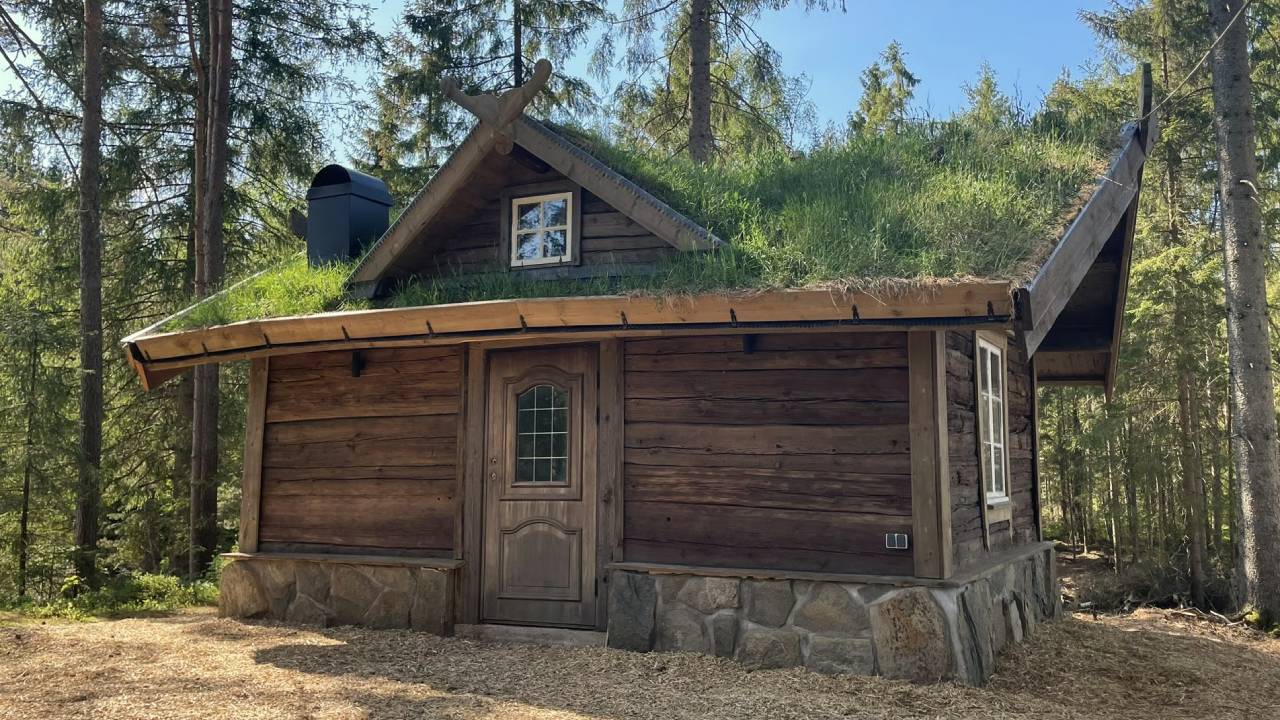
Sweden is where the buying is easiest and the social access is hardest. There are no restrictions on foreigners buying residential property, and permit requirements apply only to agricultural land regardless of nationality. Transaction costs are the lowest in the region: 1.5 percent stamp duty for individuals plus modest fees. You can own a Stockholm archipelago island parcel with less friction than buying a flat in Mumbai.
The market tiers cleanly. The Stockholm archipelago, the Sandhamn, Möja and Vaxholm belt, is the establishment heartland: SEK 8 to 25 million, roughly ₹6.5 to 20 crore, for good waterfront, with boat-access-only islands trading at a discount that locals treat as a feature. The west coast, Torekov, Båstad, Falsterbo and Ljunghusen, is the old-money summer circuit, where Båstad tennis week functions roughly as the Swedish equivalent of a Breach Candy club membership: the property is purchasable, the invitation is not. Prime Torekov and Falsterbo villas run SEK 15 to 40 million.
Then there is the value tier nobody writes about: Höga Kusten and the Bohuslän outer skerries, where architect-grade waterfront under SEK 5 million, roughly ₹4 crore, still exists because it is three hours from anyone's office. The aesthetic vocabulary of this stock is examined in our guide to the design codes of Stockholm's elite, and the region's environmental credentials are illustrated by Växjö's transformation into Sweden's most refined sustainable sanctuary.
Insider Mechanics
Swedish sales run on open bidding, budgivning, with no binding offers until contract. Gazumping is legal and routine. Winning bids on prime archipelago stock frequently land 15 to 25 percent over asking. Price the listing as a floor, not a number.
And allemansrätten, the right of public access, means strangers may lawfully walk, camp briefly and swim near your shoreline. Swedes consider this civilisation. Buyers expecting Alibaug-style compound privacy should understand it before purchase: the fence you want to build is culturally, and often legally, impossible. For those who want the archipelago experience without the ownership question, properties such as the Pater Noster island lighthouse hotel off the Swedish coast offer a useful trial run, as does Sweden's emergence as a luxury sleep tourism destination.
Finland: Half a Million Mökit, One Ministry Between You and Yours
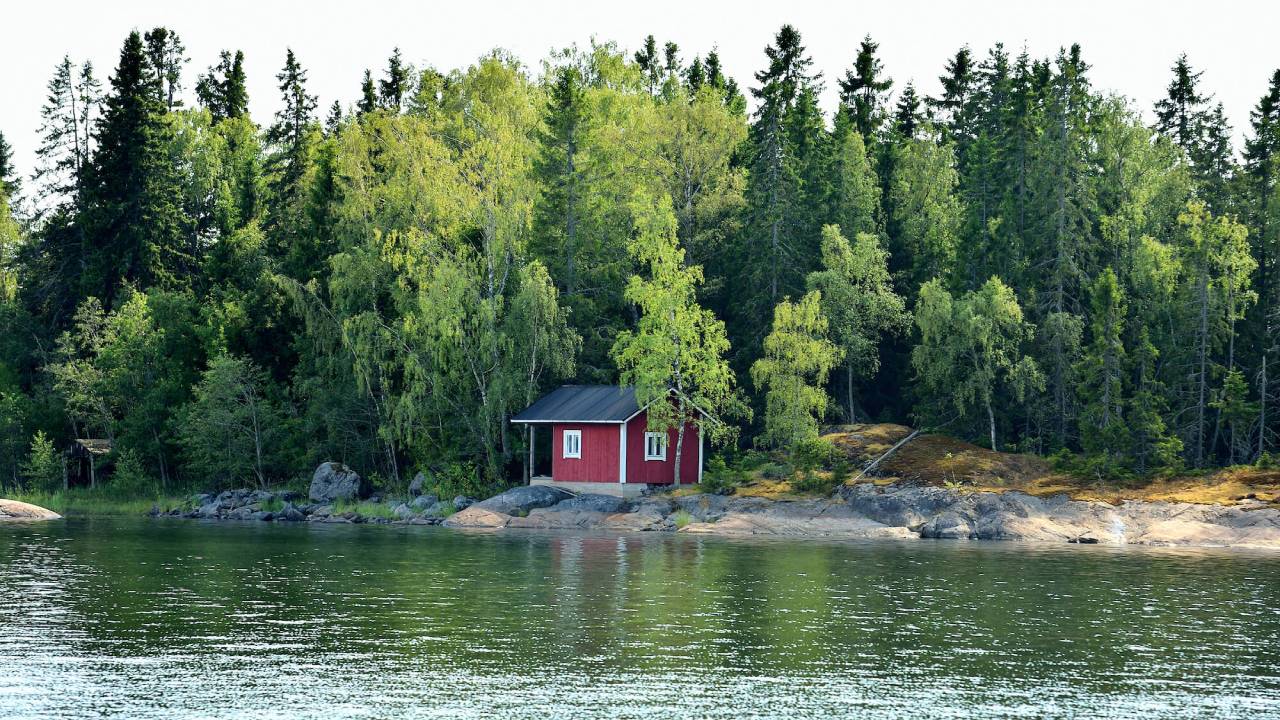
Finland has the purest cabin culture and, since 2025, the most formal gate. Non-EU and non-EEA nationals must obtain a permit from the Ministry of Defence to acquire real estate that includes land. The requirement applies regardless of where in mainland Finland the property sits.
The mechanics matter. The Finnish Parliament adopted the amendment on 11 April 2025 and it entered into force on 15 July 2025. The permit application carries a processing fee of €210 per property identifier when paid online at submission, or €280 if invoiced, and the fee is non-refundable whether the permit is granted, refused or the application withdrawn. Applications must be filed promptly after the purchase contract is signed. Title registration is a fixed €172, one of the most predictable closing costs in the region.
Read the Permit Risk Honestly
Coverage of this regime tends to frame refusals as confined to border zones and defence installations. The record does not support that framing.
The government decree naming states considered to pose a threat covers Russia and Belarus, and India is not on it. But the Ministry has exercised its discretion more broadly. In October 2025 it rejected eleven applications across ten regions from Russian, Israeli, Kazakh and Kyrgyz nationals. Earlier that year it denied an Israeli citizen a property in Mikkeli and a Chinese-owned company a property near a defence exercise area in Rovaniemi.
The accurate statement for an Indian buyer is therefore this: India is not among the restricted states, permits for ordinary lakeland leisure property are generally obtainable, but the decision is discretionary and made on national security grounds that are not exhaustively published. Budget the time, do not treat approval as automatic, and do not commit funds on the assumption of a formality.
Three Routes That Avoid the Permit Entirely
- Apartment shares in housing companies require no permit, which covers many resort-style lakeside developments.
- Properties on leased land generally fall outside the requirement. Finnish residential plot leases commonly run 30 to 100 years and, structured correctly, can be registered, transferred and used as loan collateral.
- Dual nationals need no permit if one nationality is that of an EU or EEA state. Relevant for Indian-origin families holding a second European passport.
Åland, and the Cost of Informality
The Åland Islands are effectively closed. Ownership is tied to holding Åland right of domicile, which typically requires around five years of residence, and the restriction binds mainland Finns and EU citizens alike.
Separately, skip the National Land Survey process or the public purchase witness and the conveyance can be declared invalid for title registration. Finland is not a market for informal deal-making.
The compensation is price. Lake Saimaa, Europe's fourth-largest lake with 14,000 kilometres of shoreline, offers renovated waterfront mökit with sauna and private jetty from €150,000 to €400,000, roughly ₹1.4 to 3.8 crore. Equivalent water frontage on Lake Como starts at several times that. Finnish transfer tax stands at 3 percent for real property and 1.5 percent for housing company shares. Annual municipal property tax applies, and second homes often carry a higher rate than primary residences, a recurring line item that surprises foreign owners. The design culture the purchase buys into is surveyed in our look at the Finnish artisans redefining Nordic luxury.
Denmark: The Market You Cannot Have
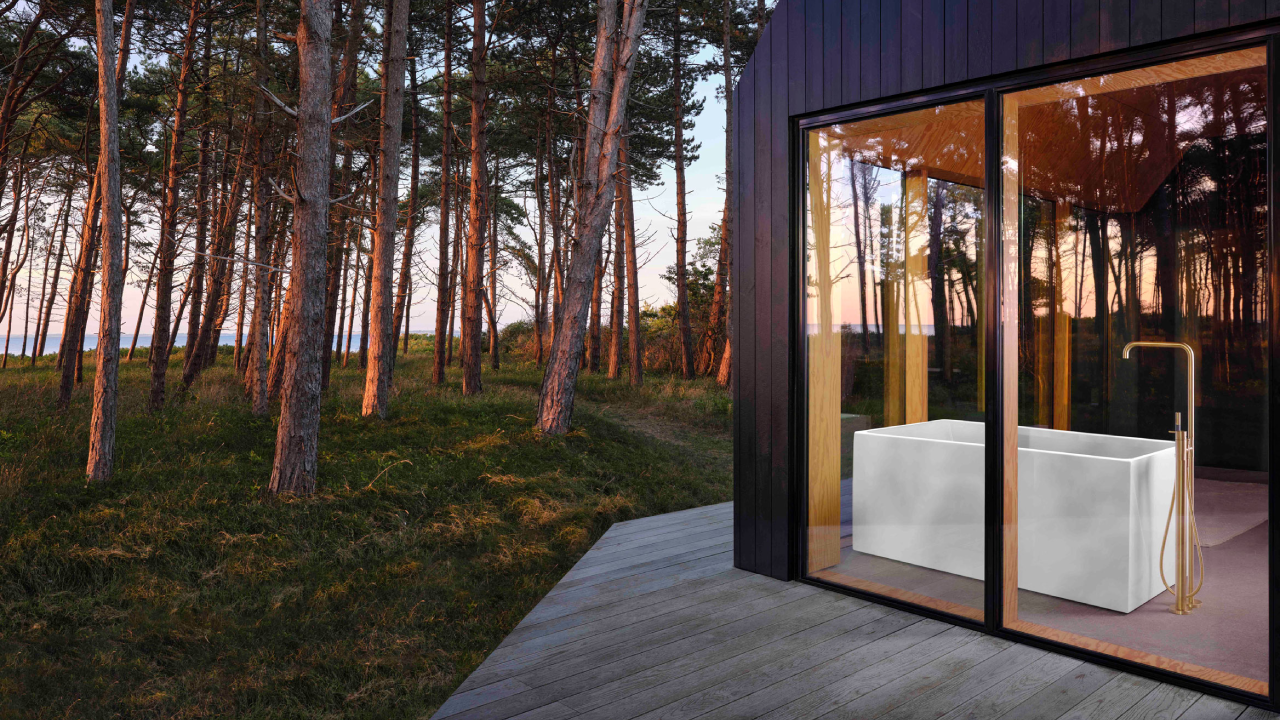
Say it plainly, because no listing portal will. Denmark's summer house market is closed to you.
Danish law requires five years of residence in Denmark before purchasing property, and summer houses, sommerhuse, sit under an even stricter regime. Denmark negotiated a permanent EU treaty protocol in 1992 specifically so that even EU citizens cannot freely buy them. Non-residents may petition the Ministry of Justice for an exemption based on demonstrated particular ties to Denmark. Grants are rare and discretionary.
There is no premium-buyer route, no golden exception, no structure a sensible advisor will sign off on. Nominee arrangements exist in the grey market and are exactly the kind of construction Nordic land registries are built to unwind.
Why mention a market you cannot enter? Because Skagen, Hornbæk and Tisvildeleje form the reference index for the whole region, with Hornbæk trophy sommerhuse trading above DKK 20 million among Danes, and because the Danish wall explains Nordic pricing logic everywhere else. These countries treat summer coastline as heritage infrastructure, not inventory. Norway's boplikt, Finland's permits and Åland's closure are points on the same spectrum. Denmark is simply the endpoint. Rent in Denmark, and take the city on its own terms through establishments such as Delphine in Copenhagen's Vesterbro district. Buy next door.
The Shadow Cost Table: ₹3 Crore Sticker, What You Actually Pay
Take a representative purchase: a renovated waterfront cabin at €320,000, approximately ₹3 crore, in Sweden or Finland. True first-year and running costs:
| Item | Sweden | Finland | Norway (NOK equivalent) |
|---|---|---|---|
| Purchase price | ₹3.00 cr | ₹3.00 cr | ₹3.00 cr |
| Transfer or stamp duty | 1.5 percent: ₹4.5 L | 3 percent: ₹9 L | 2.5 percent dokumentavgift: ₹7.5 L |
| Legal, survey, agent-side costs | ₹3 to 5 L | ₹4 to 6 L, including MoD permit fee and NLS process | ₹3 to 5 L |
| Annual property tax | Approximately ₹60,000 to 80,000 | ₹80,000 to 1.5 L at higher second-home rate | Municipal, varies, plus wealth tax exposure ₹1 to 2 L |
| Insurance, including water damage and vacancy clauses | ₹50,000 to 70,000 a year | ₹50,000 to 70,000 a year | ₹60,000 to 90,000 a year |
| Winterisation, caretaking, opening and closing | ₹1.5 to 2.5 L a year | ₹1.5 to 2.5 L a year | ₹2 to 3 L a year |
| Boat, jetty and sauna maintenance | ₹1 to 3 L a year | ₹1 to 2 L a year | ₹2 to 4 L a year |
| Realistic all-in year one | Approximately ₹3.14 cr | Approximately ₹3.18 cr | Approximately ₹3.15 cr |
| Realistic annual carry thereafter | ₹4 to 7 L | ₹4 to 6 L | ₹6 to 10 L |
The pattern worth internalising: acquisition friction is trivial by Indian standards, compared with 5 to 7 percent stamp duty plus GST on new-build in Mumbai, but the carry is dominated by physical stewardship rather than tax. A Nordic cabin left unmanaged through one freeze-thaw cycle loses more value than a decade of property tax.
For comparison against warmer alternatives, see the best locations to purchase a luxury vacation home in France, and for the wider Nordic price context, the appreciation recorded in Reykjavik's Austurhöfn apartments.
The India Route: Why This Fits LRS When an Alpine Chalet Does Not
Under FEMA, a resident Indian may acquire immovable property abroad through the Liberalised Remittance Scheme, capped at USD 250,000 per person per financial year. A single limit buys little in Courchevel. But a family of four pooling LRS capacity moves USD 1 million, roughly ₹8.3 crore, in one year, legally and cleanly, with joint ownership reflecting each remitter's contribution.
That envelope covers the entire serious mid-market in Finnish lakeland, Swedish Bohuslän and inland Norway, and reaches the lower rungs of coastal prime.
The Frictions, Priced Accurately
- TCS applies at 20 percent on LRS remittances above ₹10 lakh in a financial year for purposes other than education and medical treatment. Property acquisition falls in that category. The Budget 2026 reductions cut education, medical and overseas tour package rates to 2 percent, but explicitly left the general rate at 20 percent. On an ₹8 crore transfer this is a substantial cash-flow drag, creditable against final tax liability rather than an additional cost.
- The governing provision, formerly Section 206C(1G) of the Income-tax Act 1961, has been renumbered as Section 394(1) of the Income-tax Act 2025 with effect from 1 April 2026. Advisors still citing the old section number are working from superseded material.
- Schedule FA disclosure of the foreign asset is required in every return thereafter, reported on a calendar year rather than financial year basis. Non-disclosure of a foreign asset attracts penalty under the Black Money Act, and the exposure is per year of non-disclosure. This is the compliance point most often underestimated.
- Rental income is taxable in India with treaty credit for foreign tax paid.
- NRIs face none of the LRS ceiling and are the natural buyers at the trophy tier, a dynamic that also shapes NRI appetite for Indian luxury property in the opposite direction.
Families considering a residency angle alongside the asset should note that a Nordic cabin confers no immigration benefit whatsoever. That is a separate decision, mapped in our analysis of where 142,000 relocating millionaires chose to go. Domestically, the same capital competes against the logic set out in ten strategic reasons India's ultra-wealthy are building real estate empires at home.
What You Are Actually Buying
The closing insight is about the nature of the asset. A Nordic summer cabin is a low-appreciation, high-permanence holding. Expect Nordic-inflation-level price growth, not Dubai-style runs, and thin rental yields outside peak weeks.
What you are buying is the one thing the luxury market cannot manufacture more of: legally grandfathered waterline in politically stable, climate-advantaged jurisdictions, in the only region of Europe where summer is becoming more valuable every year. The region's cultural output is following the same trajectory, as traced in the rise of luxury Nordic wines and Scandinavian elegance.
The Danes understood this in 1992, which is why they locked the door. The correct read of that fact is not frustration. It is confirmation.
Frequently Asked Questions
Can a foreigner buy a summer cabin in Norway?
Yes. Norway currently imposes no nationality-based restriction on property purchase. Check two things before bidding: whether the property is registered as fritidsbolig, meaning leisure use with no residence obligation, or helårsbolig, which may be subject to boplikt year-round residence rules in some coastal municipalities, and your exposure to Norwegian wealth tax as a non-resident owner.
Can Indians buy property in Finland?
Yes, with a permit. Non-EU and non-EEA nationals need Ministry of Defence approval to acquire real estate including land. India is not among the states named in the restricted-states decree, and permits for ordinary lakeside leisure homes are generally obtainable, but the decision is discretionary and refusals have extended beyond border and defence sites. Apartment shares in housing companies and properties on leased land generally need no permit.
Why can't foreigners buy summer houses in Denmark?
Danish law requires five years of residence to buy property, and summer houses are further protected by a 1992 EU treaty protocol negotiated specifically for that purpose. Exemptions from the Ministry of Justice require demonstrated particular ties to Denmark and are rarely granted.
How much does a good Nordic summer cabin cost in 2026?
Authentic inland cabins start around ₹50 to 70 lakh. Quality lakefront in Finland or Swedish west-coast waterfront runs ₹1.5 to 4 crore. Prime coastal Norway around Blindleia and Kragerø, and Stockholm archipelago trophy stock, runs ₹12 to 25 crore and above.
Is a Nordic cabin a good investment?
As a financial asset, modest. Expect inflation-adjacent appreciation and thin rental yields outside peak weeks. As a scarcity asset, strong. Grandfathered waterfront rights cannot be recreated, and coolcation demand is structurally rising. Treat it as a lifestyle holding with capital preservation characteristics rather than as a growth allocation.
Can I buy a Nordic property under LRS?
Yes. Immovable property abroad is a permitted LRS use at USD 250,000 per person per financial year, poolable across family members with joint ownership proportionate to each remittance. Account for TCS at the general 20 percent rate above the ₹10 lakh annual threshold, and for Schedule FA disclosure in every subsequent return.
Disclaimer: This article is provided for informational and editorial purposes only and does not constitute legal, tax, investment or immigration advice. Property prices, transaction taxes, permit requirements, residence obligations and foreign ownership rules in Norway, Sweden, Finland and Denmark are subject to change and vary by municipality and property category. Currency conversions are indicative and should be confirmed at prevailing rates. Indian regulatory positions including Liberalised Remittance Scheme limits, TCS rates and thresholds, Schedule FA disclosure obligations and Black Money Act penalties are subject to periodic revision and should be verified with a qualified chartered accountant and an authorised dealer bank before any remittance. Cross-border property acquisition should be undertaken only with qualified legal counsel in the destination jurisdiction. LuxuryAbode is not a property agent, tax advisor or authorised dealer, holds no interest in any property or market referenced, and accepts no liability for decisions taken on the basis of this article.

Comments
No comments yet.
Add Your Comment
Thank you, for commenting !!
Your comment is under moderation...
Keep reading luxury post