The Last Unspoiled Luxury Coastlines And the Development Clocks Already Ticking
 Pradeep Dhuri
- 15th May 2026
- 1399
- 0
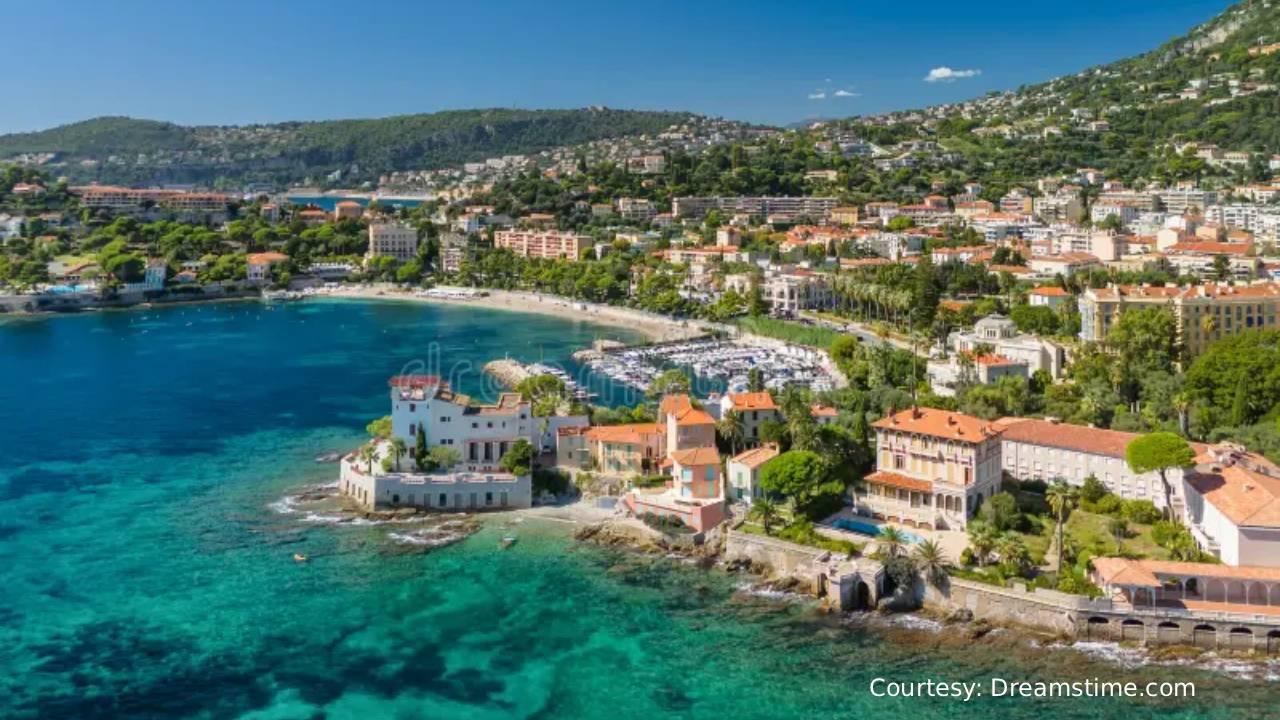
There is a predictable sequence that destroys extraordinary coastlines. First comes the travel magazine feature. Then the boutique resort, the Instagram post, the Airbnb listing, the charter flight, and finally the concrete. The interval between "discovered by those in the know" and "ruined for everyone" has compressed dramatically. Maldives took thirty years. Mykonos took twenty. Tulum took eight. Some of the world's remaining pristine coastlines may have fewer than five.
This is not an article about where to go if you want a quiet holiday. It is about where to go if you want to be somewhere before the version that gets photographed exists. The distinction matters, because the experience of arriving at a coastline that has not yet been shaped to receive you is categorically different from luxury as it is typically sold. It is the difference between owning something and renting it. For a broader map of where affluent Indian travellers are taking their experiential budgets in 2026, our definitive report on why Indian travellers are choosing luxury over budget trips this summer documents the macro shift that is making frontier destinations like these increasingly relevant.
The UHNW travellers who understand this distinction are already moving. Private aviation data from operators who track charter activity to non-primary destinations shows a measurable uptick in routing to coastal destinations in Oman's Musandam, northern Mozambique, and the Gulf of Guinea. The money arrives before the hotels do. It almost always does.
What follows is an honest accounting of six coastlines where that window remains open — narrowly, in some cases by months — alongside the real mechanics of access, the specific forces driving development, and what changes the equation permanently.
Príncipe Island, São Tomé & Príncipe: The World's First Total UNESCO Biosphere That's About to Change Hands
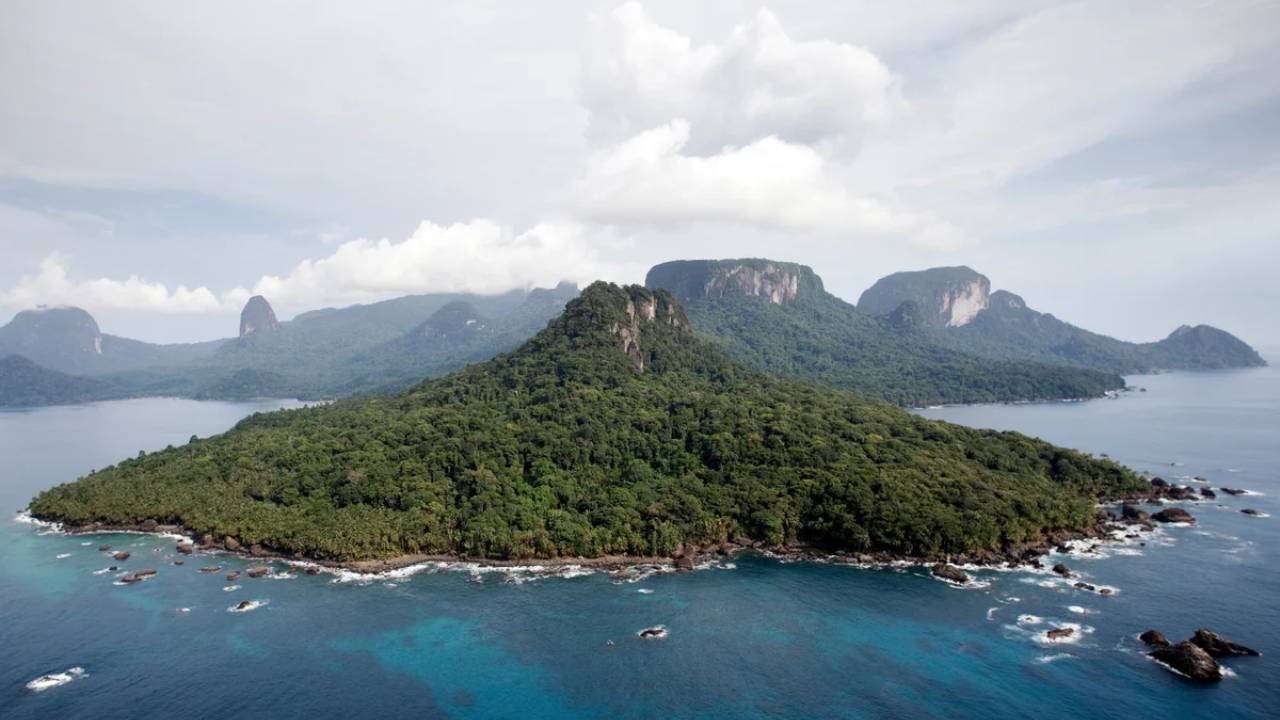
In 2025, São Tomé and Príncipe became the first country on earth to have its entire territory designated a UNESCO Biosphere Reserve — São Tomé Island receiving the designation to join Príncipe, which earned it in 2012. That fact has barely registered in luxury travel coverage. It should.
Príncipe is 142 square kilometres of volcanic rainforest meeting the Atlantic, 250 kilometres off the coast of Gabon. Fewer than 40,000 people visit annually. The island's entire modern tourism infrastructure was built and managed by Mark Shuttleworth, the South African software entrepreneur who made his fortune with Thawte and later became the second person to pay his way to the International Space Station. His company, HBD Príncipe, has managed the island's tourism economy for fifteen years with a philosophy of controlled, low-density development.
In October 2025, Shuttleworth sent a letter to the Príncipe government stating his intention to find a buyer for HBD. That single fact represents the most significant shift in Príncipe's trajectory since Shuttleworth arrived. The next owner will determine whether the island stays at its current carrying capacity or becomes the next ultra-luxury spectacle.
What the coast actually looks like: The island's shoreline is not the white-sand-infinity-pool archetype that luxury travel photography has trained the market to expect. Along Príncipe's coast, strips of ivory sand are caught between turquoise water on one side and trees and tangled plant roots on the other. It is the coast you arrive at, not the coast someone built for you. For those who have already experienced what it means to arrive at a destination before the infrastructure catches up, our piece on 5 secret luxury travel destinations affluent travellers are quietly booking in 2026 maps the same philosophy across five comparable frontier markets.
Access and true cost: Getting to Príncipe requires connecting through São Tomé via a 20-seat propeller aircraft — 35 minutes, weather permitting. The two operational luxury properties, Bom Bom Island Resort and Roça Sundy, run approximately $800–$1,200 per villa per night in high season. Charter a private plane from Libreville, Gabon — the closest realistic private aviation hub — and budget ₹35–45 lakh ($42,000–$55,000) round-trip for a Cessna Citation or comparable light jet.
The HBD sale process is the countdown timer. Whoever acquires it will face immediate pressure from institutional capital to scale. The UNESCO designation provides a framework for conservation, not a guarantee. Go in 2026 while the question of what Príncipe becomes is still unanswered.
Quirimbas Archipelago, Mozambique: Africa's Best-Kept Indian Ocean Secret Has an Infrastructure Problem — For Now
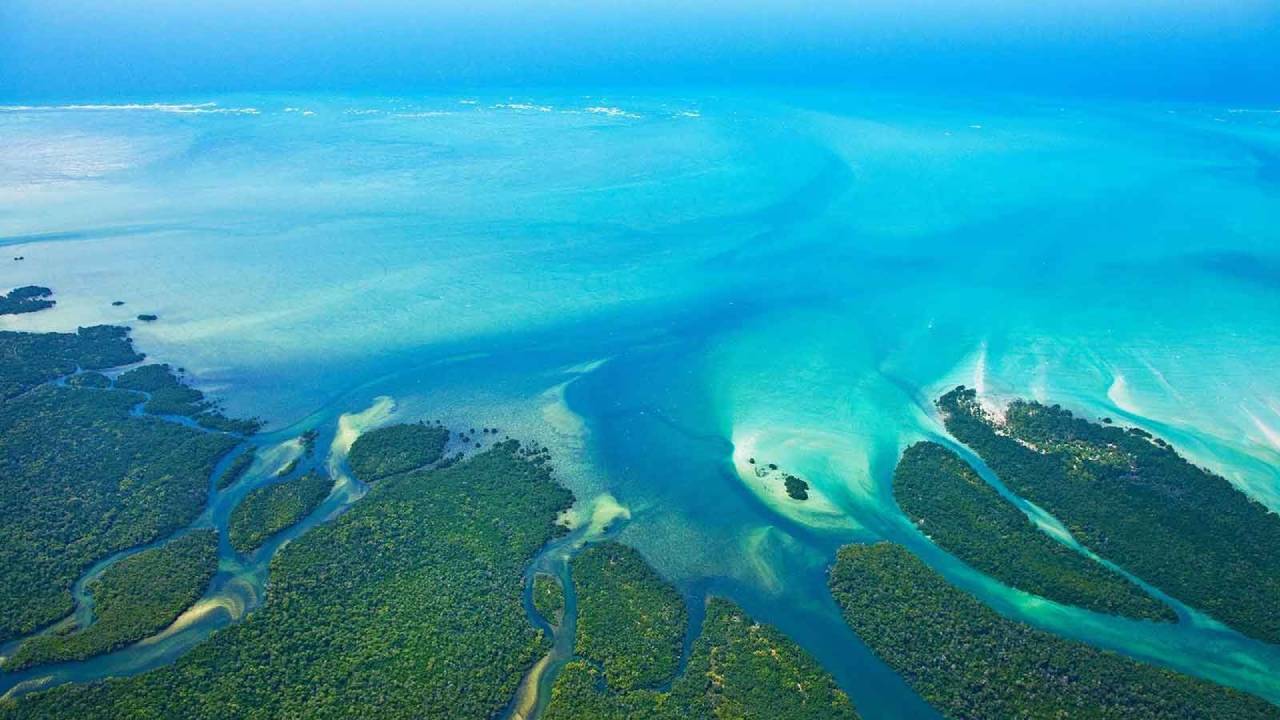
The Quirimbas stretch 400 kilometres up Mozambique's northern coastline from Pemba toward the Tanzanian border. The southern islands form part of Quirimbas National Park, which protects roughly 7,500 km² of mainland and marine habitats, including mangroves, coral reef, and coastal forest. The entire archipelago has fewer than a dozen luxury properties in total. Vamizi Island, arguably the flagship, has twelve villas. Medjumbe Private Island has thirteen chalets. These are not capacity constraints imposed by choice — they reflect genuine remoteness.
The region's security situation in Cabo Delgado, which saw insurgent activity between 2017 and 2023, has paradoxically preserved the northern islands. International capital that might otherwise have moved stayed away. That calculation is shifting. Improved access resulted in a substantial rise in visitor numbers. SA Airlink's weekly Johannesburg route and improvements in light aircraft transfers from Pemba have made the logistics manageable.
The marine case: Sites include Neptune's Arm — often cited among the top dive sites globally — and the dramatic Metundo Canyon, part of a broader reef system rising steeply from deep water. This is world-class diving with no dive tourism crowd. Whale sharks, manta rays, and southern right whales move through seasonally. Access pricing at Vamizi runs $7,500–$9,000 per person per week all-inclusive. A private dhow charter for island-hopping runs $3,000–$5,000 per day through the lodge operators. For those interested in how eco-luxury conservation properties operate at their finest, our report on Raffles Udaipur setting a benchmark for eco-luxury with its prestigious Green Key Certification illustrates the standard the Quirimbas' best operators are working toward.
The window here: visit the Quirimbas now, while it is still an undeveloped backwater. Blunt advice from a travel operator with fifteen years in the region. Heed it.
Musandam Peninsula, Oman: The Norway of Arabia Is Getting a Club Med
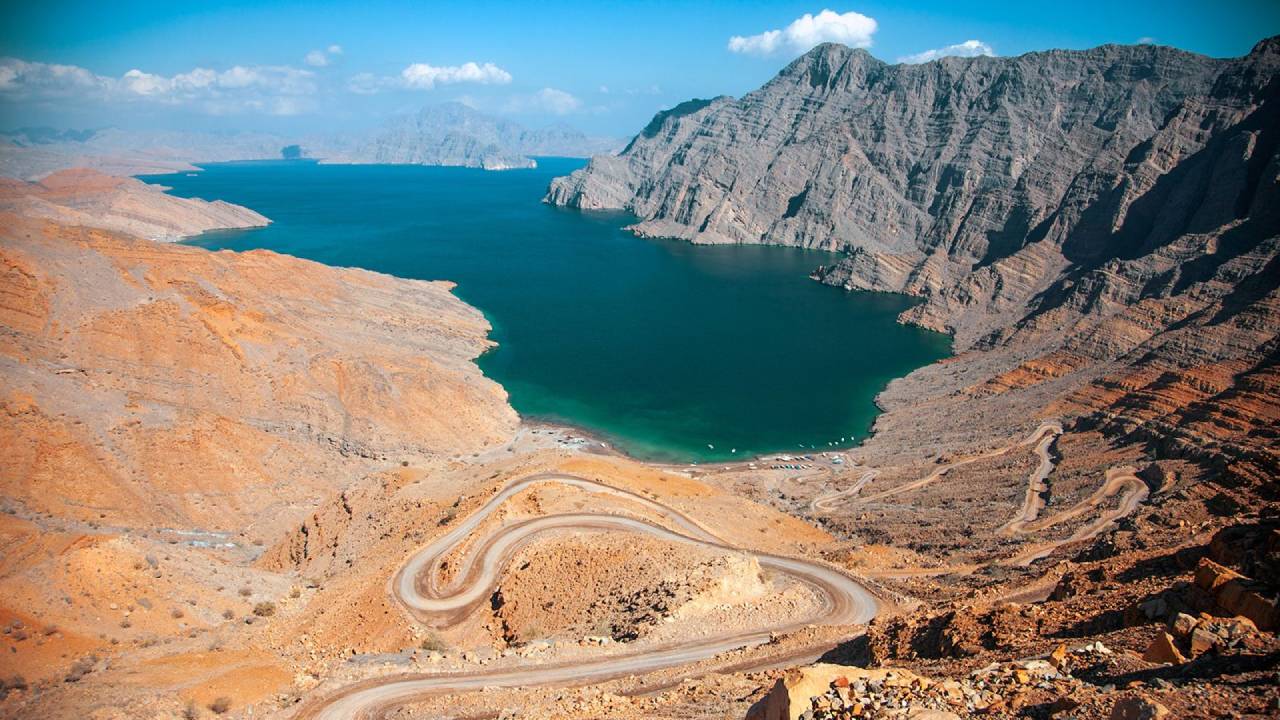
Nicknamed "Norway of the Middle East" due to its fjord-like coastline, the Musandam Peninsula is an Omani exclave at the tip of the Arabian Peninsula, surrounded on its land side by the UAE and overlooking the Strait of Hormuz. The khors — the Arabic word for the narrow inlets that carve into limestone cliffs up to 2,000 metres high — are among the most dramatic coastal formations accessible by boat anywhere in the world.
The development signal arrived in unmistakeable form when Oman's state tourism company, Omran Group, unveiled the design for Club Med Musandam. Over $150 million in committed investment has been secured for the construction of cliff-view eco-resorts in the Musandam Peninsula alone. Currently, the peninsula operates at a fraction of this incoming capacity. Six Senses Zighy Bay, a 30-minute speedboat ride from Dibba in the UAE, is the lone international luxury flag in the region. For those who want to experience Six Senses Zighy Bay's full proposition before the broader destination changes around it, our dedicated feature on reconnecting with family at the delightfully refurbished Six Senses Zighy Bay Oman offers an immersive look at what the resort delivers today. The private overnight Musandam voyages from Six Senses are equally compelling — our feature on the private overnight Musandam Voyages by Six Senses Zighy Bay documents one of the finest small-boat experiences available in the Arabian Peninsula.
Getting there independently: fly to Muscat or Dubai, drive or charter a small aircraft to Khasab. A week's experience — boat, accommodation, diving — runs ₹6–10 lakh ($7,000–$12,000) per person if done properly through a specialist operator. Once Club Med opens, the baseline changes completely.
Albanian Riviera: The Sazan Situation Explains Everything
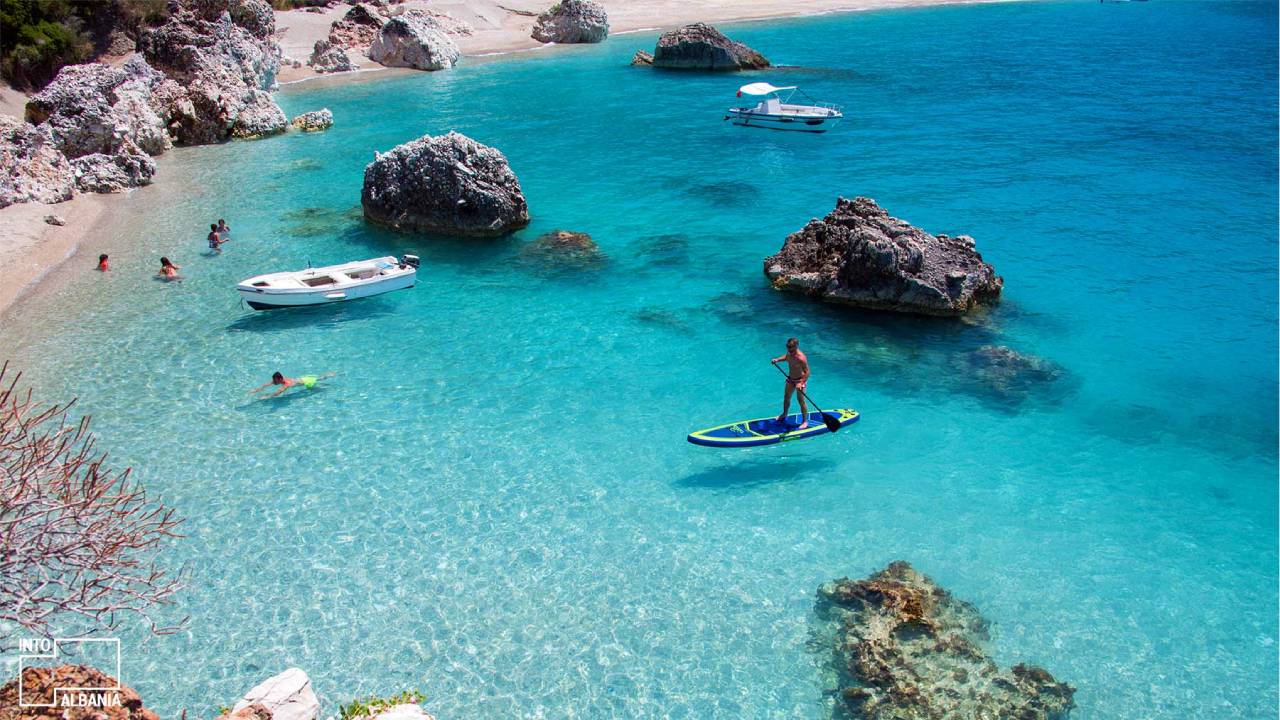
The Albanian Riviera — the Ionian coast running south from Vlorë toward Sarandë — was genuinely undiscovered luxury territory as recently as 2019. Albania attracted nearly twelve million visitors in 2024 — four times its domestic population. The Riviera proper is no longer unspoiled. The concrete has arrived. But the story of why it happened so fast is the story that matters for anyone reading coastline futures.
The specific signal was Sazan Island, a 566-hectare former Albanian military base at the mouth of Vlorë Bay. Ivanka Trump and Jared Kushner have acquired this Albanian island for an estimated value of more than $1 billion, with the intention of turning it into an exclusive luxury resort. Negotiations were postponed indefinitely as of November 2025, so the project remains in limbo. But the legal changes to accommodate it are permanent.
What this tells you about coastline futures generally: A protected island with Cold War bunkers and unexploded ordnance can become a $1.4 billion luxury proposition in the time between one tourist visit and a signed agreement. The protective status of "remote," "restricted," or "environmentally protected" is not the barrier it once was when sufficiently large capital is interested.
For the traveller, the genuinely interesting Albanian coast today is the Karaburun Peninsula opposite Sazan — still accessible only by boat, with no road connections, part of the Karaburun-Sazan National Marine Park. Transparent water, underwater caves, and no infrastructure of any kind. That status will not survive another five years. For those drawn to the idea of being ahead of capital in European coastal markets, our piece on 7 reasons a luxury road trip through Portugal is the ultimate travel experience maps how Portugal's Comporta went through the same arc — and what the early movers captured that latecomers cannot.
Lakshadweep, India: A Permit Relaxation Is a Countdown Clock
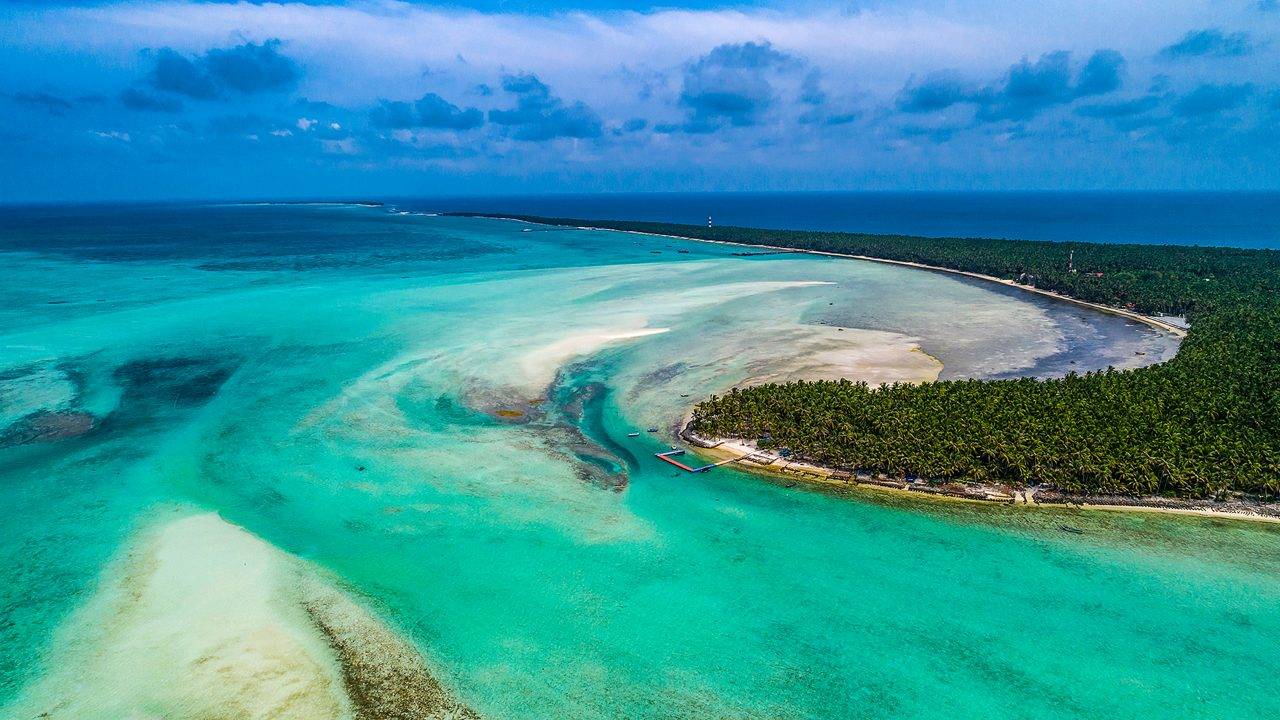
India's only coral atoll chain sits in the Arabian Sea, 220–440 kilometres west of Kerala. Thirty-six islands, eleven open to tourism, total land area smaller than Delhi's Connaught Place. For decades, the permit system made Lakshadweep genuinely hard to reach for most Indians and nearly impossible for international visitors.
In a major update, the island's administration has relaxed several long-standing entry permit rules. Indian tourists will no longer need a local sponsor from Lakshadweep or a police clearance certificate from their hometown. The change, announced in May 2026, is significant. Every time access to a restricted coastline is formally eased, the window between "rare" and "popular" shrinks. For a sense of the Kerala coastal experience that makes the Lakshadweep context so meaningful, our guide to 10 luxurious vacation rentals in Kerala maps the mainland luxury landscape that Lakshadweep's finest properties are beginning to rival.
The islands currently accessible — Agatti, Bangaram, Kavaratti, Kadmat, Minicoy — have a handful of operational resorts. Bangaram Island Resort, the closest thing to a private island experience, runs roughly ₹35,000–65,000 per couple per night. Charter flights from Kochi to Agatti run ₹18,000–28,000 per seat one-way.
The honest assessment: Lakshadweep's luxury infrastructure today is thin enough to deter most UHNW travellers accustomed to seamless service. That is precisely the point. The experience of arriving by boat to an atoll where the only sounds are the lagoon and the wind is not replicable once the resort pipeline reaches completion. For those willing to accept operational friction in exchange for genuine solitude, the time is now.
The foreign national restriction remains: International visitors still require a Restricted Area Permit and formal sponsorship. The recent relaxation applies to Indian citizens only. Non-resident Indians travelling on OCI cards operate in a grey area — verify current rules with the Lakshadweep Administration directly before planning.
Outer Andamans, India: The Restriction Zones That Stay Restricted
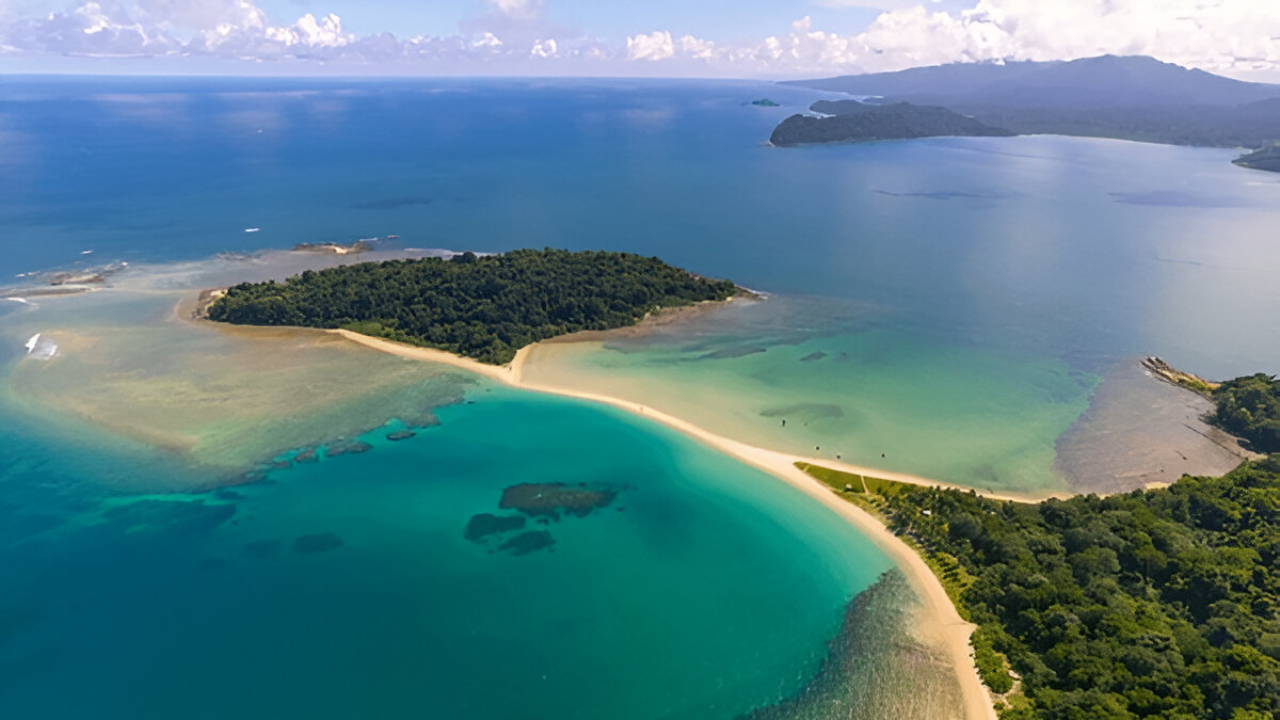
The Andaman and Nicobar Islands are not undiscovered. Port Blair is a functioning city. Havelock (now Swaraj Dweep) has a growing roster of resorts including the Jalakara and Taj Exotica. Neil Island fills up in peak season. For a sense of what the more developed Andaman luxury tier looks like, our report on the luxury resort coming up in Aves Island, Andaman and Nicobar Islands shows the direction of travel for the archipelago's accessible southern section.
But the outer Andamans — Baratang, Diglipur, Interview Island, the Smith and Ross islands north of Rangat, and the 550-island chain south toward Nicobar — are a different matter. Large sections remain restricted under the Andaman and Nicobar Islands (Protection of Aboriginal Tribes) Act and additional security designations. The Nicobar Islands are closed to civilian visitors entirely.
What is accessible, with the right permissions: Interview Island, a wildlife sanctuary off the western coast of Middle Andaman, with feral elephants and zero tourist infrastructure. Barren Island, India's only active volcano, visible by boat but not landable without research permits. The reefs around Smith and Ross Islands, accessible by chartered liveaboard from Port Blair.
A properly organised private liveaboard for a week in the outer Andamans — boat charter, dive equipment, provisions, guide, and permits — costs ₹8–15 lakh for a group of six to eight. This is not a packaged luxury experience. It is the absence of one. For a specific type of UHNW traveller — the one who has done the Maldives, done the Seychelles, done the overwater villa — that absence is the entire value proposition. For a benchmark of what the finest private island experience looks like when it has been fully developed, our feature on the ultimate luxury escape at Four Seasons Maldives Private Island at Voavah sets the standard that the outer Andamans' raw experience offers an intentional counterpoint to.
The protection status here is more durable than most. The tribal protection laws are constitutional in character and politically difficult to roll back. The outer Andamans may be the one coastline on this list where the window is measured in decades rather than years.
The True Cost of Access: A Comparative Breakdown
| Destination | Entry Point | Charter Flight (₹) | Accommodation/Week (₹) | Development Horizon |
|---|---|---|---|---|
| Príncipe Island | São Tomé via Libreville | ₹35–45 lakh (pvt jet) | ₹7–10 lakh | 3–5 years |
| Quirimbas, Mozambique | Pemba via Johannesburg | ₹18–25 lakh (pvt jet) | ₹6–8 lakh (all-in lodge) | 5–7 years |
| Musandam, Oman | Khasab via Dubai/Muscat | ₹3–6 lakh (commercial + transfer) | ₹10–20 lakh (Six Senses) | 2–4 years |
| Karaburun, Albania | Vlorë via Tirana | ₹4–8 lakh (pvt jet) | ₹2–4 lakh (villa charter) | 3–5 years |
| Lakshadweep, India | Agatti via Kochi | ₹75,000–1.5 lakh (commercial) | ₹2–5 lakh | 4–6 years |
| Outer Andamans | Port Blair | ₹1.5–3 lakh (liveaboard) | ₹8–15 lakh (private charter boat) | 10–15 years |
Figures are estimates based on current operator pricing and charter rates. Private jet costs assume a six-to-eight-seat light jet. Development horizon reflects the window before the destination's character changes materially.
The Principle Behind the Data
Every coastline on this list is in the same position: visible enough to be found by those who are looking, inaccessible enough to deter everyone else. That gap is closing everywhere. The forces accelerating it are not random — they are the same everywhere you look: improved private aviation connectivity, the formalisation of permit systems that were once genuine barriers, and capital in search of the next Aman.
The question UHNW travellers rarely ask but should is: what am I actually buying when I go early? The answer is not a better beach. The water at Musandam will be the same colour whether Club Med is there or not. What you buy is the experience of being somewhere before it has been shaped to receive you — before the arrival sequence is choreographed, before the menu has been focus-grouped, before the photography team has been. You buy the place, not the product.
There is also a property angle that most travel coverage ignores. Several of the destinations above — Quirimbas, Albania's coast, São Tomé — allow foreign nationals to acquire land or long-term leasehold interests at prices that will not exist in five years. Residential property prices in Sarandë surged by up to 58% year-over-year. That trajectory, compressed into one year, is what happens when a frontier coastline gets signal from capital markets. The same compression is coming to at least two of the destinations above. For Indian investors navigating the FEMA framework around such foreign acquisitions, our guide on how the new TCS rule affects luxury purchases over Rs 10 lakh in India is essential context before any cross-border investment decision.
The data does not say which two destinations will compress next. That is the risk. It is also the point. For those who want to understand the broader structural thesis on why frontier luxury destinations are attracting institutional capital right now, our landmark report on Bhutan unlocked — the BIG-designed airport, royal-backed city and 168 km trail redefining Himalayan luxury is the definitive case study in how a deliberately restricted destination manages the transition from frontier to premier without losing its soul.
FAQ
What makes a coastline truly "unspoiled" for luxury travel purposes?
The term is overused in travel marketing, but the operational definition for UHNW travellers is specific: a coastline where fewer than 5,000 luxury tourists visit annually, where no international hotel chain flag operates at scale, where access requires either unusual logistics knowledge or significant friction, and where the coastal environment has not been altered by infrastructure to serve tourism. By these criteria, Príncipe Island, the Quirimbas Archipelago, and the outer Andamans all qualify in 2025–2026.
How much does it actually cost to visit a genuinely remote luxury coastline?
The all-in cost — private aviation, accommodation, ground logistics, and guide — ranges from ₹10 lakh per week at the lower end (Lakshadweep, commercial flights, government resort) to ₹55–70 lakh per week at the higher end (Príncipe, private jet from Libreville, both lodges hired out). The figure that most operators quote does not include aviation, which is typically the largest single cost. For a full breakdown of how private aviation pricing works in India, our shadow price analysis of what luxury actually costs in India covers the private aviation tier in granular detail.
Which of these coastlines has the most durable protection against overdevelopment?
The outer Andamans of India have the most structurally durable protection, due to the Andaman and Nicobar Islands (Protection of Aboriginal Tribes) Act, which is constitutionally grounded and politically resistant to change. The Quirimbas National Park and São Tomé and Príncipe's UNESCO Biosphere Reserve designation provide meaningful but softer protection. Albania's Karaburun National Marine Park showed in 2024 that protective designations can be overridden by legislation when capital is sufficiently motivated.
Can Indian nationals legally acquire property on these coastlines?
Under FEMA regulations, Indian residents face significant restrictions on direct foreign real estate purchases. Acquiring property abroad typically requires RBI approval and must be funded through the Liberalised Remittance Scheme (LRS), which caps remittances at $250,000 per person per financial year — insufficient for meaningful coastal land acquisition in most of these markets without careful structuring. Non-residents and NRIs have more flexibility. Any acquisition in these jurisdictions requires jurisdiction-specific legal counsel; the regulatory complexity varies significantly between Albania, Mozambique, Oman, and São Tomé.
What is the best way to access the Quirimbas Archipelago as a private traveller?
The practical route is Johannesburg (O.R. Tambo) to Pemba on SA Airlink, then light aircraft charter to Vamizi, Medjumbe, or Quilalea — approximately 45–60 minutes. Alternatively, a private dhow can be chartered from Pemba for island-hopping, which requires a minimum of 4–5 days to cover the archipelago meaningfully. Advance booking through Expert Africa, Journeys by Design, or directly with the Vamizi Island Project is the most reliable access route; the islands do not accept walk-in guests by design.
How long do these coastlines realistically remain accessible in their current form?
Musandam has the shortest window — the Club Med design is unveiled and investment is committed. Príncipe's window depends entirely on who acquires HBD and what development philosophy they bring. The Quirimbas has 5–7 years of current character remaining if security in Cabo Delgado remains stable. Lakshadweep's window shortened materially with the May 2026 permit relaxation. Plan around 2026–2028 as the action window for most of these destinations.

Comments
No comments yet.
Add Your Comment
Thank you, for commenting !!
Your comment is under moderation...
Keep reading luxury post