Super-Clone Watches Are Becoming an Organised Technology Industry
 Namrata Parab
- 11th Sep 2026
- 1178
- 0
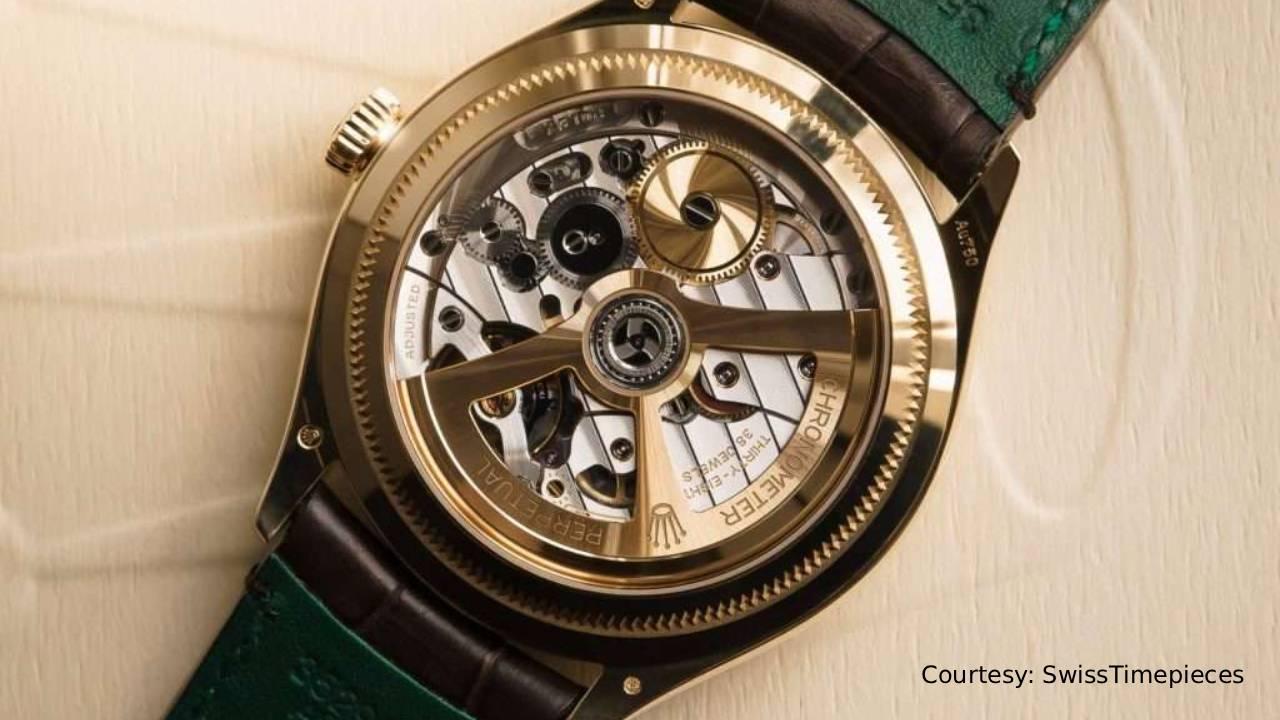
The replica watch no longer arrives alone. It now comes with factory rankings, reference databases, photographic inspections, automated alignment tools, collection tracking and a vocabulary sophisticated enough to resemble a parallel horological trade.
That development is more important than the familiar argument over whether a fake Rolex can fool someone across a restaurant table. The counterfeit-watch business is acquiring infrastructure.
A newly launched, community-built platform called RepSearch claims to bring replica catalogues, factory research, genuine-versus-replica comparisons, collection management and automated quality-control analysis into one interface. Its launch was immediately welcomed by some members of the replica-watch community, and questioned by others concerned about registration, privacy and whether centralising the information might attract enforcement attention.
LuxuryAbode is deliberately not linking to or testing the platform. The launch is self-promotional, its claims require independent verification, and replica manufacture and importation can infringe trademark, design and customs laws. Its importance is therefore not as a consumer recommendation. It is evidence of a structural change, one that stands in sharp contrast to the coordinated response described in this report on LVMH, Cartier and Prada joining forces against counterfeits.
The counterfeit watch is becoming a technology product.
And as its visible resemblance to the genuine article improves, the value of a real watch is moving away from the object's appearance and towards something harder to reproduce: an authenticated chain of custody.
From Canal Street Counterfeit to Distributed Supply Chain
The old fake-watch transaction was intentionally opaque. A buyer encountered a seller, inspected a dubious object and accepted that the watch might stop working before the holiday ended.
The super-clone market looks different.
A buyer may now encounter factory pseudonyms, model-specific production batches, dealer reputations, photographic quality-control procedures and community-maintained spreadsheets grading replicas according to their closeness to the genuine watch.
WIRED's 2026 investigation documented communities using terms including "GL" and "RL", green light and red light, to approve or reject individual watches after examining dealer photographs. Buyers scrutinised hour-marker alignment, dial printing, date wheels, bezel placement, solid end links and timing-machine readings. Some watches were classified as "NWBIG": "not worth buying in genuine", an internal claim that a replica is so visually accurate that the authentic version is unnecessary.
This is not proof that the watches are genuinely equivalent. It demonstrates that counterfeit consumers have developed their own technical language, comparative standards and informal quality-assurance institutions.
WIRED reported that the RepTime community was receiving more than 250,000 weekly visitors, while its dedicated quality-control ecosystem processed large numbers of inspection requests. One source estimated that three moderators handled 98 per cent of those requests. That concentration reveals both the strength and fragility of the model: enormous demand resting on a small pool of trusted human judgment. WIRED documented the community's QC system and terminology.
Automated quality-control software is the logical next step. It turns expertise into a repeatable product.
A piece of software can overlay alignment lines, compare proportions, flag a displaced index or organise photographs by reference. It may eventually compare incoming images against thousands of previously submitted examples. None of that makes a counterfeit watch legitimate. It does, however, reduce the information asymmetry traditionally associated with buying one.
The uncomfortable irony is that counterfeiters are borrowing the infrastructure of the legitimate collectible market: searchable archives, condition analysis, comparative imagery, ownership records and reputation scores.
What WIRED's $498 Rolex Test Actually Proved
WIRED bought three counterfeit Rolex watches for a total of $1,704: a $438 Submariner, a $768 Daytona and a $498 Oyster Perpetual "Celebration".
The publication then took the Celebration model into Rolex retail environments. Staff did not immediately identify it as counterfeit during the encounters.
That finding needs to be interpreted precisely.
It does not mean Rolex formally authenticated the watch. A retail interaction is not equivalent to disassembly, movement inspection or manufacturer certification. It does mean that the watch survived casual examination in the very environment where a consumer might reasonably expect superficial anomalies to become apparent.
Visually, that is a significant achievement for a watch costing approximately ₹42,000 before shipping and currency costs.
Internally and physically, the deception was less complete. Independent watch specialist Adrian Hailwood identified crudely finished bracelet screws, raw metal beneath the clasp, imperfect luminous material and an incorrectly centred bezel pip. The replica also contained the tiny laser-etched coronet on its sapphire crystal, an element once assumed to offer meaningful protection against copying.
Most revealingly, WIRED ordered the Celebration model in 36 mm and received a 41 mm watch. The community's detailed photographic QC process failed to catch that the product was the wrong size.
That error exposes the limits of the entire counterfeit quality system. It may be efficient at identifying familiar cosmetic deviations, but it remains a buyer-beware marketplace with no dependable contractual remedy. WIRED was offered a discount against a future purchase rather than a proper exchange.
The surface was persuasive. The underlying transaction was not.
For a wealthy collector, that distinction matters more than whether a stranger can recognise the watch at dinner.
The Super Clone Is Not the Most Dangerous Fake
A declared replica purchased for a few hundred dollars is an intellectual-property problem. A counterfeit represented as authentic becomes a wealth-preservation problem.
The greatest financial danger is not necessarily the complete super clone. It is the "Frankenwatch": a composite containing some authentic components and some counterfeit, modified, refinished or period-incorrect parts.
A genuine movement can sit inside a fabricated case. A real dial can be repainted. A bracelet can be replaced. A serial number can be copied from an existing watch. Papers can be forged or paired with a different object. A vintage watch can be composed from individually authentic parts that were never assembled together by the manufacturer.
WIRED's investigation described purported versions of the exceptionally rare rose-gold Patek Philippe reference 3448. Only one example is publicly known, yet specialist Adrian Hailwood said he had seen three watches presented as the supposed second example. He estimated that manufacturing a highly convincing composite with genuine Patek components could cost between £20,000 and £30,000.
That expenditure makes economic sense if the resulting object can be privately represented as a watch worth hundreds of thousands of pounds.
The counterfeit market therefore operates at several distinct levels:
| Category | Typical indicated cost | Main deception | Principal risk |
|---|---|---|---|
| Low-grade replica | Under ₹15,000 | Brand appearance | Poor construction; obvious infringement |
| Super clone | Roughly ₹40,000-₹70,000 | Close visual and functional imitation | May pass casual inspection |
| Composite or Frankenwatch | ₹1.5 lakh to ₹30 lakh+ to construct | Mix of genuine and false components | Can mislead experienced buyers |
| Counterfeit sold as authentic | Priced against the genuine reference | False identity and provenance | Major financial fraud |
| Misrepresented vintage watch | Potentially several crore | Incorrect dial, case, movement or history | Permanent impairment of collectible value |
These ranges are indicative, not market quotations. The upper end varies dramatically according to the value of the genuine components and the watch being imitated.
The problem is no longer "real versus fake" in a simple binary. The serious collector must ask four separate questions:
- Is every major component authentic?
- Is the configuration correct for this reference and production period?
- Did these components originally leave the manufacturer together?
- Can the watch's ownership, servicing and restoration history be substantiated?
A convincing dial answers none of them.
The True Cost of Buying Outside a Defensible Chain of Custody
The marketplace often treats authentication as a fixed fee. The real cost is the entire premium required to convert an attractive object into a defensible asset.
Consider a hypothetical pre-owned watch offered privately at ₹40 lakh when a comparable example from an established specialist costs ₹44 lakh, a gap worth weighing against the broader case for buying secondhand made in this piece on why pre-owned luxury items are popular in India.
The ₹4 lakh discount may appear rational. It can disappear quickly.
| Cost layer | Indicative amount | What the buyer is actually paying for |
|---|---|---|
| Private-sale asking price | ₹40 lakh | The physical watch |
| Independent inspection | ₹25,000-₹1 lakh | Movement, case, dial and serial examination |
| Manufacturer service or assessment | ₹75,000-₹3 lakh+ | Mechanical evaluation; terms vary by brand |
| Insurance valuation and documentation | ₹15,000-₹50,000 | Evidence required for cover |
| Travel, shipping and secure handling | ₹25,000-₹1 lakh+ | Safe transfer to a recognised expert |
| Missing accessories or provenance discount | ₹1 lakh-₹8 lakh+ | Market penalty for an incomplete history |
| Potential corrective work | ₹1 lakh-₹10 lakh+ | Replacing non-original or damaged components |
| Residual authenticity risk | Unquantifiable | The future buyer may reject the watch entirely |
Possible true acquisition cost: approximately ₹42.4 lakh to ₹63.5 lakh, before considering tax, customs exposure or a catastrophic authentication failure.
The most expensive scenario is not paying slightly too much for a genuine watch. It is paying the genuine price for an object that cannot later be sold as genuine.
For collectors, provenance is therefore not paperwork added to the watch. It is part of the watch's financial architecture.
Why Visual Authentication Is Losing Its Authority
Luxury-watch authentication has long relied on accumulated pattern recognition: typography, spacing, finishing, proportions, movement architecture, case geometry and the subtle tactile behaviour of crowns, pushers and bracelets.
That expertise remains essential. But the conditions under which it operates are changing.
First, counterfeit production has become iterative. A flaw identified publicly can be corrected in a subsequent manufacturing batch. Community forums effectively supply free product feedback.
Second, high-resolution photographs and online reference archives give producers access to details that were once visible only to specialists.
Third, CNC machining, laser marking and improved movement manufacturing make smaller production tolerances economically achievable, a technical sophistication far removed from the craftsmanship story behind buying a serious timepiece, such as the case made in this piece on why a luxury watch investment should come from Japan.
Fourth, the counterfeit ecosystem now segments production by model and component. The people fabricating a dial need not be the same people assembling the movement or bracelet.
Fifth, automated image comparison can accelerate the discovery of visible flaws. Even a relatively simple system can measure index alignment or bezel position more consistently than an untrained buyer.
This creates an arms race. Brands add micro-engraving, serialisation or hidden identifiers. Those identifiers are photographed, copied or transferred. Authentication moves deeper into the object. Counterfeiters follow.
The limiting factor is no longer whether a replica looks plausible. It is whether the object can be connected to a record the counterfeiter did not create and cannot retrospectively control.
The Emerging Provenance Premium
Rolex's answer is explicit. Under its Certified Pre-Owned programme, participating watches are returned to Rolex workshops, disassembled and checked down to their component configuration. They receive a distinct seal, a brand-issued guarantee card and a two-year international guarantee.
Rolex states that only the company can definitively confirm the authenticity of a Rolex watch. Whether collectors accept that exclusivity in every vintage context is another debate, but the commercial signal is unmistakable: brand-backed authentication is becoming a product in its own right. Rolex details its certification and two-year guarantee here.
The premium charged by a manufacturer-certified or highly reputable pre-owned channel is frequently described as a retail markup. Increasingly, it should be understood as the cost of transferring authenticity risk away from the buyer.
That premium pays for more than technical inspection:
- a legally identifiable seller;
- a documented invoice;
- recourse if the description proves false;
- an inspectable service record;
- recognised expertise;
- custody and logistics;
- the ability to resell the watch with a credible history.
For an ₹80 lakh watch, an 8 per cent provenance premium equals ₹6.4 lakh. That can look excessive when two watches appear identical in photographs. It looks modest if the alternative carries even a small probability of a total authentication failure.
Collectors often negotiate aggressively over a few percentage points while accepting undocumented provenance risk capable of destroying most of the asset's resale value. That is poor risk allocation.
Digital Passports Will Help, But They Will Not Make Fraud Disappear
The industry's next response is likely to involve digital product passports, secure identifiers and persistent ownership histories.
The European Commission launched the EU Digital Product Passport Registry and its testing environment in July 2026. The infrastructure is intended to register unique product identifiers and associated metadata while underlying product data remains decentralised. The first implementation deadline applies to certain large batteries rather than luxury watches, so it should not be misreported as an immediate watch-industry authentication mandate. Nevertheless, the architecture points towards a future in which valuable products carry machine-readable lifecycle records. The European Commission explains the registry and rollout.
A useful watch passport could record:
- manufacturing identity and initial configuration;
- authorised sale and warranty activation;
- ownership transfers;
- service and component-replacement history;
- reported loss or theft;
- insurance events;
- auction or dealer inspections;
- consent-controlled access for future purchasers.
The danger is confusing a database entry with the physical object.
A genuine passport can be detached conceptually, or sometimes physically, from the watch it was created to protect. QR codes can be copied. NFC tags can be transplanted. Accounts can be compromised. Owners may fail to record private transfers. A corrupt participant can introduce false data at the beginning of the chain.
Blockchain does not solve the "oracle problem": someone must still confirm that the physical watch being entered into the system is authentic.
The strongest system will therefore combine three layers:
- A tamper-resistant physical identifier
- A manufacturer or qualified-expert inspection
- A persistent, auditable record of custody and intervention
Technology can make provenance harder to alter. It cannot eliminate the need for accountable human judgment.
India's Exposure Is Not Merely Theoretical
India's rapidly expanding luxury market creates fertile conditions for both legitimate secondary sales and fraudulent private transactions.
The attraction is straightforward. An affluent buyer may encounter a desirable watch through WhatsApp, Instagram, a social acquaintance or an informal dealer. The seller may offer immediate availability and a discount against authorised or established secondary-market pricing. Payment and delivery can occur with little formal due diligence, in contrast to the more structured approach outlined in this guide to the top sites to buy pre-owned luxury items.
That is precisely where appearance becomes dangerous.
A watch that "looks right" in a South Mumbai office, a Delhi farmhouse or a Dubai hotel suite may still contain an incorrect movement, replaced dial, copied serial number or invented service history. Social proximity to the seller is not provenance.
Importation adds another layer. Indian Customs states that it follows a zero-tolerance policy towards IPR violations and subjects suspect consignments to controls. India's Intellectual Property Rights (Imported Goods) Enforcement Rules allow Customs to suspend suspect imports and involve registered rights holders in determining infringement. The official Indian Customs IPR portal outlines that enforcement position.
An older CBIC implementation circular noted an exception for non-commercial goods in personal baggage or small consignments intended for personal use. That language should not be treated as universal permission to import counterfeit watches: classification, later amendments, facts and enforcement practice matter. Anyone facing a real transaction should obtain jurisdiction-specific legal advice rather than rely on online anecdotes.
The broader lesson is simpler. A buyer should not assume that paying for a counterfeit with cryptocurrency, shipping it as a low-value item or ordering it for "personal use" removes customs or intellectual-property risk.
LuxuryAbode will not provide methods for avoiding those controls.
Enforcement Is Facing a Data Problem
In August 2026, US Customs and Border Protection announced that officers in Louisville had intercepted a shipment containing 152 watches bearing suspected Rolex and Louis Vuitton marks, alongside counterfeit-branded footwear. CBP assessed the shipment's manufacturer's suggested retail price, had the goods been genuine, at approximately $9 million.
That headline figure should be read carefully. Customs agencies frequently value counterfeits using the retail price of equivalent genuine goods. It does not mean the seized replicas could have sold for $9 million in the counterfeit market.
Still, the interception shows the enormous value gap on which the trade operates. A watch with a production cost in the hundreds of dollars can imitate an identity retailing for tens of thousands.
The OECD estimated that counterfeit watches infringing Swiss brands were worth $1.88 billion in global trade in 2021 and accounted for more than 40 per cent of the estimated trade in counterfeit Swiss products. The OECD's 2025 report examines the scale of counterfeiting affecting Switzerland.
But seizures measure only what enforcement agencies detect. Small parcels, inaccurate declarations, intermediary destinations and fragmented logistics make the total market difficult to quantify.
The new generation of searchable replica infrastructure may create an unusual trade-off for its operators. Centralisation improves convenience for users, but it can also create a map of factories, models, images, terminology and participant behaviour. The same database that reduces uncertainty for buyers can improve intelligence for brands and enforcement agencies.
Organisation creates visibility.
The Counterfeit Industry Is Building Its Own Trust Layer
The most revealing feature of the emerging replica ecosystem is not improved machining. It is the attempt to manufacture trust.
Counterfeit sellers cannot rely on conventional legal warranties, transparent corporate ownership or normal dispute resolution. Communities compensate by creating substitutes:
| Legitimate-market institution | Replica-market substitute |
|---|---|
| Authorised retailer | "Trusted dealer" designation |
| Manufacturer QC | Community photographic QC |
| Reference archive | Community factory and model database |
| Product reviews | Batch and factory rankings |
| Warranty | Seller replacement assurances |
| Authentication certificate | Crowdsourced approval |
| Collection-management platform | Replica collection tracker |
| Professional inspection | Automated image-analysis tool |
The substitutions are not equivalent. A community's approval is not a legally enforceable guarantee, and an anonymous dealer's promise is not manufacturer recourse.
Yet their emergence matters. It shows that counterfeit consumers want the same things demanded by legitimate collectors: predictability, knowledge, documentation and confidence.
Counterfeiters can copy a watch. Their ecosystem is now trying to copy the institutions surrounding ownership.
What Serious Collectors Should Change Now
The correct response is not paranoia. It is a more rigorous definition of ownership.
For modern watches, buyers should preserve the original invoice, warranty documentation, serial-linked records, service history and evidence of every transfer. High-value purchases should be routed through counterparties capable of standing behind their descriptions.
For vintage watches, papers alone are insufficient. Period-correct configuration, dial condition, case geometry, movement numbers, component history and restoration disclosures can matter more than a modern certificate.
Collectors should also distinguish between authentication and valuation. A watch can be authentic but heavily restored, incorrectly configured or economically undesirable. Conversely, a replacement component may be genuine and properly documented yet materially affect collector value.
The safest principle is to buy the seller, the evidence and the object, in that order.
If a seller resists an independent inspection, will not provide a proper invoice or relies entirely on photographs and social reputation, the discount is not free. It is compensation for risk being transferred to the buyer.
The Watch Is Becoming the Least Defensible Part of the Watch
Super clones expose a truth luxury brands have spent decades avoiding: visual scarcity is fragile.
Steel can be machined. Ceramic can be coloured. Logos can be engraved. Dial furniture can be aligned. A movement can be imitated closely enough to deceive anyone who never opens the case.
What cannot be reproduced as easily is an uninterrupted relationship between an object, its maker, its custodians and its history.
This does not make design or mechanical craft irrelevant. It changes how those qualities are defended.
In the next phase of the luxury-watch market, the valuable object will not be merely a Rolex, Patek Philippe, Audemars Piguet or Cartier that looks correct. It will be one whose identity can survive scrutiny at every transfer.
The super clone is therefore not only a threat to watch brands. It is forcing the legitimate market to improve.
It is pushing manufacturers towards persistent records, dealers towards greater accountability, auction houses towards stronger disclosure and collectors towards a less romantic understanding of provenance.
The replica industry has industrialised resemblance.
The genuine industry must now industrialise trust.
Frequently Asked Questions
What is a super-clone watch?
A super clone is a high-grade counterfeit designed to imitate the appearance, and sometimes the movement architecture and operation, of a specific luxury watch. Prices commonly reported for current super clones are about $500 to $700, although more sophisticated composite counterfeits can cost substantially more to produce.
Can a super-clone Rolex fool an authorised dealer?
A super clone may survive casual visual inspection. In WIRED's 2026 investigation, retail staff did not immediately identify a $498 counterfeit Oyster Perpetual during store encounters. That was not a formal Rolex authentication. Definitive assessment may require disassembly, component inspection and verification against manufacturer records.
How can buyers authenticate a pre-owned luxury watch?
Buyers should combine physical inspection by a qualified specialist with serial and configuration checks, service records, ownership documents and a legally accountable seller. Photographs, boxes and papers are not conclusive because packaging and documentation can also be counterfeited.
Is a watch authentic if it contains a genuine movement?
Not necessarily. A watch may contain a genuine movement inside a counterfeit case, or combine authentic components that did not originally belong together. Authentication must cover the complete configuration, not one component.
Are digital watch passports enough to prevent counterfeiting?
No. A digital passport improves traceability only if the physical identifier is secure and the watch was accurately authenticated when the record was created. Digital records reduce tampering but do not eliminate incorrect data, transplanted identifiers or compromised accounts.
Is it legal to import a replica watch into India?
Counterfeit imports can infringe trademarks, designs and Indian customs rules. Treatment may depend on the shipment, purpose and applicable exceptions, but buyers should not assume that personal use makes importation lawful. Specialist legal advice is advisable for any actual transaction.


Comments
No comments yet.
Add Your Comment
Thank you, for commenting !!
Your comment is under moderation...
Keep reading luxury post