TAG Heuer Reportedly Ends Its Smartwatch Experiment After a Decade
 Namrata Parab
- 29th Aug 2026
- 1286
- 0
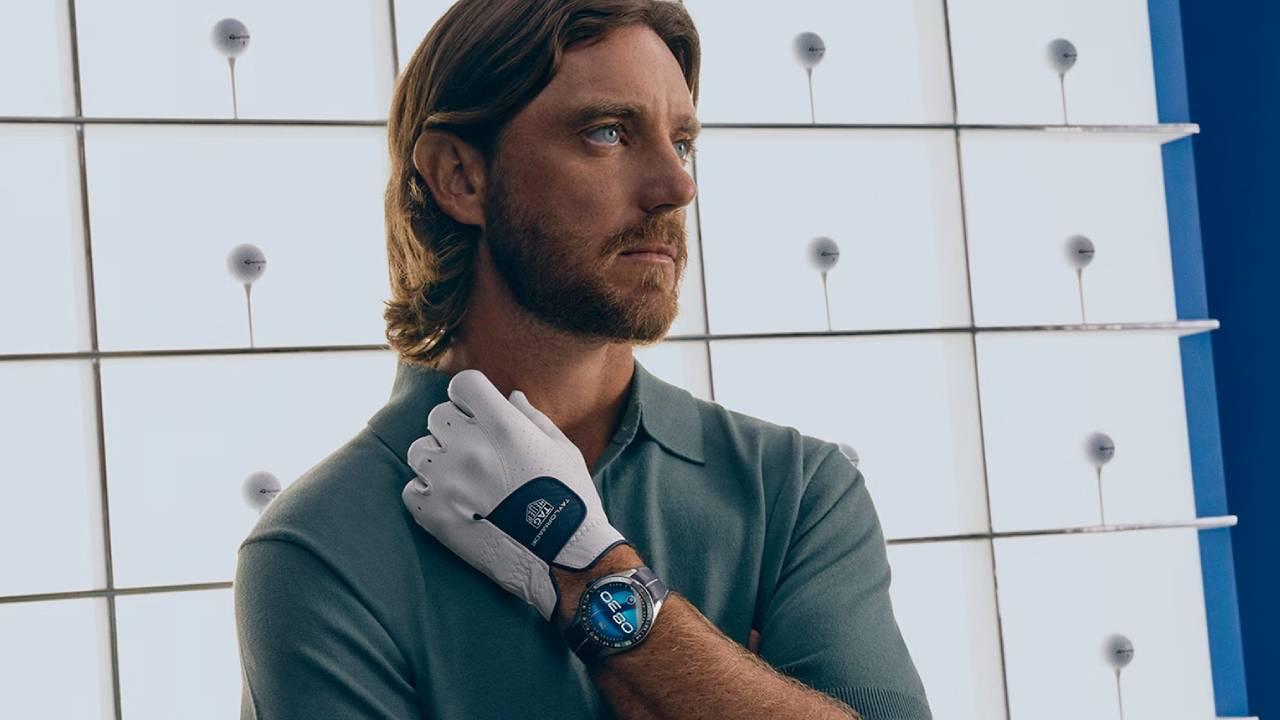
The LVMH owned watchmaker has reportedly halted production of its Connected smartwatch line, drawing a line under one of Swiss watchmaking's most ambitious attempts to compete with Silicon Valley. Remaining inventory is expected to be sold through the end of 2027.
TAG Heuer appears to be calling time on its Connected smartwatch business, more than a decade after becoming one of the first major Swiss luxury watchmakers to seriously challenge Apple, Samsung and other technology companies on their own territory.
According to French investigative publication La Lettre, production of TAG Heuer's connected watches has now been stopped, with sales of existing inventory expected to continue until the end of 2027. The publication describes the decision as a significant retreat from a project closely associated with Frederic Arnault.
There is, however, an important qualification. TAG Heuer and parent company LVMH have not publicly announced the closure of the Connected programme. TAG Heuer's own website continues to display and market the latest Connected Calibre E5 at the time of writing. The development should therefore presently be described as reported, rather than formally confirmed by the maison, a distinction consistent with the wider caution LVMH has recently applied to leadership and operational disclosures across its beauty and horology divisions.
Ten Years of Trying to Reinvent the Swiss Watch
TAG Heuer entered the smartwatch market in November 2015, unveiling the original TAG Heuer Connected in collaboration with Intel and Google. It was an unusually aggressive move for a Swiss luxury watchmaker at a moment when the Apple Watch was beginning to redefine what consumers expected from something worn on the wrist.
The idea was compelling: combine Swiss watchmaking design, premium materials and luxury brand equity with the functionality of an evolving digital platform. Successive generations followed, including the Connected Modular watches and later the Calibre E series, such as the Porsche inspired Calibre E4 edition launched in earlier years, with TAG Heuer increasingly building proprietary sports, wellness and golf functionality around the product.
But the economics of a luxury smartwatch were always fundamentally different from those of a mechanical Carrera or Monaco, houses whose enduring appeal is evident in releases such as a red dial Carrera edition that rekindles a genuinely timeless design and a Gulf liveried Monaco edition prized for its motorsport heritage.
A traditional luxury watch can remain serviceable, and desirable, for generations. A smartwatch is inevitably tied to batteries, processors, operating system support, apps and changing smartphone ecosystems. That makes technological obsolescence a particularly uncomfortable companion to luxury's promise of permanence, a tension explored at length in an earlier look at how Swiss watches are still ticking in a digital world.
The E5 Makes the Timing Particularly Striking
The reported withdrawal comes less than a year after TAG Heuer introduced what was arguably its most ambitious Connected watch yet.
The Connected Calibre E5 was launched in October 2025, not 2026 as some reports have stated, and represented a major strategic change. TAG Heuer abandoned Google's Wear OS in favour of its own TAG Heuer OS, while securing Apple's Made for iPhone certification. The watch was offered in 40mm and 45mm sizes and incorporated sports, wellness, GPS and health tracking functions.
TAG Heuer had gone so far as to develop its proprietary digital experience in house. Contemporary reports said approximately 60 engineers were involved in developing the new platform. That makes the reported decision to stop production particularly revealing. This was not an ageing product quietly reaching the end of its life cycle. TAG Heuer had only recently invested in creating a more independent technology platform, one it had shown off as recently as its own masterclass presentation at LVMH Watch Week 2025, an event that was itself described as a dazzling symphony of heritage, innovation and horological artistry.
La Lettre based reporting subsequently estimated that more than 150 million euros had been invested over eight years in the Connected operation, although TAG Heuer has not publicly confirmed that figure. This figure should be treated as a media estimate rather than an audited disclosure.
| Dimension | Mechanical Watch | Smartwatch |
|---|---|---|
| Value Trajectory | Can hold or appreciate in value over decades | Depreciates as hardware and software age |
| Technological Dependency | None, driven purely by mechanical movement | Tied to batteries, chips and operating system support |
| Servicing Life | Serviceable indefinitely by skilled watchmakers | Effectively unserviceable once platform support ends |
| Emotional Utility | Deepens through inheritance and provenance | Resets with each new hardware generation |
This permanence versus obsolescence lens helps explain why a mechanical watch can gain meaning with age while a smartwatch is built on a countdown clock of its own.
Luxury Watchmaking's Difficult Technology Equation
TAG Heuer's experiment highlights a broader question for the luxury industry. Can a heritage manufacturer realistically compete against technology companies whose operating systems, semiconductor capabilities, developer ecosystems and consumer electronics volumes operate on an entirely different scale, companies that include a corporation with the scale of the first American company to reach a 1.5 trillion dollar milestone?
Apple does not merely manufacture a watch. It controls the iPhone, operating system, App Store, payments ecosystem, health platform and an enormous developer network surrounding it. The Swiss watch industry competes from the opposite direction: craftsmanship, provenance, emotional value, mechanical ingenuity and longevity, even as the broader question of how smart innovations disrupt the wider luxury industry continues to shape strategy across categories well beyond watches.
TAG Heuer was not alone in testing this territory. Rival attempts at blending computing power with luxury casing, such as a full carbon fibre smartwatch built entirely through CNC machining and accessory ranges like luxury cases designed specifically for the Apple Watch Series 7, illustrate how widely the luxury sector experimented with wearable technology over the past decade, with mixed commercial outcomes.
A Return to What Luxury Watches Do Best
If the Connected programme is indeed being wound down, the decision should not necessarily be interpreted as TAG Heuer retreating from innovation. It may instead represent a clearer definition of where technological innovation creates the greatest value for a luxury watchmaker.
TAG Heuer's mechanical universe already contains some of the industry's strongest names, particularly Carrera, Monaco and Formula 1, a heritage line reinforced by releases such as a colourful new Formula 1 chronograph introduced in recent years. The maison can continue experimenting with new materials, movements, chronograph technology, design and manufacturing without competing directly against consumer electronics companies.
And therein lies perhaps the most important lesson from the Connected experiment. A smartwatch becomes outdated when technology moves forward. A great mechanical watch often becomes more desirable because time has moved forward. For luxury watchmaking, that distinction may ultimately matter more than almost any specification on a screen, a point echoed by broader industry commentary on whether the Swiss watch industry is facing its most difficult period yet.
What This Means for Indian Watch Collectors
For Indian collectors, the reported wind down of TAG Heuer's Connected line is unlikely to change much, since Swiss mechanical watches, rather than connected models, remain the primary draw in the domestic market. What could matter more over time is the ongoing phase down of India's import duty on Swiss watches under the India EFTA trade agreement, which is gradually easing what has historically been a steep duty structure over a multi year schedule. Buyers importing high value pieces from Switzerland or paying through international channels should also keep in mind that outward remittance rules under the Liberalised Remittance Scheme and associated tax collected at source provisions can apply, so it remains sensible to check current thresholds before a purchase. Watch collecting is also increasingly framed as a long term holding rather than a purely aesthetic purchase, a theme covered in a separate look at why the next watch investment might come from Japan.
Duty, tax and remittance figures mentioned above are directional and subject to change with future budget announcements and trade agreement schedules. Readers should confirm current rates with a qualified customs or tax advisor before making a purchase decision.
Frequently Asked Questions
Has TAG Heuer officially confirmed it is ending its Connected smartwatch line?
No. The development has been reported by French publication La Lettre and other outlets, but TAG Heuer and LVMH have not issued a public confirmation, and the Connected Calibre E5 remains listed on TAG Heuer's own website.
When did TAG Heuer first launch a smartwatch?
TAG Heuer unveiled its first Connected smartwatch in November 2015, developed in collaboration with Intel and Google.
What was different about the Connected Calibre E5?
Launched in October 2025, the Calibre E5 moved away from Google's Wear OS to TAG Heuer's own proprietary operating system while also securing Apple's Made for iPhone certification.
How much did TAG Heuer reportedly invest in its Connected programme?
La Lettre based reporting estimated more than 150 million euros invested over eight years, though TAG Heuer has not publicly confirmed this figure.
Will existing TAG Heuer Connected smartwatches still be available to buy?
Reports indicate that remaining inventory of Connected smartwatches is expected to be sold through the end of 2027, even as new production is understood to have stopped.
This article is based on reported information from La Lettre and other industry publications. The closure of TAG Heuer's Connected programme has not been officially confirmed by TAG Heuer or LVMH at the time of publication and may be updated as further details emerge.
Comments
No comments yet.
Add Your Comment
Thank you, for commenting !!
Your comment is under moderation...
Keep reading luxury post