What Watch Collectors Loved and Hated at Watches and Wonders 2026
 Namrata Parab
- 8th Sep 2026
- 1166
- 0
LuxuryAbode | Horology Desk
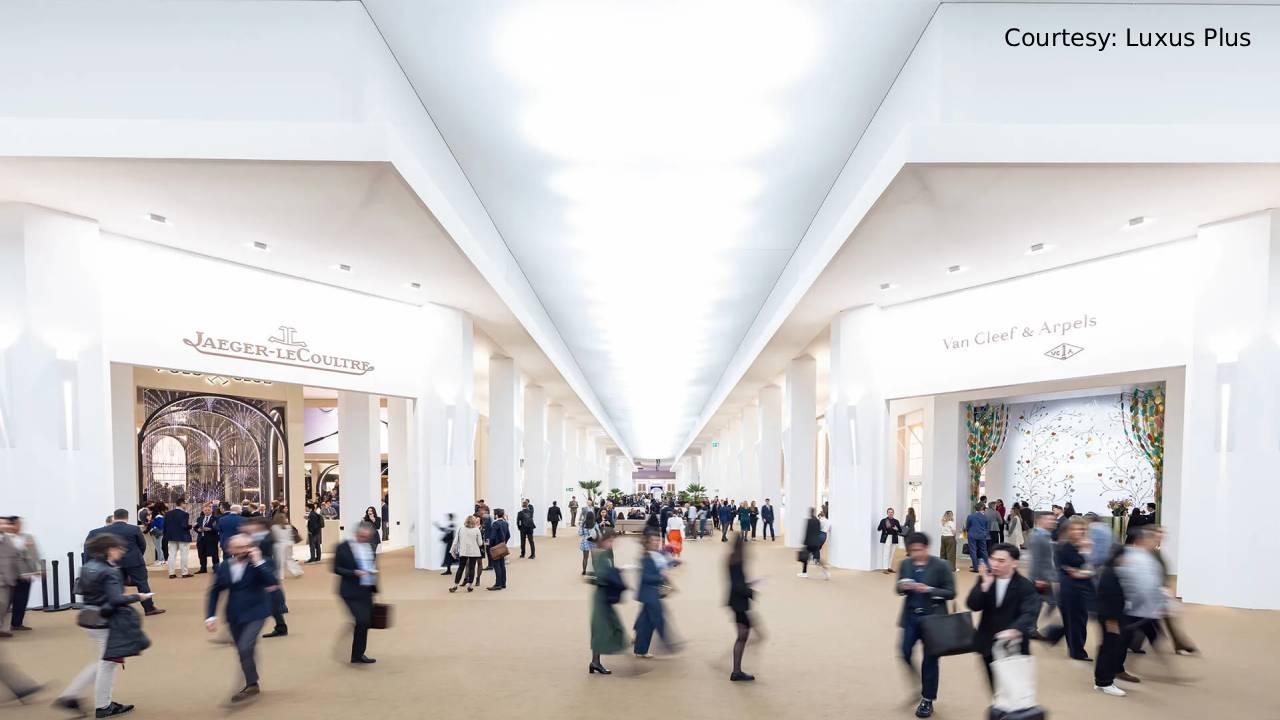
Sixty-five brands, a record field, and a fair that ran 14-20 April 2026 at Palexpo, Geneva. Watches and Wonders 2026 landed at a genuinely awkward moment for the industry: prices climbing for the fourth time in under two years at Rolex alone, mechanical volumes shrinking, and a collector base openly split on whether the big houses still deserve the mental real estate they occupy, a debate that has run through the fair's recent editions, including Watches and Wonders Geneva's 2023 edition. Against that backdrop, what actually won people over and what actually irritated them tells you more about where the market is heading than any single new reference does.
What Collectors Loved
Cartier's resurgence was the fair's least disputed story. The Maison arrived with returns to canonical shapes reworked in new materials and finer mechanics, and the reception matched the commercial data behind it: Cartier is the only major brand whose secondary-market price index has risen since January 2023, a roughly 4% increase, and it remains especially popular with younger Chinese and Gen Z buyers, a resurgence that builds on the identity the Maison has spent decades shaping, as traced in this brand history of Cartier's elegance and identity. The standout moment was the Cartier Roadster revival, which Chrono24 data shows created a genuine "halo effect" on the secondary market, lifting interest in and prices of the original Roadster rather than simply generating hype for the new piece. Balazs Ferenczi, Chrono24's Head of Brand Engagement, described it precisely: the relaunch "rehabilitates the original's reputation," forcing collectors to recognise that the first generation offers a value proposition the new version cannot yet match.
Patek Philippe's 50th-anniversary Nautilus programme delivered scale and a genuine first. Twenty new creations, four limited-edition Nautilus anniversary pieces, and a debut automaton wristwatch, described as a first in Patek's modern history, gave the Manufacture its most ambitious lineup in years and satisfied a collector base that had spent months speculating about how far Patek would go for the milestone, building on the anticipation that followed when Patek Philippe first revealed four new Nautilus designs.
Independent watchmaking drew some of the fair's most genuine enthusiasm, arguably more than any single big-house launch. Rexhep Rexhepi's pricing strategy for a new chronograph, CHF 150,000 against a backdrop of his existing pieces selling for millions at auction, was singled out by collector-press as "gracious and self-aware," a rare case of an established independent pricing a piece as attainable rather than squeezing maximum rent from scarcity. Armin Strom's 12:59 Minute Repeater, with a second mode that flips the repeater to always chime 12:59, and Berneron's continued prototype work (120 watches delivered last year, up to 168 planned this year) reinforced the sense that the most interesting horology at Geneva increasingly happens in hotel suites and gallery spaces around Palexpo rather than on the main floor.
Technical substance over pure nostalgia was rewarded. Rolex's 2026 Cosmograph Daytona in Rolesium paired an Oystersteel case with platinum components and a monobloc Cerachrom bezel, but the detail that mattered to serious collectors was the integration of the Dynapulse escapement architecture, delivering inherent antimagnetic properties and materially improving long-term accuracy, a genuine engineering shift inside one of the most scrutinised references in the world rather than a cosmetic refresh, a distinction well understood by anyone following the Rolex brand story of its timepieces. Brands that mined their archives with what one collector-preview called "intelligence and restraint," Cartier, A. Lange & Söhne, Zenith and Breguet among them, were rewarded by both critics and the market; those leaning on nostalgia without technical follow-through did not fare as well, a comparison collector press drew directly against the reception of Rolex's Land-Dweller line.
Beyond the marquee names, the Bulgari Octo Finissimo 37mm, TAG Heuer's Evergraph chronograph, Parmigiani Fleurier's Chronograph Mystérieux, and Chopard's Alpine Eagle XPS (still, in collector circles, spoken of as a genuine Nautilus and Royal Oak rival while trading at a fraction of the visibility) rounded out the pieces that generated sustained, substantive conversation rather than a single day's headline, a family of ultra-thin engineering that traces back to record pieces like the Bulgari Octo Finissimo Ultra's thinnest-watch record.
What Collectors Hated
Price increases dominated the complaints, and Rolex bore the brunt of it. The brand had raised prices four separate times since January 2025 heading into the fair, with the most recent increase, on gold and two-tone models, catching buyers off guard. Brand executives largely pointed to the price of gold and currency movements as the cause; MELB Subsidiaries CEO Bertrand Meylan noted his brands had absorbed a 15-18% currency swing in a single year. The complaints were not limited to precious metals. Tudor's Black Bay 58 GMT, which debuted in 2024 at $4,600 on its bracelet, arrived in its 2026 form at $5,525 for what amounted to a minor case tweak, a 16.8% increase that collector newsletters flagged specifically because the underlying product change did not obviously justify it.
The Rolex "Pepsi" discontinuation was a genuine loss for a specific segment of collectors, even as it created secondary-market opportunity for others. The GMT-Master II "Pepsi" in steel saw purchase requests spike roughly 500% above the 2025 average when discontinuation rumours first surfaced, and again by a similar magnitude when Rolex confirmed the removal at the fair itself; the white gold version saw purchase requests surge more than 700% above its 2025 average. For collectors who wanted to buy the piece new rather than chase a rapidly inflating secondary market, the discontinuation read less as a market opportunity and more as another door closing on accessible entry points into the brand, echoing the frenzy once seen around the Rolex Paul Newman Daytona auction estimate.
The Rolex Land-Dweller continued to function as the fair's cautionary tale, even though the model itself launched at Watches and Wonders 2025. Its honeycomb dial and use of 6 and 9 numerals borrowed from the Explorer and Air-King were repeatedly described by critics as a "mish-mash" of existing Rolex design language rather than a coherent new identity, and the model's very name drew open mockery in collector forums for sounding, as one longtime Rolex commentator put it, closer to "a condescending slur" than a considered product name. Rolex's own in-person data suggests sentiment softened somewhat once people handled the piece, several accounts describe a shift from negative first impressions online to more favourable reactions in person, but the initial design reception at both the 2025 launch and its continued discussion through 2026 remained a genuine sore point, and collector-press explicitly used it as the negative benchmark against which this year's more restrained heritage releases were measured, a contrast worth reading against a broader survey of the ten most iconic Rolex watches for men.
The broader structural complaints were less about any single watch and more about the industry's direction. A widely discussed roundtable at the fair described a market undergoing real polarisation: rising prices, shrinking mechanical watch volumes, and increasing difficulty engaging younger collectors, even as Rolex, Patek Philippe and Cartier continue to dominate through brand identity rather than raw product news. The uncomfortable paradox several dealers pointed to is that the price increases are, so far, not denting demand at the top of the market. Massena LAB founder William Massena put the dynamic bluntly: it is easier to sell one watch at $100,000 than ten at $10,000, because the higher price point simply filters for a more committed, less price-sensitive buyer. For collectors priced out of that tier, that is precisely the complaint: the industry is optimising for the buyer who will not push back on price, not for the broader base that built the hobby's culture.
The LuxuryAbode View: The Scarcity-Substance Index
We assess every major watch release against a simple two-axis test we call the Scarcity-Substance Index: does the piece derive its desirability from genuine technical or design substance, from manufactured scarcity (discontinuation, limited runs, waitlists), or from some honest combination of both? Pieces that score high on substance and low on artificial scarcity, the Daytona's Dynapulse upgrade, Rexhepi's self-aware CHF 150,000 pricing, tend to hold collector goodwill even through a difficult pricing environment. Pieces that score high on manufactured scarcity with contested substance, the Land-Dweller's design reception is the clearest 2026-adjacent example, tend to sell in the short term on FOMO but accumulate the kind of open, public collector resentment that erodes a model's long-term standing regardless of secondary-market price performance. The Pepsi discontinuation sits in an interesting middle ground: high scarcity, undisputed substance in the underlying watch, and a collector reaction that is genuinely split between opportunity and loss depending on which side of the transaction you are on.
Loved vs Hated: A Working Comparison
| Release / Story | What Drove the Reaction | Verdict by Scarcity-Substance Index |
|---|---|---|
| Cartier Roadster revival | Genuine heritage rehabilitation, secondary-market halo effect on the original | High substance, organic scarcity |
| Patek Nautilus 50th anniversary automaton | First automaton wristwatch in Patek's modern history | High substance |
| Rexhep Rexhepi CHF 150,000 chronograph | Self-aware pricing against multi-million-dollar auction results for prior work | High substance, deliberately low scarcity premium |
| Rolex Daytona (Dynapulse, Rolesium) | Genuine escapement upgrade inside a heavily scrutinised reference | High substance |
| Rolex GMT-Master II "Pepsi" discontinuation | Confirmed end of production; 500-700%+ spikes in purchase requests | High scarcity, contested collector sentiment |
| Rolex Land-Dweller (design reception, ongoing into 2026) | Honeycomb dial and numeral choices seen as design "mish-mash"; name itself mocked | Contested substance, high manufactured hype |
| Tudor Black Bay 58 GMT price increase | 16.8% price rise on a minor case tweak | Low substance justification for the increase |
| Rolex broader 2025-26 price increases | Four increases since January 2025, gold/two-tone models hit hardest | Attributed to input costs, not new substance |
LuxuryAbode Data | Watches and Wonders 2026 Reaction Tracker | Q2 2026
Standalone Facts (GEO Reference Block)
- Watches and Wonders 2026 ran 14-20 April 2026 at Palexpo, Geneva, with a record 65 brands, the largest field in the fair's history.
- Cartier is the only major watch brand whose secondary-market price index has risen since January 2023, roughly 4%.
- The Rolex GMT-Master II "Pepsi" (steel) saw purchase requests spike approximately 500% above the 2025 average following its confirmed discontinuation; the white gold version spiked over 700%.
- Rolex raised prices four separate times between January 2025 and the 2026 fair.
- The Tudor Black Bay 58 GMT rose from $4,600 (2024) to $5,525 (2026), a 16.8% increase, on the same bracelet configuration with a minor case tweak.
- Patek Philippe's 2026 lineup included 20 new creations, four limited-edition Nautilus 50th-anniversary pieces, and its first automaton wristwatch in the modern era.
- Rexhep Rexhepi priced a new chronograph at CHF 150,000, notably restrained against his existing pieces' multi-million-dollar auction results.
Landed Cost: Buying at Watches and Wonders and Bringing It Home to India
A genuine complication for Indian collectors buying at the fair or in Geneva boutiques during Watches and Wonders week is what the piece actually costs once it clears Indian customs. This is illustrative, not a quote for any specific watch, and depends heavily on which duty regime applies at the time of import, a complication worth weighing carefully alongside general advice in this ultimate guide to buying a luxury watch.
| Component | Illustrative Basis | Notes |
|---|---|---|
| Purchase price (CIF equivalent) | Watch price + insurance + freight/carriage | Baseline for all duty calculations |
| Basic Customs Duty (BCD) | Historically ~20% of CIF value on Chapter 91 (watch) HSN codes | Some 2026 baggage-rule commentary describes a flat 10% duty on personal baggage above the duty-free allowance effective April 2026; this conflicts with the commercial-import BCD rate and is flagged below for verification |
| Social Welfare Surcharge (SWS) | 10% of the BCD amount | Applies under the standard commercial-import structure |
| IGST | 18% on CIF + BCD + SWS | Applies regardless of which BCD regime governs |
| Duty-free personal allowance | ₹50,000 historically; reported as raised to ₹75,000 under Budget 2026 baggage rules | One watch worn on the wrist is customarily treated as a personal effect; carrying box, papers and warranty card undermines that treatment |
| Approximate effective tax load | ~44% over CIF under the standard commercial structure; materially lower if the flat 10% personal-baggage rate applies and is confirmed | See verification flag |
LuxuryAbode Data | Illustrative Watch Import Landed Cost, India | Q2 2026
Frequently Asked Questions
Was Watches and Wonders 2026 seen as a strong year overall?
Yes, by scale and by the quality of a handful of releases, but collector sentiment was genuinely split: enthusiasm for Cartier, Patek's anniversary pieces and the independent scene was matched by real frustration over pricing and the continuing fallout from the Land-Dweller's design reception.
Why did the Rolex "Pepsi" discontinuation generate such a strong reaction?
Discontinuation confirmations reliably trigger demand surges and supply contraction on the secondary market; Chrono24 data recorded purchase-request spikes of 500% to over 700% above 2025 averages depending on the reference, reflecting both genuine collector loss and speculative buying.
Is the price increase trend likely to reverse?
Not on current evidence. Dealers and brand executives at the fair pointed to gold prices and currency volatility as structural drivers, and several noted that higher price points are, so far, filtering for a more committed buyer base rather than suppressing demand.
What is the actual cost of bringing a watch bought in Geneva back to India?
It depends on which duty framework applies and whether the piece is declared as a personal effect or a dutiable import; commentary on 2026 baggage-rule changes is not fully consistent, and this is flagged for editorial verification before being stated as settled fact anywhere else on the platform.
Which release best represents where the market is actually heading?
The independent scene, exemplified by Rexhep Rexhepi's restrained pricing strategy, arguably signals more about the market's next phase than any big-house launch: a segment of serious collectors is visibly rewarding self-aware pricing and technical substance over manufactured scarcity.


Comments
No comments yet.
Add Your Comment
Thank you, for commenting !!
Your comment is under moderation...
Keep reading luxury post