Sabyasachi x The Met: Indian Luxury Steps Into a 5,000-Year Conversation
 Namrata Parab
- 16th Aug 2026
- 1430
- 0
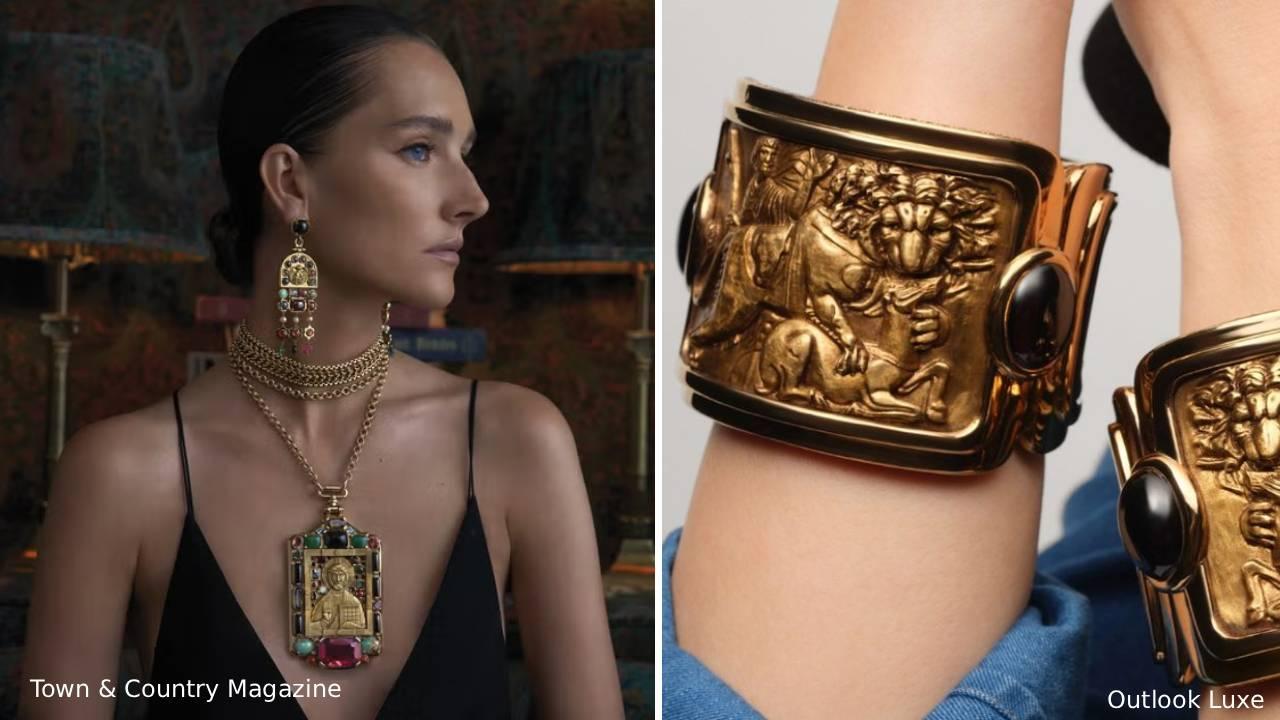
There are collaborations designed to create attention. And then there are collaborations that say something about where culture, and luxury itself, is headed. The coming together of Sabyasachi Mukherjee and The Metropolitan Museum of Art in New York belongs firmly to the latter.
The Indian designer and The Met have entered into a multi year partnership through which objects, histories and artistic traditions from the museum's extraordinary holdings will be interpreted through Sabyasachi's distinctly Indian vocabulary of craftsmanship, ornament, storytelling and contemporary luxury. The Met's collection spans more than 5,000 years of art from cultures across the world, and the collaboration is intended to turn selected histories from that archive into new jewellery, accessories and clothing created through Indian craft.
It is an ambitious proposition. A museum preserves objects because they survived history. A designer creates objects intended to enter it. Sabyasachi is attempting to bring the two ideas together, a philosophy that already runs through his fashion house's broader trajectory, including its own commercial evolution since Aditya Birla Fashion's acquisition of a 51 percent stake in Sabyasachi and its established presence in fine jewellery, seen when Sudha Reddy graced Sabyasachi's own iconic jewelry line launch in Hyderabad.
The First Chapter: Byzantium Through Indian Hands
The collaboration opens with high jewellery inspired by the Byzantine world, a civilisation shaped not in isolation but through the circulation of people, religion, commerce, materials and ideas between Europe, Asia and the Mediterranean.
Rather than reproducing Byzantine jewellery literally, Sabyasachi has looked across The Met's Greek and Roman, Medieval and Islamic collections, drawing from imperial medallions, architectural details, statuary, stonework and religious iconography. The result is a contemporary collection informed by antiquity rather than constrained by it. More than 100 pieces have reportedly been created, using 18 and 22 karat gold alongside tourmalines, spinels, amethysts, lapis lazuli and other gemstones. The collection is scheduled to make its debut during New York Fashion Week on September 15, 2026, before becoming available through Sabyasachi's New York flagship.
Yet the significance of the jewellery lies beyond its material value. It lies in the route by which the inspiration travels. Constantinople meets Calcutta. Antiquity meets contemporary India. The museum vitrine meets the jewellery atelier. And somewhere between them, history stops being static. This kind of archive led approach places Sabyasachi in company with houses that have similarly treated a first high jewellery outing as a statement of intellectual ambition rather than a simple product launch, from Pomellato's own celestial themed debut high jewelry collection to Boucheron's colour driven Holographique high jewellery line.
Sabyasachi's Real Subject Has Always Been Memory
To understand why this collaboration feels so natural, one has to understand that Sabyasachi has never really been designing only clothes or jewellery. He designs memory.
His universe has long been populated by old Calcutta mansions, fading aristocracy, Bengal textiles, antique furniture, velvet, brocade, paintings, heirloom jewellery, books, flowers, carpets, patina and objects that appear to have lived several lives before arriving in the present. Even the experience of entering a Sabyasachi store often feels closer to entering the home of an obsessive collector than stepping into a conventional luxury boutique.
For him, beauty rarely emerges from perfection alone. It comes from accumulation, histories layered upon histories. That philosophy makes The Met, with galleries containing thousands of years of human ambition, an extraordinary source material.
Sabyasachi has described his first encounter with the museum as deeply emotional. What overwhelmed him was the recognition that many of the works surrounding him had been produced centuries before modern manufacturing and technology, yet possessed an integrity of execution that continued to communicate across time. That idea appears to sit at the heart of this partnership: what can human wisdom and human hands build that remains meaningful centuries later? It is perhaps one of the most important questions luxury can ask today.
From Calcutta to Constantinople
Sabyasachi's interpretation of Byzantium is especially interesting because he does not treat culture as something contained neatly within national borders. The Byzantine world itself was shaped by exchange. Goods, beliefs, artisans and techniques travelled across continents. India participated in these historic networks of trade and craftsmanship.
Sabyasachi sees a parallel with Calcutta, another city whose identity emerged through commerce, migration and cultural collision. He has spoken of his fascination with places where different worlds meet and create something new, describing culture not as fixed inheritance but as something transformed continuously through encounter and exchange.
This is where the collaboration becomes far more compelling than a conventional museum licensing exercise. Instead of asking how Sabyasachi can reproduce something Byzantine, the more interesting question becomes what happens when a Byzantine object is seen through the imagination of an Indian designer, interpreted by Indian artisans and transformed into an object made for the twenty first century. The answer is not reproduction. It is cultural continuation.
The New Meaning of Indian Luxury
For decades, Indian craftsmanship has been praised internationally for embroidery, textiles, gemstones and artisanal skill. But admiration can sometimes carry a subtle limitation: India becomes the place that makes, while the world's established fashion capitals become the places that supposedly design, define and intellectualise luxury.
The Sabyasachi-Met partnership quietly disrupts that hierarchy. Every piece in the collaboration is to be conceived, developed and handcrafted in India through Sabyasachi's network of artisans. More importantly, Indian craftsmanship is not being positioned merely as production capability. It becomes the intellectual and creative lens through which some of the world's great historic objects are reinterpreted.
That distinction matters. It places India not on the periphery of luxury history but within its continuum. Not as an emerging participant. As an author. For a country possessing some of the world's oldest jewellery traditions, textile techniques and craft cultures, perhaps this is exactly where Indian luxury should be headed. The ambition need not simply be to make products that compete with Parisian or Italian luxury houses such as Cartier, whose own story of elegance and identity spans over a century. It can be larger: to build globally relevant luxury brands whose power comes precisely from the depth of Indian civilisation, craft and cultural confidence, an ambition shared by other Indian ateliers pursuing enduring workmanship over trend cycles, such as Anavila's own meditation on khadi and enduring craftsmanship in its Quiet collection.
When a Museum Becomes a Living Archive
The collaboration is equally interesting from The Met's perspective. Museums face a peculiar challenge. They are custodians of extraordinary objects, yet those objects risk becoming disconnected from contemporary life when viewed only as artefacts behind glass. Collaborations with living designers can change that relationship, a strategy other cultural institutions have leaned on as well, as seen when Chanel considered hosting its Metiers d'Art show inside the Palais Galliera fashion museum and when Vacheron Constantin built a Les Cabinotiers commission around the Louvre Museum's own archive.
Stephen Mannello, The Met's Head of Retail and Global Licensing, has described the partnership as an opportunity to allow contemporary makers to revisit historic works through new creative perspectives and introduce the stories contained within them to new audiences. It turns the museum from an archive into a conversation.
A Byzantine medallion no longer belongs solely to the civilisation that produced it. Centuries later, its proportions, symbols or craftsmanship might inspire an Indian jeweller. That jeweller may create something worn in New York. Another generation may someday encounter that object and reinterpret it again. Culture survives precisely because this cycle continues. Sabyasachi's own philosophy captures the idea beautifully: for culture to remain relevant, it must remain dynamic.
Luxury After Logos
There is another reason this collaboration feels particularly timely. The global luxury industry has spent years mastering visibility: logos, collaborations, drops, celebrity dressing, social media moments and instantly recognisable brand codes.
But the most interesting luxury consumers are increasingly asking a different set of questions. Who made this? Where did the idea come from? What tradition does it belong to? Will it still matter twenty years from now? Can it be passed on?
In such a world, craftsmanship is no longer merely a manufacturing process. Provenance becomes part of the product. A piece inspired by a centuries old object in The Met, reinterpreted in Calcutta and handcrafted by Indian artisans possesses something no marketing campaign can manufacture instantly: layers of meaning. This same premium on documented history and lineage already underpins how collectible objects trade hands more broadly, a dynamic covered in LuxuryAbode's own look at the business of luxury auction houses and how they establish an object's worth, and in India specifically through houses like AstaGuru, whose its own jewelry, silver and exceptional timepieces auction combined regal eloquence with timeless design.
The object becomes valuable not simply because it is rare, expensive or beautiful. It becomes valuable because it carries a story larger than itself. And perhaps this explains why museums, historic homes, ateliers, archives and private collections increasingly occupy the same cultural territory as contemporary luxury. They all deal in one extraordinarily scarce commodity: continuity, a value system also visible in how Bulgari has built out its own high jewellery storytelling, from the Magnifica collection's exotic high jewelry and watch pairings to the house's own documentary uncovering the mysteries behind its high jewelry ateliers.
The LuxuryAbode View
The most powerful line emerging from Sabyasachi's reflections on The Met may also be the simplest: his fascination with what human wisdom and human hands can build. That idea extends far beyond jewellery. It applies to architecture, furniture, decorative arts, gardens, textiles and homes.
The world's great residences are rarely memorable because they contain the newest things. They become memorable because architecture, craftsmanship, objects, provenance and personal history accumulate until a house possesses something impossible to purchase immediately: character. The same principle defines enduring luxury.
Technology can accelerate production. Algorithms can generate infinite variations. Machines can achieve extraordinary precision. But the things humanity chooses to preserve are often those in which we can still sense another human being. The irregularity of a hand carved surface. The patience contained in embroidery. The judgement of a stone setter. The imagination of an architect. The fingerprints of a maker invisible beneath the finished object.
LuxuryAbode calls what Sabyasachi is attempting here the Archive Authorship Model: a framework where a designer moves beyond referencing history as decoration and instead earns the standing to reinterpret it, positioning craft origin as an intellectual authority rather than a manufacturing footnote. Under a conventional licensing model, a designer borrows visual motifs from an institution's archive in exchange for association with its prestige. Under archive authorship, the institution treats the designer's own cultural perspective as an equal, generative force, one capable of extending an object's meaning rather than merely echoing its form.
| Dimension | Conventional Archive Licensing | Archive Authorship Model |
|---|---|---|
| Designer's Role | Reproduces or lightly reinterprets existing motifs for commercial use | Reinterprets historic objects through an independent cultural lens |
| Where Craft Happens | Often outsourced to whichever facility suits cost or speed | Anchored entirely in the designer's own artisan network and geography |
| What the Institution Gains | Commercial licensing revenue and brand association | A living continuation of the archive's cultural relevance across generations |
The Archive Authorship Model describes a partnership structure in which a designer's own cultural perspective and craft origin are treated as an equal, generative force alongside the institution's historic archive, rather than as a licensed decorative motif.
Sabyasachi's collaboration with The Met therefore arrives as more than a meeting between an Indian luxury house and one of the world's great museums. It is a reminder that the future of luxury may not lie in escaping the past. It may lie in understanding it deeply enough to create something worthy of the future. And in an age capable of making almost anything faster, true luxury may increasingly be defined by the things that still take knowledge, memory, patience, and human hands.
Frequently Asked Questions
What is the Sabyasachi x The Met collaboration?
It is a multi year partnership between Indian designer Sabyasachi Mukherjee and The Metropolitan Museum of Art in New York, through which objects and histories from The Met's collection are reinterpreted through Sabyasachi's craftsmanship, ornament and storytelling into new jewellery, accessories and clothing made in India.
What inspired the first collection in the partnership?
The debut collection draws on the Byzantine world, referencing imperial medallions, architectural details, statuary, stonework and religious iconography from The Met's Greek and Roman, Medieval and Islamic collections, rather than reproducing Byzantine jewellery literally.
When and where will the collection debut?
The collection is scheduled to make its debut during New York Fashion Week on September 15, 2026, before becoming available through Sabyasachi's New York flagship.
What materials and scale does the collection involve?
More than 100 pieces have reportedly been created using 18 and 22 karat gold alongside tourmalines, spinels, amethysts, lapis lazuli and other gemstones.
Where is the jewellery made?
Every piece in the collaboration is conceived, developed and handcrafted in India through Sabyasachi's network of artisans.
Disclaimer: Piece counts, materials and launch details reflect information available at the time of publication and are subject to change ahead of the September 2026 debut. This article is for informational purposes only and does not constitute investment or purchase advice.

Comments
No comments yet.
Add Your Comment
Thank you, for commenting !!
Your comment is under moderation...
Keep reading luxury post