Maxhosa Africa Reaches the Paris Runway on Its Own Terms
 Anishka Kataria
- 30th Sep 2026
- 1167
- 0
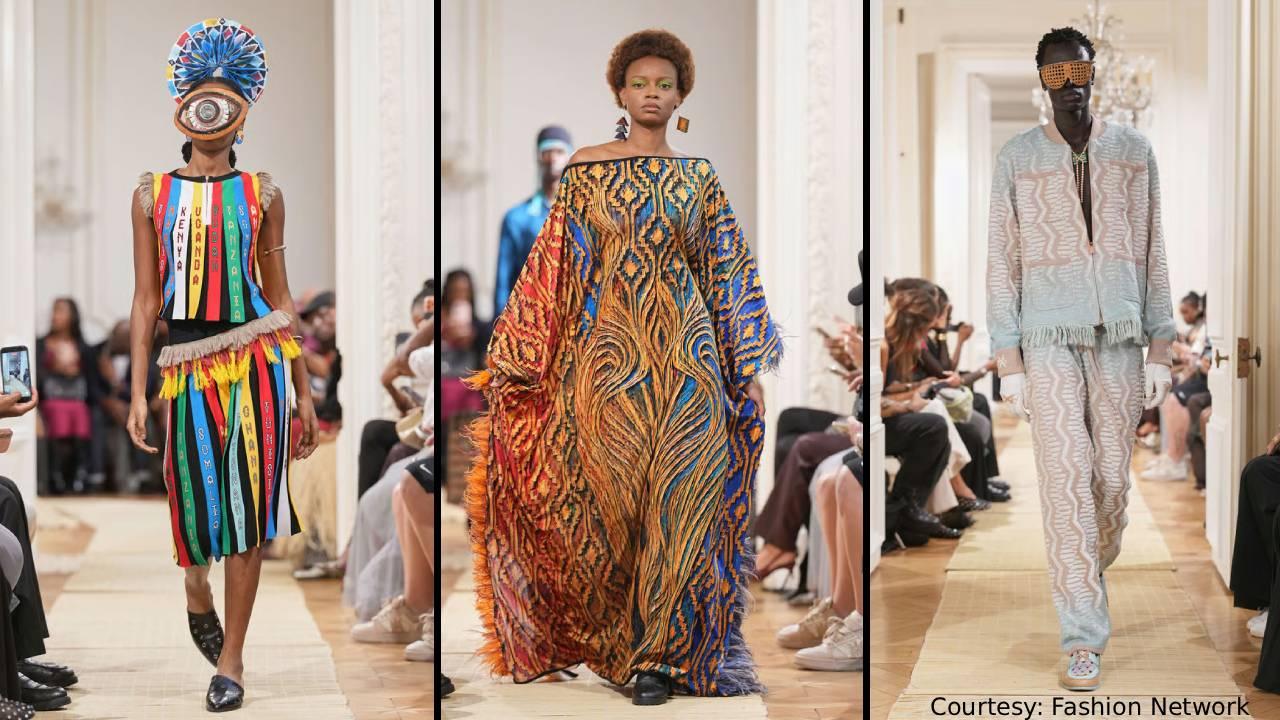
After five Paris presentations, Maxhosa took the runway without translating away its point of view.
Paris Fashion Week has long operated as both marketplace and gatekeeper. Designers arrive seeking buyers, attention and the institutional legitimacy that an official place on its calendar can confer. For readers new to the French system, our explainer on what haute couture clothing really is covers the wider context.
For Laduma Ngxokolo, however, Maxhosa Africa's first full official-calendar runway show on 28 September 2026 represented something more complicated than validation from Paris.
It was the latest stage in a 16-year attempt to build a luxury house from Africa, using South African design references, South African wool and company-owned production capacity rather than exporting an aesthetic while leaving its economic value elsewhere. It also shows what defines a luxury brand in practice: a clear identity backed by real control over how products are made.
The distinction matters because this was not Maxhosa's first appearance in Paris. The brand had already completed five presentations in the city. Spring/Summer 2027 marked its progression from presentation to full runway show on the official Paris Fashion Week calendar. The Fédération de la Haute Couture et de la Mode described it as the point at which those earlier seasons of work came together (FHCM).
Reuters reported that Maxhosa also became the first South African brand to stage a full runway show on the official calendar (Reuters).
That is a genuine milestone. But treating Parisian acceptance as the entire achievement would miss the more important story.
Maxhosa did not reach Paris by making itself culturally quieter.
From presentation to runway
A fashion presentation and a runway show can serve different commercial purposes.
Presentations allow buyers, editors and guests to examine garments in a relatively controlled setting. A runway must create a coherent statement at speed. Silhouette, casting, music, movement and venue become part of the collection's argument, a dynamic also visible in how Milan Fashion Week Men's SS26 rewrote the rules of masculinity on the runway.
For Maxhosa, the move required its visual language to work not simply as recognisable knitwear, but as a complete luxury proposition.
The show took place in the gilded rooms of the South African ambassador's residence in France. Models walked over woven straw mats as South African musician Sjava provided the soundtrack. The clothing moved between pleated knit skirts, geometric coordinated separates, tailored double-breasted suits, cropped pieces and more relaxed streetwear silhouettes. Kenyan artist Cyrus Kabiru contributed eyewear made from discarded materials (Reuters).
The collection, titled Izihlwele Zivumile, has been translated by the fashion federation as "the ancestors have co-signed." Its references included the Mpondo people, Ngxokolo's family history and Cape Aloe, a plant indigenous to South Africa and strongly associated with the Eastern Cape (FHCM).
These elements were not arranged as a heritage display. They were deployed inside a contemporary wardrobe designed to compete within international luxury. This is where the importance of storytelling for a luxury brand becomes clear, because the story only works when the product carries it.
That is the essential difference between cultural representation and brand-building. Representation asks whether a tradition is visible. Brand-building asks whether its visual codes can support recognisable products, commercial continuity and long-term creative authority.
African luxury without explanatory subtitles
African fashion is frequently presented internationally through a narrow vocabulary: craft, colour, heritage, community and discovery.
Those ideas can be relevant, but they can also reduce a sophisticated business to an ethnographic introduction. The African designer is asked to explain origin before being allowed to discuss construction, scale, pricing or ambition. Similar debates surround the unique Baobab Forest Fashion Week in Senegal and the new generation of goldsmiths adding African grandeur to the jewellery world.
Ngxokolo's stated position is more assertive. In his interview with the fashion federation, he argued that African culture does not need to be simplified to acquire global value. Maxhosa's objective is not to become less African as it becomes more international (FHCM).
The runway supported that argument.
Traditional Xhosa beadwork remains an important source for the brand's geometric patterns, but the collection was not confined to one cultural identity. References expanded across South African and pan-African histories, including a garment carrying the names of African countries.
Nor did Ngxokolo pretend that his design influences exist outside global fashion. He acknowledged inspirations including Missoni, Gucci and Louis Vuitton (Reuters). To see how those houses built their own codes, read the brand story of the House of Gucci and Louis Vuitton's art of luxury living.
That openness strengthens rather than weakens the collection. Luxury fashion has always developed through visual exchange. The inequity lies not in influence itself, but in which designers are allowed to be seen as authors of modernity and which are confined to the category of cultural source material.
Maxhosa wants to occupy the former position.
The factory may matter as much as the runway
The most consequential detail in the Paris story may be located thousands of kilometres away.
According to Reuters, Maxhosa owns knitting factories in Johannesburg and East London. Its knitwear uses wool sourced in the Eastern Cape, and Ngxokolo has connected the company's growth to a wider ambition for South Africa's textile industry (Reuters).
These claims should be assessed further through company disclosures, factory visits and independently verified production figures. But strategically, the model is important. Long-lived houses such as Vitale Barberis Canonico offer a blueprint for the luxury fashion industry, and it rests on the same principle of owning production knowledge.
A luxury brand creates more durable economic value when design, technical capability, production knowledge, employment and intellectual property remain connected. If the creative idea is African but the sophisticated manufacturing and margin are captured elsewhere, global visibility does not necessarily translate into industrial development.
Maxhosa is attempting a more integrated proposition:
| Creative asset | Industrial asset |
|---|---|
| Recognisable geometric design language | Company-owned knitting capacity |
| South African cultural references | Wool sourced in the Eastern Cape |
| International runway visibility | Production in Johannesburg and East London |
| Global luxury ambition | Domestic textile skills and employment |
The Paris runway gives the clothes global visibility. The factories determine whether growing demand can create lasting value at home.
What Paris can give, and what it cannot
An official runway show can improve press visibility, deepen relationships with international buyers and make a brand easier to place within the institutional structure of global fashion.
It does not guarantee commercial scale.
Maxhosa must still manage production volumes, delivery schedules, wholesale margins, retail expansion, quality consistency and the considerable cost of showing internationally. Ngxokolo told Reuters that he had hoped to bring other African designers to Paris but did not have the resources to do so. That comment is a reminder of how expensive global representation remains (Reuters).
The commercial question is therefore not merely whether Paris applauded. It is whether the visibility can translate into sustained demand without overstretching the production system or diluting the design codes that created that demand.
That is where many independent luxury brands encounter difficulty. Cultural relevance can grow faster than working capital. Editorial recognition can outpace wholesale infrastructure. A successful show may produce orders whose fulfilment requires financing, trained labour and operational discipline invisible from the front row.
A different geography of luxury
For generations, ambitious designers from outside Europe have been encouraged to treat Paris as the final authority on whether their work belongs in luxury. The question of whether Indian luxury fashion brands can capture the global imagination is a close parallel.
Maxhosa's show complicates that geography.
Paris remains valuable because it concentrates buyers, editors and institutional influence. But the brand did not arrive as an unnamed supplier seeking approval for its technique. It arrived with a distinctive name, established visual codes, years of presentations and a manufacturing ambition rooted in South Africa.
The runway was therefore less a beginning than a change in format.
That is why "first Paris appearance" would be both inaccurate and editorially weak. Maxhosa had already been building recognition in the city. The stronger story is that five presentations became a runway, and a regional knitwear proposition continued evolving into a prospective global luxury house.
Its success should not ultimately be measured by whether African design has been admitted to Paris. It should be measured by whether a South African company can use Parisian visibility to expand creative influence, industrial capability and economic value on its own terms.
The show demonstrated that Maxhosa's point of view can command an official runway. The next test is whether the business behind that runway can travel just as confidently.
Comments
No comments yet.
Add Your Comment
Thank you, for commenting !!
Your comment is under moderation...
Keep reading luxury post