Professor Sudhakar Nadkarni (1936 to 2026): The Man Who Taught India That Design Was a Way of Thinking
 Namrata Parab
- 29th Oct 2026
- 1425
- 0
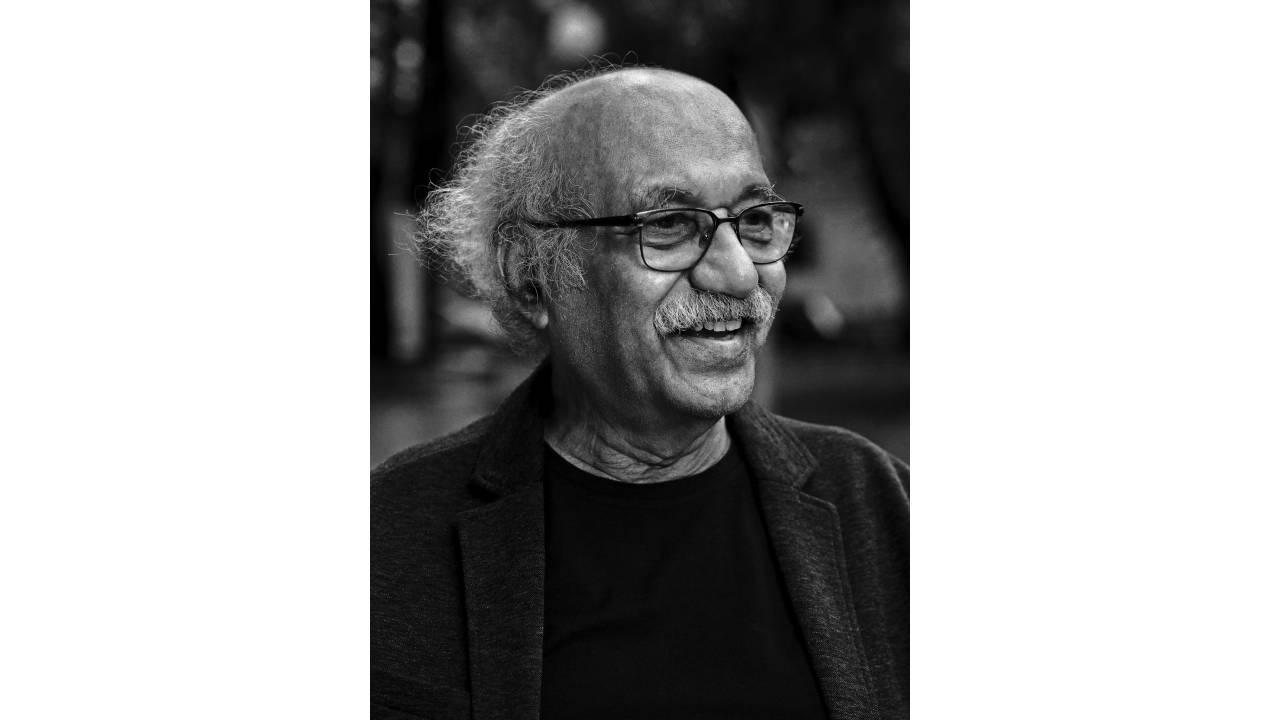
Before design thinking became a management slogan, Professor Sudhakar Nadkarni was building the institutions that taught Indians to approach products, public systems and industrial development through design. His death at 90 marks the passing of one of the country's most consequential design educators.
Professor Sudhakar Nadkarni, the pioneering industrial designer and educator who helped establish modern design education at IIT Bombay and IIT Guwahati, died in Mumbai on 20 October 2026 following a cardiac arrest. He was 90, according to The Indian Express.
His contribution to Indian design is difficult to measure through the conventional indicators of professional achievement. Nadkarni was not primarily celebrated for creating an iconic consumer brand, a fashionable chair or a landmark building. His influence was more structural. He helped create the institutions, curricula and professional culture through which generations of Indian designers learned to think about the relationship between people, products, technology and society.
At a time when design in India was frequently understood as decoration, commercial art or the refinement of a product's appearance, Nadkarni advocated something more fundamental. Design, in his view, belonged inside the processes of industrial planning, technological development and everyday problem-solving.
His career took him from Mumbai's commercial art industry to Germany's Hochschule für Gestaltung Ulm, one of the twentieth century's most influential design schools. Returning to India, he became associated with the National Institute of Design in Ahmedabad, helped establish the Industrial Design Centre at IIT Bombay in 1969, and subsequently initiated the Department of Design at IIT Guwahati in 1997.
These were formative interventions in a country still developing its industrial capabilities and professional design infrastructure.
Today, when design thinking is taught in business schools, human-centred design influences digital products and industrial designers collaborate with engineers, Nadkarni's work provides an important part of the historical foundation.
Yet his legacy deserves to be understood beyond the contemporary popularity of the term design thinking. His ambitions were more demanding: design should contribute to national development, not merely help businesses sell more attractive products.
From Mumbai's Chawls to Germany's Ulm School of Design
Nadkarni's introduction to design was far removed from the formal institutions he would later help establish.
Growing up in a Mumbai chawl, he encountered the city's informal creative economy, particularly signboard painters and commercial artists whose work combined visual communication, lettering, practical materials and an understanding of public space.
In a 2019 interview with Sahapedia, Nadkarni recalled his early involvement with hand-painted signage and the influence of the working environment in which he grew up. These experiences exposed him to an important aspect of design often overlooked in formal histories: skilled visual problem-solving was already embedded in India's streets, workshops and everyday commercial life, much like the traditional crafts of India celebrated in Bhuj.
He studied graphic design at the Sir J. J. School of Applied Art between 1954 and 1959, and subsequently worked as an art director in Mumbai's advertising industry.
His professional direction changed when he travelled to Germany in 1962 to study industrial design at the Hochschule für Gestaltung Ulm, where he remained until 1966.
Ulm occupied a distinctive position in postwar design education. Building upon aspects of the Bauhaus tradition, it placed considerable emphasis on rational methodology, systems, industrial processes, technology and the social purpose of design.
For Nadkarni, the experience introduced a framework that could be applied to India's developmental needs.
His 1966 theoretical project examined design as a factor in development planning, using India as an example. The significance of that choice is worth emphasising. Rather than treating design primarily as a means of improving commercial products, he was considering how design methodologies might contribute to national development.
He also completed a practical design project involving the Aarey Milk Booth, an everyday public-facing structure rather than an exclusive consumer object.
The choice reflected a philosophy that would remain central throughout his career: the quality of design should be judged partly by its relevance to the people and systems it serves.
Why the Ulm Philosophy Mattered to India
The influence of Ulm on Indian design cannot be reduced to a preference for European modernism.
For a newly independent country working to expand manufacturing, infrastructure and public services, design posed questions that were both technical and social.
How could industrial products be made efficient, durable and affordable? How should public facilities respond to human behaviour? Could designers work directly with engineers and manufacturers instead of arriving only at the final stage to determine colour, shape or appearance?
These were precisely the kinds of problems that the Ulm approach encouraged students to investigate.
Nadkarni recognised that the principles could be adapted to Indian circumstances, although applying them required sensitivity to local manufacturing capabilities, economic conditions and cultural practices.
His own account of the period distinguished the Ulm philosophy from an American approach to commercial styling. He saw design as a way of improving products and systems within the constraints of a developing economy.
This remains one of the most useful ways to understand his contribution.
He did not simply import a Western design methodology into India. He participated in the process of translating international ideas into an educational framework suited to Indian industry.
That distinction also explains why his work remains relevant to contemporary conversations about affordability, sustainability, public design and socially responsible innovation.
Building IDC at IIT Bombay: Bringing Design Into an Engineering Institution
The defining institutional achievement of Nadkarni's career came in 1969, when the Industrial Design Centre was established at IIT Bombay.
According to IIT Bombay's official institutional history, the centre was created by the Government of India to develop professional industrial designers capable of contributing to industry, research and development. Professor V. N. Adarkar served as adviser during its initial years, while Nadkarni assumed leadership and played a central role in establishing the institution.
The setting was consequential.
An engineering institute offered access to laboratories, technical expertise, manufacturing knowledge and scientific research. But positioning design within such an environment also required overcoming assumptions about its intellectual status.
At the time, design was not universally recognised as a discipline comparable to engineering or scientific research.
Nadkarni's task involved establishing an academic programme that combined creative experimentation with technical rigour.
The early curriculum focused on industrial design, later expanding to incorporate visual communication. His broader ambition included environmental design, although that component did not develop into the separate programme he initially envisaged.
He remained at IIT Bombay for almost three decades, including approximately 18 years as head of the centre.
During that period, IDC developed an educational culture in which making, experimentation, research and engagement with industry were central.
For Nadkarni, a design school could not function solely through lectures and examinations. Workshops, equipment, project work and contact with real manufacturing problems were essential to training competent designers.
This was a significant departure from treating design education as an extension of drawing or applied art.
The Importance of Learning by Making
One of Nadkarni's lasting contributions was his insistence that design students needed to develop both intellectual judgement and practical competence.
Design decisions could not be adequately evaluated through drawings alone. Students needed to understand materials, fabrication methods, ergonomics, mechanical constraints and how a product behaved in use.
This approach was particularly important in India's industrial environment, where production capabilities and manufacturing resources could vary considerably.
The purpose was not to create designers who could independently perform every engineering task. Rather, it was to develop professionals capable of collaborating across disciplines and understanding the consequences of their decisions.
His thinking also extended into exhibition design and environmental design, areas where products, information, built space and human movement intersect.
D'Source's archival material records his work on exhibition projects, including the State Trading Corporation pavilion associated with Asia 72 and related exhibition-design initiatives.
Such projects demonstrated that design was not confined to the scale of individual objects.
An exhibition pavilion, for example, required decisions about spatial organisation, communication, materials, fabrication and visitor experience. These are challenges closely connected to the contemporary disciplines of environmental graphics, experiential design and public-space planning. They echo the way Piet Boon, the Dutch master of interior design, treats space, objects and architecture as one continuous discipline.
Nadkarni's understanding of design was unusually broad for a period when professional specialisations in India were still being established.
Beyond Mumbai: Building IIT Guwahati's Design Department in 1997
Nadkarni's institutional influence did not end with IIT Bombay.
In 1997, he established the Department of Design at IIT Guwahati and became its founding head. The department introduced the first undergraduate design programme among India's IITs, creating a new pathway for students who wanted to pursue design within a leading technical institution.
The setting presented a different set of opportunities and constraints from Mumbai.
In Assam, Nadkarni recognised the potential of locally available materials and regional knowledge. Contemporary reporting of his work describes the development of bamboo-based furniture and equipment for floating healthcare facilities, including stretchers, trolleys, wheelchairs and saline stands.
These were precisely the kinds of problems that illustrated his philosophy. Bamboo was not merely an attractive traditional material. Its weight, structural properties, availability and affordability made it relevant to designing functional products for specific conditions. The same thinking drives sustainable luxury architecture and local materials today, and it recalls why Francis Kere won the Pritzker Prize for community-rooted architecture.
His work at IIT Guwahati also extended beyond academic administration.
The institute's official tribute credits him with shaping elements of its institutional identity, including the IIT Guwahati logo, convocation robes and ceremonial objects. His involvement demonstrated that design could influence the visual and cultural character of an institution as well as the products it created.
What distinguishes this period is the continuity of his thinking. More than three decades after studying at Ulm, Nadkarni was still advocating design grounded in people, materials, technical possibilities and local conditions.
Before Design Thinking Became Corporate Vocabulary
One of the most relevant aspects of Nadkarni's legacy is his contribution to the relationship between design and management.
After his work at IIT Bombay and IIT Guwahati, he became associated with the Welingkar Institute of Management Development and Research in Mumbai, helping establish its design management programme from 2004 onward.
The initiative anticipated a growing recognition among businesses that design was not simply a finishing activity. It could influence product development, customer experience, organisational processes and strategic decision-making. Leaders such as Titan's Chief Design Officer Revathi Kant now carry that thinking into corporate boardrooms.
Today, design thinking is frequently presented through workshops, innovation frameworks and corporate training programmes. Yet Nadkarni's career offers a reminder that the discipline's intellectual foundations are considerably deeper.
His approach combined observation, experimentation, technical knowledge, material understanding and an awareness of social context.
He also understood a critical distinction: creativity alone does not make a product useful, just as technical efficiency alone does not make a product appropriate for its users.
The most consequential design decisions often arise where human needs, production capabilities and economic realities intersect.
That principle remains relevant to contemporary product design, architecture, user experience and service innovation.
It also raises a question for modern business education: has the popularisation of design thinking preserved the depth of inquiry that its early practitioners considered essential?
For Nadkarni, design was a sustained intellectual and practical discipline. It was not reducible to a brainstorming technique.
The Objects and Systems That Reveal His Real Contribution
While Nadkarni is best remembered as an educator, his professional work offers concrete evidence of his approach.
Marathi newspaper Loksatta's October 2026 tribute identifies several projects, including design contributions associated with Crompton fans, Indian Oil petrol pump canopies, exhibition installations and public-facing industrial objects.
These examples are particularly instructive because they involve the ordinary infrastructure of daily life.
An electric fan must communicate its controls clearly, operate reliably and remain practical to manufacture. A petrol pump canopy must address visibility, recognisability and the physical needs of a working commercial environment. An exhibition requires visitors to understand information through spatial sequences rather than text alone.
Such projects seldom receive the public recognition associated with monumental architecture or luxury consumer products.
Nevertheless, they represent a substantial part of design's contribution to modern life.
For Nadkarni, the complexity of a design problem did not depend on the price or prestige of the object. A low-cost public utility could present an equally demanding challenge as an expensive manufactured product.
That conviction distinguished his practice from an understanding of design primarily associated with exclusivity.
Three Institutions, One Consistent Philosophy
| Institution | Period | Contribution |
|---|---|---|
| National Institute of Design, Ahmedabad | 1966 to 1969 | Helped develop early industrial and product design education |
| Industrial Design Centre, IIT Bombay | From 1969 | Played a foundational role in establishing postgraduate industrial design education |
| Department of Design, IIT Guwahati | From 1997 | Founded the department and introduced the first undergraduate design programme among IITs |
| Welingkar Institute, Mumbai | From 2004 | Helped develop design management and business design education |
Sources: IIT Bombay IDC archives, IIT Guwahati's institutional tribute and D'Source's biography of Professor Nadkarni.
Together, these contributions show why Nadkarni's importance cannot be measured by any one institution.
He helped establish design within different educational environments, from a specialist design school to engineering institutes and a business school.
Each required a slightly different approach. Yet his underlying argument remained consistent: design belonged within the processes through which societies make decisions and solve problems.
A Teacher Who Built More Than Classrooms
Nadkarni was remembered by students and colleagues as a demanding educator with a strong commitment to the craft and discipline of design.
Writer and filmmaker Anil Zankar, reflecting on his career in The Indian Express, describes an educator who combined rigorous expectations with a willingness to acknowledge the contributions of colleagues.
This collaborative outlook mattered because design institutions are rarely built by individuals working alone.
Nadkarni helped assemble faculty, encourage international exposure and develop the academic structures required for design programmes to sustain themselves beyond their founders.
His work also connected Indian institutions with international professional networks and discussions on design education.
He received a Lifetime Achievement Award from the India Design Association in 2015, recognising his contribution to institution-building and Indian design education. He was also honoured by the Indian Institute of Science in 2017.
His professional journey is documented in publications including The Design Journey of Prof. Sudhakar Nadkarni and the more recent By Design: Works + Thoughts, which preserves aspects of his philosophy and professional experience.
These records are important for a field whose early institutional history remains less widely documented than its contemporary commercial successes.
Why Sudhakar Nadkarni's Legacy Matters Now
India's contemporary design economy is significantly larger and more diverse than the one Nadkarni entered in the 1950s.
Designers now work across digital platforms, mobility, healthcare, consumer electronics, architecture, financial services and advanced manufacturing.
The vocabulary has changed. Product design increasingly overlaps with user experience, service design, systems thinking and human-computer interaction.
Yet many of the questions remain familiar.
Can a product be manufactured affordably? Does it serve a genuine human need? Can a system be made easier to understand? Does a design respect the environment in which it operates? Are designers participating early enough in the decision-making process?
These were not peripheral issues in Nadkarni's educational philosophy. They were central to it.
His career offers an important corrective to the tendency to describe design through aesthetics, branding or commercial success alone.
The true measure of a design culture is not merely the number of visually distinctive products it produces. It is whether design knowledge improves the way institutions, industries and public services function.
The Man Who Changed How India Thought About Design
Professor Sudhakar Nadkarni belonged to a generation that helped establish design as a professional discipline in independent India. Other Indian design pioneers have been remembered in similar moments, such as when Satya Paul, the revolutionary designer who transformed the saree, passed away.
He arrived at a time when the country's industrial infrastructure was still developing and formal opportunities for specialised design education were limited.
By the time his career concluded, design had established a substantial presence within India's leading technical institutions and was gaining recognition in management education and industry.
It would be inaccurate to attribute that transformation to a single individual. India's design movement was built through the work of many educators, practitioners, industrialists and institutions.
But Nadkarni's contribution was unusually consequential because he repeatedly helped create the structures through which design could be taught, practised and developed.
His legacy is visible in educational institutions, professional practices and generations of designers whose work extends far beyond the classroom.
Professor Sudhakar Nadkarni did more than teach India how to design objects. He helped establish the idea that design could change how the country understood problems, developed solutions and imagined progress.
That is an inheritance more enduring than any individual product.
Frequently Asked Questions
Who was Professor Sudhakar Nadkarni?
Professor Sudhakar Nadkarni was an Indian industrial designer, educator and institution-builder who helped establish major design programmes at IIT Bombay, IIT Guwahati and Welingkar Institute of Management. He was among the pioneers of professional design education in India.
When did Professor Sudhakar Nadkarni die?
He died in Mumbai on 20 October 2026, aged 90. Contemporary reports attributed his death to a cardiac arrest.
Did Sudhakar Nadkarni establish IDC IIT Bombay?
Professor Nadkarni played a foundational role in establishing the Industrial Design Centre at IIT Bombay in 1969. He subsequently led the centre for approximately 18 years and helped develop its academic programmes and institutional identity.
What was Professor Nadkarni's connection with IIT Guwahati?
He founded the Department of Design at IIT Guwahati in 1997. The department introduced the first undergraduate design programme among India's IITs. He also contributed to the institute's visual identity and design culture.
Where did Sudhakar Nadkarni study design?
He studied at the Sir J. J. School of Applied Art in Mumbai and later pursued industrial design at the Hochschule für Gestaltung Ulm in Germany between 1962 and 1966.
Why is Sudhakar Nadkarni important to Indian design thinking?
He promoted an understanding of design that combined creativity, industrial production, technology and social responsibility. His educational initiatives helped establish design as an independent professional discipline within engineering and management institutions.



Comments
No comments yet.
Add Your Comment
Thank you, for commenting !!
Your comment is under moderation...
Keep reading luxury post