- Blog
- Brand Story
- Switzerland
Nespresso: How a Swiss Coffee Innovation Became a Global Symbol of Everyday Luxury
 Anishka Kataria
- 2nd Nov 2026
- 1215
- 0
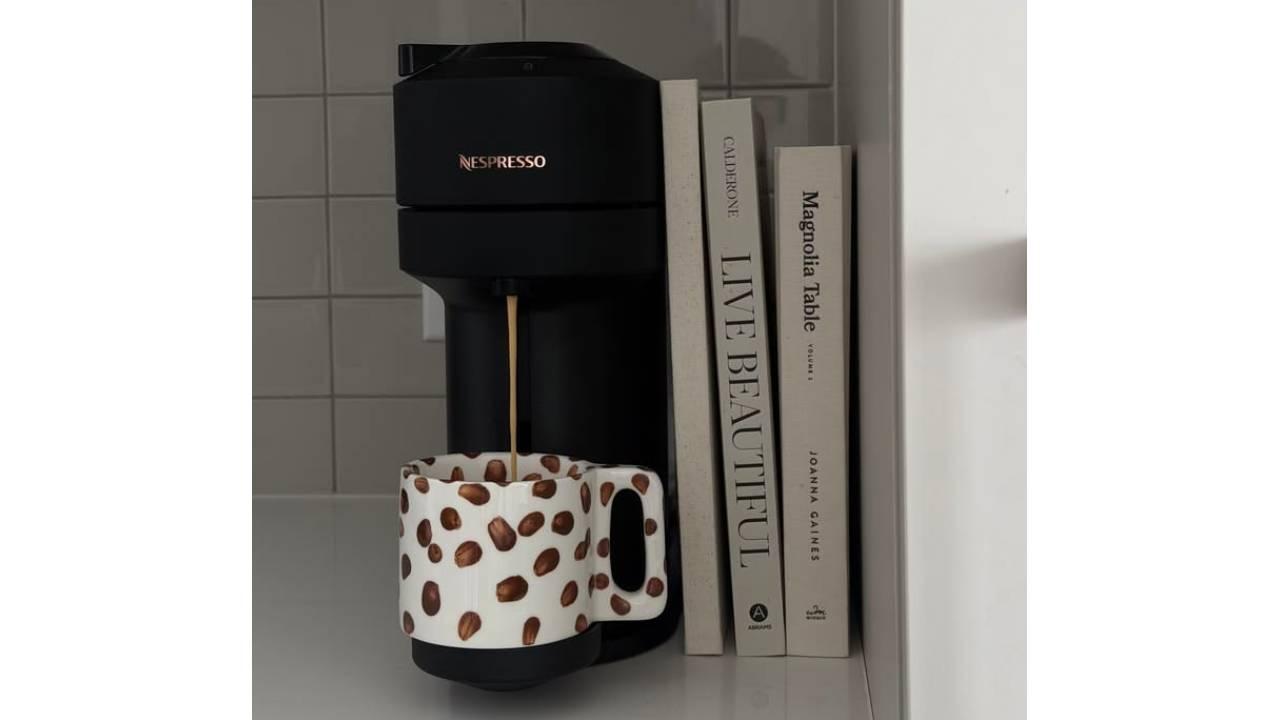
From an inspired discovery in an Italian café to a global luxury coffee brand, Nespresso has transformed the art of espresso into a sophisticated daily ritual. Four decades after its debut, its influence extends beyond coffee into design, hospitality, sustainability and the evolving culture of modern luxury.
There is something quietly luxurious about a perfectly prepared espresso. The fragrance of freshly brewed coffee, the delicate layer of golden crema, the warmth of porcelain and the brief moment of stillness before the first sip. In Italy, this ritual has been woven into everyday life for generations. Elsewhere, achieving the same experience once demanded specialised equipment, technical knowledge and a considerable degree of patience. It is the same pleasure that makes people relish the luxury of coffee in its many forms.
Nespresso changed that equation. The Swiss coffee brand, established in 1986 under the Nestlé Group, introduced a deceptively simple proposition: exceptional espresso, prepared consistently, at the touch of a button. What emerged was more than a technological innovation. Nespresso created an entirely new category of premium coffee consumption, bringing the refinement of European café culture into private homes, executive offices, luxury hotels and contemporary living spaces.
Today, Nespresso occupies an unusual position in the luxury landscape. Its products are accessible to millions, yet its identity remains closely associated with sophisticated design, curated experiences and a distinctive approach to everyday indulgence. Its success demonstrates how a brand can transform an ordinary habit into something consumers actively anticipate.
An Italian Inspiration, a Swiss Invention
The origins of Nespresso trace back to 1975, when Swiss engineer Eric Favre, working for Nestlé, encountered the espresso culture of Rome. During a visit to an Italian café, Favre became intrigued by the unusually rich coffee served there. Observing the barista's preparation techniques, he began investigating the relationship between pressure, aeration and extraction.
His curiosity eventually led to an innovative coffee extraction system built around precisely measured portions of ground coffee enclosed in capsules. The objective was ambitious: reproduce the complexity and consistency of a professionally prepared espresso without requiring the expertise of a trained barista.
The development process was neither immediate nor universally welcomed. The concept challenged established assumptions about how coffee should be prepared and sold, particularly within a company already associated with instant coffee through Nescafé.
Nevertheless, experimentation continued, and in 1986, Nestlé introduced Nespresso as a dedicated business with just five employees. Its initial offering comprised two machines, the C-100 and C-1100, alongside four coffee varieties: Capriccio, Cosi, Decaffeinato and Bolero, later renamed Volluto.
Initially directed towards professional environments in Switzerland, Japan and Italy, the system gradually found its most influential audience in the home. By 1989, Nespresso had entered the Swiss household market and introduced the Nespresso Club, establishing a direct relationship with consumers that would become central to its commercial identity.
The brand's lasting achievement was not simply making espresso easier. It made the experience of preparing it feel intentional, desirable and remarkably personal.
The Architecture of a Perfect Cup
At the centre of Nespresso's appeal is an unusual marriage of coffee expertise and precision engineering. Every capsule represents a carefully controlled interaction between provenance, roasting, grinding, packaging and extraction.
Coffee beans sourced from different growing regions bring distinctive characteristics to the finished cup. Altitude, soil composition, rainfall and agricultural practices influence flavour, while roasting and blending determine how these qualities are expressed. Nespresso's coffee specialists work with these variables to create profiles ranging from delicate floral and fruity expressions to intense, roasted and cocoa rich compositions. At the far end of the spectrum sits the world's most luxurious coffee, a reminder of how much provenance shapes prestige.
The company's Original system uses high pressure extraction, with machines engineered to operate at 19 bars of pressure. Its Vertuo technology takes a different approach, employing a proprietary centrifugal extraction system that spins capsules while automatically adjusting brewing parameters. The result is a broader range of serving sizes, including espresso, double espresso and longer coffees.
These two systems reflect different interpretations of the coffee ritual. Original remains closely associated with the compact intensity of Italian espresso, while Vertuo addresses consumers who prefer larger cups and more varied coffee formats. Those who enjoy longer, chilled serves can even learn to brew a luxe ice coffee at home.
Nespresso's coffee capsules are manufactured in Switzerland, where the company operates three production facilities. This Swiss manufacturing identity reinforces a broader positioning built around consistency, precision and controlled quality.
The capsule itself has become an important design object. Compact, meticulously shaped and presented in carefully differentiated colours, it serves simultaneously as packaging, a functional component and a recognisable expression of the brand.
When Coffee Became a Lifestyle Statement
Nespresso's transformation into a premium lifestyle brand offers a compelling example of how design and storytelling can influence consumer behaviour. It is a textbook case of the importance of storytelling for a luxury brand.
Rather than positioning its machines purely as kitchen appliances, the company presented them as objects deserving a place in thoughtfully designed interiors. Clean silhouettes, polished finishes and carefully considered proportions helped Nespresso machines move from the functional kitchen counter to the visual language of contemporary luxury living.
Collaborations with established appliance manufacturers and designers further strengthened this connection. Nespresso machines have appeared in multiple interpretations, from compact minimalist models to expressive designs intended to complement increasingly sophisticated domestic environments. The category has since grown, with rivals such as Keurig launching what is billed as the ultimate luxury coffee maker.
The company's retail strategy followed a similar philosophy. Nespresso boutiques were conceived not simply as points of sale but as immersive environments where visitors could discover coffee origins, explore flavour profiles, experience machines and receive personalised guidance.
These spaces borrow familiar principles from luxury retail: attentive service, controlled presentation, curated product displays and an emphasis on the experience surrounding the purchase, much like the power of visual merchandising in fashion stores.
Its marketing provided another defining ingredient. George Clooney's long association with Nespresso, beginning in the mid 2000s, helped establish a tone of understated glamour, humour and international sophistication. Rather than relying exclusively on technical product claims, the campaigns placed coffee within a world of cultivated taste and confident individuality.
Nespresso understood that the emotional experience surrounding a product could become as valuable as the product itself.
The Luxury of Convenience
For decades, luxury was frequently defined by elaborate preparation, specialised craftsmanship and experiences that required time. Nespresso introduced an alternative interpretation: convenience could be luxurious when supported by quality, thoughtful design and reliability. This reflects the wider evolution of luxury and the rise of experiences over hedonism.
The brand effectively transformed convenience from a compromise into part of the appeal.
Its business model also proved influential. By combining coffee machines with an ongoing ecosystem of capsules, accessories and personalised services, Nespresso established an enduring relationship with its customers. The machine provided the entry point; the coffee created continuity.
This relationship extended into hospitality, where consistent quality and operational simplicity made portioned coffee particularly attractive. Premium hotels, executive lounges and upscale offices could provide recognisable espresso experiences without the logistical demands of conventional coffee preparation, a goal shared by venues that let guests discover the world in your coffee cup.
The approach has since become familiar across numerous premium consumer categories, where hardware, consumables, membership services and curated experiences operate together.
Nespresso's contribution was to demonstrate how this model could feel aspirational rather than purely transactional.
Sustainability and the Responsibility of Premium Coffee
No contemporary assessment of Nespresso would be complete without considering the environmental questions surrounding single serve coffee.
The very qualities that make capsules convenient also raise concerns about packaging, resource consumption and disposal. Aluminium, the material central to Nespresso's capsule system, offers important advantages in protecting coffee from oxygen, moisture and light. It is also recyclable, although environmental benefits depend on effective collection and processing.
Nespresso introduced a dedicated capsule recycling programme in Switzerland in 1991, long before sustainability became a defining concern for many premium consumer brands. It has subsequently expanded recycling initiatives across markets, although consumer participation and local infrastructure remain important limitations.
The company's sustainability strategy extends beyond packaging. In 2003, Nespresso partnered with the Rainforest Alliance to establish its AAA Sustainable Quality Programme, designed to support coffee quality, agricultural productivity, environmental practices and farmer livelihoods. Another experiential coffee success story shows how sustainability and experience can reinforce each other.
The programme now works with more than 168,000 farmers across 18 countries, according to Nespresso's published global information. In 2022, the company also achieved B Corp certification, placing its social and environmental performance within an externally assessed framework.
These initiatives represent significant investments, but they do not eliminate the environmental impact of capsule production, coffee cultivation or global distribution. For Nespresso, the enduring challenge is to reconcile a highly convenient consumption model with credible, measurable improvements throughout its supply chain. Mindful drinkers can also explore the art of responsible coffee consumption.
That tension is particularly relevant to modern luxury, where craftsmanship and aesthetics are increasingly judged alongside provenance, accountability and environmental responsibility. It also helps explain why sustainable luxury is good business for premium brands.
India and the Rise of the Premium Coffee Ritual
Nespresso's arrival in India marks an interesting development in the country's evolving relationship with coffee.
Although India has a longstanding coffee growing tradition, particularly across Karnataka, Kerala and Tamil Nadu, urban consumption has historically been shaped by a combination of regional preferences, instant coffee and, more recently, speciality café culture. The rise of global chains, such as Tata Starbucks in India, has helped shape these tastes.
A growing audience of affluent Indian consumers is now embracing coffee as an extension of lifestyle, hospitality and personal taste. Premium brewing equipment, speciality beans, carefully designed coffee corners and curated home experiences have become increasingly visible within contemporary Indian homes.
Nestlé announced Nespresso's entry into India in April 2024, with commercial availability beginning later that year. Its first Indian boutique opened at Select Citywalk in New Delhi in March 2025, followed by a Gurugram boutique at Ambience Mall in March 2026 and a Mumbai retail debut at Jio World Drive in May 2026.
These locations reflect a deliberate association with premium shopping destinations and consumers already familiar with international luxury and lifestyle brands.
Interestingly, India's connection with Nespresso predates its retail presence. The company has sourced green coffee from India since 2011 and works directly with approximately 1,800 Indian coffee farmers through its AAA programme, according to Nestlé India's 2024-25 annual report.
This creates an intriguing relationship between Indian agricultural expertise and Swiss coffee manufacturing, with India participating both as a source of raw material and as an emerging market for premium coffee experiences.
For Indian consumers, Nespresso's proposition is particularly relevant to the expanding culture of luxury home entertaining. A beautifully designed coffee machine, a curated selection of blends and the ability to offer guests a consistently prepared espresso fit naturally into homes where hospitality and personal expression increasingly intersect.
The Enduring Appeal of Everyday Luxury
As Nespresso enters its fifth decade, its influence can be measured beyond the millions of capsules and machines it has sold. The company helped establish an entirely new understanding of what premium coffee could represent: an experience that combines technological precision, cultivated taste, distinctive design and personal ritual.
Its success has attracted competition, encouraged innovation and helped normalise sophisticated coffee preparation in domestic environments. Yet its most enduring achievement remains cultural rather than mechanical.
Nespresso identified an everyday moment that people already valued and gave it a new language of quality, elegance and convenience. By doing so, it demonstrated that luxury need not always involve rarity, elaborate ceremony or extravagant expenditure, an idea central to the future of luxury.
Sometimes, it is simply the pleasure of an exceptional cup of coffee, prepared exactly as one likes it, in the comfort of one's own home.
Nespresso: Luxury Abode Brand Profile
| Brand Detail | Information |
|---|---|
| Brand | Nespresso |
| Established | 1986, 40 years ago |
| Origin | Switzerland |
| Founding innovator | Eric Favre |
| Parent company | Nestlé S.A. |
| Company | Nestlé Nespresso S.A. |
| Ownership | Wholly owned subsidiary of publicly listed Nestlé S.A. |
| Headquarters | Switzerland |
| Chief Executive Officer | Alfonso Gonzalez Loeschen, since November 2025 |
| Industry | Premium coffee, beverages and coffee equipment |
| Core products | Coffee capsules, espresso machines, professional coffee systems and accessories |
| Signature technologies | Nespresso Original and Vertuo |
| Manufacturing | Three coffee capsule production facilities in Switzerland |
| Global presence | 81 countries |
| Retail network | Approximately 802 boutiques across 515 cities, according to the company's published global profile |
| Sustainability initiatives | AAA Sustainable Quality Programme, capsule recycling, B Corp certification |
| India presence | New Delhi, Gurugram, Mumbai and nationwide online distribution |
| Official website | www.nespresso.com |
About the Brand
Founded in Switzerland in 1986, Nespresso is a globally recognised premium coffee brand that transformed espresso preparation through its innovative capsule based brewing systems. A subsidiary of Nestlé, the company combines Swiss engineering, carefully sourced coffee and sophisticated product design to create consistent, high quality coffee experiences. Its Original and Vertuo systems serve homes, offices and hospitality environments worldwide, while its distinctive boutiques reinforce an identity associated with contemporary luxury. With an expanding international presence, established sustainability programmes and growing relevance in India's premium coffee market, Nespresso continues to influence modern coffee culture.


Comments
No comments yet.
Add Your Comment
Thank you, for commenting !!
Your comment is under moderation...
Keep reading luxury post