- Blog
- Brand Story
- India
Jaipur Gems: The Art of Timeless Jewellery and the Remarkable Legacy of India's House of Heirlooms
 Anishka Kataria
- 31st Oct 2026
- 1207
- 0
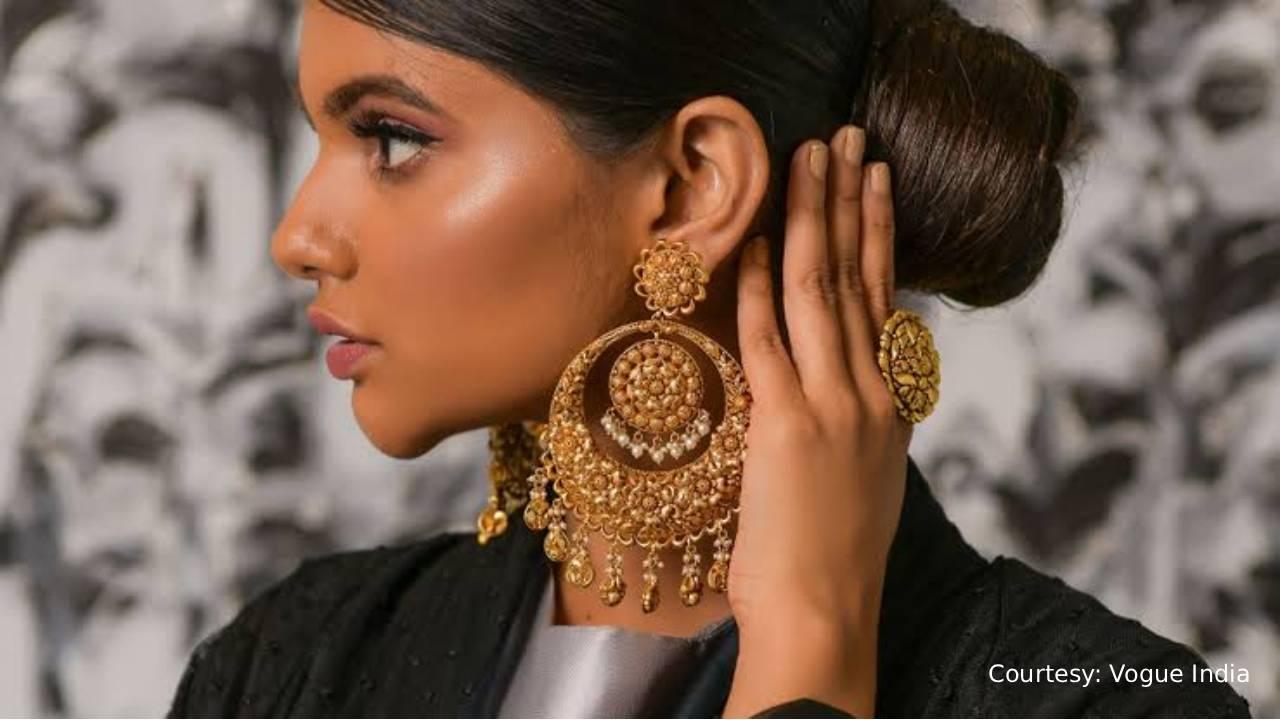
From its beginnings in Mumbai in 1974 to an international presence spanning India and the Middle East, Jaipur Gems has transformed the traditions of Indian jadau jewellery into a contemporary expression of luxury. At the heart of its story is the Sacheti family's extraordinary relationship with gemstones, craftsmanship and the enduring beauty of objects made to outlive their owners.
A Legacy Written in Gold and Gemstones
There is a particular kind of luxury that cannot be manufactured through expensive advertising or fleeting trends. It develops over generations, through an intimate understanding of materials, an instinct for beauty and the trust of discerning patrons. For Jaipur Gems, one of India's established fine jewellery houses, that philosophy has shaped more than five decades of craftsmanship.
Founded in Mumbai in 1974 by Padam Sacheti, Jaipur Gems represents a fascinating intersection of India's historic jewellery traditions and contemporary luxury design. Its creations draw upon the intricate world of jadau, polki diamonds, precious gemstones and handcrafted gold, while increasingly embracing modern silhouettes that appeal to an international clientele.
The house occupies a distinctive position in India's luxury jewellery landscape, alongside the top jewellery designers in India. Unlike brands built primarily around commercial scale, Jaipur Gems has cultivated an identity rooted in artistic expression, individual relationships and the preservation of traditional jewellery making techniques.
Its story is also deeply personal. The founding of Jaipur Gems coincided with the birth of Padam Sacheti's son, Siddhartha Sacheti, on 16 October 1974. Decades later, Siddhartha would become the brand's CEO and Creative Director, bringing a contemporary perspective to the artistic legacy established by his father.
What began as a modest enterprise would evolve into an international jewellery house, with boutiques in Mumbai, Chennai, Coimbatore, Dubai and Abu Dhabi.
From Ajmer to Mumbai: The Making of Jaipur Gems
To understand Jaipur Gems is to understand the remarkable journey of its founder.
Padam Sacheti belonged to a family whose roots extended through six generations in Ajmer, Rajasthan. His early career took him from Kagaznagar to Jaipur, where he became associated with the Surana family jewellery business and developed an understanding of gemstones and traditional craftsmanship.
Mumbai, however, offered an entirely different opportunity.
At a time when the city's affluent families were developing an appetite for elaborate heritage jewellery, Sacheti recognised the potential to introduce the artistry of Jaipur's traditional jewellers to a new generation of patrons.
He began by presenting jewellery directly to prospective clients, carrying pieces in a suitcase and building relationships through personal introductions. The business was initially established within another jeweller's showroom, before Jaipur Gems eventually opened its own flagship store on Hughes Road.
It was an era when fine jewellery was purchased through relationships rather than retail spectacle. Reputation depended upon the quality of gemstones, the integrity of craftsmanship and the confidence that a jeweller could inspire among families whose collections were often assembled across generations.
Those early relationships helped establish Jaipur Gems as a recognised name in traditional Indian jewellery, particularly jadau creations.
Over time, the company expanded its vocabulary beyond elaborate ceremonial pieces, incorporating contemporary diamonds, coloured gemstones and more versatile designs without abandoning its artistic foundations.
The Enduring Art of Jadau Jewellery
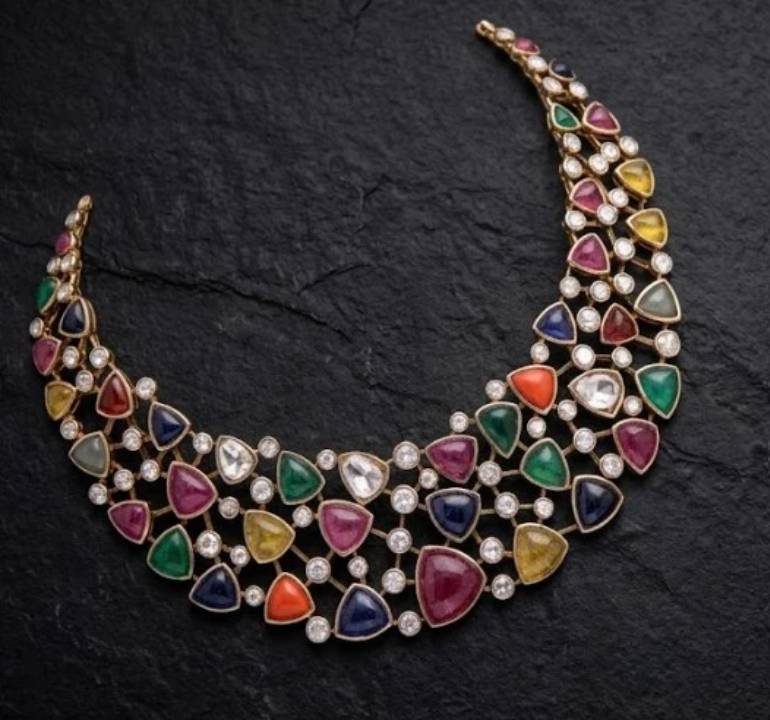
At the centre of Jaipur Gems' identity lies one of India's most sophisticated jewellery traditions: jadau.
Historically associated with the royal courts of Rajasthan and the Mughal era, jadau jewellery involves the intricate setting of gemstones into precious metal using techniques that demand exceptional patience and precision.
Unlike conventional jewellery in which gemstones are typically held by prongs or mechanically constructed settings, traditional jadau relies upon specialised methods of embedding stones into a prepared gold framework.
Polki diamonds, valued for their natural, uncut character, are frequently incorporated alongside rubies, emeralds, pearls and other coloured gemstones, as explained in the types of gems used in luxury jewelry. The results possess a richness of texture that distinguishes them from the geometric perfection of many contemporary diamond creations.
The beauty of jadau lies partly in its imperfections. Each irregular diamond surface interacts with light differently, producing a softer, more organic brilliance than the sharply controlled reflections of a modern brilliant cut.
Jaipur Gems has made this artistic language central to its identity. Its in-house workshops specialise in jadau, polki, gold and diamond jewellery, combining established techniques with evolving design sensibilities.
Every creation involves decisions that extend beyond the monetary value of its materials. The proportions of a necklace, the movement of a pair of earrings, the balance of coloured gemstones and the relationship between ornamentation and empty space all influence the final composition.
In this respect, fine jewellery has much in common with architecture. Both depend upon proportion, structure, craftsmanship and an understanding of how materials occupy space. A similar dialogue appears in what happens when art meets jewellery.
The most accomplished creations achieve something that is difficult to quantify: visual richness without sacrificing elegance.
A Contemporary Classic: The Creative Vision of Siddhartha Sacheti
When Siddhartha Sacheti joined the family business in 1997, he entered an organisation already associated with exceptional craftsmanship.
Rather than treating that inheritance as a fixed aesthetic, he approached it as a creative foundation.
Learning directly from experienced Bengali artisans, Siddhartha developed an understanding of jewellery production from initial sketches to finished creations. His exposure to traditional techniques would become central to his subsequent philosophy as both designer and business leader.
Today, as CEO and Creative Director, he champions an approach he describes as "contemporary classic", an aesthetic that balances the complexity of heritage jewellery with the sensibilities of modern collectors.
His mother, Manju Sacheti, has also played an influential role in shaping the house's design identity. Their creative collaboration reflects the family character of Jaipur Gems, where artistic direction remains closely connected to personal taste and inherited knowledge.
The resulting collections reveal a willingness to move beyond rigid definitions of Indian jewellery, a trend also seen among designers and brands creating offbeat luxury jewellery in India.
Floral compositions, sculptural forms, textured gold, unconventional gemstone arrangements and distinctive three-dimensional constructions coexist with traditional chandbalis, elaborate necklaces and ceremonial jewellery.
An emerald may become the focal point of an architectural composition. A pearl can soften the visual intensity of gold. An irregularly cut diamond may be selected precisely because its character introduces individuality.
This philosophy is particularly relevant as younger luxury consumers become increasingly interested in jewellery as wearable art that expresses identity rather than merely demonstrating wealth.
For Jaipur Gems, the challenge is not to make traditional jewellery appear modern through superficial changes. It is to preserve the intelligence of traditional craftsmanship while allowing its visual language to evolve.
The Rise of Slow Luxury
One of the defining developments in contemporary luxury is the renewed appreciation for objects that require time, skill and human judgement.
Across fashion, watchmaking, furniture and fine jewellery, discerning consumers are rediscovering the value of craftsmanship that resists industrial standardisation.
Jaipur Gems reflects this movement through an emphasis on what Siddhartha Sacheti calls slow luxury.
The concept extends beyond the time required to produce an individual jewel. It concerns the relationship between the maker, the materials and the eventual owner.
A carefully designed necklace may involve numerous revisions before its proportions feel resolved. Precious gemstones must be evaluated not simply for their individual beauty but also for how they interact within a larger composition.
The house's commitment to in-house design and manufacturing gives it greater control over this process.
For customers, this approach introduces another dimension of exclusivity. Jewellery can become an intensely personal expression, a theme explored in how personalization enhances the experience of luxury, with bespoke commissions allowing individual preferences, family traditions and sentimental considerations to influence the finished piece.
Jaipur Gems also offers custom creations, encouraging clients to participate in the design process rather than simply selecting from existing collections.
The significance of such relationships is particularly pronounced in India, where jewellery often marks life's most meaningful occasions. Weddings, anniversaries, family celebrations and inheritance all contribute to an emotional narrative that can extend across generations.
In this context, an exceptional jewel is not merely purchased. It gradually becomes part of a family's history, much like the heirloom status jewelry from Stephen Silver Fine Jewelry.
From Heritage Jewels to Global Luxury
The evolution of Jaipur Gems also reflects the internationalisation of Indian luxury.
Historically, Indian jewellery houses were often perceived primarily through the lens of bridal ornamentation and ceremonial craftsmanship. Today, designers and collectors increasingly recognise Indian jewellery traditions as sophisticated artistic disciplines with global relevance.
Jaipur Gems has participated in that transition by introducing contemporary collections that move comfortably between Indian and international wardrobes.
Its portfolio extends from elaborate polki necklaces and gemstone jewellery to diamond earrings, sculptural gold bangles, modern rings and understated everyday pieces.
Collections such as Desert Rose and Nuvo Polki illustrate the house's interest in translating traditional materials and craftsmanship into a contemporary design vocabulary, an approach shared by Khurana Jewellery House and its Zahrah Collection.
This versatility has become important as Indian luxury consumers increasingly seek jewellery that can accompany different occasions, rather than remain confined to elaborate ceremonies, in a market analysed in the global luxury jewelry market and its precious gemstones.
A statement necklace may be styled with a minimalist evening gown, while traditional earrings might complement contemporary tailoring. The distinction between Indian heritage jewellery and international luxury styling is becoming progressively less rigid.
Jaipur Gems' expansion into Dubai and Abu Dhabi also reflects the growing appeal of Indian fine jewellery among international customers, particularly those interested in distinctive gemstones, artisanal techniques and culturally informed design, in a city home to some of the best luxury jewelry designers in Dubai.
The Middle East, with its established appreciation for gold and precious jewellery, provides a natural setting for this expansion.
The larger story is one of cultural confidence. Indian jewellery houses are no longer required to dilute their origins to participate in the global luxury conversation. Their heritage can itself become a source of distinction, as Kumari Jewellery, born from legacy, also shows.
A New Chapter in Bandra
The opening of Jaipur Gems' flagship showroom on Turner Road in Bandra West, Mumbai, represents an important development in the brand's retail evolution.
Rather than approaching the boutique as a conventional jewellery showroom, the house has introduced a more immersive environment designed around architecture, atmosphere and customer experience.
The interiors incorporate references to the brand's Dal Lake collection, with water lily motifs integrated into the design. Burgundy tones inspired by Imperial Rome, textured surfaces recalling the Pantheon and carefully considered lighting contribute to a setting that places jewellery within a broader cultural conversation.
The restrained product displays are particularly significant. Instead of overwhelming visitors with inventory, the store encourages closer interaction with individual creations.
This approach reflects a broader shift across luxury retail, where the physical boutique is increasingly expected to offer something that cannot be replicated through an online catalogue, as seen when Isharya opened its inaugural flagship shop on Lavelle Road.
For an established jewellery house, the store must communicate not only product quality but also cultural identity, artistic vision and the intimacy of the purchasing experience.
Bandra's position within Mumbai's evolving luxury landscape makes it a compelling location for this next chapter. Its combination of affluent residential neighbourhoods, independent design culture, contemporary hospitality and established fashion retail provides a distinctive setting for a heritage brand seeking to engage younger collectors.
The showroom also signals the growing influence of a new generation within the Sacheti family, suggesting an evolution in how the house presents its legacy to future customers.
Beyond Jewellery: Patronage and Cultural Continuity
Jaipur Gems' association with craftsmanship extends beyond precious stones and gold.
For more than two decades, the Sacheti family has supported Hindustani classical music through concert sponsorships and scholarships for emerging musicians.
This cultural involvement provides an interesting perspective on the relationship between luxury and artistic patronage.
Historically, India's royal courts supported musicians, painters, architects and jewellers as interconnected expressions of cultural achievement. Craftsmanship flourished because patrons valued the preservation and advancement of artistic knowledge.
By supporting classical music alongside traditional jewellery making, the Sacheti family participates in a broader tradition of cultural stewardship.
The connection is especially appropriate for a house whose identity depends upon specialised skills passed between generations.
Whether expressed through the movements of a classical composition or the meticulous setting of an uncut diamond, artistic excellence often depends upon years of disciplined practice and a sensitivity that cannot be reduced to machinery or commercial efficiency.
It is this appreciation for human skill that gives cultural depth to the Jaipur Gems story.
The Future of an Indian Jewellery Legacy
As Jaipur Gems moves beyond its fifth decade, its most compelling opportunity lies in the meeting of two seemingly different worlds: the extraordinary richness of traditional Indian jewellery and the increasingly individualistic tastes of contemporary luxury consumers.
The house has the advantages of established craftsmanship, family continuity, access to specialised jewellery making knowledge and a recognisable aesthetic identity.
Its continued relevance will depend upon preserving those strengths while responding to changing expectations around design, transparency, personalisation and retail experience.
The distinction between heritage and modernity need not be an opposition. For the most enduring luxury houses, each gives meaning to the other.
Jaipur Gems demonstrates how a traditional jewellery business can become a contemporary design institution without surrendering its origins.
From Padam Sacheti's early journeys with a suitcase of jewellery to carefully conceived boutiques serving an international clientele, its evolution illustrates the possibilities for Indian craftsmanship within the global luxury market.
Ultimately, the true measure of Jaipur Gems may not lie in the scale of its retail network or the rarity of an individual gemstone. It lies in the possibility that a jewel created today might still carry meaning generations from now, treasured not simply for the gold or diamonds it contains, but for the artistry, memories and human connections it preserves.
That is the enduring promise of an heirloom. And perhaps the most meaningful definition of luxury.
Jaipur Gems: Luxury Abode Brand Profile
- Established: 1974, Mumbai, India (52 years in 2026)
- Founder: Padam Sacheti
- Creative Leadership: Dr. Siddhartha Sacheti, CEO and Creative Director
- Creative Heritage: The Sacheti family, with ancestral roots in Ajmer, Rajasthan
- Headquarters: Mumbai, Maharashtra, India
- Signature Specialities: Jadau jewellery, polki diamonds, precious gemstones, handcrafted gold jewellery and contemporary high jewellery
- Collections and Creations: Heritage necklaces, bridal jewellery, diamond necklaces, gemstone earrings, gold bangles, bespoke jewellery and contemporary fine jewellery
- Distinctive Design Philosophy: Contemporary classic, combining Indian craftsmanship with modern aesthetics
- Business Structure: Privately held, family operated luxury jewellery house
- International Presence: Mumbai, Chennai, Coimbatore, Dubai and Abu Dhabi
- Notable Mumbai Boutiques: Hughes Road, Gamdevi, and Turner Road, Bandra West
- Cultural Associations: Support for Hindustani classical music, concerts and emerging musicians
- Official Website: Jaipur Gems official website
About the Brand
Jaipur Gems is an Indian luxury jewellery house established in Mumbai in 1974 by Padam Sacheti. Renowned for its mastery of traditional jadau jewellery, polki diamonds and exceptional gemstones, the family owned brand brings together generations of Indian craftsmanship and contemporary design. Under the creative leadership of Dr. Siddhartha Sacheti, Jaipur Gems has developed a distinctive aesthetic that celebrates artistic individuality, precious materials and timeless elegance. With boutiques across India and the Middle East, the house continues to reinterpret India's remarkable jewellery heritage for discerning international collectors and modern connoisseurs.

Comments
No comments yet.
Add Your Comment
Thank you, for commenting !!
Your comment is under moderation...
Keep reading luxury post