Mauritania: The Luxury Travel Guide to the World's Last Untouched Frontier
 Pradeep Dhuri
- 18th Jul 2026
- 1370
- 0
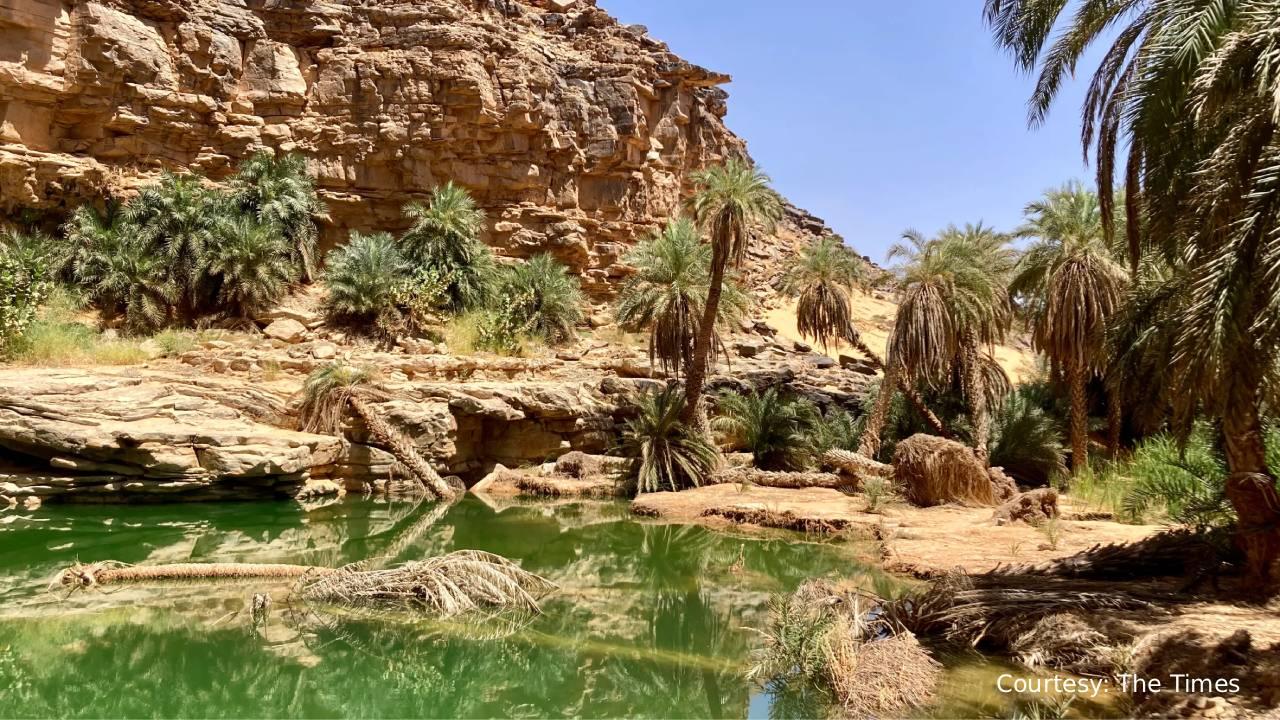
There are roughly 195 countries on earth. Most of them have been packaged, photographed, hashtagged, and flattened into a carousel of predictable experiences. Mauritania has not.
This is a country the size of Egypt with a population smaller than Dubai's. Two-thirds of it is Sahara. Its capital, Nouakchott, did not exist seventy years ago: it was a fishing village of a few hundred people when Mauritania gained independence from France in 1960. Today it is a sprawling, wind-blown city of over a million, with exactly one hotel that would pass muster as genuinely international. The country receives fewer than 30,000 international visitors annually. Iceland, a country with a fifteenth of its landmass, receives over two million.
For the traveller who has exhausted the Aman circuit and worked through nearly every one of the world's most celebrated luxury escapes, who finds Patagonia crowded and the Maldives repetitive, Mauritania offers something that money alone struggles to buy: genuine emptiness, deep civilisational history, and the satisfying discomfort of going somewhere that has not been designed for your arrival.
This is not a destination for the luxury traveller who requires thread-count guarantees. It is for the one who understands that the rarest commodity in 2026 is not comfort but authenticity, and who is willing to accept that the two rarely coexist.
What You Are Actually Going To See
Mauritania's appeal is concentrated in a handful of extraordinary sites spread across vast distances. Understanding the geography is essential before committing. For travellers who plan itineraries around immersive stays inside UNESCO World Heritage sites, the country's highlights fall into four distinct clusters.
The Adrar Plateau is the centrepiece. This elevated desert region in central-western Mauritania holds the two most significant UNESCO-listed ancient cities (Chinguetti and Ouadane), the Terjit Oasis, the towering Azoueiga dunes, and, reachable via a punishing but extraordinary 4x4 track, the Richat Structure, commonly known as the Eye of the Sahara.
The Atlantic Coast runs from Nouakchott north to Nouadhibou, encompassing the Banc d'Arguin National Park, one of the most important migratory bird sanctuaries on earth, and the Cap Blanc peninsula, home to one of the last surviving colonies of Mediterranean monk seals.
The Iron Ore Railway is a 704-kilometre single-track line connecting the mining town of Zouerate deep in the Sahara to the port of Nouadhibou on the Atlantic. The train that runs on it, up to three kilometres long, carrying over 200 wagons of iron ore, weighing upwards of 17,000 tonnes, is the longest and heaviest in the world. Riding it is one of the most singular travel experiences available anywhere.
The Deep South, Tichitt and Oualata, represents the furthest frontier. These two remaining UNESCO-listed ksour (fortified desert villages) lie over 1,200 kilometres from Nouakchott and require multi-day 4x4 expeditions to reach. Oualata, with its extraordinary painted mud-brick houses, is considered by those who have visited all four ksour to be the most beautiful. It is also the hardest to reach, requiring a drive of 19 hours from the nearest city of any size.
Chinguetti and the Desert Libraries
Chinguetti was founded in 777 CE. For centuries, all of Mauritania was known in the Arab world as Bilad Shinqit, the Land of Chinguetti. It served as a gathering point for pilgrims heading to Mecca and as a centre of Islamic learning so significant that some scholars consider it the seventh holiest city in Islam.
What draws the informed traveller today are the manuscript libraries. Thirteen privately owned libraries survive in Chinguetti, collectively holding approximately 6,000 Arabic manuscripts, many dating to the 12th century. The subjects range from Islamic jurisprudence and Quranic commentary to astronomy, mathematics, poetry, and medicine. The manuscripts were handwritten by scribes using ink made from charcoal and gum Arabic, on paper and parchment, some on sheepskin. For anyone captivated by the opulence of ancient royal treasuries, these fragile family collections offer a quieter but equally profound encounter with the deep past.
These are not museum displays. The libraries are family possessions, passed through generations. The Habbot Library holds over 1,400 documents. The Al-Ahmed Mahmoud Library contains approximately 700 manuscripts, many of which the current custodian, Saif el Islam al Ahmed Mahmoud, handles with cotton gloves as he shows them to visitors.
The physical setting compounds the experience. Chinguetti's old quarter is a labyrinth of dry-stone and mud-brick buildings being slowly consumed by advancing sand dunes. UNESCO designated it a World Heritage Site in 1996. In the 18th century, the town had roughly 30 libraries. Now 13 remain, with only four to six operational on any regular basis. Flash floods driven by climate change increasingly threaten the structures housing the manuscripts. The Sahara itself is advancing southward at roughly 10 kilometres per year.
Visiting requires a 4x4 from the regional town of Atar, about a two-hour drive on rough desert roads. Accommodation in Chinguetti is basic, comprising tented camps and simple auberges (guesthouses). The Auberge Zarga, situated beside the dunes, is a commonly recommended option. Expect shared facilities, a mat on a raised platform, and some of the finest stargazing on the planet.
The Eye of the Sahara
The Richat Structure is one of those geological formations that seems designed to provoke conspiracy theories. Visible from space, where astronauts use it as an orientation landmark when orbiting over the Sahara, it is a nearly perfect set of concentric rock rings spanning approximately 50 kilometres in diameter. The current scientific consensus is that it is the eroded remnant of a geological dome, roughly 100 million years in the making. No impact evidence (shocked quartz, melt rock) has been found, ruling out the meteor theory.
At ground level, the Richat Structure is less immediately dramatic than its satellite photographs suggest. The scale is too vast to comprehend from the desert floor. The real reward comes from hiking the rim at sunrise, when the light crawls across the ancient concentric rings and the silence is total. It is the kind of dark-sky setting that has elsewhere turned stargazing into a new dimension of luxury astro-tourism at far more developed destinations.
Access is from Ouadane, reached by 4x4 from Atar (roughly four hours on unpaved track). From Ouadane, the Richat Structure requires another two-hour drive through trackless desert, with no roads and no signage. A local guide and experienced driver are non-negotiable. There is no tourist infrastructure at the site: no entrance fee, no visitor centre, no shade, no water. You bring everything or you do without.
Banc d'Arguin: Where the Sahara Meets the Atlantic
The Banc d'Arguin National Park, a UNESCO World Heritage Site since 1989, stretches over 12,000 square kilometres along the Mauritanian coast between Nouakchott and Nouadhibou. It is, by scientific consensus, one of the most important bird sanctuaries in the world. For travellers who plan journeys around immersive luxury wildlife and safari experiences, it is one of the great undiscovered natural theatres.
The park shelters more than two million migratory waders from northern Europe, Siberia, and Greenland during the winter months. Breeding populations include flamingos, pelicans, terns, spoonbills, and ospreys. The surrounding waters are the richest fishery off the West African coast.
What makes Banc d'Arguin exceptional beyond its ornithological significance is the Imraguen, an indigenous fishing community whose members traditionally cooperate with dolphins to herd schools of mullet toward their nets. The Imraguen sailing boats, or lanchas, offer the primary means of exploring the park's islands, mudflats, and mangrove-lined shores.
The park also lies adjacent to the Cap Blanc peninsula, where one of the last remaining colonies of Mediterranean monk seals, estimated at roughly 300 animals, part of a global population of under 1,000, breeds in inaccessible coastal caves. The monk seal is one of the world's most endangered marine mammals. Sightings cannot be guaranteed, but dedicated visits can be arranged through the Cap Blanc nature reserve.
Access to the heart of Banc d'Arguin requires a 4x4 drive of two to three hours on unpaved sand and gravel tracks from the N2 highway to the Imraguen village of Iwik. Accommodation within the park is limited to basic eco-lodges and tented camps, often community-run.
The Iron Ore Train
No discussion of Mauritania is complete without the iron ore train. Operated by SNIM (the national mining company), this train has run since 1963, hauling iron ore from the mines at Zouerate to the port at Nouadhibou. It consists of three to four diesel-electric locomotives pulling approximately 200 wagons, each carrying 84 tonnes of iron ore. Fully loaded, the train stretches up to three kilometres and weighs roughly 17,000 tonnes.
Anyone can ride it. Locals routinely use the freight wagons to transport themselves, their goods, and occasionally their camels between Saharan settlements. There is a basic passenger car, but the experience that has made this train famous is riding atop the open ore wagons: exposed to the wind, the cold (temperatures drop sharply after sunset in the desert), and the relentless iron ore dust.
The full journey covers approximately 700 kilometres and takes between 17 and 20 hours. Departure times are unpredictable, with the train typically arriving at boarding points somewhere between 6pm and 11pm. You wait.
This is emphatically not a comfortable experience. Riders emerge coated in iron dust. Goggles, a scarf wrapped around the head, and warm layers are essential. The more seasoned operators arrange for drivers to flatten and smooth the ore in a wagon section, provide blankets and mattresses, and ride alongside their clients.
The payoff is proportional to the discomfort. Seventeen hours crossing the Sahara under a canopy of stars, on a three-kilometre-long industrial leviathan, with nothing but desert and silence in every direction, is unlike anything in the curated world of luxury travel. It could not sit further from the world's most refined luxury rail journeys, or from the polished five-star desert train experiences emerging across Saudi Arabia, and that is precisely the point.
How to Get There and What It Costs
Flights: Nouakchott's Oumtounsy International Airport receives direct flights from Paris (Air France), Casablanca (Royal Air Maroc), Istanbul (Turkish Airlines), Tunis (Tunisair), and Las Palmas de Gran Canaria (Binter). From India, the most practical routing is via Istanbul or Paris. There are no direct flights from any Indian city. Budget approximately $800 to $1,500 for a round-trip economy ticket from Mumbai or Delhi via Istanbul, and $2,500 to $4,000 for business class, depending on season and routing. A routing via Casablanca also pairs naturally with a stay at some of the finest luxury hotels across Morocco.
Visa: As of January 2025, all travellers must apply for an e-visa online before boarding. The application is processed through the Mauritanian government's electronic portal. The visa fee of EUR 55 (approximately $60) is paid on arrival. Indian passport holders are eligible. Processing is typically straightforward, but allow at least two weeks.
Season: November through March offers the most favourable conditions. Daytime temperatures in the Adrar region are warm but manageable (25 to 35 degrees Celsius), and nights are cool. Summer months (June to September) bring extreme heat exceeding 45 degrees Celsius and are not advised for travel.
Hotels in Nouakchott: The accommodation ceiling is low. The FASQ Hotel is the closest Mauritania comes to an international-standard property, being a modern, well-managed hotel with a spa, reliable air conditioning, and decent food. The Azalai Hotel Nouakchott is a serviceable four-star business hotel. The Sheraton (now under the Marriott umbrella) serves as the default for corporate travellers. Beyond Nouakchott, accommodation drops to basic auberges, tented camps, and desert bivouacs.
Private Tour Costs: This is where the economics become interesting.
| Component | Budget Estimate (Per Person) |
|---|---|
| Private 4x4 plus driver/guide, 8 to 10 days | $2,000 to $3,500 |
| Accommodation (mix of hotel plus camp) | $400 to $800 |
| Meals (full board, included in most tours) | Included in tour price |
| Domestic flights (if any) | $150 to $300 per sector |
| Iron ore train experience (logistics) | Included in tour price |
| International flights (ex-India, economy) | $800 to $1,500 |
| International flights (ex-India, business) | $2,500 to $4,000 |
| Visa plus travel insurance | $100 to $200 |
| Total range (per person, 8 to 10 days) | $4,000 to $8,500 |
For context, this is less than a single night at the Aman Tokyo, and the experience is incomparably more rare. For Indian ultra-high-net-worth travellers who have already embraced India's fast-growing elite travel obsessions such as vineyard tourism, the value equation here is striking.
Fully private, bespoke expeditions organised through specialist operators such as Kanaga Africa Tours (who run dedicated Oualata-Tichitt expeditions), RJ Travel Agency (Marrakech-based, strong Mauritania coverage), or Against the Compass Expeditions (experienced operator running regular small-group departures) will fall at the higher end. Several Nouakchott-based operators such as Mauritanian Best Tours offer well-regarded private guiding at more accessible price points, typically $200 to $350 per day for a fully inclusive private 4x4 itinerary with an English-speaking guide.
Safety: The Honest Assessment
The U.S. State Department maintains a Level 3 advisory (Reconsider Travel) for Mauritania, citing terrorism and crime risks. The UK Foreign Office advises against travel beyond major cities. These advisories reflect genuine regional security challenges, particularly near the borders with Mali and in the far north and east, but they do not accurately reflect the experience of organised tourism in the established travel corridors (Nouakchott, Atar, Chinguetti, Ouadane).
The practical reality, as reported consistently by operators who have run hundreds of trips, is that the Adrar region and the coast between Nouakchott and Nouadhibou are safe for guided travel. Violent incidents against tourists in these areas are essentially unheard of. Petty crime exists in Nouakchott, concentrated outside the Tevragh Zeina diplomatic quarter, and standard urban precautions apply.
What makes Mauritania feel different from a security perspective is not actual danger but the absence of safety infrastructure. There are no hospitals with advanced trauma capability outside Nouakchott. Evacuation from the deep desert is measured in hours, not minutes. Mobile phone coverage is intermittent to nonexistent in the Adrar. These are the risks that matter for the UHNW traveller: not terrorism, but the logistical reality of being genuinely remote.
Travel insurance with emergency evacuation coverage is non-negotiable. A satellite phone or satellite communicator (Garmin inReach or equivalent) is strongly recommended for any itinerary beyond Nouakchott.
Independent travel is inadvisable. This is not a destination where you rent a car and explore. Even experienced overlanders rely on local guides who know the desert tracks, the shifting sand conditions, and the precise locations of water and fuel. For the luxury traveller, the question is not whether to use a guide but which operator to trust.
Who This Destination Is Actually For
Mauritania rewards a specific type of traveller: someone who has moved past the collection of comfortable destinations and is now seeking encounters that cannot be replicated or packaged. The person who finds meaning in standing inside a 12th-century library where the custodian is the direct descendant of the family who built it. Who wants to ride a three-kilometre train across the Sahara, in the spirit of an epic long-distance luxury rail adventure, not because it is comfortable but because it is singular. Who understands that the absence of a Four Seasons is not a deficiency but the very reason the place remains worth visiting.
The infrastructure gap is real. You will eat simply. You will sleep on mats under canvas some nights. The toilets will occasionally be the open desert. The 4x4 rides will be long and punishing.
But you will also stand inside the Eye of the Sahara with no other human being in sight. You will handle manuscripts that predate the printing press in a library that has been in the same family for 200 years. You will watch two million birds take flight over Atlantic shallows that have been fished by the same community, using the same dolphin-cooperative technique, for centuries. You will see the Sahara not as a curated backdrop but as the thing itself: vast, indifferent, and beautiful. It rewards the same instinct that draws seasoned travellers to a genuinely rare luxury travel adventure in the world's remote corners.
Mauritania is not luxury travel. It is something better: it is rare travel.
Frequently Asked Questions
How do you get to Mauritania from India?
There are no direct flights from India to Mauritania. The most practical routings are via Istanbul (Turkish Airlines to Nouakchott) or via Paris (Air France). Total travel time from Mumbai or Delhi is approximately 14 to 18 hours depending on layover. An e-visa is required, obtainable online before departure, with the fee of EUR 55 paid on arrival. Indian passport holders are eligible.
Is Mauritania safe for tourists in 2026?
The main tourism corridors, namely Nouakchott, the Adrar Plateau (Atar, Chinguetti, Ouadane, Terjit Oasis), and the coast to Nouadhibou, are considered safe for organised, guided travel. The U.S. State Department maintains a Level 3 advisory citing terrorism and crime risks, primarily relevant to border regions near Mali and remote northern and eastern areas. No organised tour operator has reported a security incident against tourists in the established travel areas. Travel insurance with emergency evacuation coverage is essential.
How much does a private Mauritania trip cost?
A fully private 8 to 10 day expedition with a dedicated 4x4, English-speaking guide, full board, and all logistics typically costs $2,500 to $4,000 per person, excluding international flights. Including business-class flights from India via Istanbul or Paris, the total ranges from $5,000 to $8,500 per person. Group tours run considerably less, at $1,600 to $2,800 for 6 to 8 day itineraries.
What is the best time to visit Mauritania?
November through March. Daytime temperatures in the Adrar Plateau average 25 to 35 degrees Celsius, with cool nights ideal for desert camping. The period from April to October brings extreme heat, regularly exceeding 45 degrees Celsius in the interior, and is not recommended for travel.
Can you visit the Eye of the Sahara (Richat Structure)?
Yes. The Richat Structure is accessible by 4x4 from Ouadane, itself reached from Atar (the regional capital of the Adrar). The drive from Ouadane to the structure takes approximately two hours through trackless desert. A local guide and experienced driver are mandatory, as there are no roads, no signage, and no facilities at the site. The structure spans 50 kilometres in diameter, and sunrise hikes along the rim offer the most rewarding views.
What are the ancient libraries of Chinguetti?
Chinguetti, founded in 777 CE, holds 13 privately owned libraries containing approximately 6,000 Arabic manuscripts, some dating to the 12th century. Topics span Islamic law, astronomy, mathematics, poetry, and medicine. The manuscripts are family possessions maintained by descendants of the original collectors. Chinguetti is a UNESCO World Heritage Site, reached by 4x4 from Atar in roughly two hours.
Disclaimer: All pricing, cost ranges, visa fees, tax and regulatory figures, advisory levels, and travel logistics mentioned in this article are indicative estimates compiled at the time of writing and are subject to change with season, operator, currency movement, and government policy. Figures such as visitor numbers, manuscript counts, wildlife populations, and geological measurements are drawn from publicly reported sources and should be independently verified before making travel or financial decisions. This article is intended for general informational purposes only and does not constitute travel, financial, or legal advice.
Comments
No comments yet.
Add Your Comment
Thank you, for commenting !!
Your comment is under moderation...
Keep reading luxury post