Four Seasons Explorer Opens a Remote Palau Beach Route, But Access Comes With a Catch
 Namrata Parab
- 13th Oct 2026
- 1264
- 0
LuxuryAbode Travel Intelligence | Palau | October 2026
The most compelling luxury travel experiences increasingly have something in common: they cannot be replicated simply by paying more.
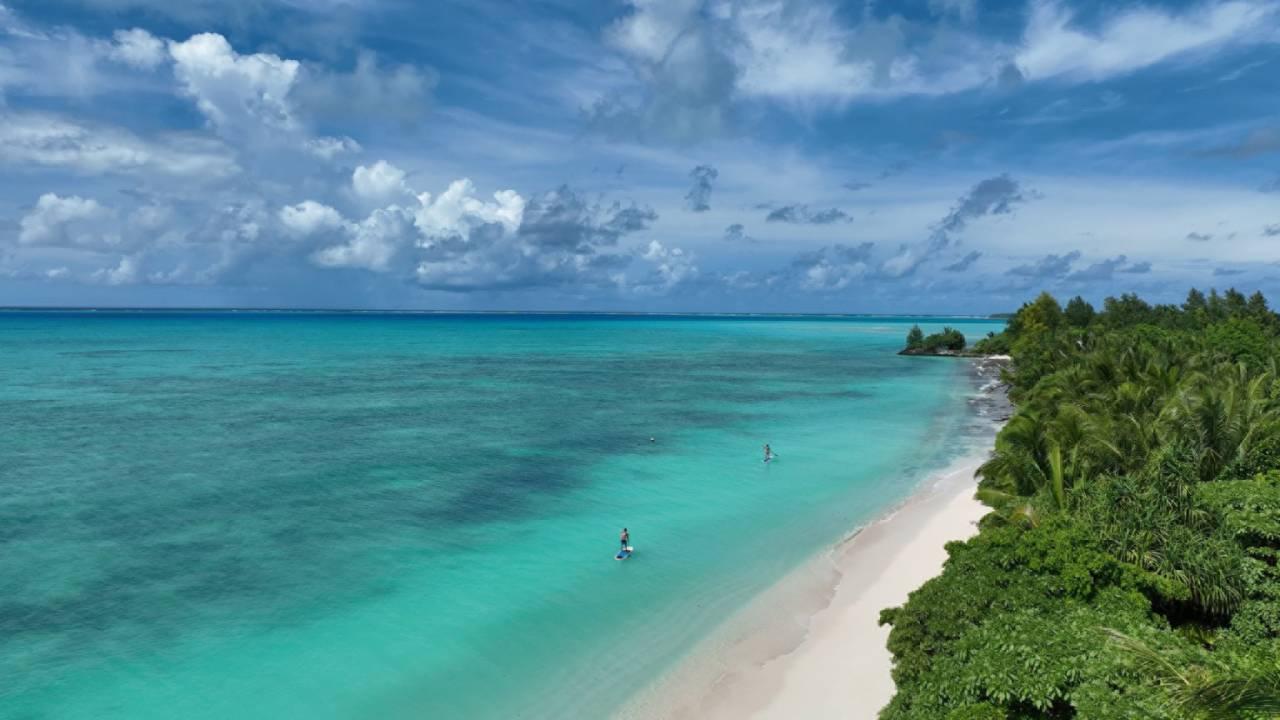
In the western Pacific, Four Seasons has introduced a northern route aboard its 22-guest Explorer catamaran, opening up the possibility of visiting Kayangel, a remote Palauan atoll whose principal island covers approximately 1.4 square kilometres.
The centrepiece is a secluded beach experience, complete with a specially prepared lunch, access to remarkably clear waters and a level of privacy difficult to achieve at established island resorts.
There is, however, an important qualification. Kayangel visits are subject to weather and sea conditions. Even a confirmed stay aboard Four Seasons Explorer does not guarantee access to the island.
For travellers accustomed to carefully controlled itineraries, that uncertainty is not incidental. It is part of what distinguishes genuine exploration from a conventional luxury resort holiday.
Kayangel: A 1.4-Square-Kilometre Island Beyond Palau's Usual Luxury Circuit
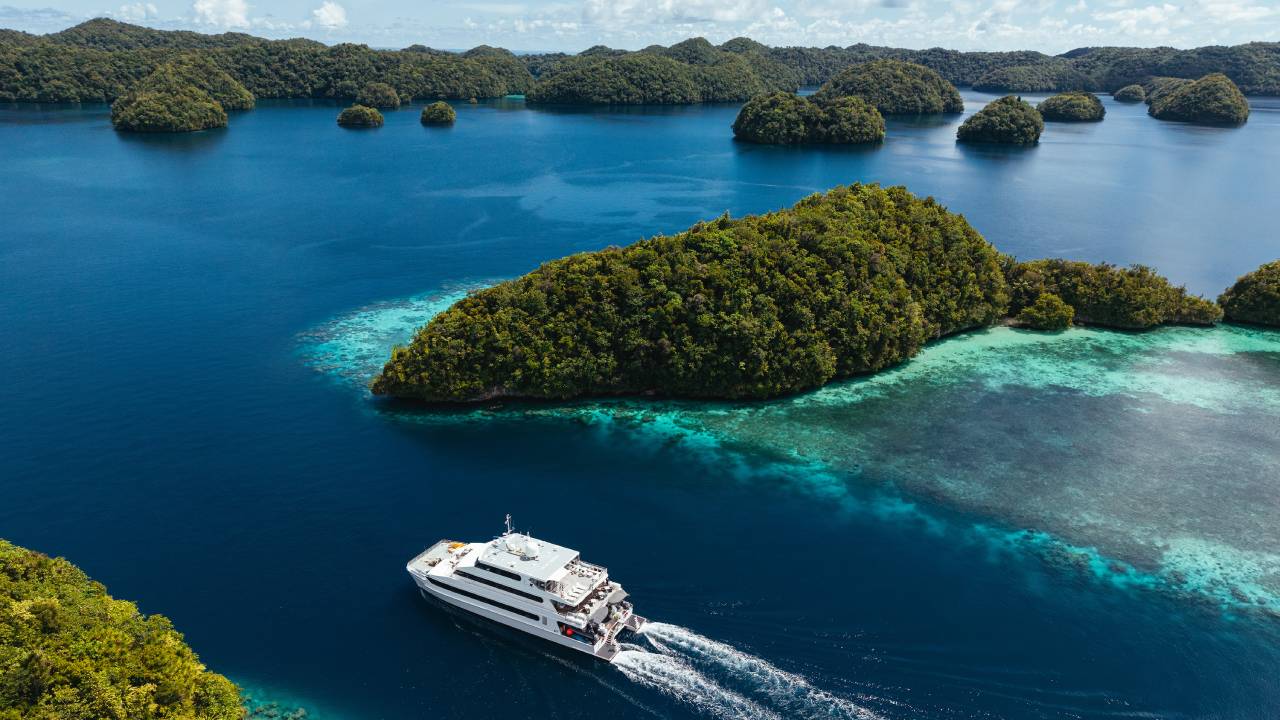
Palau's better-known attractions lie largely around the Rock Islands Southern Lagoon, a UNESCO World Heritage Site distinguished by forested limestone formations, marine lakes and exceptional reef environments.
Kayangel lies to the north, away from the country's principal visitor circuits. Four Seasons describes an atoll inhabited by approximately 55 people, where fishing, traditional livelihoods and the natural environment remain central to everyday life.
Unlike a purpose-built private island resort in the Maldives, Kayangel is a living island community. This distinction matters.
Four Seasons is offering an exclusive guest experience on a designated stretch of beach, not ownership of the island or unrestricted access to its community.
The destination is reached by boat, with the northern extension expanding the geographic scope of Four Seasons Explorer's operations. The company describes its vessel as uniquely positioned to travel between Palau's northern and southern island regions, although that exclusivity claim has not been independently established.
A Beach Lunch Designed Around Isolation, Not Excess
The new excursion's signature experience is deliberately restrained.
Rather than elaborate beachfront infrastructure, guests are offered a castaway-style lunch on a secluded shoreline. The menu includes vegetarian and seafood bento boxes drawing on Mediterranean influences.
Reported dishes include watermelon with feta, avocado, caponata, Niçoise salad, yuzu-dressed prawns and grilled cod, with apple pie to finish.
The attraction is less about culinary theatre than the setting: a limited number of guests, an open horizon and a beach reached without the density of conventional resort tourism.
That said, exclusivity should not be confused with complete solitude. The experience is shared within the context of a small floating resort, and arrangements depend on that day's sailing programme.
Private dining, full-vessel charter arrangements and exclusive beach-use conditions should be discussed separately with Four Seasons rather than assumed to form part of a standard reservation.
Inside the 39-Metre Four Seasons Explorer
Four Seasons Explorer is closer in operational character to a specialist expedition yacht than a conventional cruise ship.
The 39-metre catamaran accommodates 22 guests across 10 staterooms and one Explorer Suite, with three decks dedicated to accommodation, dining, recreation and marine activities.
| Specification | Detail |
|---|---|
| Vessel length | 39 m |
| Guest capacity | 22 |
| Accommodations | 11 |
Vessel and accommodation specifications published by Four Seasons.
The standard stateroom measures 20 square metres, while the upper-deck Explorer Suite offers 45 square metres and a private sundeck.
These are comfortable yacht accommodations, but they should not be mistaken for the space available in an equivalent ultra-luxury land-based resort suite.
What the vessel offers instead is mobility.
Its dive facilities, tenders and specialist recreational equipment allow guests to move between reefs, islands and shore-based excursions without repeatedly checking into different hotels.
Days may include scuba diving, snorkelling, guided kayaking, island cycling, nature excursions and wellness sessions. The vessel also operates a PADI Five Star Dive Centre.
Travellers curious about the wider fleet can read about the Four Seasons Explorer in the Maldives, while those planning ahead can explore Palau adventures aboard the Four Seasons Explorer.
What Does Four Seasons Explorer Palau Actually Cost?
The principal commercial detail missing from the Kayangel announcement is the accommodation price.
Four Seasons operates dynamic reservations, and no fixed public rate specifically for the new Kayangel route was established during this review.
More importantly, guests should distinguish between the cost of occupying a cabin and the total expenditure of making a remote Pacific expedition.
The following published charges provide useful reference points. They are not a quotation for a complete Kayangel itinerary.
| Expense | Published price or booking position |
|---|---|
| Stateroom accommodation | Date-dependent; request a live quotation |
| Explorer Suite | Date-dependent; request a live quotation |
| Kayangel beach excursion | Confirm inclusion or additional charge |
| Onboard meals | Included; beverages excluded |
| Discover Scuba Diving | From US$275 per person |
| PADI Open Water course | From US$950 per person |
| Private beach dinner | From US$2,000 |
| Private scenic flight | From US$625 per person |
| Entire vessel charter | Quotation required |
Sources: Four Seasons' official accommodation, dining and experiences pages. Rates are starting prices where indicated and may change.
For travellers considering a private charter, the vessel's 23-member crew and maximum 22-guest accommodation capacity are particularly relevant. An exclusive booking changes the character of the experience, but not the weather-related restrictions affecting northern navigation. Anyone new to the format may find this definitive guide to luxury yacht chartering a useful starting point.
The most useful pre-booking request is therefore an itemised proposal covering accommodation, the planned Kayangel sailing window, transfers, marine activities, beverages, applicable permits and cancellation terms.
Getting to Palau: The Journey Requires Planning
Palau is not a destination with the air connectivity of the Maldives or Bali.
International arrivals use Roman Tmetuchl International Airport, commonly known as Palau International Airport, with connections through regional gateways including Taipei, Manila, Tokyo, Guam and Brisbane. Actual routes and operating schedules must be checked before confirming accommodation.
From the airport, reaching Four Seasons Explorer generally involves a 20-minute road journey to M-Dock Marina in Koror, followed by a speedboat transfer taking approximately 60 to 90 minutes, depending on the vessel's location.
Regular embarkation is scheduled for 1:00 PM, and disembarkation for 11:00 AM. International arrivals late in the evening may require an overnight stay in Koror.
For travellers arriving from India, Europe or the Middle East, flight coordination deserves as much attention as the yacht reservation itself. A short expedition could otherwise be undermined by inconvenient transit schedules or missed connections.
The operational advantage is that Four Seasons Explorer allows daily embarkations and disembarkations without a standard minimum stay. Nevertheless, anyone booking primarily to visit Kayangel would be wise to allow additional days rather than rely on a single weather-dependent opportunity.
Conservation Is Part of the Destination's Value
Palau's marine environment is among its most valuable national assets.
Its exclusive economic zone extends across approximately 500,000 square kilometres, while the country's marine-conservation framework has historically allocated substantial offshore areas to protection and controlled fishing activities. The exact legal restrictions applicable to a particular excursion should be checked against current regulations.
Kayangel introduces an important question for remote-island tourism: how can increased access create economic value without undermining the qualities that attracted visitors in the first place?
A beach lunch for a small group has a different physical footprint from a large resort development. Yet small-scale tourism is not automatically environmentally neutral.
Tender movements, waste management, wildlife disturbance, local community consent and the frequency of visits all influence the eventual impact.
For Four Seasons, the commercial opportunity is clear. The harder obligation is demonstrating that expanding the geographic reach of a luxury product also respects the ecological and social limits of the destination. The brand's track record, including 15 years of marine conservation in the Maldives, offers a useful benchmark.
The LuxuryAbode Perspective: Access Is Valuable Because It Has Limits
There is a material difference between a private beach that has been manufactured for exclusivity and an isolated coastline that remains difficult to reach.
Kayangel belongs to the second category.
Four Seasons Explorer's new route is interesting because it combines a recognised hospitality operator, specialist marine logistics and a destination that cannot be made reliably accessible on demand.
The resulting experience will not suit every affluent traveller. Those seeking guaranteed beach time, expansive suites and tightly scheduled activities may find a conventional private-island resort more appropriate.
For experienced divers, expedition travellers and families interested in marine environments, the trade-off could be worthwhile.
The important point is that a premium price purchases the expertise and infrastructure needed to attempt the journey, not absolute control over nature.
In Palau, genuine exclusivity begins where the guarantee ends.
Reservations and Enquiries
Four Seasons Explorer, Palau
- Official Four Seasons Explorer website
- Phone: +960 66 00 888
- Email: reservations.pme@fourseasons.com
Request current rates, planned Kayangel sailings, inclusions and weather-related itinerary terms directly from the reservations team.
Frequently Asked Questions
1. Can guests visit Kayangel Island with Four Seasons Explorer?
Yes. Four Seasons introduced a northern Palau route in September 2026 that includes potential access to Kayangel. Visits are subject to suitable weather, sea conditions and operational scheduling.
2. Is Kayangel a private island owned by Four Seasons?
No. Kayangel is a Palauan island community. Four Seasons advertises exclusive use of a designated beach area for its Explorer guests, not ownership or exclusive control of the island.
3. How much does Four Seasons Explorer Palau cost?
Accommodation rates depend on travel dates and room selection. The vessel offers 20-square-metre staterooms and a 45-square-metre Explorer Suite. Travellers should request a current quotation and clarify any additional fees for excursions and transfers.
4. Can Four Seasons Explorer Palau be privately chartered?
Yes. The complete vessel can be chartered for groups of up to 22 guests, with the support of a 23-member crew. Rates and customised itineraries are available by enquiry.
5. What is the best time to visit Palau for diving?
Four Seasons identifies February through April as a period of particularly good diving visibility. Kayangel access, however, remains dependent on local conditions rather than a guaranteed seasonal schedule.
6. How do you reach Four Seasons Explorer from Palau airport?
Guests typically transfer from Palau International Airport to M-Dock Marina in approximately 20 minutes, followed by a 60 to 90-minute speedboat journey. Transfer timing depends on where the vessel is operating.

Comments
No comments yet.
Add Your Comment
Thank you, for commenting !!
Your comment is under moderation...
Keep reading luxury post