Flores Island, Indonesia: The Last Serious Frontier in Asian Luxury Travel (And What It Actually Costs)
 Namrata Parab
- 12th Aug 2026
- 1409
- 0
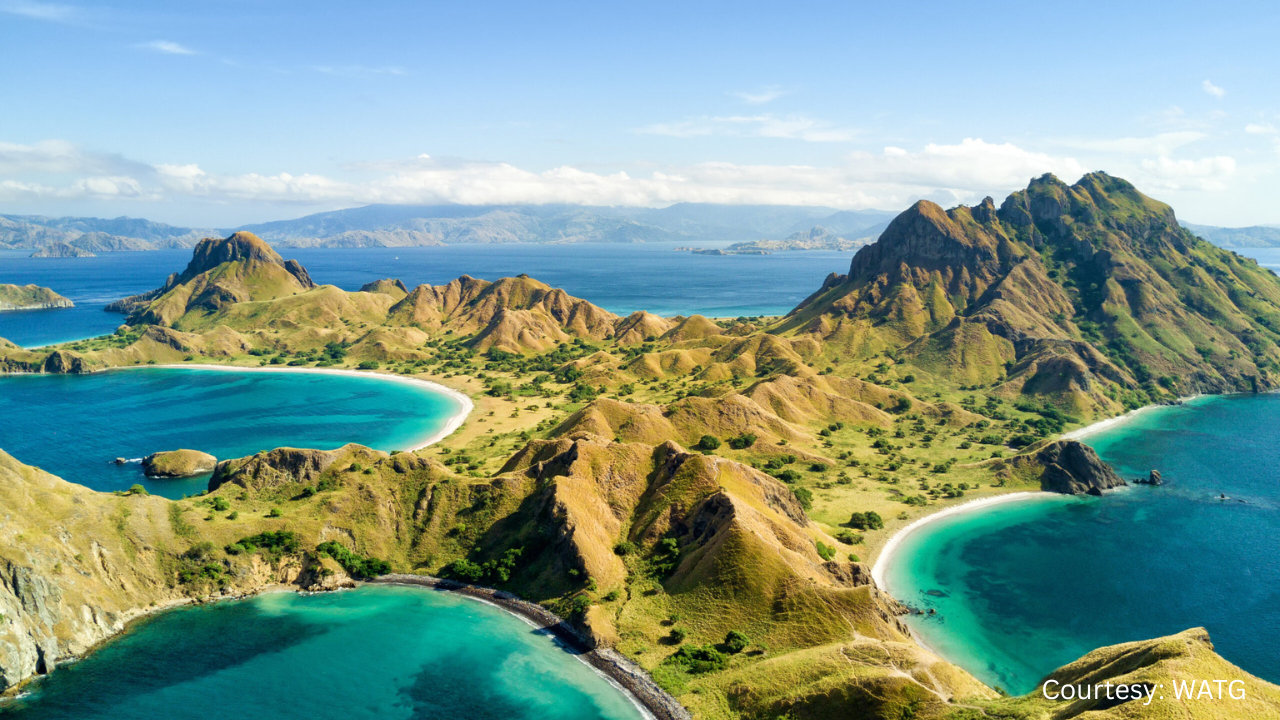
Bali has a traffic problem, a crowd problem, and increasingly a credibility problem among people who can afford to go anywhere. The interesting money in Indonesian travel moved east some time ago, and it settled, for now, on a 350 kilometre long volcanic island that most itineraries treat as nothing more than the airstrip next to the dragons.
Flores is where Indonesia's most expensive travel product actually operates. The phinisi fleet that sails Komodo National Park out of Labuan Bajo now includes vessels charging over USD 20,000 a night. Marriott planted its first Luxury Collection resort in Indonesia here, not in Bali, joining a portfolio that elsewhere includes properties such as the Luxury Collection's own Mitsui property in Kyoto. The G20 delegates were brought here in 2022, and the ASEAN Summit followed in 2023, which is why a town that was a fishing village fifteen years ago now has a marina, an expanded international capable airport, and a five star density that makes no sense on paper until you understand what sits offshore.
What the glossy coverage consistently omits: the park fee structure has become genuinely chaotic, with a consolidated ticket, a daily visitor quota, and a mandatory pre-booking app introduced in quick succession. The best boats sell out eight to twelve months ahead for July and August. And 90 percent of visitors never travel more than 30 nautical miles from Labuan Bajo harbour, which means the actual island of Flores, arguably the most rewarding overland journey in Indonesia, remains almost empty.
This is the full picture: what the top end costs, how the access actually works, and why the smartest itineraries treat the dragons as the beginning rather than the point.
Labuan Bajo: From Fishing Village to Indonesia's Designated Luxury Gateway
The Indonesian government named Labuan Bajo one of its five super priority tourism destinations, and the capital followed. Komodo Airport, LBJ, was expanded to handle wide body aircraft. A new marina and waterfront promenade replaced much of the old harbour chaos. Direct flights from Jakarta take about 2.5 hours, from Bali under 1.5 hours, with multiple daily rotations on Garuda, Batik and Citilink.
For Indian travellers, there is no direct routing. The clean options run Mumbai or Delhi to Singapore or Jakarta, then onward, or via Bali, a routing pattern already familiar to Indian ultra rich travellers accustomed to flying privately to nearby island destinations. Indians receive Indonesian visa on arrival at IDR 500,000, about Rs 2,700, extendable once, and the e-VOA can be arranged before departure. Realistic door to door from Mumbai: 14 to 18 hours. That filter is precisely why the clientele here skews serious.
On land, two properties define the top tier:
Ta'aktana, a Luxury Collection Resort and Spa. Marriott's first Luxury Collection property in Indonesia, opened 2023, built across a private bay ten minutes from the airport, a positioning strategy not unlike the Luxury Collection's approach when The Joseph opened in Nashville. Overwater villas, a jetty for private boat departures, and rates that run roughly USD 450 to USD 700 per night for entry categories, with the top overwater and cliff villas commanding USD 1,500 to USD 3,000 plus in peak season. Its real product is not the room, it is the ability to step from your villa onto a private vessel and be inside the national park before the day trip fleet leaves the harbour.
Ayana Komodo Waecicu Beach. The first true five star on Flores, with 205 rooms, a private jetty, and, critically, its own nine cabin phinisi, the Lako di'a, which sells cruises as an extension of the resort stay. Rooms run roughly USD 300 to USD 600, suites higher. Ayana functions as the polished, larger scale option, Ta'aktana as the quieter, villa led one.
Everything below these two drops off quickly. Labuan Bajo's hotel stock is thin in the middle, which is a useful tell: this destination was built top first.
The Phinisi Fleet: Indonesia's Most Underrated Charter Market
The phinisi, the traditional two masted wooden sailing vessel of the Bugis shipwrights of Sulawesi, has been reborn as a floating villa category with no real equivalent anywhere in the world, a category serious enough to warrant its own place in our definitive guide to luxury yacht chartering. These are hand built wooden ships, some over 50 metres, carrying spas, dive centres and crews of twenty, sailing one of the richest marine ecosystems on the planet.
The market has three genuine tiers, and the spread between them is enormous.
Flagship tier, USD 10,000 to 25,000 per night, full charter. Prana by Atzaró, 55m, nine cabins, 18 guests, roughly USD 20,000 per night, Lamima, 65m, the largest wooden sailing yacht built in modern times, Dunia Baru, 51m, Celestia, 45m, seven cabins, quoted around USD 11,500 per night through local brokers. These vessels carry butlers, dive masters, and chefs with Michelin kitchen CVs, the kind of onboard scale that would not look out of place on a superyacht built for two helicopters and a live concert. A five night Komodo charter on this tier lands between USD 55,000 and USD 125,000 before extras.
Boutique five star tier, USD 4,000 to 9,000 per night. Alila Purnama, Amandira, Silolona, Vela, The Maj Oceanic. Four to seven cabins, eight to fourteen guests, full crew and chef. This is where most UHNI family charters actually book, and per person it frequently undercuts a comparable Mediterranean week by half or more.
Premium local tier, USD 1,500 to 4,000 per night. Well run, comfortable, air conditioned, ensuite phinisis chartered whole. Broker listings in 2026 place the general market between USD 1,500 and 5,000 per day, averaging around USD 2,500 for a mid range vessel, with local pricing running IDR 40 lakh to IDR 30 crore, IDR 40 million to 300 million, per night across the deluxe to VVIP spread.
Three things the charter brochures gloss over. First, seasonality is severe: July, August and the December holidays price 20 to 50 percent above shoulder months, while November to March discounts 15 to 20 percent but brings rain and reduced visibility. Second, the marquee vessels are frequently positioned in Raja Ampat from roughly November to March, so a Komodo charter on a flagship boat is effectively a May to October product. Third, the best value in the entire market is April: manta activity peaks, weather is settled, and peak pricing has not yet begun.
The Komodo Fee Question: What Entry Actually Costs Now
No luxury publication has covered this honestly, because the answer is a moving target. Here is the current state.
Komodo National Park, a UNESCO World Heritage Site holding roughly 3,000 dragons, has spent four years cycling through fee regimes, including a proposed and withdrawn USD 250 conservation membership. As of 2026, operators in Labuan Bajo report a consolidated ticket of approximately IDR 650,000 per person, about Rs 3,500, for the Komodo Island route and IDR 900,000 for the Rinca route, bundling entry, ranger service and conservation levies. Official confirmation from the park authority, BTNK, was still pending as of mid-2026, and some sources continue to quote the older itemised structure, so any charter contract should specify who bears fee changes.
Two structural changes matter more than the price. A 1,000 visitor daily quota now applies, and from April 2026 all entries must be pre-booked through the government's SiORA application, walk-in tickets no longer exist. Payment runs through Indonesian bank transfer, which in practice means your operator handles it. On multi-day charters, note that some fee interpretations charge per calendar day inside the park boundary, so a three day itinerary can mean three days of fees per guest. Reputable luxury operators bundle all of it, the attractive per person day trip prices advertised on the waterfront usually do not.
The Quota Premium: a working framework
| Destination Behaviour | Uncapped Destination | Quota-Capped Destination (Komodo Model) |
|---|---|---|
| How access is limited | Price alone, anyone who pays can enter | A fixed daily visitor number, price plus availability |
| Crowding trajectory over time | Worsens as marketing and infrastructure expand | Structurally capped regardless of demand growth |
| Who benefits from allocation relationships | Whoever pays the most on the day | Operators holding pre-booked SiORA allocations |
| Long-term asset trajectory | Saturates, then depreciates in exclusivity value | Appreciates in exclusivity value as demand grows against a fixed cap |
| Contrast row: what becomes the scarce resource | Money | Booked access itself |
The Quota Premium describes destinations where a government-imposed visitor cap, rather than price, becomes the true gatekeeping mechanism, meaning the operators and travellers who secure allocation early capture a scarcity value that pure pricing power cannot replicate.
The editorial read: the quota is the real luxury feature. A capped park with mandatory pre-booking is a park where access itself becomes the scarce good, and the charter operators who hold allocation relationships are the ones to book through.
Inside the Park: Where the Boats Actually Go
The circuit is compact and, at the right hour, still astonishing. Padar Island's ridge walk over three differently coloured crescent bays is the region's signature view, a private charter puts you on the summit at 5:30 am, ninety minutes before the day boats. Komodo and Rinca islands hold the dragons, with mandatory licensed rangers and a two metre minimum distance, enforced with fines. Pink Beach owes its colour to crushed red organ pipe coral. Taka Makassar is a sandbar in open water. And the diving, at sites like Batu Bolong, Castle Rock and Manta Point, is ranked among the best on earth, with reef manta encounters close to guaranteed in season, a standard of underwater experience that has separately earned regional dive properties recognition, including a PADI award for outstanding contribution to women's diving at a Maldives resort. Diving carries its own park surcharge, roughly IDR 300,000 to 350,000 per day.
The kalong sunset, thousands of flying foxes leaving the mangroves of Kalong Island at dusk, is the moment charter guests consistently cite afterwards, and it costs nothing beyond being anchored in the right bay.
The Flores Nobody Flies For: The Overland Route East
Here is the contrarian core of this guide. The island itself, east of Labuan Bajo along the Trans-Flores Highway, delivers experiences that no amount of money can compress elsewhere, and almost nobody goes.
Wae Rebo. A Manggarai village of cone shaped mbaru niang houses at 1,100 metres, reachable only by a two to three hour forest trek from Denge. UNESCO gave its conservation an Asia-Pacific heritage award. There is no vehicle access and no luxury version, guests sleep communally in a drum house. It is, by some distance, the most talked about single experience among sophisticated travellers who do Flores properly, precisely because it cannot be bought up a tier.
Cancar spider web rice fields. The lingko fields near Ruteng, divided radially from a central point according to clan land rights, are one of Asia's great agrarian sights and receive a fraction of the visitors of any Balinese terrace.
Bajawa and the Ngada villages. Bena village, beneath the Inerie volcano, maintains megalithic ancestral shrines in active use.
Kelimutu. Three crater lakes on one volcano, each a different colour, each changing colour unpredictably as volcanic chemistry shifts, one turquoise, one often green, one frequently black or red. Sunrise access from Moni. In terms of singularity per visitor, Kelimutu may be the best value natural wonder in Asia.
The honest caveat: land infrastructure east of Labuan Bajo is basic. The realistic top end format is a privately driven four to five day traverse, Labuan Bajo, Ruteng, Bajawa, Ende, Moni, out via Ende or Maumere airports, with the best available boutique stays, roughly USD 250 to 500 per day per couple with a private car, driver and guide. Charter operators and DMCs can also position helicopters from Bali for point to point access, but at USD 8,000 to 15,000 per rotation this remains an occasional indulgence rather than a system, closer in spirit to the fly-in luxury this publication has covered when guests fly by private jet to a remote luxury lodge in South America. Anyone promising a seamless five star overland Flores is selling something that does not exist yet, which is exactly why the next decade of development interest is pointing here.
True Cost Breakdown: A Benchmark Flores Itinerary for Four
Eight days, two couples, May departure ex-Mumbai. Figures are informed estimates at current rates, INR at USD/INR 87.
| Component | Cost (USD) | Cost (INR approx) |
|---|---|---|
| Business class Mumbai-Singapore/Bali-Labuan Bajo return, 4 pax | 14,000 | Rs 12.2 lakh |
| Ta'aktana villa, 2 villas x 2 nights | 4,800 | Rs 4.2 lakh |
| Boutique-tier phinisi full charter, 4 nights (e.g. Vela / Amandira class) | 26,000 | Rs 22.6 lakh |
| Komodo consolidated park fees, diving surcharges, 4 pax | 700 | Rs 0.6 lakh |
| Private overland segment, 2 days (Ruteng, Wae Rebo) | 1,800 | Rs 1.6 lakh |
| Crew gratuities (10% charter convention), guides, incidentals | 3,500 | Rs 3.0 lakh |
| Total | ~50,800 | ~Rs 44 lakh |
The flagship version of the same trip, Prana or Lamima for five nights, clears USD 130,000, Rs 1.1 crore plus. The instructive comparison: a like for like week on a crewed yacht in the Cyclades or Amalfi at equivalent guest capacity typically runs 1.5 to 2.5 times the boutique phinisi figure, with none of the wildlife and considerably more company.
India Traveller Notes
- Remittances for foreign charters and hotels fall under the RBI's Liberalised Remittance Scheme. TCS applies at 20 percent on LRS remittances beyond the Rs 10 lakh annual threshold, adjustable against tax liability, so a cash flow cost rather than a final one, while packages bought through an Indian operator attract TCS at 5 percent up to Rs 10 lakh and 20 percent beyond.
- On a Rs 44 lakh trip remitted directly, budget roughly Rs 6.8 lakh in TCS working capital.
- Card spends abroad currently sit outside TCS, a distinction worth structuring around with your CA when paying charter deposits or resort bills directly.
The Closing Read: Why Flores Is a Ten-Year Position, Not a Trip
Strip out the scenery and Flores is a case study in how scarcity gets manufactured and then monetised. A visitor quota. A pre-booking gate. A charter fleet that cannot scale quickly because the vessels are hand built in wood over years. Two five star properties and government capital committed to a super priority designation. Every one of those is a supply constraint, and supply constraints are what separate destinations that appreciate from destinations that saturate, the same discipline that has kept smaller-scale island operators like Vakkaru in the Maldives genuinely exclusive after five years rather than diluted by expansion.
Bali took forty years to go from insider secret to cautionary tale. Flores has the advantage of watching that film already knowing the ending: the park capped access before mass tourism arrived, not after. For the reader, the practical conclusion is simple. The Komodo charter is already a mature, world class product that merely remains under priced against Mediterranean equivalents. The overland island is where the frontier genuinely still is, and the gap between what Wae Rebo or Kelimutu deliver and what they cost is the kind of asymmetry that does not survive a decade of attention.
Go by boat. Come back by road. Do it before the second airport terminal fills.
FAQ
How much does a private phinisi charter in Komodo cost?
Full boat charters from Labuan Bajo range from roughly USD 1,500 per night for premium local vessels to USD 20,000 plus for flagships like Prana by Atzaró. The boutique five star tier, Alila Purnama, Amandira, Vela, runs about USD 4,000 to 9,000 per night, all inclusive of crew, chef and meals. Peak season, July to August, December, pricing runs 20 to 50 percent higher.
What is the Komodo National Park entrance fee in 2026?
Operators report a consolidated ticket of approximately IDR 650,000 per person for the Komodo Island route and IDR 900,000 for the Rinca route, covering entry, ranger service and conservation levies. A 1,000 visitor daily quota applies and all entries must be pre-booked via the SiORA application, confirm current figures with your operator, as official structures have changed repeatedly.
Which are the best luxury resorts in Flores?
Two properties lead: Ta'aktana, a Luxury Collection Resort and Spa, Marriott's first Luxury Collection in Indonesia, overwater villas, private jetty, and Ayana Komodo Waecicu Beach, 205 rooms, private jetty, its own phinisi, the Lako di'a. Beyond Labuan Bajo, accommodation across Flores is boutique to basic.
How do you get to Flores Island from India?
No direct flights exist. Route via Singapore, Jakarta or Bali to Labuan Bajo, LBJ, Bali to Labuan Bajo takes under 90 minutes with multiple daily flights. Indians receive Indonesian visa on arrival, IDR 500,000, about Rs 2,700, also available as an e-VOA before travel.
Is Flores better than Bali for luxury travellers?
They are different products. Bali offers depth of villas, dining and spa infrastructure, Flores offers a capped access national park, the world's best traditional yacht charter market, near guaranteed manta diving and an almost empty cultural interior. Travellers who have exhausted Bali increasingly treat Flores as the serious itinerary and Bali as the transit stop.
When is the best time to charter in Komodo?
April to June and September offer the best balance: settled weather, peak manta activity in April, and pre peak pricing. July to August has the best weather and the highest prices, with flagship vessels booking out eight to twelve months ahead. November to March is discounted but wetter, and many flagship phinisis reposition to Raja Ampat.
This article discusses travel costs, charter pricing and tax treatment for informational purposes only. Figures are indicative estimates based on operator and broker reporting as of 2026 and INR conversions are approximate. Komodo National Park fee structures, quota rules and TCS thresholds are subject to change and should be independently confirmed with your charter operator and a qualified tax advisor before booking or remitting funds.

Comments
No comments yet.
Add Your Comment
Thank you, for commenting !!
Your comment is under moderation...
Keep reading luxury post