Desert Travel for the Genuinely Wealthy: Sahara vs Atacama vs Namib vs Wadi Rum vs Thar
 Namrata Parab
- 4th Aug 2026
- 1365
- 0
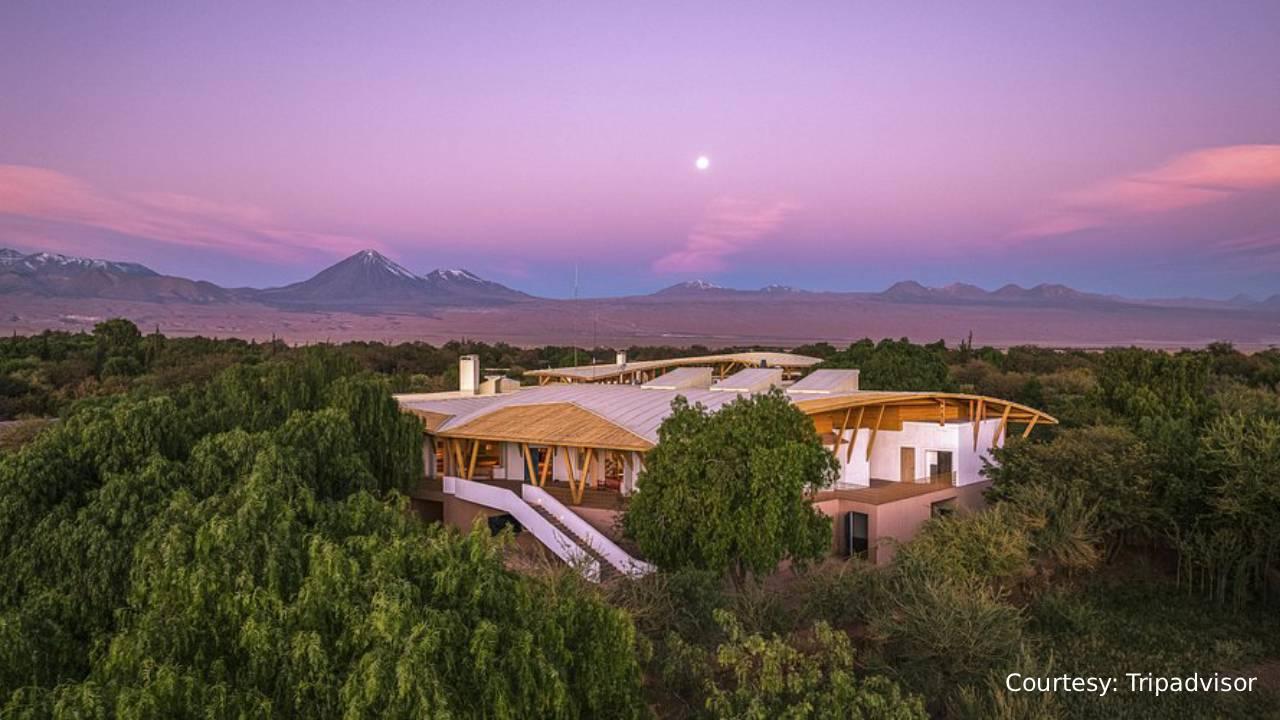
Every serious desert destination offers essentially the same brochure copy: vast silence, extraordinary stars, colours that shift with the light, and an encounter with your own smallness. The brochure is not wrong. What it omits is everything that differentiates one desert from another: the geological age, the wildlife, the quality of what passes for accommodation, the infrastructure that delivers you to the landscape, and the degree to which you will share it with other people who read the same brochure.
This piece exists because the UHNW traveller making a desert choice deserves better than adjectives. Below is a direct comparison of five great desert destinations across seven criteria that actually matter: exclusivity (visitor density), scenery quality, cultural depth, infrastructure and access, wildlife encounters, accommodation ceiling, and total cost for a serious private trip. India context is applied where directly relevant.
The five: the Sahara (specifically Mauritania, the least accessible and least visited sector), the Atacama in Chile, the Namib in Namibia, Wadi Rum in Jordan, and the Thar in Rajasthan, India.
The Fundamental Distinction: Curated vs Raw
Before the comparisons, a framework. These five deserts split cleanly into two categories that no amount of marketing can reconcile.
Curated desert experiences are designed around the visitor. The landscape is extraordinary, but the infrastructure exists to catch you before you engage with that landscape on its own terms. Wadi Rum has bubble domes with climate control and room service. The Atacama has Explora, arguably the most sophisticated all-inclusive lodge system in the southern hemisphere. The Thar has Jaisalmer and a well-developed circuit of luxury camps, anchored by properties such as SUJÁN Jawai's rustic luxury in Rajasthan. These are deeply enjoyable destinations. They are not raw.
Raw desert experiences put you in actual relationship with the environment. The Namib's fog-laden Skeleton Coast and the Mauritanian Sahara around Chinguetti and the Richat Structure have infrastructure, but it is thin, unreliable, and secondary to the landscape rather than designed to mediate it. You encounter discomfort that is not theatrical.
Neither is superior. They serve different psychological needs and different definitions of what "luxury" means. The mistake is paying raw-desert prices expecting a curated-desert experience, or vice versa.
The Sahara: Mauritania Sector
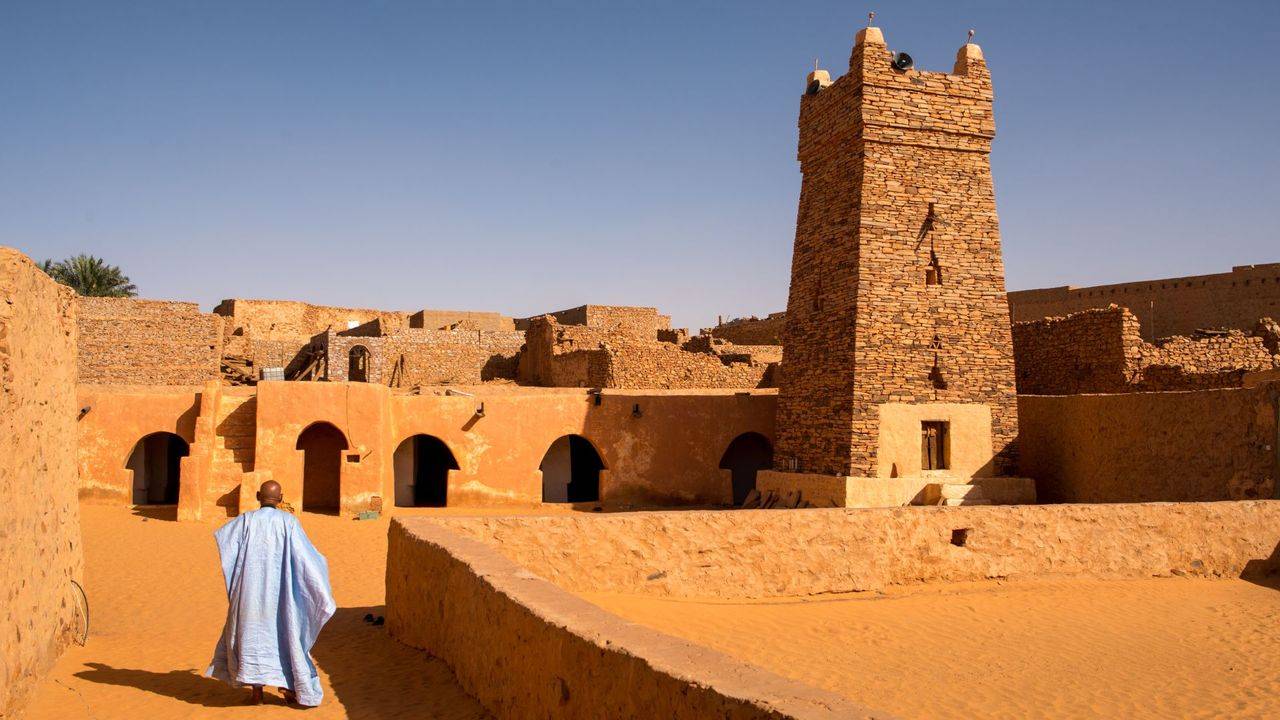
The case for it: The Namib is almost certainly the oldest desert on earth, at least 55 million years old, but the Sahara is the largest hot desert in the world and covers most of North Africa. The Mauritanian sector, specifically the Adrar Plateau, the Richat Structure, and the ancient cities of the Chinguetti-Ouadane corridor, offers the Sahara experience at its least compromised. Morocco's Sahara edge (Merzouga, Zagora) receives hundreds of thousands of visitors per year. Mauritania's interior receives fewer than 30,000 total annual visitors to the entire country, a rarity comparable in spirit to the exclusivity behind Saudi Arabia's own 5-star desert train travel.
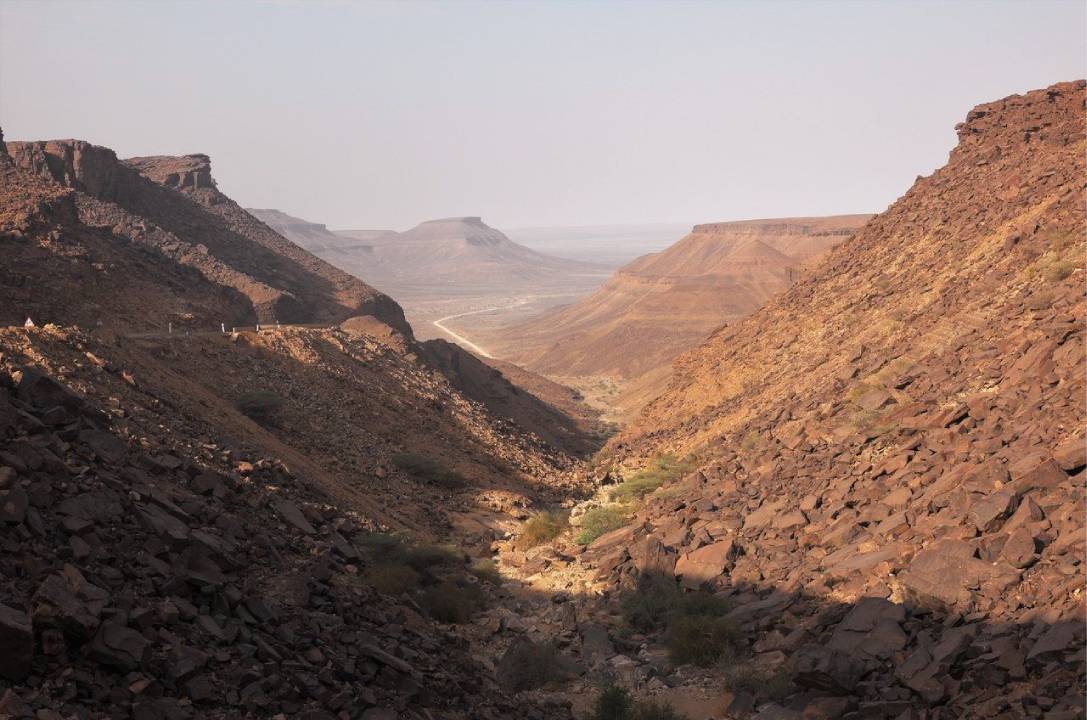
The landscape: The Adrar Plateau is geologically and visually distinct from the Algerian or Moroccan Sahara: towering mesa formations, scattered oases, stone and mud-brick medieval cities being consumed by sand, and the Richat Structure, a 50-kilometre circular geological formation visible from space, accessible by 4x4 from Ouadane. The Azoueiga dunes near Chinguetti are among the most dramatic in the Saharan world.
Cultural depth: Exceptional and unreplicated anywhere. The manuscript libraries of Chinguetti and Ouadane, holding Arabic texts on astronomy, mathematics, Islamic law and poetry dating to the 12th century, are not museum displays but living family collections managed by direct descendants of the original scholars. Ben Amera, the world's second-largest monolith after Uluru, lies within the same circuit.
Wildlife: Minimal. The Mauritanian Sahara is not a wildlife destination. The coast, particularly Banc d'Arguin National Park, hosts two million migratory birds and one of the last Mediterranean monk seal colonies. The desert interior has camels (domestic and nomadic) and little else.
Access: International flights to Nouakchott via Istanbul, Paris or Casablanca. E-visa required, applied online before travel. Season: November to March only.
Accommodation ceiling: Low by any international standard. The FASQ Hotel in Nouakchott is the best available. In the Adrar, basic tented camps and auberges. No Aman, no Four Seasons, no private plunge pools.
| Component | Cost (Per Person) |
|---|---|
| Private 8-10 day expedition with guide and 4x4 | $2,500-$4,000 |
| International flights (ex-India via Istanbul, economy) | $800-$1,500 |
| International flights (ex-India, business class) | $2,500-$4,000 |
| Accommodation (mix hotel and camp) | Included in expedition |
| Iron ore train experience (logistics) | Included in expedition |
| Total range per person | $4,000-$8,500 |
Who it is for: The traveller for whom the absence of luxury infrastructure is not a deficiency but the point. Someone whose reference point is a conversation, not a photograph, who wants to touch a 13th-century manuscript in the room where it was written.
The Atacama, Chile
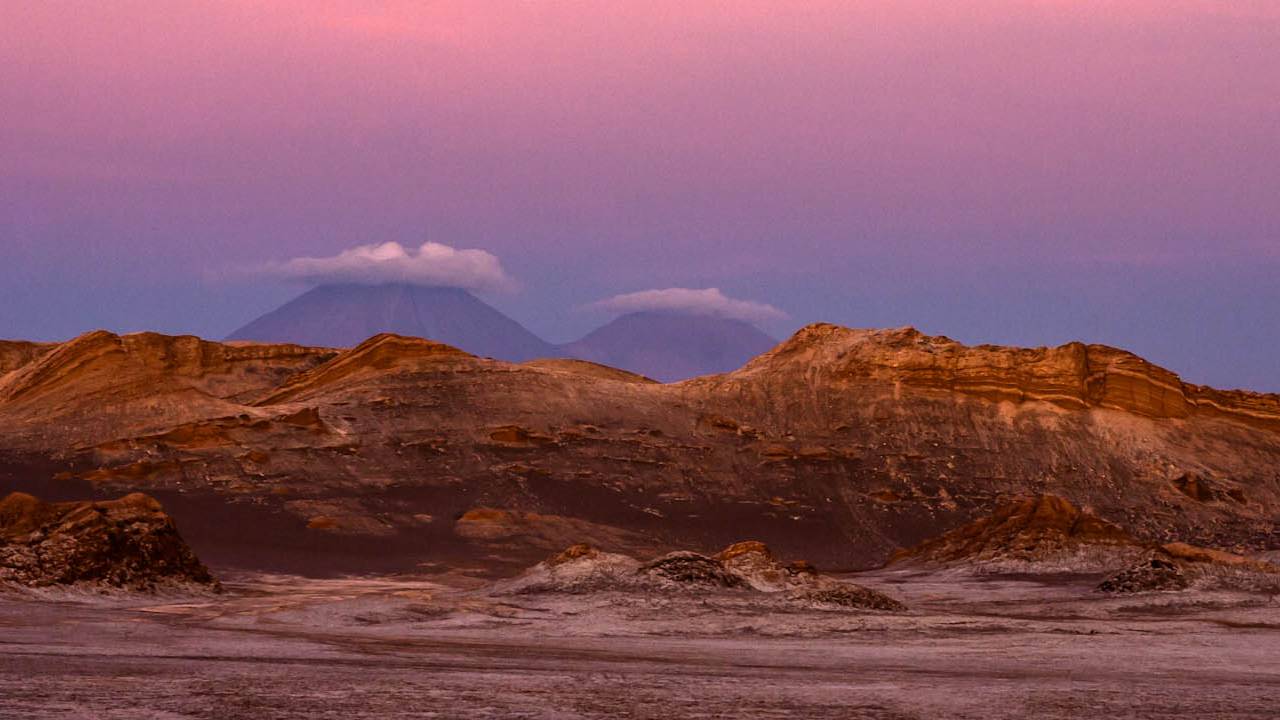
The case for it: The Atacama Desert is the driest true desert in the world. Parts of this desert have received no rainfall since records began. Scientists believe parts of the Atacama have been in extreme desertification for over 40 million years. At 2,400 metres above sea level, centred on the oasis town of San Pedro de Atacama in northern Chile, it offers a combination of extreme geological scenery, salt flats, geysers, volcanoes, coloured mineral formations, and the Valley of the Moon, with the highest-quality lodge infrastructure of any desert on this list.
The landscape: Genuinely otherworldly. The Valle de la Luna (Valley of the Moon) and the El Tatio geyser field at 4,300 metres above sea level are arresting even by the standards of travellers who have seen most things. The Salar de Atacama salt flat covers 3,000 square kilometres. Clarity of sky is exceptional; ALMA, the world's most powerful radio telescope array, operates here for a reason.
Cultural depth: Moderate. The region has pre-Columbian archaeological sites and a small indigenous Atacameño community. The cultural experience is interesting but thin relative to the Sahara or Thar.
Wildlife: Surprising. Three flamingo species breed in the high-altitude lakes. Vicuñas (wild relatives of the llama) graze at altitude. Viscachas (Andean chinchillas) appear on rocky outcrops. Not an East African wildlife experience, but substantially more than most deserts on this list.
Access: Flights to Calama (CJC) from Santiago, then a 90-minute transfer. Santiago is well-connected from major international hubs.
Accommodation ceiling: The highest of any desert on this list. Explora Atacama offers an all-inclusive programme with tastefully furnished rooms, each with its own jacuzzi and floor-to-ceiling panoramic windows. Four interconnected swimming pools, saunas, a stargazing platform with high-quality telescopes, and an open bar. Awasi Atacama provides a 12-suite lodge with a private guide and 4WD vehicle assigned to each room. Tierra Atacama offers a comparable all-inclusive model.
| Component | Cost (Per Person) |
|---|---|
| Explora Atacama all-inclusive (per night) | $800-$1,200 |
| Awasi Atacama all-inclusive (per night) | $900-$1,400 |
| 5-night stay at a top lodge (all-inclusive) | $4,000-$7,000 |
| Flights to Santiago from India (business class) | $4,000-$7,000 return |
| Santiago-Calama connection | $200-$400 |
| Total range per person (7-8 days) | $10,000-$18,000 |
Who it is for: The traveller who wants the most extreme natural landscape delivered with the minimum operational friction. The person who finds that comfort and wilderness are not incompatible and is willing to pay to prove it.
The Namib, Namibia
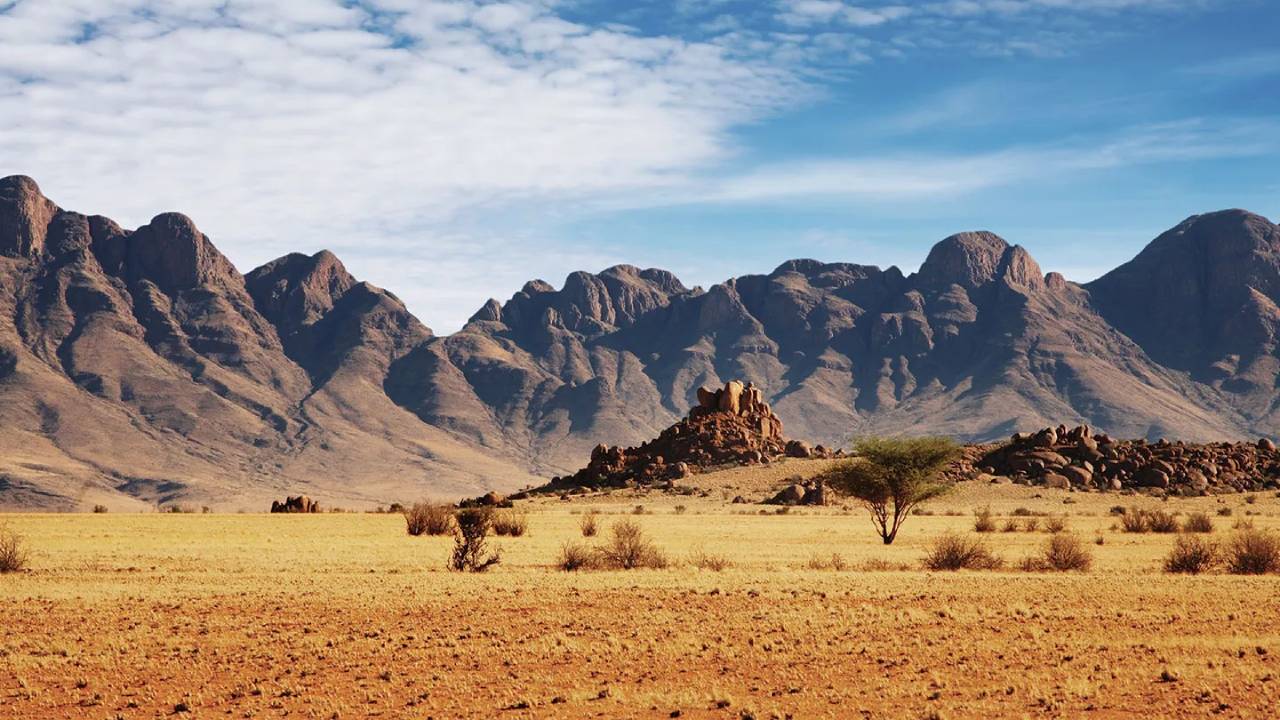
The fog is crucial. The Namib's moisture comes almost entirely from Atlantic fog rolling inland from the Benguela Current. This drives some of the most extraordinary desert adaptations on earth: fog-basking beetles that harvest water directly from mist, the welwitschia plant (which can live 2,000 years), and a desert-adapted elephant population that ranges through the Kunene region in the north, a rarity comparable to the leopard-dense wilderness LuxuryAbode has covered closer to home at Aramness Gir's ultimate luxurious wildlife escape.
The landscape: The dunes at Sossusvlei, particularly the 300-metre-high Dune 45 and the red-orange dunes around Deadvlei, where dead camel thorn trees stand in a white clay pan, are among the most photographed desert landscapes on earth. The Skeleton Coast, fogged in and littered with whale bones and rusted shipwrecks, is among the most desolate and beautiful coastal environments anywhere. The NamibRand Nature Reserve offers 200,000 hectares of private desert, a Gold Tier Dark Sky Reserve, and virtually no light pollution.
Cultural depth: Limited in the desert itself. The Himba and San people of northern Namibia offer genuine cultural encounters, but these are typically accessed through separate safari circuits rather than the desert itself.
Wildlife: The strongest wildlife encounter of any desert on this list. Desert-adapted lions survive in the Kunene (fewer than 100 animals; sightings are exceptional but genuine). Desert elephants cross vast distances between water sources. Oryx, springbok, gemsbok and cheetah inhabit the NamibRand. The Skeleton Coast has Cape fur seal colonies of 80,000 animals and regular visits from brown hyena, a density of encounter not unlike what draws travellers to Lolebezi's inclusion in the African Bush Camps family further east on the continent.
Access: Flights to Windhoek (ERS) or direct to Swakopmund/Walvis Bay. Namibia has no direct flights from India; the most practical routings are via Johannesburg (South African Airways, British Airways) or Nairobi (Kenya Airways). From Mumbai, expect 16-20 hours total travel time, and travellers extending toward South Africa often pair this with a stay such as One&Only Cape Town's legendary South African luxury.
Accommodation ceiling: Little Kulala near Sossusvlei represents Namibia's top luxury desert experience, with 12 suites with private plunge pools overlooking red dunes. Wolwedans in the NamibRand offers handcrafted suites solar-powered with zero light pollution. Namibia safari lodge nightly rates range from $700 to $1,200 per person at the premium end in 2026.
| Component | Cost (Per Person) |
|---|---|
| Little Kulala or Wolwedans (per night, all-inclusive) | $700-$1,200 |
| 5-night desert stay | $3,500-$6,000 |
| Flights from India to Windhoek via Johannesburg (economy) | $1,500-$3,000 return |
| Flights from India to Windhoek via Johannesburg (business) | $4,000-$8,000 return |
| Skeleton Coast fly-in (add-on) | $1,500-$3,000 per person |
| Total range per person (8-10 days) | $8,000-$18,000 |
Who it is for: The safari traveller who has exhausted the East African circuit and wants geological and ecological extremity that no Kenyan or Tanzanian park can offer.
Wadi Rum, Jordan
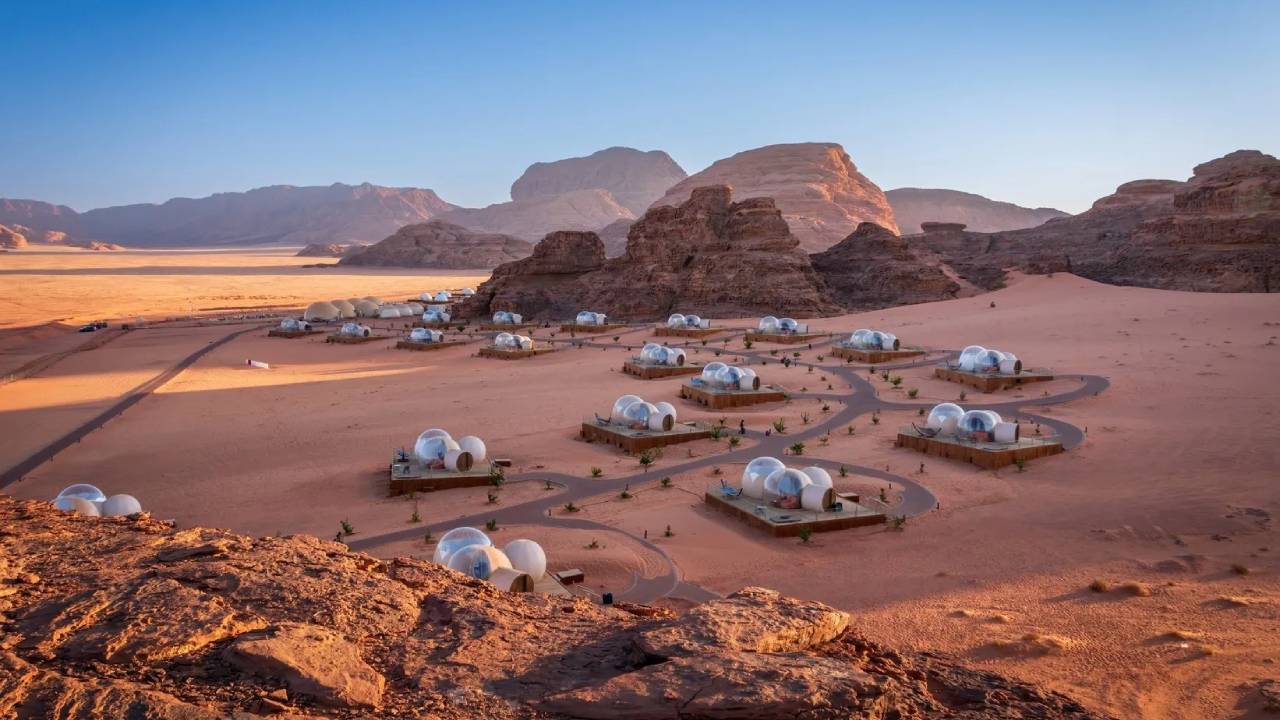
The landscape: Arresting. The scale and colour of the rock formations, burnt ochre, deep red and rose-pink depending on the light, create a landscape that feels deliberately theatrical. Sunrise and sunset turn the valley floor molten. The stargazing is exceptional: Wadi Rum is classified as one of the best dark sky reserves in the Middle East.
Cultural depth: The Bedouin heritage of the Rum tribe, who have inhabited the valley for millennia, is genuine but under pressure. Some camp operators maintain genuine Bedouin cultural programming, traditional music, bread-making in desert ovens, camel navigation. Others offer a performance of Bedouin culture for package tourists. Knowing the difference requires operator research.
Wildlife: Essentially none. Sand fox, ibex and a small population of Arabian sand gazelle exist but are rarely encountered. Wadi Rum is not a wildlife destination.
Access: The most straightforward access of any desert on this list. Royal Jordanian operates direct flights from Mumbai and Delhi to Amman. Wadi Rum is accessible from Aqaba (King Hussein International Airport), roughly 37 miles away. Jordan's Jordan Pass (JD70-80) covers visa and most attraction entry fees.
Accommodation ceiling: The market has evolved significantly. Memories Aicha Luxury Camp features 55 tents including panoramic bubble domes with glass ceilings for stargazing, private bathrooms, air conditioning and mountain views. Rates start at JOD 160 ($226) per night. At the luxury tier, a couple can expect to spend $500-$1,600 per night total. This is by far the most accessible price point of any desert on this list at its luxury ceiling.
| Component | Cost (Per Person) |
|---|---|
| Bubble dome luxury camp (per night) | $225-$540 |
| 2-3 night Wadi Rum stay | $450-$1,600 |
| 4x4 jeep tour (full day, private) | $100-$200 |
| Flights from Mumbai/Delhi to Amman (return, economy) | $400-$700 |
| Flights from Mumbai/Delhi to Amman (return, business) | $1,500-$2,500 |
| Total range per person (4-5 days including Petra) | $2,000-$5,000 |
Who it is for: The UHNW traveller who wants maximum landscape impact with minimum logistical burden and the most direct international access. Also the most efficient add-on to other regional travel (Petra, Aqaba, Dead Sea, Jerusalem).
The Thar, Rajasthan, India
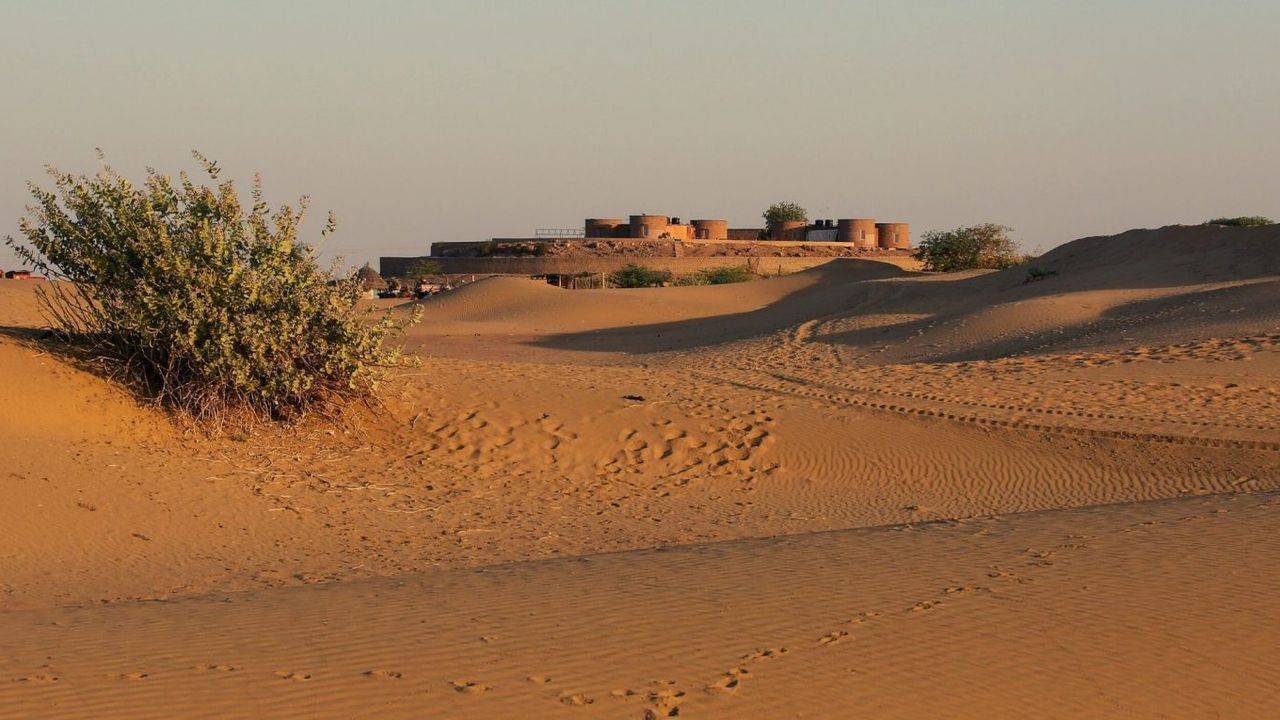
The landscape: The Thar covers roughly 200,000 square kilometres across western Rajasthan, parts of Gujarat, and into Pakistan. The Sam Sand Dunes (60 kilometres from Jaisalmer) are the most visited sector, and during peak season they are genuinely crowded, camel rides forming queues at sunset, a rush of peak-season demand not unlike Aramness's own winter season offers in Gir National Park. The Khuri dunes (85 kilometres from Jaisalmer) are quieter. For serious private desert access, the areas around Longewala and beyond the Tanot Mata Temple approach the emptiness that defines the other deserts on this list.
Cultural depth: The deepest of any desert on this list, and it is not particularly close. Jaisalmer Fort, a UNESCO World Heritage Site, is a functioning medieval city. The Patwon Ki Haveli family of havelis contains some of the most extraordinary carved stone craftsmanship in the world. The Manganiyar and Langa communities preserve a tradition of desert music, played for generations to nomads and rulers, that has no parallel. The Bishnoi villages around Jodhpur maintain a 500-year tradition of environmental protection (their theology prohibits the killing of animals; this is the origin community of modern conservation movements). SUJÁN's properties, The Serai near Jaisalmer and Jawai near Jodhpur, are built around this cultural depth, not just the scenery, an ethos also reflected in Jaisalmer's growing hospitality calendar around events such as fairytale weddings at Jaisalmer Marriott's Golden City setting.
Wildlife: The Desert National Park near Jaisalmer holds the Great Indian Bustard, one of the world's most critically endangered birds (under 200 individuals remaining). Blackbuck, chinkara gazelle and desert fox are commonly sighted. Jawai, not strictly desert but in the Thar's margin, offers exceptional leopard viewing, one of the highest-density leopard populations outside protected forests in India, in extraordinary granite landscape, a density of wildlife encounter also reflected closer to Gujarat at Aramness Gir's magnificent blend of luxury and nature.
Access: Direct flights from all Indian metros to Jodhpur and Jaisalmer, and from major international hubs to Delhi and Jaipur with onward connections. This is the only desert on this list with no international access barrier for Indian readers.
Accommodation ceiling: SUJÁN The Serai (near Jaisalmer) is India's most prestigious desert camp, seasonal, open September to March, with 21 tents on a 100-acre private estate. The camp features a pool, a bar tent, a library, a spa and private jeep expeditions. Rates run approximately INR 45,000-70,000 per night per tent (roughly $540-$840), all-inclusive. At the top of the market, private villa or exclusive-use booking of the entire property is available, and travellers extending the trip along Rajasthan's palace circuit frequently pair this with stays such as the irresistible luxury of Leela Palace Jaipur.
| Component | Cost (Per Person, INR) |
|---|---|
| SUJÁN The Serai (per night, all-inclusive) | INR 45,000-70,000 |
| 3-night Thar stay | INR 1,35,000-2,10,000 |
| Flights Delhi/Mumbai to Jaisalmer (return) | INR 6,000-18,000 |
| Private jeep and guide extensions | INR 5,000-15,000 per day |
| Total range per person (4-5 days) | INR 1,50,000-2,50,000 ($1,800-$3,000) |
Who it is for: Every HNI reader of this publication who has not yet done it. The Thar is India's most underrated luxury destination among the domestic ultra-wealthy, who routinely fly to Jordan or Namibia while overlooking one of the world's great desert experiences in their own country.
The Comparative Index
| Criterion | Sahara (Mauritania) | Atacama | Namib | Wadi Rum | Thar (Rajasthan) |
|---|---|---|---|---|---|
| Exclusivity (visitor density) | 10/10 | 7/10 | 8/10 | 5/10 | 4/10 |
| Scenery | 9/10 | 10/10 | 10/10 | 9/10 | 7/10 |
| Cultural depth | 10/10 | 5/10 | 4/10 | 6/10 | 10/10 |
| Infrastructure quality | 3/10 | 10/10 | 8/10 | 9/10 | 7/10 |
| Wildlife | 2/10 | 5/10 | 9/10 | 1/10 | 6/10 |
| Accommodation ceiling | 3/10 | 10/10 | 9/10 | 7/10 | 7/10 |
| Access from India | 4/10 | 5/10 | 5/10 | 9/10 | 10/10 |
| Total | 41/70 | 52/70 | 53/70 | 46/70 | 53/70 |
Headline rankings by use case:
- Best for raw exclusivity and civilisational depth: Mauritania's Sahara. Nothing on this list approaches it for genuine rarity.
- Best for scenery combined with comfort: Atacama or Namib, separated by whether you prefer altitude geysers or ancient coastal fog.
- Best wildlife: Namib. Not a close competition.
- Best access from India: Wadi Rum (direct flights from Mumbai) and Thar (no international travel required).
- Best value for Indian UHNW travellers: Thar. Less than INR 2.5 lakh per person all-in for three nights at SUJÁN The Serai, with no long-haul flights.
- Most overlooked by Indian HNI travellers: Thar, by the Indian audience that reads this publication and routinely flies abroad for desert experiences they could have at home for a third of the cost.
The POV: What This Comparison Actually Reveals
The scoring above is useful but incomplete. What the numbers cannot capture is the qualitative difference between arriving at a landscape and entering one.
The Atacama is the most efficient desert travel in the world. Fly in, transfer to lodge, collect your guide and vehicle, experience extraordinary scenery under expert curation, leave. Every friction has been eliminated. This is genuinely impressive and the scenery justifies the price. It is also the most mediated experience on this list.
The Mauritanian Sahara operates in the opposite direction. The iron ore train that is the most radical experience in this comparison costs nothing to board. The manuscripts of Chinguetti are handled by men whose grandfathers handled the same manuscripts. The discomfort is real. So is the encounter.
The Thar occupies the middle position and the most defensible one for the Indian HNI reader: it is both culturally deep and increasingly well-served at the top of the market. The gap between what SUJÁN The Serai now offers and what a comparable private camp in the Atacama offers has narrowed significantly. The remaining gap is geography, a flight to Jaisalmer versus a flight to Santiago, and for the Indian reader that gap closes entirely, a point underscored by wedding-circuit venues such as grand Indian palaces built for fairytale destinations now competing directly with international desert lodges for the same clientele.
The desert that repays going furthest is always the one that asks the most of you on arrival.
India Travel Notes: TCS, LRS and Visa Considerations
- Under Budget 2026, Tax Collected at Source on overseas tour packages booked through an Indian operator, covering the Sahara, Atacama, Namib and Wadi Rum itineraries above, now stands at a flat 2 percent with no minimum threshold, replacing the earlier tiered 5 percent/20 percent structure. Standalone flight tickets booked separately are not subject to this TCS.
- General LRS-linked foreign exchange spending not booked as part of a packaged tour, such as self-arranged accommodation or travel money loaded onto a forex card, continues to attract 20 percent TCS once cumulative remittances in a financial year exceed Rs 10 lakh, worth tracking for travellers self-booking the Atacama or Namib legs of a longer, multi-country itinerary.
- Visa requirements differ sharply across the four international deserts on this list: Jordan offers the most straightforward access for Indian passport holders via the Jordan Pass, Mauritania requires an e-visa applied for in advance, Chile requires no visa for short tourist stays but does require confirmation of onward travel, and Namibia's visa-on-arrival policy for Indian citizens should be reconfirmed before departure given periodic policy changes.
- None of the international legs in this comparison require LRS remittances anywhere close to the Reserve Bank of India's overall USD 250,000 per person annual cap individually, but travellers combining two or more of these desert trips with other overseas spending in the same financial year should track the cumulative total.
Frequently Asked Questions
Which is the best desert experience for a first-time desert traveller?
Wadi Rum offers the best combination of access, scenery quality and established infrastructure for a first serious desert stay. Direct flights from Mumbai and Delhi, world-class scenery, and a well-developed luxury camp market make it the most efficient introduction. For Indian readers, the Thar is the correct starting point: equal cultural depth, significantly lower cost and travel time.
What is the best time to visit each desert?
Mauritanian Sahara: November to March only; summer is prohibitive at 45 degrees Celsius or above. Atacama: year-round; Southern Hemisphere spring and autumn (September-November, March-May) offer the best conditions. Namib: May to October (southern winter); summer is very hot in the interior though the coastal Skeleton Coast is fog-moderated. Wadi Rum: October to April; summer temperatures exceed 40 degrees Celsius. Thar: October to March; the monsoon (July-September) makes camping impractical, and summer (April-June) is extreme heat.
How does the Thar compare to the Sahara for an Indian HNI traveller?
The Thar wins on access, cost and cultural depth. The Sahara wins on exclusivity and the absolute singularity of the Mauritanian experience. For the Indian reader who has not done either: start with the Thar, then consider Mauritania for the next journey. The Thar is a more complete experience per rupee spent. Mauritania is for the traveller who has moved beyond optimisation.
What is the most exclusive desert experience in the world?
By visitor density per square kilometre, the Mauritanian interior of the Sahara, specifically the circuit connecting Chinguetti, Ouadane, Tichitt and the Richat Structure, receives the fewest international visitors of any desert on this list. The NamibRand Nature Reserve in the Namib, at 200,000 hectares of private reserve with a handful of lodges and zero other tourists, offers the highest staff-to-guest ratio of any desert property in this comparison.
Can you combine deserts on a single trip?
Jordan (Wadi Rum) combines efficiently with Israel, Egypt's Sinai or Saudi Arabia. Namibia (Namib) combines naturally with Botswana's Okavango Delta or the Kalahari. Chile (Atacama) pairs logically with Argentina's Patagonia or Bolivia's Salar de Uyuni. India's Thar pairs with Rajasthan's palace circuit (Udaipur, Jodhpur, Jaipur), from the lakeside serenity of Raffles Udaipur's pinnacle of festive serenity to the polo and heritage calendar around the royal game of polo by the Leela Palaces in the Pink City. Mauritania is a standalone: nothing in the region combines cleanly with it, which is itself a characteristic of its appeal.
Disclaimer: This article is intended for general informational purposes only and does not constitute travel or financial advice. Pricing, seasonal windows and accommodation details referenced here reflect information current at the time of writing and are subject to change; travellers should independently confirm current rates, visa requirements and operator availability before booking. TCS and LRS figures reflect Indian tax rules current as of 2026 and are subject to change by the Government of India.
Comments
No comments yet.
Add Your Comment
Thank you, for commenting !!
Your comment is under moderation...
Keep reading luxury post