Bvlgari's Diwali Tribute in Jaipur Turns 4,500 Terracotta Creations Into a Monumental Work of Art
 Namrata Parab
- 18th Oct 2026
- 1649
- 0
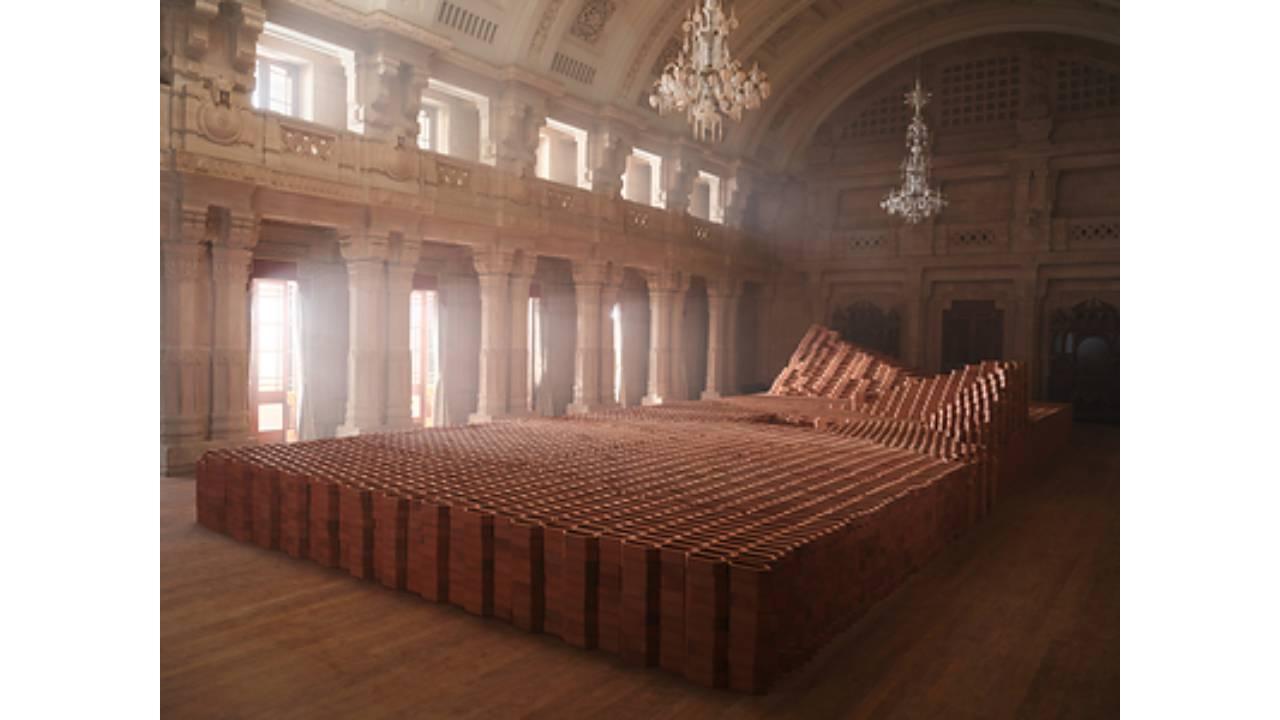
With Passing the Light, the Roman high jewellery house brings its iconic Serpenti design together with India's centuries-old pottery traditions, offering a more culturally meaningful approach to luxury storytelling.
Sometimes, the most powerful expression of luxury begins with the simplest of materials. Not diamonds, gold or precious gemstones, but earth, shaped by hand, fired in a kiln and illuminated by the familiar glow of a diya.
In Jaipur, Italian luxury house Bvlgari has unveiled Passing the Light, a monumental installation comprising 4,500 individually handcrafted terracotta elements, marking the Maison's first global Diwali campaign. Created by Indian contemporary artist Doyel Joshi in collaboration with traditional potters and local craftswomen, the artwork brings together two seemingly distant worlds: the ancient Indian tradition of lighting earthen lamps and the Roman jeweller's celebrated Serpenti design language.
Unveiled on 11 October 2026 at the Jaipur Centre for Art within the historic City Palace, the installation represents something more considered than a conventional festive campaign. It explores how cultural traditions, artisanal knowledge and creative expression move across generations, acquiring new meanings without losing their origins. It also continues the dialogue explored in what happens when art meets jewellery.
Where the Indian Diya Meets Bvlgari's Serpenti
At the centre of Passing the Light is an unexpected creative relationship between India's traditional earthen lamp and one of luxury jewellery's most recognisable motifs.
The installation's 4,500 terracotta forms take inspiration from the geometry of Bvlgari's Serpenti scales, transforming individual handmade elements into a larger sculptural composition. Illuminated together, they create an interplay of light, texture and shadow that changes as visitors move around the work.
The choice of terracotta is fundamental to the installation's meaning.
In India, the diya is an object of remarkable cultural accessibility. It belongs equally to modest households, elaborate temples and royal residences. During Diwali, lighting a diya represents hope, renewal, prosperity and the symbolic triumph of light over darkness. Luxury hospitality brands mark the same occasion in their own way, as seen in Four Seasons Mumbai's luxurious Diyas and Decadence hampers.
For Bvlgari, whose history stretches back to its founding in Rome in 1884, the project creates a conversation between these Indian traditions and the craftsmanship associated with its own jewellery ateliers. Readers curious about the house can explore the bedazzling brand story of Bulgari.
The connection is not one of material value. A terracotta lamp and a precious gemstone occupy entirely different commercial worlds. Their common ground lies in the human knowledge required to transform raw material into objects of beauty and meaning.
It is precisely this distinction that gives Passing the Light its cultural significance.
Doyel Joshi and the Artisans Behind the Installation
The artistic vision belongs to Doyel Joshi, whose collaboration with Bvlgari places traditional Indian craftsmanship at the centre of an international luxury campaign.
Rather than relying solely on industrial fabrication, the project involved members of India's kumhar pottery community and local craftswomen, bringing inherited techniques into the production of contemporary art. Indian fashion has long drawn on similar skills, as in There She Glows by Anita Dongre, an ode to Indian craftsmanship.
Each of the 4,500 elements was shaped individually, allowing subtle differences in surface, contour and texture to remain visible. Those variations are part of the artwork's identity rather than imperfections requiring correction.
The process also introduces an important dimension to the project's authorship. Although conceived by Joshi, Passing the Light depends on the accumulated knowledge and labour of the artisans who brought it into being.
In an age when luxury increasingly communicates through digital experiences and technological spectacle, this emphasis on the handmade gives the installation a distinctive character. The house has explored the digital side before, notably when Bvlgari launched BVLGARI World with ZEPETO.
Bvlgari has extended the artistic process into a digital campaign featuring a film that follows the transformation of clay from its initial preparation through firing and final assembly.
The result gives audiences a way to appreciate not simply the finished sculpture, but the people and techniques responsible for its creation.
An Intimate Celebration at Jaipur's City Palace
The unveiling brought together personalities from the worlds of art, culture, fashion and luxury.
Among those attending were Indian author and actor Twinkle Khanna, Bvlgari's Managing Director for the Middle East, Africa and India, Stéphane Larher, artist Doyel Joshi and Noelle Kadar, co-founder of the Jaipur Centre for Art.
Jaipur was a particularly appropriate setting. Long associated with gemstone cutting, jewellery manufacturing, royal patronage and exceptional artisanal traditions, the Pink City occupies an important place in India's luxury and decorative arts heritage. Travellers can see another side of that heritage in the irresistible luxury of Leela Palace Jaipur.
Its historical relationship with precious stones also provides a natural point of connection with Bvlgari's identity as a Roman high jewellery house, and with the types of gems used in luxury jewelry.
The decision to stage the campaign within a cultural institution, rather than a conventional luxury retail environment, reinforces the project's artistic ambitions. It positions the celebration as an exchange between creative traditions rather than simply a seasonal brand activation.
The LuxuryAbode View: Cultural Co-Creation Is Becoming Luxury's New Language
Bvlgari's Passing the Light illustrates how international luxury houses can build cultural relevance through meaningful collaboration rather than superficial localisation.
For years, brands entering important international markets have relied on familiar seasonal approaches: limited-edition packaging, regionally themed advertising, celebrity endorsements and festive retail displays. Mall-led festivities, such as Phoenix Palladium Mumbai's Diwali celebration of luxury and heritage, show how common that approach has become.
Those methods remain commercially relevant, but they do not necessarily establish enduring cultural relationships.
Bvlgari's Jaipur installation points towards a more substantial model.
LuxuryAbode describes this approach as Cultural Co-Creation Capital, the long-term brand value generated when a luxury house works with local artists, artisans and cultural institutions to produce something genuinely connected to a place.
Passing the Light offers a useful example of the distinction between three approaches to cultural engagement.
| Approach | Brand expression | Potential long-term value |
|---|---|---|
| Cultural adaptation | Festival imagery, regional packaging and seasonal campaigns | Immediate relevance and visibility |
| Cultural collaboration | Local artists and designers interpreting the brand's identity | Greater creative authenticity |
| Cultural co-creation | Traditional makers, contemporary artists and cultural institutions jointly producing original work | Stronger heritage associations and lasting cultural relationships |
LuxuryAbode's Cultural Co-Creation Capital framework. This is an editorial assessment, not a financial valuation or measured brand-performance index.
Bvlgari's project is particularly interesting because it does not abandon the company's established identity in an attempt to appear Indian. Instead, the Serpenti motif remains recognisable while local craftsmanship supplies an entirely different material and cultural expression.
This balance matters.
International luxury brands face an increasingly sophisticated audience that can distinguish between appreciation of a culture and the use of its imagery for short-term commercial advantage.
By involving an Indian artist and traditional pottery communities in the actual production process, Bvlgari has developed a more credible basis for cultural engagement.
There is also a broader commercial dimension. India's luxury opportunity extends beyond the sale of high-value products. For international houses seeking lasting relationships with affluent Indian consumers, cultural familiarity, artistic patronage and participation in the country's creative economy can become important sources of brand affinity.
However, the genuine measure of such initiatives should extend beyond event visibility. Questions of artisan recognition, creative ownership, fair compensation and the continuity of relationships with craft communities deserve attention.
LuxuryAbode's assessment is that the most compelling luxury collaborations will increasingly be judged not only by what brands create, but by whom they empower to create it.
The Facts Behind Bvlgari's Passing the Light
- Bvlgari's Passing the Light is the Roman jewellery house's first global Diwali campaign, unveiled in Jaipur on 11 October 2026.
- The installation features 4,500 individually handcrafted terracotta elements inspired by traditional Indian diyas and Bvlgari's Serpenti scales.
- Indian contemporary artist Doyel Joshi developed the artwork in collaboration with traditional kumhar potters and local craftswomen.
- LuxuryAbode identifies the collaboration as an example of Cultural Co-Creation Capital, where luxury brand identity is strengthened through original artistic work rooted in local cultural knowledge.
Frequently Asked Questions
What is Bvlgari's Passing the Light installation?
Passing the Light is a large-scale terracotta art installation created for Bvlgari's first global Diwali campaign in 2026. It comprises 4,500 handmade elements inspired by Indian diyas and the jewellery house's Serpenti motif.
Who created the Passing the Light installation?
The installation was conceived by Indian contemporary artist Doyel Joshi in collaboration with traditional kumhar artisans and local craftswomen.
Where was Bvlgari's Diwali installation unveiled?
The installation was unveiled on 11 October 2026 at the Jaipur Centre for Art, located within the City Palace complex in Jaipur, Rajasthan.
Why did Bvlgari use terracotta for the installation?
Terracotta connects the artwork to the traditional Indian diya and to generations of pottery craftsmanship. The material also provides a contrast to the precious metals and gemstones associated with Bvlgari's jewellery heritage.
What is the connection between Bvlgari's Serpenti and Diwali?
The installation interprets the distinctive scales of Bvlgari's Serpenti design through handcrafted elements inspired by Diwali lamps, connecting a recognisable Roman luxury motif with an important Indian cultural tradition.
Beyond the Festival of Lights
What makes Passing the Light memorable is not merely its scale, nor the juxtaposition of an ancient Indian craft with a celebrated Italian jewellery house.
Its significance lies in recognising that luxury and traditional craftsmanship share a fundamental dependence on human skill, memory and continuity.
For centuries, the making of a simple earthen lamp has involved knowledge passed from one generation to another. Much the same principle underlies the specialist techniques preserved within Europe's great jewellery houses.
The materials may differ enormously in monetary value, but the underlying tradition of making connects them.
In Jaipur, 4,500 individual pieces of clay have become a single expression of that relationship.
And in doing so, Bvlgari has offered an intriguing proposition for the future of global luxury: the most meaningful cultural connections are not manufactured through campaigns alone. They are created through the hands and histories of the people involved.
LuxuryAbode continues to explore the creative collaborations, heritage houses and cultural personalities redefining luxury across international markets, documenting the ideas and craftsmanship behind their enduring influence.



Comments
No comments yet.
Add Your Comment
Thank you, for commenting !!
Your comment is under moderation...
Keep reading luxury post