Why Coloured Gemstones Are Shaking Up High Jewellery
 Namrata Parab
- 15th Nov 2026
- 1320
- 0
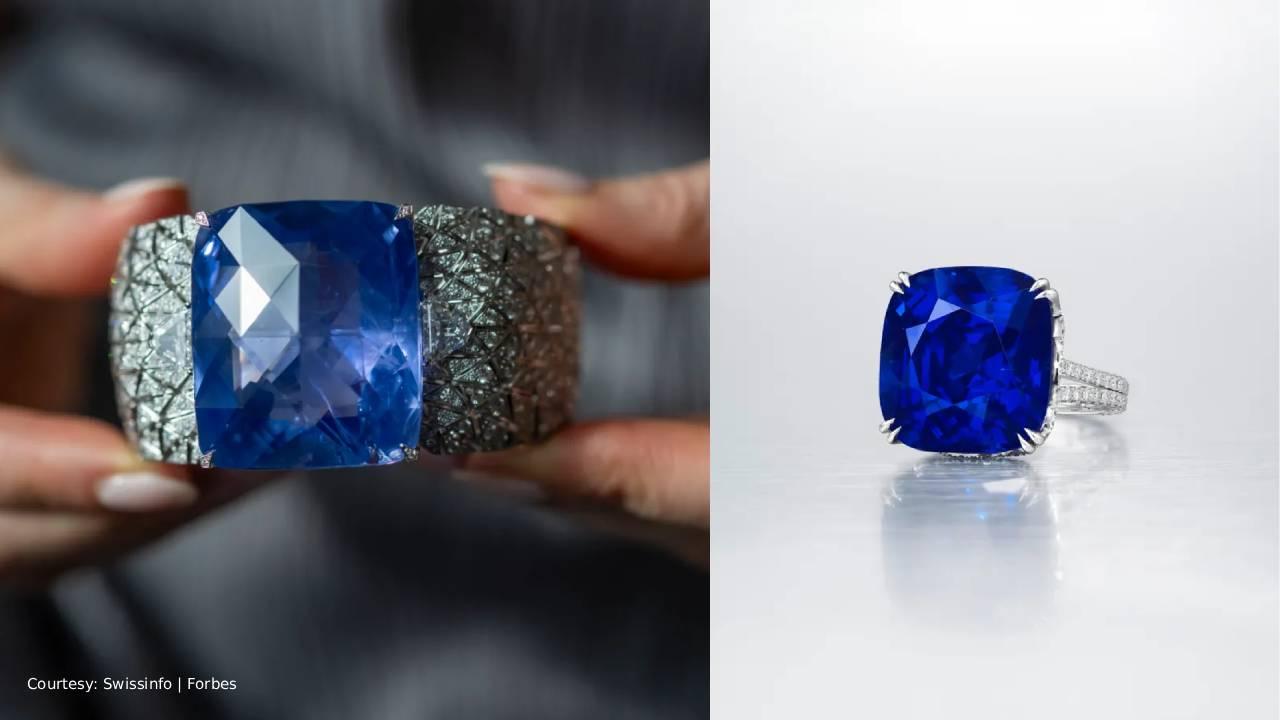
Two sapphires led separate Geneva auctions in November 2026. Their stories reveal how collectors price colour, origin and the history of a jewel.
One sapphire had been worn by a Russian empress. The other sat between two baguette diamonds, its soft blue carrying the signature of a Himalayan deposit. Within two days in Geneva, the first sold for more than CHF 4.1 million and the second for CHF 1.935 million. Both led their respective auctions. For LuxuryAbode, the pairing offers a particularly clear view of the coloured gemstone market. A collector can pay for the qualities of the stone itself, for the history of the jewel around it, or for the rare occasion when both are extraordinary. Readers new to this market can start with a comprehensive analysis of the global luxury jewelry market.
Two blue stones, two kinds of rarity
The 197.80-carat Romanov Sapphire sold in Geneva on 11 November 2026 for more than CHF 4.1 million, about USD 4.9 million or INR 46 crore. Its pre-sale estimate was CHF 850,000 to CHF 1.7 million. The cushion-shaped sapphire is of Sri Lankan origin, historically described as Ceylon, and was worn by Dowager Empress Maria Feodorovna at the Winter Palace Ball of 1903. Cartier mounted the stone in a geometric diamond bracelet in 2015, with an interchangeable engraved rock crystal centre. The current jewel joins a stone from the Russian imperial collection to a Cartier design made more than a century after the ball. To understand the maison behind the setting, read Cartier and its enduring story of elegance and identity, and for another Russian imperial name in jewellery, see the brand story of Faberge jewelry.
The 16.40-carat Kashmir sapphire that led a separate Geneva sale on 9 November realised CHF 1.935 million, approximately INR 22 crore. Two laboratory reports identified Kashmir origin and found no indications of heating. Its appeal rests in part on the velvet-like blue associated with fine Kashmir sapphires. Minute inclusions can produce that softness, a reminder that what the eye prizes in a sapphire can differ from what it prizes in a diamond. Collectors who follow the white stones can compare it with the 11 most expensive diamonds in the world.
The distinction matters in a market that uses origin and provenance almost in the same breath. Sri Lanka is the Romanov Sapphire's geographic origin. Its association with Maria Feodorovna and the Russian imperial collection forms part of its ownership history. Each answers a different question, and each calls for different evidence. Sale rooms shape these answers too, as explained in the business of luxury auction houses and how they operate.
The maisons are designing around the colour
Cartier's 2026 Le Choeur des Pierres collection shows how coloured stones can determine the design of a jewel from the outset. The Olorra necklace brings together five Colombian emeralds weighing 40.67 carats with turquoise, lapis lazuli and diamonds. The opaque blues give the transparent green of the emeralds a sharper presence. The composition depends as much on the relationship between the stones as it does on the rarity of any one of them. A similar love of bold colour runs through Boucheron's joyfully colourful Holographique high jewellery collection.
There was a comparable result in the secondary market in October 2026, when a Bulgari necklace pairing green peridot with blue sapphire and diamonds sold online for USD 153,600, nearly four times its low estimate. Peridot rarely commands the attention reserved for emerald. In this piece, its bright yellow-green is integral to a pairing that collectors recognised as Bulgari. The price belongs to the signed jewel as a whole, a useful distinction when assessing any piece whose palette is part of the maker's identity. The house's design language is traced in the bedazzling brand story of Bulgari.
The LuxuryAbode View
LuxuryAbode sees three sources of value in exceptional coloured gemstone jewellery: the stone, the setting and the history. Looking at them individually explains why headline auction prices are poor shortcuts for valuing another jewel.
| Source of value | What a collector can examine | Where it comes into focus |
|---|---|---|
| The stone | Colour in daylight, transparency, cut, geographic origin and detectable treatments | The 16.40-carat Kashmir sapphire |
| The setting | The maker's signature, workmanship, condition and use of colour | Bulgari's peridot, sapphire and diamond necklace |
| The history | Documented owners, archive photographs and earlier settings | Cartier's Romanov Sapphire bracelet |
The commercial opportunity for jewellers extends beyond exceptional rubies, emeralds and sapphires. A house with a recognisable eye for colour can make a stone such as peridot central to a collectible design, much as luxury jewelry designers favour natural diamonds for their own reasons. At the top of the auction market, a stone can also change the reputation of an entire source. The 55.22-carat Estrela de FURA ruby from Mozambique, which sold for USD 34.8 million in New York in 2023, gave collectors a reason to re-examine how they ranked origins at the highest level of ruby collecting. Geneva has long been a stage for such moments, as in the Fortune Pink at Christie's Magnificent Jewels Geneva auction.
For an Indian collector commissioning a jewel, that distinction is practical. A prestigious origin is one reason to look closely at a stone. Seeing how it holds its colour in daylight, asking which treatments a laboratory detected, and examining how it sits in the finished piece help explain whether the price is warranted. Indian buyers can find context in the latest trend setting designs in the Indian jewellery industry, in Gauri Khan wearing Zoya's emerald Riversong jewels and in the launch of Bulgari's high jewellery collection in Hyderabad. The wider appeal of the category also shows in how Indian jewellery was showcased globally in London.
The next great coloured jewel may be built around a stone whose name collectors scarcely know today. LuxuryAbode welcomes conversations with the houses, independent jewellers and collectors who can show how those choices are made, from the first look at a rough stone to the finished piece.
Auction prices and currency conversions are as reported by the sellers and have not been independently verified by LuxuryAbode. Exchange rates and sale results change, so please verify current figures independently before making any purchase or investment decision.
Frequently Asked Questions
What makes a coloured gemstone valuable?
Colour is usually the starting point. Hue, tone and saturation shape the first impression, while transparency, cut, size, geographic origin and detectable treatments can influence the price. A signed setting or documented ownership history can add value to the finished jewel.
Why are Kashmir sapphires so prized?
Fine Kashmir sapphires are prized for a blue that can appear both saturated and softly velvety. Minute inclusions can create that effect. Laboratory findings on origin and heating help collectors assess an individual stone.
How much did the Romanov Sapphire sell for in 2026?
The Cartier bracelet set with the 197.80-carat Romanov Sapphire sold in Geneva on 11 November 2026 for more than CHF 4.1 million, about USD 4.9 million or INR 46 crore.
What should buyers ask for when purchasing an important coloured gemstone?
Ask for an independent gemmological report identifying the stone and disclosing detectable treatments, with a geographic origin opinion where available. For a signed or historic jewel, request documentation for the maker, previous ownership and any significant alterations.
Comments
No comments yet.
Add Your Comment
Thank you, for commenting !!
Your comment is under moderation...
Keep reading luxury post