Remembering Paolo Bulgari: The Jeweller Who Made Colour a Signature
 Namrata Parab
- 22nd Nov 2026
- 1197
- 0
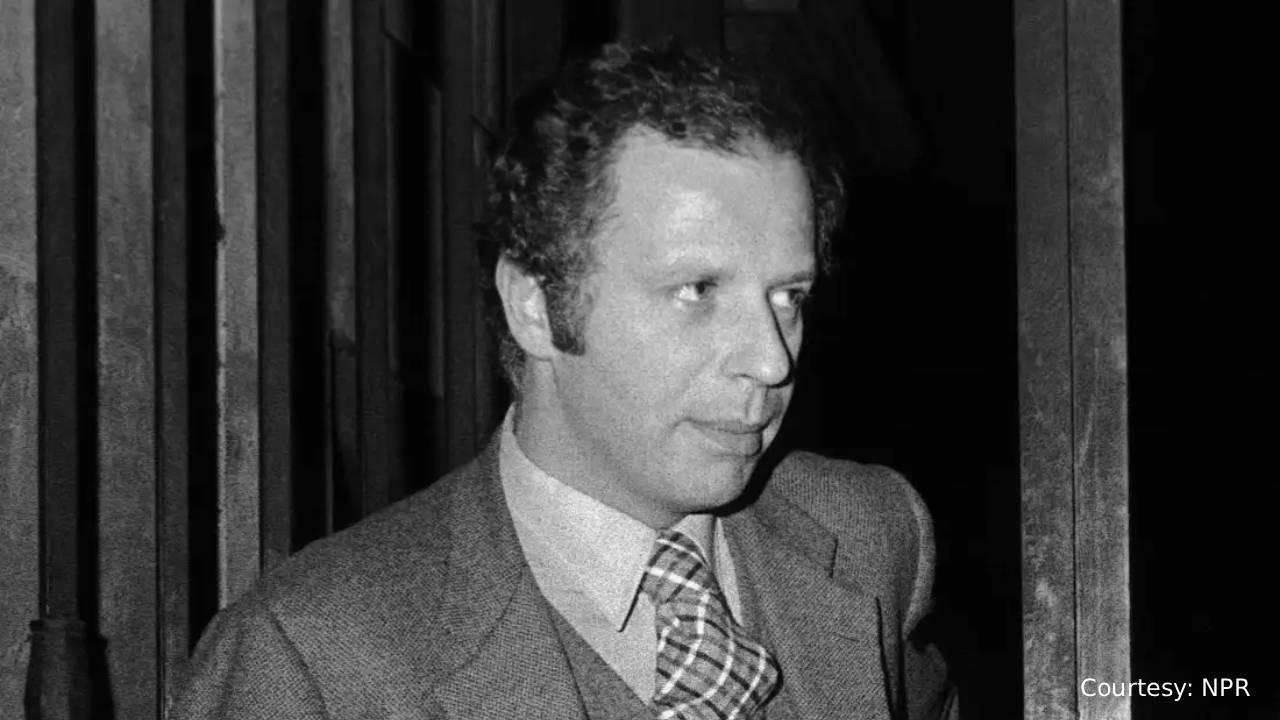
Paolo Bulgari -1937 to 2026.
A tribute to the man whose knowledge of gemstones helped a Roman family house find a language the world could recognise.
LuxuryAbode Team
Paolo Bulgari helped make a coloured gemstone look unmistakably Bulgari. An emerald could announce itself through its rounded surface, its generous proportions and the unexpected company it kept. Rubies might surround it. Yellow gold might give it warmth. The effect depended on judgement: knowing which colours could stand together, how much space each needed, and when a jewel had become complete.
His family announced his death on 21 November 2026. He was 89. For the house his grandfather founded in Rome in 1884, his passing closes a personal connection to the generations who built its identity at the workbench and across the counter, long before Bulgari became a global luxury name. Readers who want the wider story can explore the bedazzling brand story of Bulgari and its rise from a silversmith's shop.
The scale of that business is one measure of his achievement. The more intimate measure is the pleasure its jewellery continues to give: a necklace recognised across a room, a stone that rewards another look, an object whose composition remains persuasive decades after it was made.
LuxuryAbode remembers Paolo Bulgari as a custodian of that pleasure. His contribution belongs within the history of his family, its craftspeople and its designers, but it carries a distinct lesson of its own. A luxury house endures when someone knows, deeply and specifically, what makes its work worth caring about.
The man behind the gemstones
Born in Rome in 1937, Paolo was the grandson of Sotirio Bulgari, the Greek silversmith who established the business. He joined the family firm in 1960, working under his father Giorgio and developing the precious-stone expertise for which he became widely respected.
That apprenticeship matters. Before a gemstone becomes an image in a campaign, someone must assess its colour, character and possibilities. Someone must decide what kind of jewel it could become. Anyone curious about that first step can read about the types of gems used in luxury jewelry and what sets each apart.
Reuters' account of Paolo's life includes a revealing detail: despite his standing, he continued to enjoy serving customers at the historic Via Condotti boutique, sometimes introducing himself simply as a salesman.
It is an apt detail to preserve in a tribute. The chairman could still find purpose in the encounter between a person and a jewel. For a business whose name would eventually appear on hotels, fragrances and accessories, that attachment to its original craft gave the story a human centre.
Helping Bulgari become more fully itself
The house's experiments with daring gemstone combinations were already developing in the mid-1950s, before Paolo's documented entry into the business. His achievement was to help carry that developing identity forward.
Bulgari's earlier high jewellery had reflected French traditions, with platinum, diamonds and Art Deco geometry. Over time, yellow gold, substantial volumes and adventurous colour established a more distinctly Italian expression.
The cabochon became central to that vocabulary. Its smooth, domed surface offered a different way to appreciate colour from the glitter of a faceted stone. Bulgari associated its rounded forms with the cupolas of Rome.
There is something moving about that connection in the context of Paolo's life. The city around the family business became part of the objects it sent into the world. Rome supplied proportions, shapes and references that could travel without losing their origin.
Paolo helped sustain that recognisable sensibility across decades. To honour him accurately is to recognise the judgement involved in developing an inheritance. That sensibility is still visible in recent work such as the Magnifica high jewelry collection and new Octo Roma models, and in the first documentary on the behind-the-scenes mysteries of Bulgari high jewelry.
A legacy visible in the jewels
A necklace dated 1969 offers a particularly clear expression of the house's confidence. Its detachable octagonal pendant contains a 44.60-carat cabochon emerald, framed by rubies and diamonds.
The emerald's volume, the red surrounding its green and the geometry containing both create the composition. The pendant can also be worn as a brooch, allowing a substantial object to assume another role in its owner's life.
A 1972 sautoir offers a different kind of freedom. Yellow and blue sapphires appear alongside agate, citrines and diamonds. Materials with different market values contribute to a coherent whole. For a broader view of how such materials shape value, see this analysis of precious gemstones and luxury jewelry market dynamics.
These are documented Bulgari creations from Paolo's working life, rather than verified examples of his individual authorship. Together, they help explain the creative culture he helped nurture: knowledgeable about precious materials, receptive to unexpected combinations and willing to give colour considerable presence.
The house's archive also acknowledges influences beyond Rome, including Mughal references in carved emeralds paired with rubies and diamonds. Its Italian identity could accommodate those encounters. Curiosity enlarged its vocabulary. That openness also resonates in India, where the house has presented its work, as seen when Sudha Reddy launched Bulgari's high jewellery collection in Hyderabad.
For anyone who loves jewellery, that openness is part of what deserves celebration.
Elizabeth Taylor and the life a jewel acquires
Bulgari's association with Elizabeth Taylor helped bring its jewellery into the public imagination. Yet the lasting fascination comes from the relationship between the objects and the woman who chose and wore them.
In December 2011, Christie's sold her Bulgari emerald and diamond pendant brooch for USD 6,578,500, including buyer's premium. It contained a 23.46-carat Colombian emerald. The catalogue dated the jewel to 1958 and recorded it as Richard Burton's engagement gift in 1962.
The result united exceptional material, a celebrated maker and an extraordinary personal history. It cannot serve as a general price guide for vintage Bulgari. Readers interested in how such sales work can explore the business of luxury auction houses or see how the Fortune Pink anchored Christie's Magnificent Jewels Geneva auction.
Its relevance to this tribute is more enduring than the auction figure. Jewellery can become inseparable from a life. It accompanies relationships, marks occasions and gathers meaning through use. A jeweller's work continues in those private histories, often far beyond anything an archive can record.
Taking a Roman house into the world
Bulgari expanded internationally during the 1970s, establishing stores in cities including New York, Paris, Geneva and Monte Carlo. Paolo became chairman in 1984 and worked alongside his brother Nicola and nephew Francesco Trapani as the business developed across categories and markets. Those categories later included watches such as the Bulgari Octo Finissimo Ultra, the world's thinnest mechanical watch, and hospitality, including Bulgari's first luxury hotel in the US and a new Bulgari luxury resort in the Maldives.
The family transferred control to LVMH in 2011, in a transaction reported at about USD 5 billion. Reuters recalled Paolo describing the decision as painful but necessary to secure the company's future and protect its employees. To understand the group that took over, read the incredible brand story of LVMH.
That account gives the corporate milestone a personal dimension. A family business contains responsibilities accumulated across generations: to the name, to the craft and to the people whose livelihoods depend on it.
LuxuryAbode's reading of his legacy is that he helped give Bulgari something expansion alone cannot create: continuity of taste. The business could grow because there was already a recognisable point of view for it to carry. Among the names it stands beside, the 20 most expensive jewelry brands in the world offers useful context.
The Rome beyond Via Condotti
The foundation bearing Paolo's name has been active since November 2019, supporting education and young people in disadvantaged parts of Rome.
In his own account for the foundation, he returned to his family's origins in migration. Behind an internationally recognised Italian name was the story of a Greek craftsman who had arrived seeking a future.
That memory adds depth to the tribute. The city that helped shape Bulgari's aesthetic was also a place to which Paolo directed care and attention beyond the world of luxury.
His life joined those different versions of Rome: the historic boutique, the workshops and stones, and the neighbourhoods where education could widen a young person's possibilities.
Remembering the eye behind the name
A jewel can preserve a way of seeing long after its maker's lifetime. Colour, proportion and the relationship between materials remain available to anyone willing to look closely.
That is where Paolo Bulgari's legacy feels most alive. In the house he helped build, an emerald could possess grandeur without losing warmth. A bold composition could retain balance. A Roman identity could become internationally understood.
His passing invites appreciation of the people behind such continuity: those who examine, select, question and refine until an object feels resolved.
LuxuryAbode pays tribute to Paolo Bulgari, to his devotion to gemstones and to the creative inheritance he helped carry forward. The name travelled around the world. The knowledge behind it remained personal.
Frequently Asked Questions
Who was Paolo Bulgari?
Paolo Bulgari was a third-generation member of the Bulgari family, a precious-stone specialist and chairman from 1984. His family announced his death, aged 89, on 21 November 2026.
What was Paolo Bulgari's contribution to jewellery?
He helped develop and sustain Bulgari's distinctive use of coloured gemstones and supported its international growth alongside his brother Nicola and nephew Francesco Trapani.
Why is Bulgari famous for coloured gemstones?
Its recognisable aesthetic combines adventurous colour pairings, rounded cabochons, substantial proportions and Roman references. Important experiments with this vocabulary began in the 1950s.
Did Paolo Bulgari personally design every famous Bulgari jewel?
No. The house's identity developed across generations and through the work of designers and craftspeople. Attribution of a particular jewel requires specific evidence.
When did Bulgari become part of LVMH?
The Bulgari family transferred control to LVMH in 2011. The transaction supported the next phase of the house's development.
Comments
No comments yet.
Add Your Comment
Thank you, for commenting !!
Your comment is under moderation...
Keep reading luxury post