Beyond the Canvas: Santanu Hazarika on Art, Identity and a World Without Creative Boundaries
 Anishka Kataria
- 31st Oct 2026
- 1395
- 0
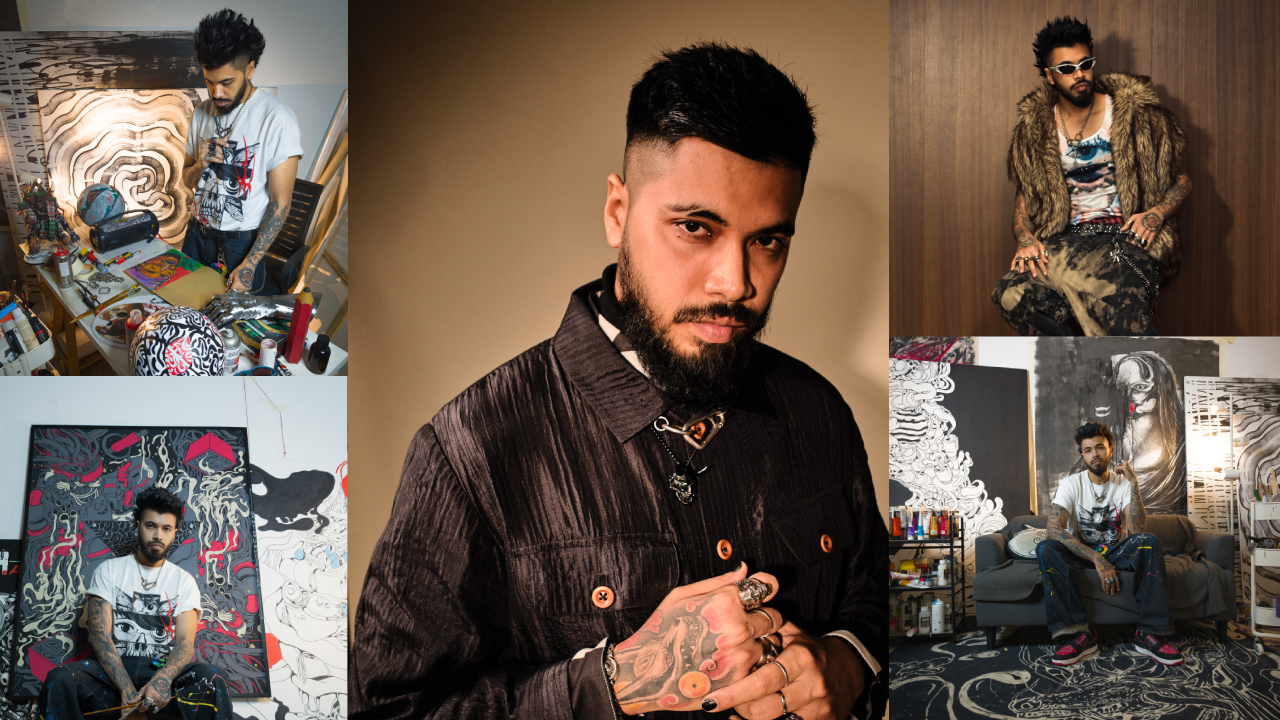
From surreal visual worlds and global brand collaborations to music, cinema and a creative residency in Assam, the multidisciplinary artist reflects on the freedom to experiment, the importance of staying rooted and why originality is ultimately a matter of perspective.
For Santanu Hazarika, art has never been confined to a canvas, a discipline or even a recognisable style. It is a way of interpreting the world, a language that finds expression in everything from intricate illustrations and automobiles to music, fashion and immersive experiences.
The Assam-born, Mumbai-based visual artist first attracted international attention in 2014 when he became the inaugural Red Bull World Doodle Art Champion, having chosen an uncertain artistic path over a conventional career in engineering. Since then, his distinctive visual universe, shaped by mythology, subcultures, philosophy and the surreal, has found its way into collaborations with brands and creative figures across industries.
Yet, for all the variety of his work, Hazarika appears less interested in the boundaries he has crossed than in those that remain unexplored. His evolving ambitions include a creative collaboration with musician Sid Sriram, an art and music residency in Assam, an immersive exhibition in the United States and a possible future in cinema.
In an exclusive conversation with LuxuryAbode, Hazarika discusses the ideas that shape his practice, the relationship between art and commerce, the evolving meaning of luxury and why a strong sense of belonging can be the foundation for a truly global creative identity.
The Conversation
You first gained international recognition as a doodle artist, but your work now spans several creative disciplines. Do you ever feel limited by that early label? How would you describe yourself today?
I think labels are useful for introducing people to something, but they can also become limitations when you start identifying yourself through them. Doodling was where my journey became visible to the world, but it was never the entirety of what I wanted to do.
I’ve always approached art as a language rather than a particular medium. Whether it’s a mural, an automobile, a fashion collaboration, an album cover or an installation, I’m essentially exploring the same universe of ideas, symbols and philosophies through different forms.
Today, I’d describe myself as a multidisciplinary visual artist and, more importantly, a storyteller. I’m interested in building worlds, questioning perspectives and creating experiences that exist beyond the canvas. I don’t necessarily want to be defined by what I make, but by the way I think and see the world.
You chose art over engineering at a time when a creative career offered little certainty. What was the hardest part of that decision, and what advice would you give someone facing a similar choice?
Choosing art over engineering was probably one of the first defining decisions of my life. Coming from a fairly conventional educational environment, pursuing art as a career wasn’t something that came with a roadmap or any guarantee of success.
The most difficult part wasn’t necessarily convincing other people. It was convincing myself that I could build a life around something so uncertain. There was no established formula, and I had to figure out almost everything through trial and error.
Looking back, I think the biggest lesson was learning to be comfortable with uncertainty. I’d tell a young artist not to romanticise the struggle, but also not to let the fear of uncertainty dictate their choices. Talent is important, but consistency, curiosity and the willingness to evolve are what sustain a creative career. You have to take your work seriously before the world does.
Your visual language is intricate, surreal and often dark. What fascinates you about these worlds, and how does an artwork take shape in your imagination?
I've always been fascinated by the relationship between chaos and structure. Mythology, philosophy, anatomy, architecture, science fiction and popular culture have all influenced the worlds I create. I’m drawn to the surreal, the grotesque and the beautiful, sometimes all existing within the same frame.
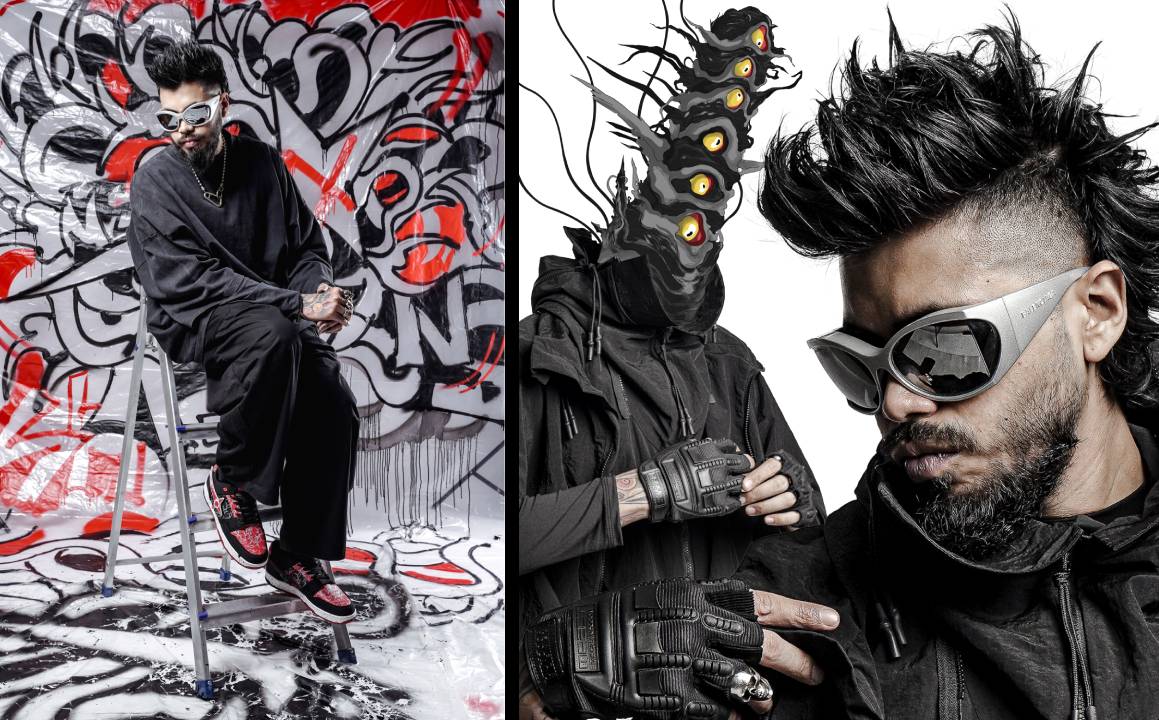
I think there’s something fascinating about the human imagination and its ability to create realities that don’t necessarily exist. My work often explores that space between the familiar and the unfamiliar.
I rarely begin with a completely finished image in my head. Usually, I start with an idea, a thought or even a feeling. The process then becomes a conversation between me and the artwork. Sometimes it takes a direction I hadn’t anticipated, and those unexpected moments are often the most exciting. I enjoy leaving room for accidents because they can lead to discoveries that a perfectly planned process might never allow.
You've worked with global brands including Adidas, Red Bull, Royal Enfield and Adobe. How do you balance artistic freedom with commercial collaborations?
For me, the most exciting collaborations happen when there’s a genuine meeting of worlds. I’m interested in what happens when my visual language interacts with something outside my usual practice, whether that’s fashion, technology, automobiles, music or culture.
I don’t see commercial collaborations as separate from artistic practice. They can become incredible opportunities to experiment, reach new audiences and take ideas into spaces they might not otherwise enter.
But alignment is important. I look at whether there’s room to bring my own perspective into the project, whether the collaboration has an interesting cultural or creative context, and whether I can contribute something beyond simply putting my artwork on a product. I’ve certainly had to be selective over the years. For me, the objective isn’t just to associate with a big name. It’s to create something meaningful through that association.
Your upcoming collaboration with Sid Sriram brings music and visual art together. What interests you about this meeting of creative worlds?
Music has always been a huge part of my creative vocabulary. I often find that music can take you into emotional and psychological spaces that are difficult to articulate through words.
What makes the association with Sid particularly interesting is the opportunity to explore the intersection of two different forms of expression. His music has an incredible emotional range, and I’m interested in translating that energy into a visual experience without simply illustrating the lyrics or creating a literal interpretation of the songs.
My approach is to understand the emotions, textures, rhythms and underlying narratives within the music, and then interpret them through my own visual language.
I see this as a meeting of two creative universes. Rather than one medium accompanying the other, I’m interested in creating a dialogue between them, where both can exist independently but also elevate each other.
You're developing an art and music residency in Assam. What inspired the idea, and what do you hope it will achieve for artists from the Northeast?
Growing up in Assam, I’ve always been conscious of the incredible creative potential that exists in the Northeast. There’s so much talent, cultural richness and experimentation happening here, but access to larger creative networks, resources and opportunities can still be limited.
As my own journey has taken me across different countries and creative industries, I’ve become increasingly interested in building those bridges back home.
The residency is envisioned as a space where artists, musicians, designers and other creative practitioners from across India can come together, exchange ideas and collaborate. I don’t want it to be another conventional workshop where people simply come, learn something and leave. I’d like it to function as a living creative ecosystem, with experimentation, mentorship, performances, collaborations and public engagement.
The larger ambition is to create an environment where emerging talent from the Northeast doesn’t feel the need to leave its cultural context behind to find opportunities. Instead, the world should have reasons to come here and engage with it.
As your career has become more international, how has your relationship with your Assamese roots evolved?
The more I’ve travelled and worked internationally, the more I’ve realised how important my roots are to my identity as an artist. Earlier, I probably approached my Assamese heritage more instinctively. Today, I’m much more conscious of its depth and the possibilities it offers creatively.
Assam and the Northeast have incredibly rich visual cultures, folklore, mythology, craftsmanship and traditions. I see these not as references to be preserved in isolation, but as living languages that can evolve and interact with contemporary culture.
I’ve always enjoyed finding ways to bring these influences into contemporary visual culture, even in unexpected spaces. My work with Konami on eFootball, in a project associated with Neymar Jr., is an interesting example of how my creative practice has moved across different cultural landscapes. For me, it’s exciting to see how an artist’s visual identity and cultural perspective can find a place within global pop culture and gaming.
Similarly, projects like Khel Maharan 3.0 allow me to engage more directly with my roots and create something that connects with the cultural context I come from.
I don’t believe an artist has to abandon their identity to become globally relevant. In fact, I think the opposite is true. The more specific and authentic your perspective is, the more interesting it becomes to someone from a completely different part of the world. Being rooted gives you a point of view, and that’s something no amount of global exposure can replace.
As individuality and creative expression become increasingly important, what does luxury mean to you personally?
For me, luxury is increasingly about individuality and the freedom to express yourself without having to conform to a particular idea of status.
There’s obviously an appreciation for craftsmanship, quality and exclusivity, but I think the definition of luxury is evolving. In a world where almost everything is accessible and constantly reproduced, something that has a genuine point of view, a story and a distinct identity becomes increasingly valuable.
I also think art and culture play a huge role in this shift. People are becoming more interested in the thought, philosophy and cultural significance behind the things they own and the experiences they engage with.
Personally, I find the idea of intellectual and creative luxury particularly interesting. The ability to experience something unique, discover a new perspective or engage with a different culture can be far more valuable than simply possessing something expensive.
With AI reshaping creative industries, do you see technology as an opportunity for artists or a challenge to originality?
I find AI exciting, but I also think it’s important to understand what it is and what it isn’t. Technology has always influenced the way artists work, from the invention of photography to digital illustration and 3D tools. AI is another significant shift in that evolution.
I’m interested in using it as a tool for exploration, visualisation and experimentation. It can help you move through ideas, challenge your own thinking and explore possibilities that might otherwise take considerably longer.
However, I don’t think originality is simply about producing an image that nobody has seen before. It’s about the experiences, cultural references, observations and personal perspectives that inform the work in the first place.
AI can generate possibilities, but the intention behind what you create, the decisions you make and the perspective you bring to it are still incredibly important. I think the future belongs to artists who are curious enough to embrace new technologies without losing their own creative identity.
Away from commissions and collaborations, what does life look like for you? What keeps you curious and creatively inspired?
My life outside art isn’t particularly disconnected from my creative world. I’m naturally curious, so I find myself exploring a lot of different things. I’m into music, especially metal and alternative music, collecting vinyl records, gaming, building Gundam models and discovering interesting subcultures.
I also enjoy travelling and observing things without necessarily having a creative agenda. Sometimes it’s architecture, sometimes it’s an unusual object, a conversation or something completely random that stays in my head for months.
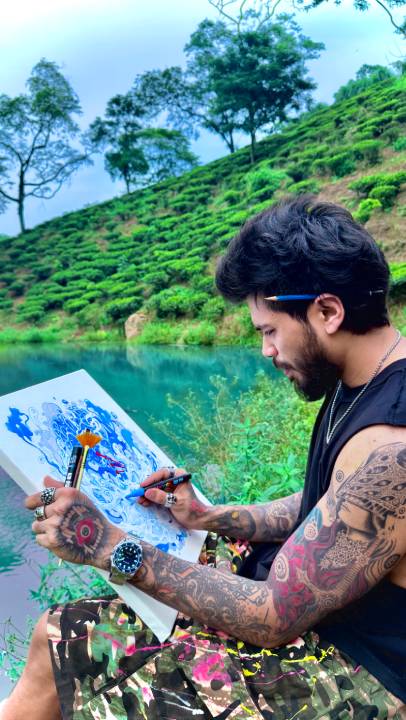
I think it’s important to have interests that don’t always need to translate into work. As artists, we can sometimes become so consumed by the idea of constantly creating that we forget to simply experience life.
A lot of my inspiration comes from those moments when I’m not consciously looking for it. Curiosity is probably the one thing that keeps me grounded and creatively stimulated.
You've explored an extraordinary range of mediums. What creative territory do you want to enter next, and what would you ultimately like your work to stand for?
I think the most exciting part of being an artist is knowing that there’s still so much left to explore. I’ve worked across several industries and mediums, but I don’t necessarily see those as completed chapters. They’re all connected, and each experience opens up possibilities for something else.
One medium I’m increasingly interested in exploring is film. I’ve been working towards bringing my ideas and storytelling into cinema, which I see as a natural but exciting evolution of my practice. Film allows you to combine imagery, sound, narrative, atmosphere and philosophy into one cohesive experience. I’d love to develop projects that bring my visual universe into that space.
I’m also working towards a major immersive art exhibition and experience in the United States, which I’m hoping will be another important milestone in my journey. Beyond that, I’d love to explore more ambitious interdisciplinary experiences that bring together art, music, technology and architecture.
I also want to invest more energy into building creative ecosystems and platforms, particularly in the Northeast, that allow other artists to experiment and find their voices.
Twenty years from now, I wouldn’t necessarily want people to remember me for a particular artwork, collaboration or achievement. I’d hope they remember that I remained curious, kept experimenting and wasn’t afraid to challenge the boundaries of what an artist could be. More than anything, I’d like my body of work to feel like an ongoing exploration rather than a fixed identity.
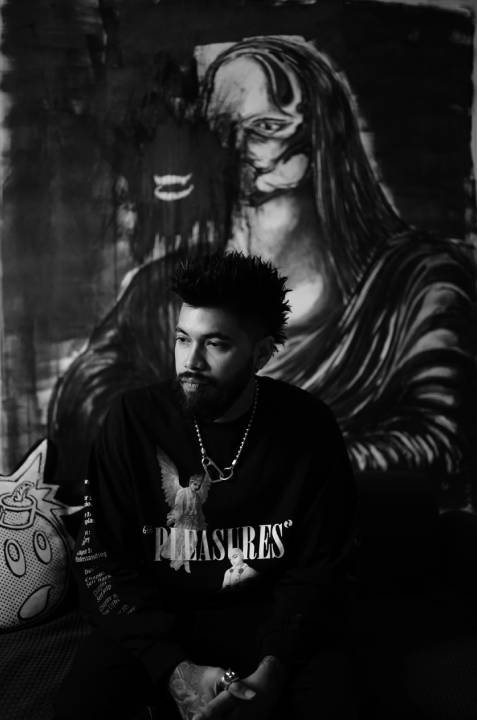
For Hazarika, the freedom to experiment is inseparable from the responsibility to remain curious. Whether reimagining visual storytelling, exploring new technologies or creating opportunities for artists in his home region, his ambitions point towards a practice defined less by medium than by imagination. Perhaps that is what makes his journey compelling: not simply the number of worlds he inhabits, but his insistence that there are always more to discover.
After all, perhaps the greatest humility in creativity lies in recognising that there will always be more to imagine, more to discover and more to learn.
Comments
No comments yet.
Add Your Comment
Thank you, for commenting !!
Your comment is under moderation...
Keep reading luxury post