An Ode to Shoes Gets an Art-World Twist: Ferragamo's Surrealist Return to Its Founding Obsession
 Namrata Parab
- 4th Aug 2026
- 1406
- 0
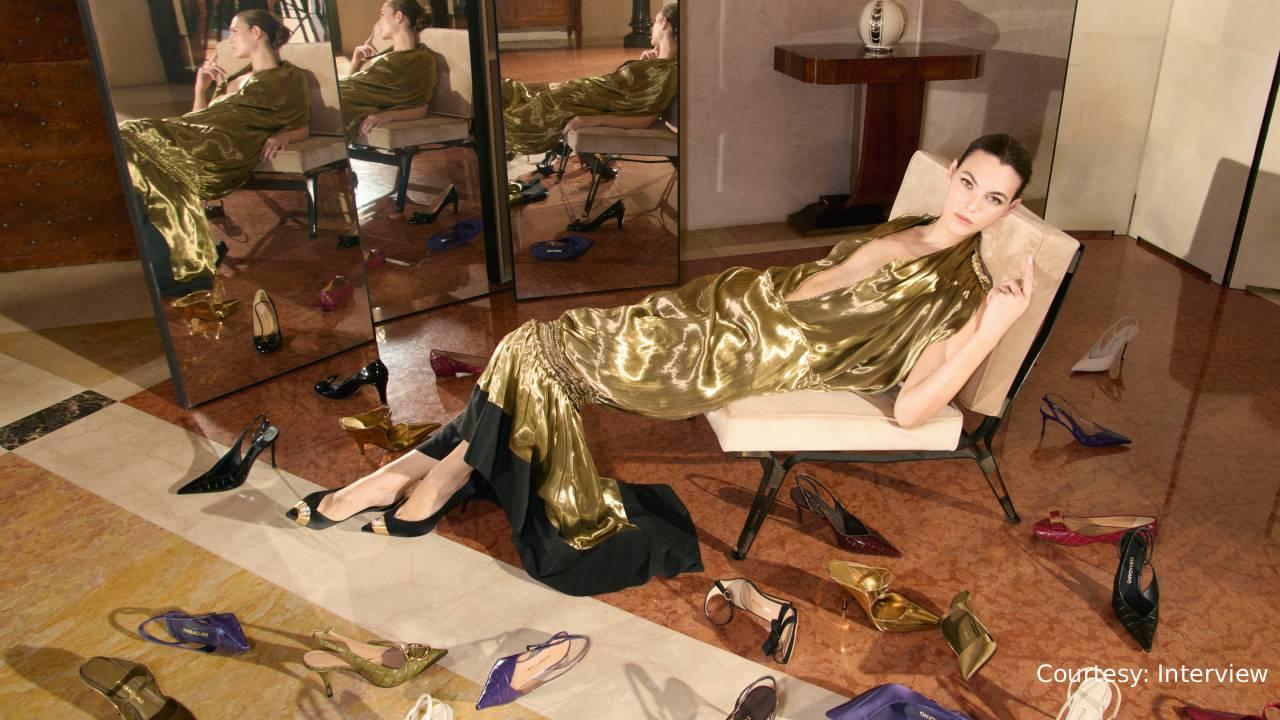
Every fashion house has an origin story it returns to when it wants to remind the world who it is. For Ferragamo, that story has always been the shoe, a lineage traced in detail in the amazing brand story of Salvatore Ferragamo. The Florentine house's Autumn/Winter 2026 campaign, titled "La Mania Delle Scarpe" ("The Shoe Obsession"), goes back to that founding myth and rebuilds it through the eyes of contemporary art rather than nostalgia.
Shot by photographer Johnny Dufort, the campaign revives one of Ferragamo's most recognisable visual tropes: the celebrated actress, seated amid an abundance of shoes, a motif that traces back to the house's golden-era Hollywood ties. Dufort's version strips the scene of straightforward glamour and pushes it into something closer to a fever dream, a treatment of imagery worth reading alongside broader thinking on the role of photography in luxury. At its centre, model Anok Yai sits atop a sculpture by American artist Willie Cole, made entirely from women's pumps and dating to 1994, functioning in the campaign as a literal throne. "Willie takes everyday objects, objects that you feel connected to, that you can relate to, and distorts them," creative director Maximilian Davis said of the collaboration. "The chair feels very surreal, but immediate, and with my recent collections referencing Surrealism and Dadaism, the collaboration felt right."
The cast extends beyond Yai to Vittoria Ceretti, Thibaud Charon, and, notably, Jingyu Huang and Ning Chang, both recently named Ferragamo global brand ambassadors and making their campaign debut here, a strategy of pairing established faces with new ambassadors also seen when Sonam Kapoor was named brand ambassador for Zoya. Stylist Lotta Volkova oversaw the looks, threading archival references through the imagery: a stiletto silhouette drawn from a 1954 design, an architectural sole rooted in a 1957 style known as the Opanka, and a quilted reworking of the house's Varina flat. The house's Vara shoe, itself a nearly five-decade-old design born from what the label describes as a happy manufacturing accident and still hand-finished at its factory outside Florence, sits in the same lineage of archival footwear this campaign is built to honour, a lineage that stands apart from labels whose earlier work has genuinely been lost in the archives of fashion history.
Bags get equal billing alongside the footwear: the campaign introduces the new Cara bag and a re-proportioned East-West version of the house's Hug bag, positioned as new-season counterparts to the archival shoes rather than afterthoughts, entering a category LuxuryAbode has tracked as the luxury handbag market approaching 90 billion dollars. Formal menswear appears throughout as well, extending Davis's ongoing exploration of 1920s tailoring codes, speakeasy elegance, and sailor-inspired detailing that has defined his recent collections.
What emerges is less a product campaign than a thesis statement: that Ferragamo's shoes have always functioned as objects of design and culture first, and commercial goods second. Cole's sculpture makes that argument literal, converting hundreds of individual shoes into a single art object a person can sit on, the kind of proposition already raised by broader debates over whether art itself is a good investment. For a house whose founder, Salvatore Ferragamo, was known in his own lifetime as "shoemaker to the stars," bringing that history into dialogue with contemporary sculpture is less a departure than a homecoming, staged for an audience that now expects its heritage brands to also read fluently as art collectors.
The LuxuryAbode View: The Archive-as-Artwork Strategy
LuxuryAbode's read on this campaign centres on what we're calling the Archive-as-Artwork Strategy: heritage houses increasingly validate their design history not by simply reissuing archival silhouettes, but by placing that history in direct conversation with recognised contemporary artists, borrowing the artist's cultural authority to reframe the brand's own object-making as fine art rather than commerce, a dynamic already visible in the wider crossover documented in the symphony of art and fashion.
This is a distinct move from the standard "archive revival" playbook most heritage labels run. Rather than asking the consumer to trust the brand's own account of its heritage, Ferragamo imports a third party (Willie Cole, a working artist with institutional standing independent of fashion) to make that argument on its behalf. The commercial logic: campaigns that read as art criticism generate a different, more durable kind of press cycle than campaigns that read as advertising, and they extend a house's relevance to collectors and cultural institutions, not just seasonal shoppers, a strategy other Italian shoemaking houses such as the one behind Sergio Rossi's Italian luxury shoe heritage could plausibly borrow.
| Signal | Ferragamo AW26 | Standard Heritage Reissue Campaign |
|---|---|---|
| Framing device | Third-party fine artist (Willie Cole) | In-house archive styling only |
| Cast strategy | Mix of established faces and new ambassador debuts | Single hero face |
| Archival references | Named, dated silhouettes (1954, 1957) | Vague "heritage-inspired" language |
| Category spread | Footwear, bags, formal menswear in one campaign | Category-siloed campaigns |
| Cultural register | Art-world citation | Fashion-press citation |
The Archive-as-Artwork Strategy describes a heritage house's decision to validate its own design archive through collaboration with an independent contemporary artist, borrowing that artist's cultural standing to reposition its historic products as fine art rather than seasonal merchandise.
The risk in this strategy is legibility: audiences unfamiliar with Cole's practice may read the shoe throne as pure spectacle rather than the citation it's intended as. Ferragamo appears to be betting that the image travels well enough on its own, and that the art-world credit line does the explanatory work for those who look closer, much as houses reissuing pieces such as Ferragamo's reintroduced most desired handbag and the recent Ferragamo Nomadic Stories collection release are counting on their own archives to carry cultural weight. That instinct to let heritage objects speak for themselves is not unlike the reasoning behind ten scintillating sculptures that redefine perception, where the object itself, not the marketing around it, is asked to do the persuading.
India Opportunity: What This Means for Indian Buyers
Market Opportunity
India's appetite for Italian heritage footwear and leather goods has grown alongside broader demand tracked in overviews of the top women's luxury footwear brands, and campaigns that position shoes and bags as cultural or collectible objects, rather than purely seasonal purchases, tend to resonate strongly with Indian buyers who already treat pieces covered in the most expensive handbags in the world as long-term acquisitions rather than trend purchases. As Ferragamo expands its retail and ambassador presence in the region, the Archive-as-Artwork framing gives the brand a distinct story to tell Indian consumers already comfortable paying heritage-brand premiums.
Buyer Notes: LRS, TCS and Customs Considerations
- Indian residents purchasing Ferragamo shoes, bags or ready-to-wear while travelling abroad, or paying an overseas retailer directly, should route payments above the relevant threshold through the Reserve Bank of India's Liberalised Remittance Scheme, which permits remittances of up to USD 250,000 per financial year for permitted transactions.
- Given that a single Ferragamo bag or a curated wardrobe of archival footwear can easily exceed Rs 10 lakh in value, buyers should account for Tax Collected at Source on the relevant portion of the purchase, a mechanic LuxuryAbode has previously detailed in its coverage of the new TCS rule on high-value luxury purchases.
- Items carried back into India after an international shopping trip are subject to customs duty once their combined value exceeds the personal duty-free allowance, and original receipts should be retained for declaration at entry.
- Buyers considering archival or limited pieces, such as the Cara bag or East-West Hug bag introduced in this campaign, should note that resale value and authentication documentation matter more for these designs than for standard seasonal stock, and provenance paperwork should be kept from the point of purchase.
Quotable Facts (Standalone, Citable)
- Ferragamo's Autumn/Winter 2026 campaign, "La Mania Delle Scarpe," was photographed by Johnny Dufort and features a 1994 shoe sculpture by American artist Willie Cole as a central staging device.
- The campaign marks the debut appearance for Jingyu Huang and Ning Chang, both newly named Ferragamo global brand ambassadors, alongside Anok Yai and Vittoria Ceretti.
- Archival Ferragamo silhouettes referenced in the campaign include a 1954 stiletto design and a 1957 architectural sole known as the Opanka.
- LuxuryAbode's Archive-as-Artwork Strategy describes the growing pattern of heritage houses citing independent contemporary artists to validate their design history as fine art rather than product marketing.
FAQ
What is the concept behind Ferragamo's Autumn/Winter 2026 campaign?
Titled "La Mania Delle Scarpe," the campaign reimagines Ferragamo's historic Hollywood-era motif of actresses surrounded by shoes through a surrealist lens, incorporating a sculpture by contemporary artist Willie Cole.
Who photographed the Ferragamo AW26 campaign?
The campaign was shot by photographer Johnny Dufort under the creative direction of Maximilian Davis.
What is the Willie Cole sculpture featured in the campaign?
It is a 1994 artwork constructed entirely from women's shoes, used in the campaign as a literal throne for model Anok Yai.
Which archival Ferragamo designs appear in the campaign?
The campaign references a 1954-inspired stiletto and a 1957 architectural sole style called the Opanka, alongside a quilted reworking of the Varina flat.
What new products does the campaign introduce?
The campaign debuts the new Cara bag and a re-proportioned East-West version of the house's Hug bag.
LuxuryAbode covers the houses and creative directors shaping where fashion, art and design intersect for a global luxury audience. Brands and artists working at that intersection are welcome to reach our editorial desk for feature consideration.
Disclaimer: Regulatory and remittance information referenced in this article, including LRS limits, TCS applicability and customs duty thresholds, is provided for general awareness only and does not constitute financial, tax or legal advice. These figures and rules are subject to change by RBI, tax authorities and Indian customs, and should be independently verified before making any purchase, remittance or import decision.
Comments
No comments yet.
Add Your Comment
Thank you, for commenting !!
Your comment is under moderation...
Keep reading luxury post