6 Indian Jewellery Houses Whose Work Sells Before It's Even Shown
 Namrata Parab
- 17th May 2026
- 1570
- 0
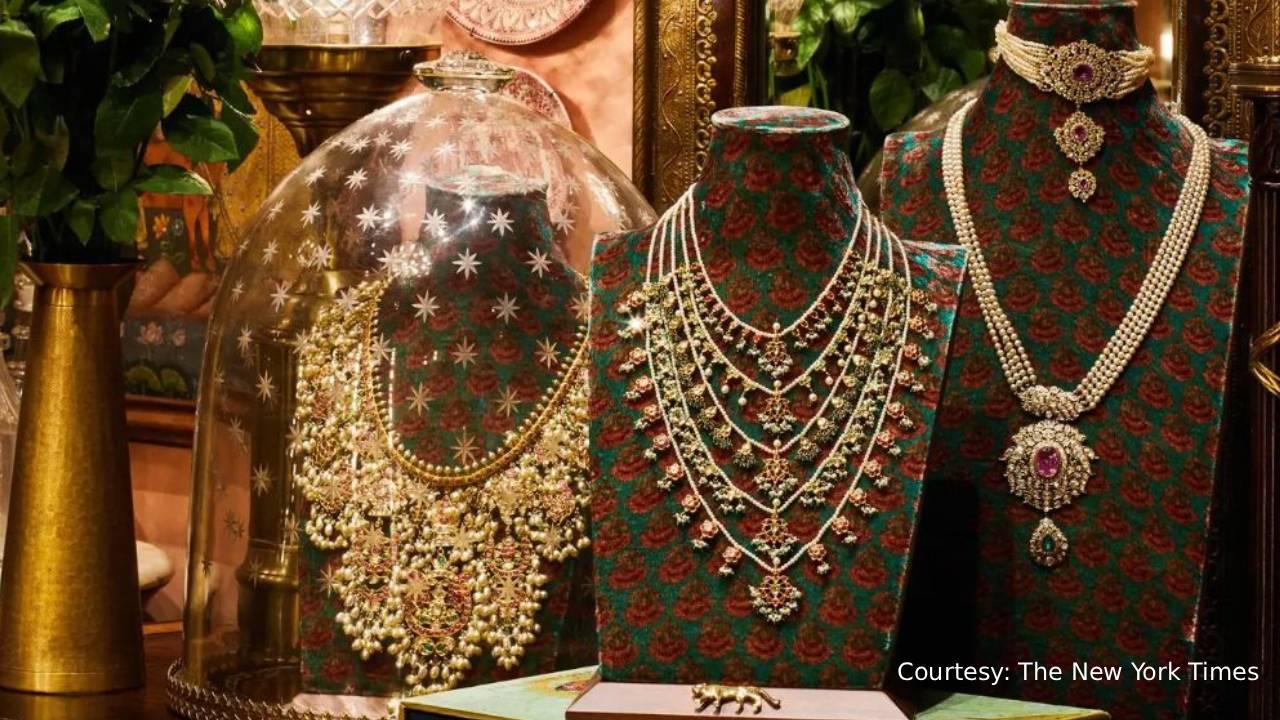
There is a category of Indian fine jewellery that does not advertise, does not maintain a public retail presence, and does not sell to walk-ins — regardless of how much the walk-in is worth. These houses operate on a logic that is genuinely alien to the modern luxury retail industry: scarcity that is not manufactured, exclusivity that is not marketed, and clientele who are not acquired but inherited.
The Indian fine jewellery industry, valued at approximately ₹5.5 lakh crore in 2024, is dominated at its consumer-facing end by brands that most UHNW buyers would not be caught dead wearing — not because the workmanship is poor, but because the distribution model has no filter. A piece sold in a mall in Pune cannot simultaneously be a signal of the social capital its buyer needs it to convey. For a specific stratum of India's wealthy — families with generational wealth, founders who have crossed the ₹500 crore net worth threshold, and the Indian diaspora's upper tier in London, Dubai, and Singapore — jewellery is not purchased. It is accessed. For broader context on who these buyers are and how they approach luxury acquisition, our guide to 7 key trends shaping the evolving Indian luxury buyer maps the full psychographic picture.
What follows is not a ranking. These six houses are categorically different from one another in geography, aesthetic, price point, and model. What unites them is a single characteristic: by the time a piece is shown to its eventual buyer, it is already sold. The showing is a courtesy. The sale happened at the first conversation, often weeks or months prior, often before the stone was even set.
The mainstream jewellery press does not write about how these houses actually operate — the private previews held in hotel suites during Diwali, the WhatsApp messages sent to three people before a new collection is formally "launched," the waiting periods that no brand would publish because publishing them would be a brand management disaster. LuxuryAbode will.
Viren Bhagat, Mumbai: The House That Has No Store and No Catalogue
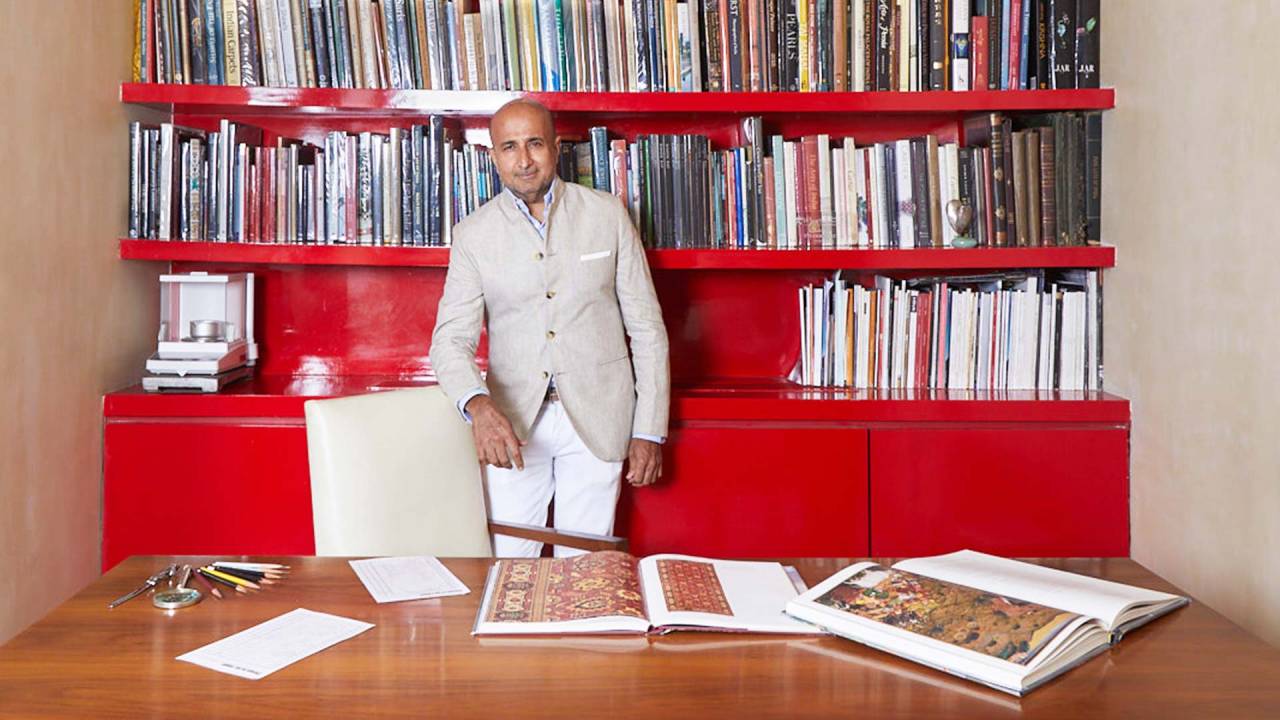
Viren Bhagat is not a celebrity jeweller. He is, by the assessment of Christie's, Sotheby's, and the community of serious collectors who bid on his work at auction, among the finest jewellers working anywhere in the world. His atelier operates from Mumbai with no retail storefront, no online shop, no public price list, and — crucially — no public commission queue. Entry is by existing client referral only.
His work is distinguished by a specific technical approach: stones of the highest individual quality, often Golconda diamonds and Colombian emeralds of unheated origin, set in ways that recall Mughal jewellery without replicating it. The workmanship — the meenakari enamelling, the foil-backed stone settings — is executed by a small group of karigar families whose knowledge does not sit in any training manual. For a sense of the gem traditions that inform pieces of this calibre, our guide to the types of gems used in luxury jewellery provides essential background on what separates Golconda diamonds and unheated coloured stones from the standard.
In terms of open-market pricing: Bhagat pieces that come up at Christie's Geneva or Sotheby's London typically sell in the range of CHF 200,000 to CHF 2.5 million (approximately ₹1.8 crore to ₹22 crore at current rates). For private commissions, informed estimates from those who have commissioned work place the entry point at approximately ₹40–60 lakh for a meaningful piece, with major statement works running to ₹5–8 crore. These figures are not confirmed by the house.
The access model: you are introduced by someone already in the network. There is no application. The waiting period for a commission, once accepted, typically runs from twelve to twenty-four months depending on stone sourcing requirements. If Bhagat is not interested in making what you want, the commission is declined politely and finally. Several people with significant wealth have been told no.
What the press doesn't publish: A meaningful portion of Bhagat's output goes to international clients — European aristocracy, American collectors — rather than Indian buyers. The assumption that India's most important fine jeweller primarily serves India is incorrect.
The Gem Palace, Jaipur (Kasliwal Family): The Oldest Allocation in India
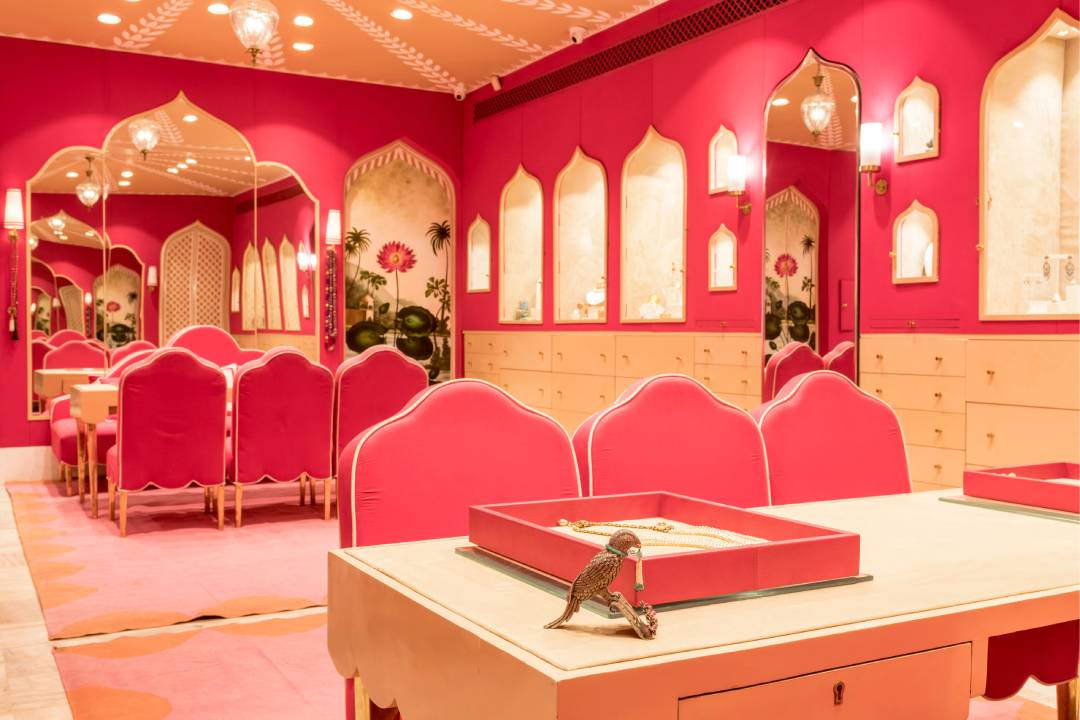
The Kasliwal family's Gem Palace on Mirza Ismail Road in Jaipur has been in continuous operation for approximately 175 years. That number alone places it in a category — globally — that fewer than a dozen jewellery houses can claim. The store itself is deceptive: a relatively understated shopfront that does not communicate, from the outside, that it contains pieces valued in the tens of crores and that its client list has included Jackie Kennedy, Mick Jagger, and multiple Maharajas before them.
Munnu Kasliwal, who died in 2018, was the creative force who brought the house to international recognition. His son Siddharth continues the atelier work. The current model: a portion of significant work is shown to a closed list of buyers before any public display. These buyers are, broadly, three categories — legacy Indian clients (families who have bought from Kasliwals for generations), international collectors who travel to Jaipur specifically, and the occasional institutional buyer (museums, royal collections). The Gem Palace does sell to walk-ins with purchasing intent — it is not as closed as Viren Bhagat's model — but the most important work never reaches the public floor.
Price range: a significant Mughal-period piece restored and mounted by the house can run from ₹25 lakh to several crore depending on the stone provenance and historical documentation. Modern atelier commissions begin around ₹8–12 lakh and scale to whatever the brief requires.
What the press doesn't publish: The Gem Palace has, over decades, amassed one of the most significant private collections of Mughal and Rajput jewellery in private hands. Not all of it is for sale. Some of it functions as a reference archive. The existence of this archive — and what it contains — is not publicly documented. For those interested in how Jaipur's royal heritage shapes the jewellery context in which the Gem Palace operates, our feature on the irresistible luxury of Leela Palace Jaipur offers a window into the city's aristocratic aesthetics that form the backdrop of the Kasliwal legacy.
Sabyasachi Jewellery, Kolkata/Mumbai: The Drop That Sells in Hours
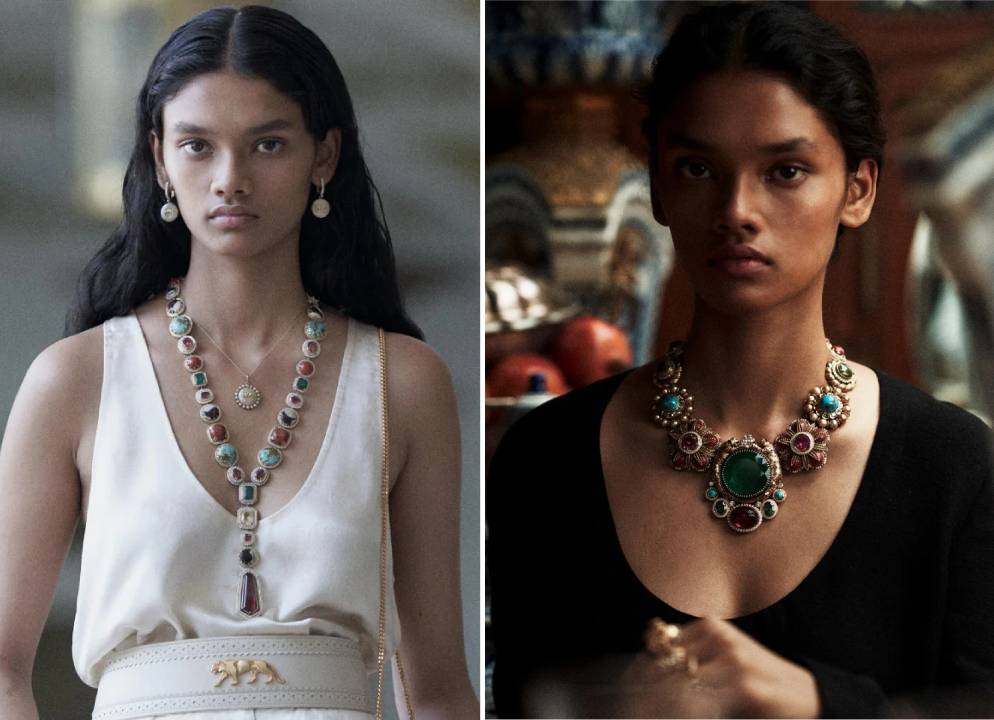
Sabyasachi Mukherjee's jewellery label operates differently from the ateliers above — it is not commission-driven, does not operate by referral, and has a public online presence. It belongs on this list because of a different but equally real form of pre-sold scarcity: every significant jewellery drop sells out, often entirely, within hours of announcement, frequently before the images have finished loading.
The model is closer to Supreme than to Gem Palace, which is both a statement about how Sabyasachi has repositioned Indian jewellery for a new generation and a limitation: the rarity is real but not personal. You are not getting something made for you. You are getting something that happened to be available when you were watching. For those wanting to understand Sabyasachi's broader brand universe — and how his wallpaper and decor divisions extend the same philosophy — our piece on VRSA and the Sabyasachi wallpaper collection documents how consistently he has applied scarcity logic across every category he enters.
The jewellery itself: Sabyasachi works primarily with uncut (polki) diamonds, Bengal gold (a specific 22-karat alloy with a warmer yellow tone than international gold), and coloured stones set in ways that reference the Bengali and Mughal traditions. The aesthetic is distinctive enough to be recognisable — which is both the appeal and, for buyers who value anonymity, the limitation.
Price points are the most accessible on this list: entry-level Sabyasachi jewellery begins at approximately ₹85,000–₹1.2 lakh for simpler gold pieces. Significant statement pieces run to ₹25–40 lakh. The top 10% of pieces by value sell in a private preview window available only to existing clients and stylist networks before the public drop.
What the press doesn't publish: The resale market for sold-out Sabyasachi jewellery pieces on secondary platforms operates at markups of 30–80% over retail. This is, by any definition, a collector market. Several pieces from early collections have appreciated more than comparable weight investments in the underlying gold.
Farah Khan Fine Jewellery, Mumbai: The Atelier That Built Its Clientele First

Farah Khan Ali established her fine jewellery practice in a way that most jewellery designers do not: she built a reputation as a collector and connoisseur before she built a commercial practice. Her social network, the circles she moved in before jewellery became her profession, became her first clientele. That is not the typical trajectory, and it explains why her practice has always operated on personal terms.
Her atelier in Mumbai works predominantly on commission, with the occasional curated collection shown to a private list before any public display. The aesthetic is distinct from the Mughal-revival school that dominates India's high jewellery conversation: her work tends toward bold forms, sometimes sculptural, always wearable in the Western context as well as the Indian one. This has given her an international collector base that most Indian designers do not have.
Price range: commissions typically begin at ₹5–8 lakh for simpler fine jewellery pieces and range to ₹2–3 crore for significant statement works in high-quality coloured stones. Her most requested commissions involve sapphires and fancy coloured diamonds — stones that she has written and spoken about in enough depth to establish genuine expertise in the area.
The access model: new clients are typically introduced through existing ones. She is known to be selective about commissions — not on the basis of budget, but on the basis of whether the brief is interesting to her as a maker. Several buyers with substantial budgets have been redirected toward more accessible alternatives when the brief she was given was generic.
What the press doesn't publish: A portion of Farah Khan's output goes to international buyers who discovered her work through auction results or editorial coverage in global fashion publications. The assumption that Indian fine jewellery designers serve a primarily Indian client base is, across this list, consistently incorrect.
Anmol Jewellers, Mumbai: The South Mumbai Institution That Never Needed a Campaign
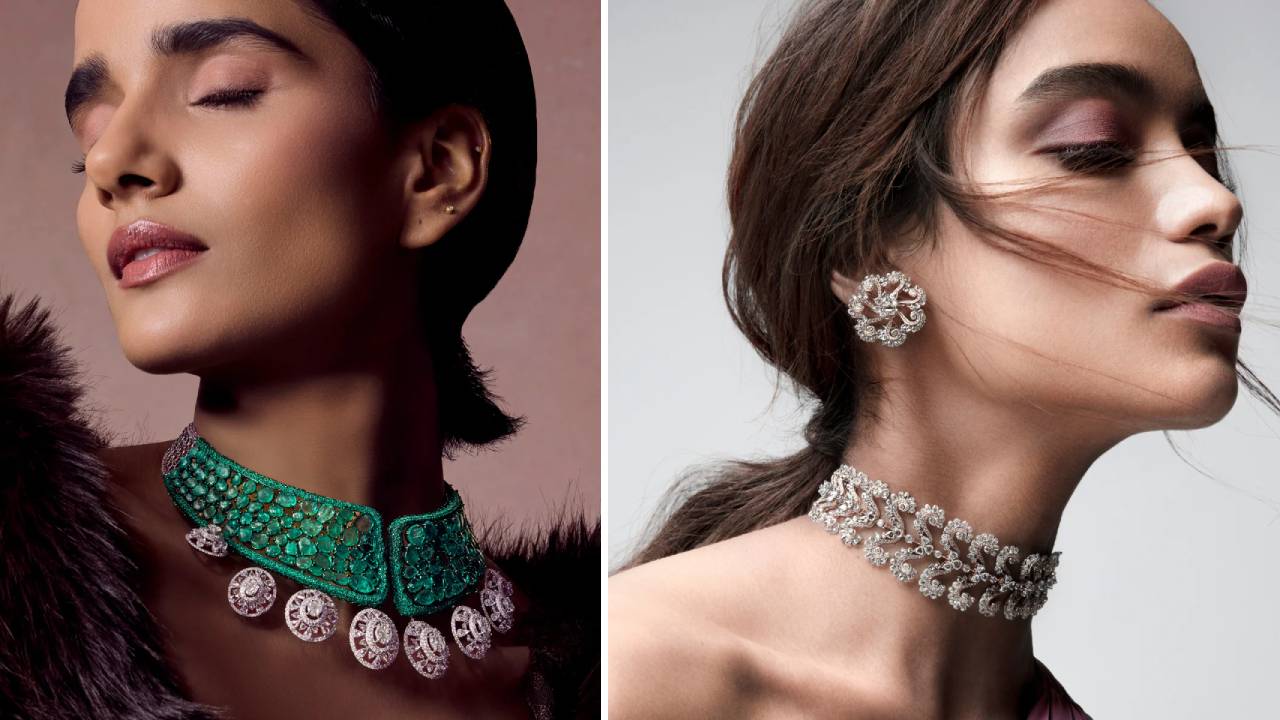
Anmol Jewellers on Warden Road in Mumbai has been serving South Mumbai's wealthiest families for over four decades without running a single mainstream advertising campaign that a casual observer would recognise. Its growth has been entirely referral-driven, its clientele almost entirely the UHNW families of South Mumbai and, increasingly, their children who have moved to Dubai and London.
The model here is traditional in the best sense: the family relationships are the business. When a significant collection is ready for viewing, the calls go out to twenty families before a single piece is moved to the display floor. By the time the display floor is arranged, several pieces are already sold or on hold for consideration. The "collection launch" — to the extent that term applies — is a formality acknowledging what has already happened in private previews.
Anmol's strength is in high-value polished diamond and coloured stone jewellery, often for the bridal and gifting market — which, at the UHNW level, means sets where the individual pieces can run to ₹1–4 crore each and the full bridal trousseau to ₹15–25 crore for the most serious buyers. For those curious about how the UHNW wedding economy operates at the scale that produces these jewellery budgets, our report on luxury destination weddings back in demand across India — and the shadow costs they generate — maps the occasion that drives Anmol's most significant sales.
What the press doesn't publish: The gifting conventions among Mumbai's wealthiest families — which families gift what, at whose weddings, in what context — function as a social signalling system that Anmol understands and serves better than any brand that arrived after 2010. The institutional knowledge of who is buying for whom, and what they have bought before, is not documented anywhere.
Ganjam Jewellers, Bengaluru: The South Indian House That the North Doesn't Know Enough About
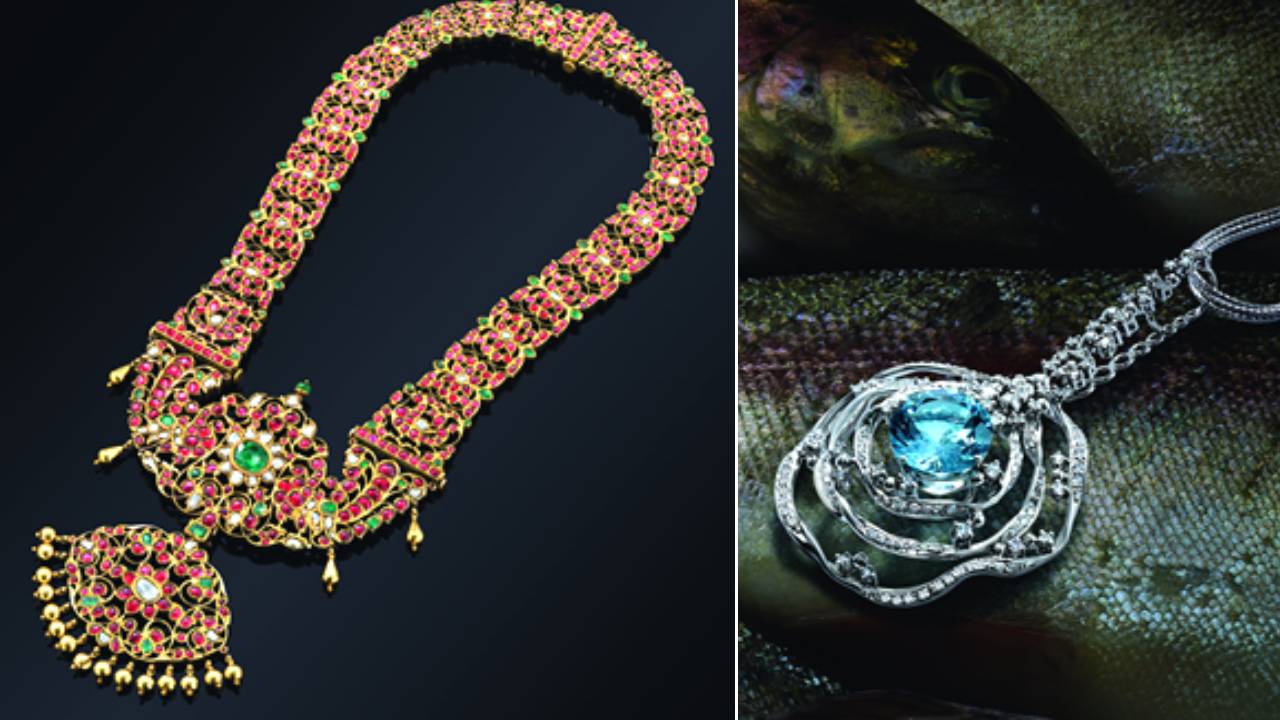
Ganjam is a 160-year-old house based in Bengaluru, and it is the most significant fine jewellery atelier in South India in terms of both heritage and ongoing output. It is also, outside Karnataka and Tamil Nadu, considerably less discussed than it deserves to be — a function of the fact that the Indian luxury conversation is still largely Mumbai-Delhi in its orientation.
The house is known for its work in diamond and coloured stone jewellery, often incorporating the distinctive South Indian temple jewellery aesthetic in contemporary fine jewellery forms. It has an international exhibition presence — it has shown at collections in Europe and the US — and maintains a private client list that includes established South Indian business families, particularly those from Bengaluru, Hyderabad, and Chennai, as well as an international collector base.
The allocation model at Ganjam is driven by exhibition: significant new works are shown at private previews before exhibitions or events, and the most important pieces are placed with clients before any public showing. The house's participation in international jewellery fairs — it has shown at Couture in Las Vegas and at events in Europe — means that some pieces are effectively pre-sold to international buyers before returning to India. For the broader picture of how Indian luxury brands are making their mark globally, our feature on top Indian luxury brands you did not know were Indian places Ganjam within the remarkable ecosystem of Indian heritage brands now commanding international recognition.
Price range: Ganjam's catalogue spans a wider range than most on this list, from approximately ₹1.5 lakh for entry-level fine pieces to ₹3–5 crore for significant high jewellery works.
What the press doesn't publish: The competitive tension between Ganjam and the newer generation of Bengaluru-based designers has quietly driven Ganjam toward a stronger emphasis on its archival and heritage work as its primary differentiation. The archive itself, which the family has maintained, is a resource that very few people have had access to.
The True Cost Architecture: What Accessing These Houses Actually Requires
| House | Entry Price (Est.) | Significant Work | Access Model | Waiting Period |
|---|---|---|---|---|
| Viren Bhagat | ₹40–60 lakh | ₹2–8 crore+ | Referral only, no exceptions | 12–24 months |
| Gem Palace, Jaipur | ₹8–12 lakh | ₹1–5 crore | Semi-open; best work pre-allocated | 3–9 months |
| Sabyasachi Jewellery | ₹85,000 | ₹15–40 lakh | Drop model; private preview for existing clients | Hours to days |
| Farah Khan Fine | ₹5–8 lakh | ₹1–3 crore | Commission-based; referral preferred | 6–18 months |
| Anmol Jewellers | ₹5 lakh | ₹1–25 crore | Relationship-driven, private preview | Varies |
| Ganjam | ₹1.5 lakh | ₹1–5 crore | Exhibition pre-sales, private list | 3–6 months |
Estimates based on publicly reported auction results, published collections, and informed market sources. Prices not confirmed by houses.
What This Actually Means
The allocation model in Indian fine jewellery is not an affectation. It is a structural response to the nature of the product. A significant fine jewellery piece takes months to make, involves stones that exist in specific qualities at specific weights in specific supply chains, and is purchased by buyers for whom the social meaning of the piece matters as much as its material value. You cannot produce this at scale. You should not try.
The houses that have understood this have, in the process, built something that the modern luxury industry has almost entirely lost: a client relationship that is commercial but not transactional. The buyer of a Viren Bhagat piece is not a customer in any retail sense. They are a participant in an ongoing curatorial conversation. The same is true, in different registers, for every house on this list. For context on how the world's most prestigious jewellery houses — from Cartier to Van Cleef — approach the same tension between scarcity and desire at global scale, our feature on the 20 most expensive jewellery brands in the world maps the international landscape within which India's finest houses are quietly operating at a comparable level.
The implication for buyers who are not yet inside these networks is worth stating directly: money is necessary but not sufficient. The entry point is a relationship with someone already inside — a family member, a lawyer who works for the right clients, a wealth manager with the right networks. If that relationship does not exist, it needs to be built. There is no shortcut, and houses at this level can identify when one is being attempted.
What is also worth stating: the secondary market for pieces from these houses is real, active, and opaque. Pieces from Viren Bhagat and Gem Palace that come to auction regularly achieve prices above their private commission cost. Sabyasachi resales at premium are documented online. For buyers who cannot access the primary market, the secondary market — through Christie's, Sotheby's, or private treaty — is a legitimate and sometimes advantageous route. Several serious collectors have built meaningful relationships with these houses by purchasing secondary-market pieces first, demonstrating taste and seriousness, and then receiving an invitation. For those who want to understand how the Indian luxury secondary market operates more broadly — including jewellery resale and the appreciation dynamics of luxury assets — our investigation into the rise of luxury resale and flipping fashion into profits documents the market infrastructure that makes this strategy viable.
The piece that sells before it is shown is not proof of a seller's arrogance. It is proof of a buyer's patience.
FAQ
How do I get access to Viren Bhagat jewellery as a new buyer?
The house operates exclusively by referral from existing clients. There is no public inquiry process, waiting list form, or introductory appointment available to new buyers without an introduction. The practical route is to work through a trusted intermediary — a wealth manager, private banker, or family advisor who has an existing relationship — or to engage with Bhagat's work through the secondary market at Christie's or Sotheby's first, which places you in a community of collectors where introductions sometimes occur naturally. For context on how India's UHNW buyer navigates these relationship-driven access models across luxury categories, our analysis of ten strategic reasons India's ultra-wealthy are building ultra-luxury empires maps the networks and advisors that facilitate exactly this kind of access.
What is the price range for commissioning jewellery from The Gem Palace in Jaipur?
Based on informed market estimates, commissions from The Gem Palace (Kasliwal family) begin at approximately ₹8–12 lakh for meaningful fine jewellery pieces. Significant works involving Mughal-period stones, high-quality unheated rubies or emeralds, or complex craftsmanship in traditional techniques run from ₹1 crore to several crore. The house does not publish a price list. To understand what the world's most prestigious jewellery shows and exhibitions look like — where the Gem Palace's work has been featured — our guide to the biggest luxury jewellery shows and exhibitions in the world provides important context.
Does Sabyasachi jewellery have a waiting list?
Sabyasachi jewellery does not operate a traditional waiting list. The model is drop-based: limited collections are released at specific times, selling out within hours. Existing clients and a closed network of stylists receive preview access before public release. The practical strategy for buyers who miss drops is the secondary resale market, where pieces are typically available at a 30–80% premium over retail.
Which Indian jewellery houses operate without a retail store?
Viren Bhagat operates with no retail storefront or catalogue, working entirely by appointment through referral. Farah Khan Fine Jewellery is primarily commission-based with no conventional retail presence. Several Jaipur-based private ateliers operate in a similar closed model. The Gem Palace has a physical location but operates its most significant work privately. The broader ecosystem of Indian designers operating at the intersection of craft and contemporary luxury is mapped in our feature on designers and brands creating offbeat luxury jewellery in India.
Is there a secondary market for Indian fine jewellery from these houses?
Yes, and it is more active than generally discussed. Viren Bhagat pieces appear regularly at Christie's Geneva and Sotheby's London, typically achieving prices in the CHF 200,000–2.5 million range. Gem Palace pieces come to international and Indian auction with some regularity. Sabyasachi jewellery resells through Vestiaire Collective and private Instagram sellers at consistent premiums. The secondary market is a legitimate entry point for buyers who cannot access primary channels.
Can jewellery from these Indian houses appreciate in value?
Some pieces do. Viren Bhagat's auction performance demonstrates genuine collector demand, with price appreciation above original commission cost documented in multiple auction results. The key variables are stone quality (unheated, certified high-quality coloured stones are the strongest performers), maker reputation, and provenance documentation. Jewellery appreciation is not guaranteed and should not be the primary purchase rationale — but for the houses on this list, it is a documented secondary benefit for buyers who hold and eventually sell. For those who approach jewellery as part of a broader luxury investment thesis, our report on whisky as one of the best luxury investments in the world today offers an instructive parallel — another category where scarcity, provenance, and the right collector relationships determine what actually appreciates.


Comments
No comments yet.
Add Your Comment
Thank you, for commenting !!
Your comment is under moderation...
Keep reading luxury post