NMDC Recovers 27.29-Carat Gem-Quality Diamond from Panna Mine in Madhya Pradesh
 Namrata Parab
- 20th Sep 2026
- 1207
- 0
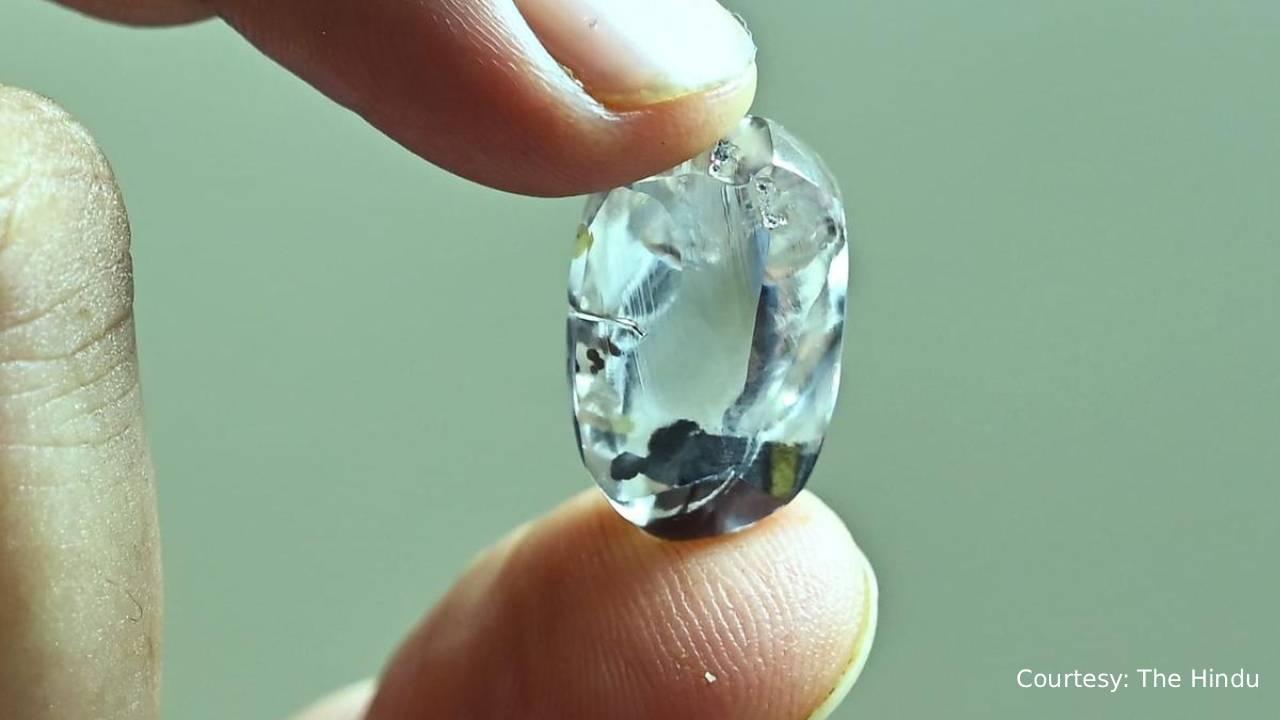
The 27.29-carat stone is the second-largest diamond recovered by NMDC from its Panna mining operation, reinforcing the geological and economic importance of India's only mechanised diamond mine.
NMDC Limited has recovered a 27.29-carat gem-quality diamond from its Diamond Mining Project at Panna in Madhya Pradesh.
The discovery ranks as the second-largest diamond recovered by NMDC from the Panna mine and represents an important milestone for the state-owned mining company's gemstone operations.
The diamond was reportedly recovered from the Majhgawan mine and announced by NMDC on September 16, 2026. Its commercial value will depend on a detailed assessment of colour, clarity, shape, inclusions and potential polished yield, much as buyers evaluate stones that eventually rank among the most expensive diamonds in the world. NMDC diamond recovery report
Key Details of the Panna Diamond Discovery
| Particular | Detail |
|---|---|
| Company | NMDC Limited |
| Mining operation | Diamond Mining Project |
| Location | Majhgawan, Panna district, Madhya Pradesh |
| Diamond weight | 27.29 carats |
| Quality | Gem-quality rough diamond |
| Significance | Second-largest diamond recovered by NMDC at Panna |
| Commercial value | To be determined after professional evaluation |
Why the 27.29-Carat Diamond Is Significant
Large rough diamonds are inherently rare, but carat weight alone does not determine value.
The eventual price will depend on the stone's internal characteristics and the quantity and quality of polished diamonds that can be produced from it. A rough diamond may lose a substantial part of its original weight during cutting and polishing, depending on its shape, inclusions and the cutter's strategy. This grading process is part of the reason luxury jewelry designers favour natural diamonds over synthetic alternatives when sourcing rare stones.
For this reason, unofficial price estimates should be treated cautiously until the stone has been examined, graded and offered through the applicable sale or auction process.
The recovery is nevertheless significant because it demonstrates the continuing potential of the Panna deposit after decades of mining.
Panna Is Home to India's Only Mechanised Diamond Mine
NMDC's Panna Diamond Mining Project occupies a distinctive position in India's mineral economy. The operation, established during the 1970s, is recognised as the country's only mechanised diamond mine.
Unlike the smaller-scale digging activity traditionally associated with parts of the Panna district, mechanised mining involves the systematic extraction and processing of diamond-bearing ore.
The project has a stated annual production capacity of approximately 84,000 carats, although actual production depends on mining permissions, ore availability, environmental compliance and operating conditions.
The mine covers approximately 276 hectares near the Panna Tiger Reserve landscape. Operations had previously faced a prolonged interruption related to environmental and wildlife clearances. Mining subsequently resumed under court-approved conditions and regulatory safeguards. Panna mine operations and environmental context
What Happens to the Diamond Next?
The newly recovered stone is expected to pass through several stages before its market value becomes clear, following the same broad path that most rough stones take before reaching collectors, a journey covered in ten essential facts about natural diamonds:
- Cleaning and documentation: The rough stone is cleaned, weighed and formally recorded.
- Technical examination: Specialists assess colour, transparency, inclusions, fractures and crystal form.
- Planning the cut: Diamond planners estimate the number, size and quality of polished stones that might be produced.
- Valuation: Experts establish a reserve or indicative value based on comparable rough diamonds.
- Sale or auction: The stone may be offered through the authorised process applicable to diamonds recovered from the project.
- Cutting and polishing: The eventual buyer determines how to maximise polished yield from the rough stone.
Until these steps are completed, any claimed market price remains provisional.
Why Panna's Diamond Economy Matters to Madhya Pradesh
Panna's association with diamonds extends far beyond a single discovery. The district's mineral identity influences employment, public revenue, tourism and its national recognition, a trend that mirrors why India sees a shining future for diamonds and gems even amid global trade uncertainty.
A large gem-quality recovery can create economic value through:
- Royalty and mineral-related revenue
- Employment in mining and supporting services
- Diamond evaluation, trading and auction activity
- Transport and logistics requirements
- Tourism connected with Panna's diamond heritage
- Greater visibility for the district's mineral resources
- Opportunities for skill development in gem identification and processing
However, the region's growth opportunity must be balanced against its environmentally sensitive setting.
The long-term value of Panna's diamond resources will depend not only on successful extraction, but also on credible environmental management, regulatory compliance and coordination with wildlife-conservation authorities.
Could Panna Build a Larger Diamond Tourism Economy?
The discovery strengthens the case for presenting Panna as more than a mining district.
A carefully designed diamond-heritage circuit could connect the region's geology, mining history, local prospecting traditions, gemstone education and wildlife landscape. Potential components could include:
- A modern diamond and geology interpretation centre
- Curated exhibitions of notable Panna discoveries
- Demonstrations of rough-diamond evaluation
- Educational programmes on mining and conservation
- Accredited retail and gemstone-certification experiences
- Guided visits to permitted mining or processing areas
- Integration with Panna Tiger Reserve and Khajuraho tourism circuits
Such initiatives would require strong provenance systems and careful separation between education, regulated commerce and informal diamond trading.
If executed responsibly, Panna could translate its mineral identity into a broader tourism and local-enterprise proposition.
The Ghar.tv View
The 27.29-carat diamond should not be interpreted as evidence of a sudden mineral boom or an automatic rise in regional property values.
Its real significance lies in what it reveals about the continuing productivity of a historic mining operation and the economic possibilities surrounding Panna's diamond identity. This pattern of resource-linked wealth also explains why India's rich are preferring land investments over conventional apartments in emerging regional economies.
The larger development opportunity is the ecosystem around the resource: specialised skills, transparent auctions, mineral logistics, hospitality, heritage tourism and supporting urban infrastructure, all of which feed into the broader global luxury jewelry market and gemstone dynamics.
Panna's challenge is to convert geological rarity into durable regional value without compromising the natural landscape that makes the district equally important.
Key Facts
- NMDC has recovered a 27.29-carat gem-quality diamond from its Panna Diamond Mining Project.
- It is the second-largest diamond recovered by NMDC from the Panna mine.
- The final commercial value cannot be established from carat weight alone.
- NMDC's Panna operation is India's only mechanised diamond mine.
- The project's location near an ecologically sensitive landscape makes environmental compliance central to its future.
Frequently Asked Questions
Where was the 27.29-carat diamond found?
The diamond was recovered from NMDC's Diamond Mining Project at Majhgawan in Panna district, Madhya Pradesh.
Is it the largest diamond found at the Panna mine?
No. NMDC has described it as the second-largest diamond recovered from its Panna mining operation.
How much is the Panna diamond worth?
Its confirmed value has not yet been established publicly. The price will depend on colour, clarity, inclusions, crystal structure and the polished diamonds that can be produced from it.
Who owns the Panna diamond mine?
The mechanised Diamond Mining Project at Majhgawan is operated by NMDC Limited, a Government of India public-sector mining company.
Why is Panna famous for diamonds?
Panna is one of India's best-known diamond-producing regions and has a long history of both organised mining and smaller-scale diamond prospecting.


Comments
No comments yet.
Add Your Comment
Thank you, for commenting !!
Your comment is under moderation...
Keep reading luxury post