Can Jewellery Craftsmanship Scale to 60 Million Pieces a Year? Pandora in Vietnam Answers
 Namrata Parab
- 1st Oct 2026
- 1223
- 0
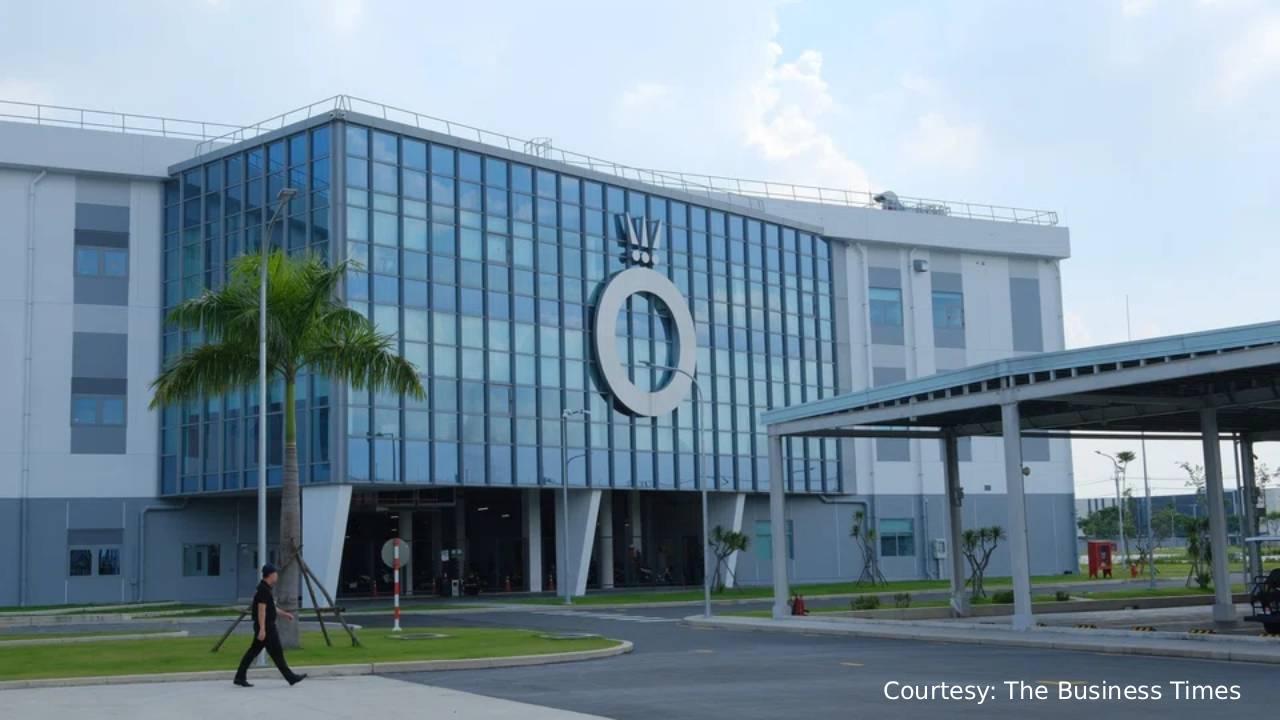
Pandora's new $150 million factory in Vietnam is designed to add industrial scale without making the jewellery feel industrial.
Jewellery is usually marketed through intimacy. A ring is polished by hand. A stone is carefully set. A charm is inspected by a craftsperson before becoming part of someone's personal story.
Pandora's new production facility forces that language to confront a very different number: 60 million pieces a year.
Opened in Ho Chi Minh City on 1 October 2026, the $150 million facility is Pandora's first production site outside Thailand and its fourth factory globally. At full operation, the company expects it to increase total manufacturing capacity by approximately 50%, employ around 7,000 people and account for as much as one-third of Pandora's worldwide production capacity by 2030.
Those are full-scale targets, not the factory's output or employment on its first day.
The facility will initially represent approximately 15% of Pandora's production capacity. Its eventual 60-million-piece capability implies an extraordinary production rhythm. Spread evenly across a year, that is more than 164,000 pieces a day. Based on 300 operating days, it would approach 200,000 pieces per production day.
Can work produced at that scale still meaningfully be described as craftsmanship?
The answer depends on what people do, what machines do and how rigorously the two are connected. Pandora has already shaken up the diamond jewellery market with its lab-created collection, and this factory is the next big test of its manufacturing ambitions.
The factory is not replacing Pandora's Thai production
Pandora manufactured all its jewellery in Thailand for 37 years before opening the Vietnam facility. It currently operates three factories there and sold 112 million pieces globally in 2025.
Vietnam therefore represents diversification rather than a straightforward relocation.
Concentrating an entire production network within one country can create efficiency, but it also increases exposure to local disruption, labour constraints, political change, logistics interruptions and natural disasters. Adding Vietnam gives Pandora greater flexibility and reduces its dependence on a single manufacturing geography.
CEO Berta de Pablos-Barbier said the facility was being built for the next decade rather than for short-term market conditions. The company selected Vietnam for its jewellery-making tradition, skilled workforce, infrastructure and business environment.
The factory will supply Pandora's global business rather than serve one particular export market.
What does craftsmanship mean at this scale?
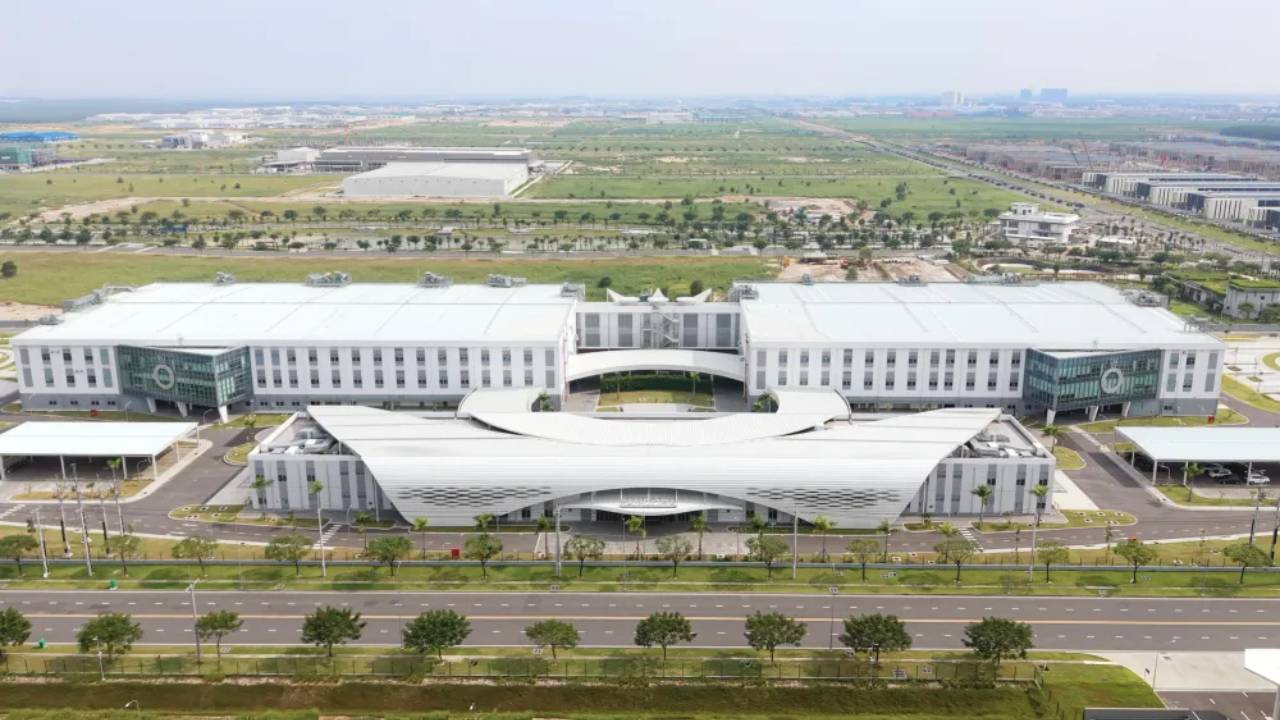
At a small atelier, one jeweller may participate in much of an object's creation. At Pandora's scale, craftsmanship becomes a distributed system.
A piece can move through multiple stages: master-model development, mould creation, casting, cutting, polishing, plating, stone setting, assembly, surface finishing, cleaning and inspection. Some operations benefit from automation and repeatability. Others continue to depend on trained eyes and hands.
Employees were observed operating grinding machinery and inspecting coloured stones, while small robots transported pieces through the production line.
That detail captures the emerging manufacturing model. Automation does not necessarily remove the craftsperson. It can move components, standardise repetitive procedures and improve consistency, while workers concentrate on finishing, stone inspection and quality decisions. This shift is part of how technology is integrating into jewellery across the industry.
The relevant distinction is not handmade versus machine-made. Almost all jewellery manufacturing now exists somewhere between those poles.
A better question is whether automation supports human skill or merely disguises highly standardised production behind the language of craft.
Pandora can help answer that through greater disclosure about:
- the hours of training required for different production roles;
- which stages are automated and which are completed manually;
- acceptable defect tolerances;
- inspection frequency and rejection rates;
- the number of operations involved in a representative charm or ring;
- and whether quality standards differ across product categories.
Without that information, "crafted" remains partly a marketing description.
Seven thousand jobs require a training system
Pandora expects the facility to employ approximately 7,000 people once fully operational. Creating a workforce of that size involves more than recruiting people with general manufacturing experience.
Jewellery work can require specialist competence in casting, polishing, stone setting, plating and microscopic inspection. Each operation must be performed consistently across high volumes without damaging small components or precious-metal finishes. Anyone curious about the skills involved can read our guide on how to become a jewellery designer.
The scale of the employment target makes training part of the factory's core technology.
A new worker must learn not only a task, but Pandora's specific standards for surface finish, stone alignment, dimensions, colour and final presentation. Supervisors must identify defects consistently. Maintenance teams must keep precision machinery within tolerance. Quality data must move backwards through the system so recurring faults can be corrected at their source.
Pandora has not yet publicly provided enough detail to evaluate the full Vietnam training programme. Useful disclosures would include the duration of apprenticeships, instructor-to-trainee ratios, certification requirements, staff turnover and the proportion of technical or supervisory roles filled locally.
These are not secondary human-resources questions. They determine whether the factory can reach scale without losing consistency.
Why Pandora wants more than silver
The facility will support Pandora's expansion into platinum-plated jewellery as the company seeks to diversify beyond its traditional dependence on silver.
This is both a design and risk-management decision.
Silver is central to Pandora's identity, particularly its charm bracelets. But sharp movements in the price of silver can place pressure on margins or force changes in pricing, weight and product mix. Expanding platinum-plated lines gives the company another colour, finish and material story while potentially reducing its sensitivity to one commodity.
Platinum plating should not be confused with solid platinum. Consumers need clear product descriptions explaining the underlying metal, thickness and nature of the surface treatment, anticipated wear and recommended care.
At Pandora's scale, material clarity is essential. A finish that appears straightforward in marketing can involve significant differences in durability, repairability and intrinsic metal value.
Recycled metals still require traceability
Pandora says the Vietnam facility will use recycled silver and gold, continuing a company-wide transition introduced for new jewellery in August 2024.
The metals arrive as refined grains from recycling businesses in Europe and Asia. According to Pandora, the original material can come from sources including discarded medical equipment and old cutlery.
Recycled gold and silver can substantially reduce reliance on new mining. Yet "recycled" does not make a supply chain automatically transparent. For a contrasting view of provenance, see how a Tiffany diamond travels from mine to box.
Once precious metals have been collected, melted and refined, their earlier origins can be difficult to establish. Newly mined material could potentially enter a recycled stream unless suppliers, refiners and chain-of-custody systems are audited effectively.
Pandora says it applies Responsible Jewellery Council standards and uses independent auditors. An external expert cited by the Associated Press nevertheless emphasised the difficulty of tracing precious metals after they have been melted.
The credible sustainability question is therefore not simply whether the finished jewellery contains recycled metal. It is whether the complete recycling and refining system can demonstrate segregation, traceability and responsible labour practices. Newer platforms such as Aulerth's ethically sourced jewellery portal show how seriously some brands now treat that question.
Renewable electricity needs careful definition
Pandora describes the facility as operating entirely on renewable electricity. It has rooftop solar panels and is considering additional generation through a possible solar-farm arrangement. The building has also received LEED Gold certification.
These are meaningful commitments, but they should be reported precisely.
"Powered by renewable electricity" may involve a combination of on-site generation, contracted renewable supply and market instruments. It does not necessarily mean the factory receives solar or wind power during every hour of operation.
Vietnam has expanded solar and wind capacity rapidly, but its national electricity system continues to depend substantially on coal. The emissions outcome therefore depends on how Pandora procures renewable electricity and whether new clean generation is added to the grid.
The company also says the facility could reduce its carbon footprint by 17%. That figure needs a published baseline and methodology. It should be clear whether the reduction refers to Pandora's manufacturing footprint, operational emissions, emissions per piece or a wider corporate inventory. Other jewellery houses have taken different routes, such as Swarovski's carbon removal arrangement with Climeworks.
LEED Gold, meanwhile, certifies aspects of building design and performance. It does not by itself verify every environmental claim associated with the jewellery produced inside.
A factory can improve quality, not only quantity
Scale is often assumed to be the enemy of craft. But a large, carefully designed factory can also make certain forms of quality easier to maintain.
Centralised production can enable:
- controlled casting and plating environments;
- consistent lighting for visual inspection;
- better dust and material recovery;
- standardised equipment maintenance;
- digital tracking of batches and defects;
- specialised workstations designed around individual tasks;
- and faster feedback between design, engineering and production.
The danger arises when speed targets overwhelm those controls.
A factory capable of 60 million pieces needs quality systems that can identify tiny deviations before they multiply across hundreds of thousands of units. A fault affecting even 0.1% of annual full-capacity production would involve 60,000 pieces.
At this scale, quality control is no longer the final inspection table. It is the architecture of the entire production process.
Pandora's real product is consistency
Pandora does not sell high jewellery in the traditional sense. Its commercial power comes from making recognisable, personalisable jewellery available across a vast international retail network. It sits in a very different space from the most expensive jewellery brands in the world, where rarity rather than repeatability defines value.
A customer buying a charm in Mumbai, Copenhagen or New York expects the same finish, fit and visual identity. That expectation makes consistency a form of luxury value, even when the product is manufactured in enormous numbers.
The Vietnam factory is therefore not merely a larger place to make jewellery. It is an experiment in whether human skill, automation, recycled materials and global quality standards can be organised at unprecedented scale. It also adds a new chapter to the glittering future of luxury jewellery.
Sixty million pieces is the headline. The more revealing numbers will be training hours, defect rates, renewable-energy sourcing, employee retention and the proportion of work that still depends on human judgment.
If Pandora discloses those figures, its new factory could become a case study in how contemporary jewellery is actually made.
Until then, the facility demonstrates the scale of the ambition. Whether it also proves that craftsmanship can be industrialised without being emptied of meaning will be decided piece by piece.
Frequently Asked Questions
Where is Pandora's new jewellery factory?
The facility is in Ho Chi Minh City, Vietnam, on a 7.5-hectare site.
How much did the factory cost?
Pandora says it invested approximately $150 million in the facility.
How many pieces can it produce?
At full capacity, the factory is designed to produce up to 60 million jewellery pieces annually. This is a future capacity figure, not its opening-day production.
How many people will it employ?
Pandora expects the facility to employ around 7,000 people when fully operational.
Where was Pandora jewellery previously manufactured?
Before opening the Vietnam facility, Pandora manufactured its jewellery in Thailand, where it operates three factories.
Does Pandora use recycled precious metals?
Pandora says it has used recycled silver and gold for new jewellery since August 2024. Its sourcing and chain-of-custody claims depend on supplier controls, industry standards and independent audits. To understand the wider shift, read what sustainable luxury really means.

Comments
No comments yet.
Add Your Comment
Thank you, for commenting !!
Your comment is under moderation...
Keep reading luxury post