5 Secret Luxury Travel Destinations Affluent Travellers Are Quietly Booking in 2026
 Namrata Parab
- 14th May 2026
- 2377
- 0

There is a particular kind of traveller who has stayed at the best-known addresses on earth and felt, somewhere between the second Krug and the sunset, a creeping sense of having been somewhere that has already been everywhere.
Santorini's caldera views are spectacular, and also on 47 million Instagram posts. The Maldives overwater bungalow is a genuine architectural achievement, available in 156 near-identical versions across competing atolls. Tuscany in summer is, as one private travel consultant bluntly put it, "Florence with a hire car and a queue."
The ultra-wealthy have known for some time that the rarest luxury in travel is not the thread count or the Michelin star — it is genuine obscurity. The sense of arriving somewhere that has not yet been pre-digested, rated, and returned to you through an algorithm. For a broader view of how affluent travellers are making these choices in 2026, our definitive report on why Indian travellers are choosing luxury over budget trips this summer maps exactly the mindset that is driving this search for genuine experiential rarity.
At LuxuryAbode, we track where the world's most discerning travellers are quietly going. These are five secret luxury travel destinations earning their full attention in 2026 — places with extraordinary natural capital, exceptional private accommodation, and crucially, visitor numbers low enough that solitude is still a realistic expectation.
1. Musandam Peninsula, Oman - Arabia's Forgotten Fjord Country

Most travellers to the Gulf stop at Dubai. The enlightened ones continue to Abu Dhabi. A very small number know to apply for a separate Omani visa and drive north to Musandam — an Omani exclave separated from the rest of the sultanate by UAE territory and from the modern world by geological accident.
What awaits is unlike anything else in the Arabian Peninsula. Limestone mountains the colour of dried blood rise 2,000 metres from the Strait of Hormuz and descend vertically into clear teal water. These are khors — Arabic for fjords — and they are among the most dramatic coastal landscapes on earth. Dolphin pods numbering in the hundreds move through the Strait daily. Traditional wooden dhows drift through channels so still and so quiet that the only sound is water against the hull.
Six Senses Zighy Bay — accessible only by sea, by a precipitous 4WD mountain descent, or by paraglider — sits at the base of these mountains on a private beach that the resort has largely to itself. It is, by any honest measure, one of the most physically extraordinary resort settings in the world. The Gulf-facing villas use local stone and traditional badgir wind-tower ventilation. The spa, which Six Senses runs better than anyone in the industry, uses Omani frankincense in every treatment. For a fuller portrait of Six Senses Zighy Bay following its recent transformation, our dedicated feature on reconnecting with family at the delightfully refurbished Six Senses Zighy Bay Oman provides an immersive look at what awaits. And for those who want to understand how Six Senses approaches wellness across its global portfolio, our report on Six Senses Vana — a unique wellness resort in the Himalayan foothills offers instructive context.
Musandam is an easy 2-hour drive from Dubai International. The reason more people do not go is that most people do not know it exists.
Location: Zighy Bay sits at approximately 26.1°N, 56.1°E — just 70km from Ras Al Khaimah but a world removed from it. The Strait of Hormuz, through which 20% of the world's oil supply passes daily, is visible from the resort's beach.
What draws luxury brands here: Oman Vision 2040 is investing heavily in sustainable, high-value tourism infrastructure across Musandam. Land is limited. The window to enter this market as a first mover is narrowing.
2. Comporta, Portugal - The Alentejo Coast's Quietly Expensive Secret
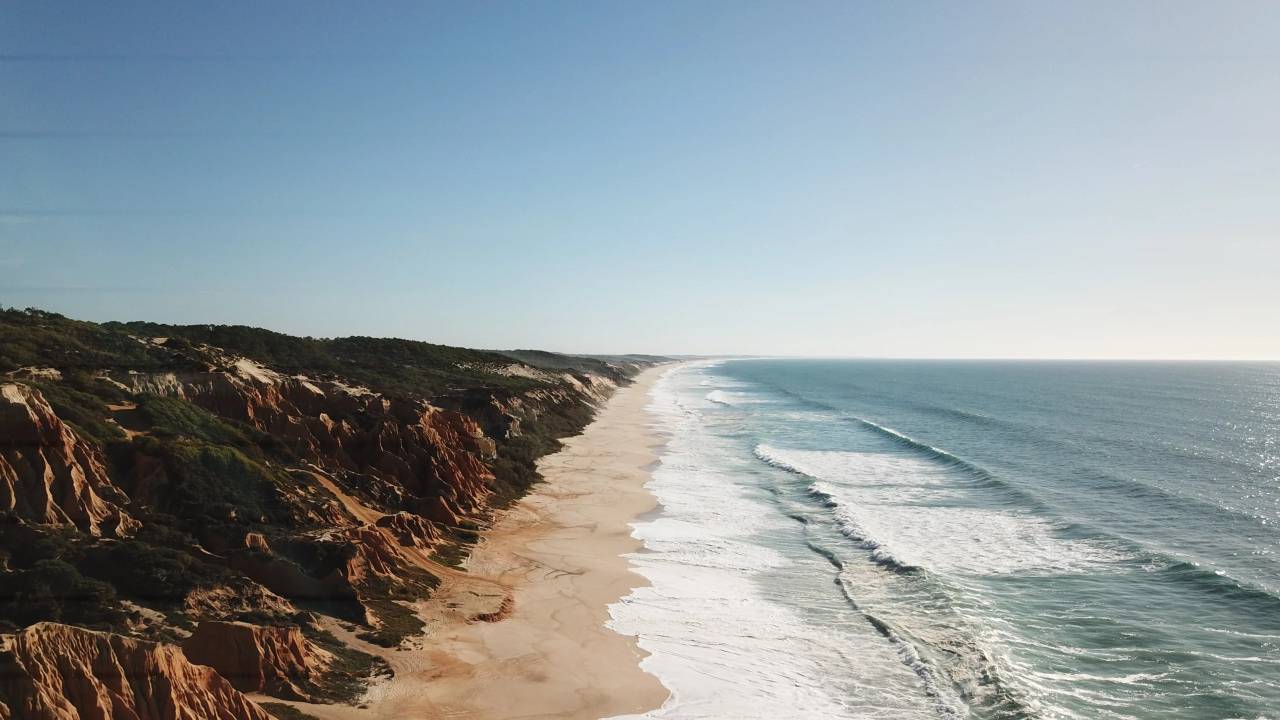
Fifty kilometres south of Lisbon, past rice paddies and cork forests and a nature reserve of 30,000 hectares, there is a village that has been Europe's best-kept coastal secret for the better part of two decades. Comporta has no marina, no casino, no beach clubs playing commercial music at volume. What it has is 40 kilometres of Atlantic-facing white sand beach — wider, wilder, and more beautiful than anything in the Algarve — a rice-straw-thatched architectural vernacular that makes every building look like it grew from the earth, and a deeply discreet clientele that includes European royalty, Portuguese literary society, and a constellation of international fashion editors who bought property here quietly, before prices climbed.
And climb they have. Comporta land values increased by over 35% between 2020 and 2024, making it one of the fastest-appreciating coastal micro-markets in Southern Europe. The buyers are not developers. They are individuals who want a house that cannot be seen from the road. Sublime Comporta — 22 cottages arranged through eucalyptus forest — remains the definitive luxury address. The design is deliberately anti-resort: natural materials, muted palette, no visual competition with the landscape. The restaurant sources from its own farm. The spa uses wild Alentejo botanicals. For those planning a broader Iberian itinerary around their Comporta stay, our guide to 7 reasons a luxury road trip through Portugal is the ultimate travel experience makes a compelling companion.
Location detail: Comporta sits within the Sado Estuary Natural Reserve — a protected habitat for flamingos, otters, and bottlenose dolphins. The village of Carvalhal, 3km north, has arguably the finest beach in mainland Portugal. Neither appears on most tourist maps.
What draws luxury brands here: Comporta's demographic is fashion and finance. It is one of the few European coastal destinations where the average visitor's spending power rivals St. Tropez, without the associated infrastructure cost or visibility.
3. Faroe Islands, Denmark — Radical Isolation at the Edge of the North Atlantic
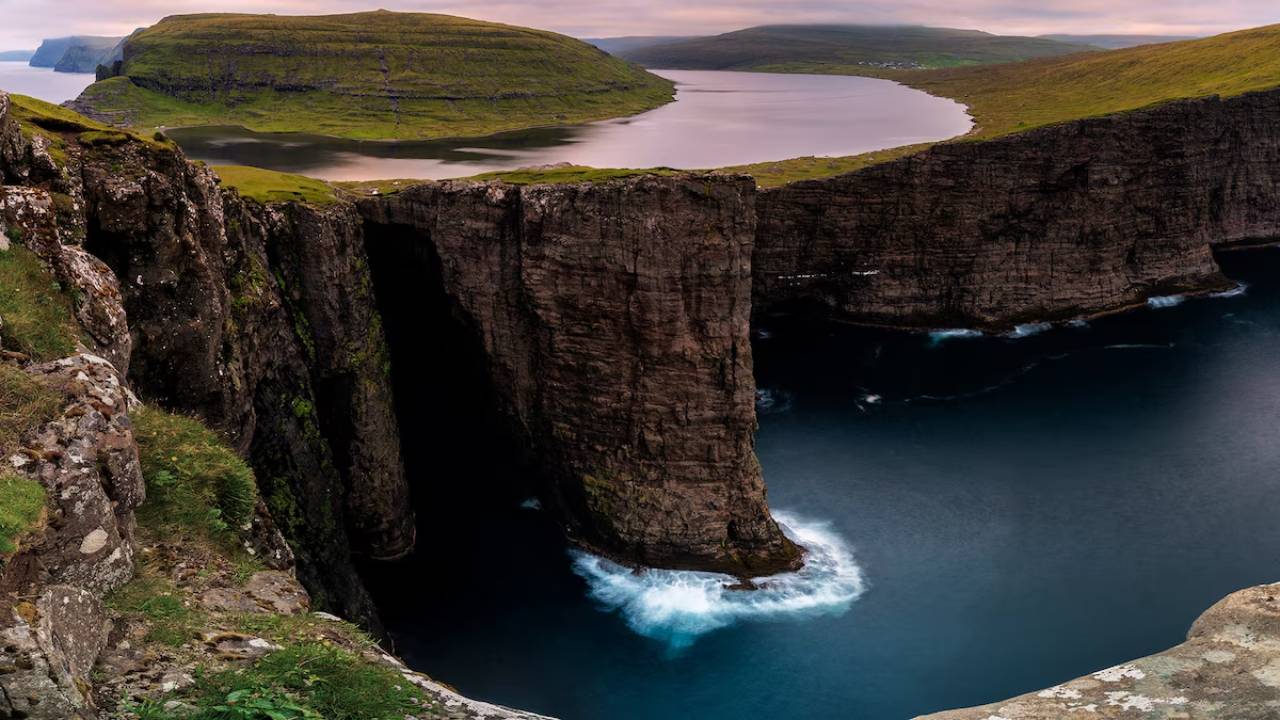
Eighteen volcanic islands suspended in the North Atlantic between Norway and Iceland, wrapped in sea mist, carpeted in impossible green, and visited by fewer than 120,000 travellers per year. The Faroe Islands are not difficult to reach — a direct flight from Copenhagen takes 2 hours — but they resist casual tourism with a kind of passive geological authority.
The cliffs at Enniberg drop 754 metres to the sea — among the highest sea cliffs on earth. The village of Gasadalur, its waterfall tumbling directly into the ocean below, was only connected to the outside world by road tunnel in 2004. The capital Torshavn has a population of 21,000 and a quality of civic life that consistently ranks among the highest in the world.
Luxury here is not conventional. There is no Aman. There is no Rosewood. What there is — and what makes the Faroe Islands genuinely compelling for the traveller who has exhausted conventional five-star options — is access to an intact world. Helicopter transfers between islands. Private guided crossings of cliff-top terrain that sees fewer than 200 hikers annually. Sea kayaking through sea caves that require local knowledge to find and conditions knowledge to navigate safely. Havgrím Seaside Hotel in Torshavn is the island's finest address — boutique, design-led, with floor-to-ceiling views of the Nólsoy strait. For those who appreciate the philosophy of seeking out the world's most extraordinary natural settings, our report on why New Zealand's Alps to Ocean Trail is a rare luxury adventure speaks to the same sensibility that draws the discerning to the Faroes.
Location detail: The Faroe Islands sit at 62°N — further north than most of mainland Norway. In June, the sun barely sets. The light between 10pm and midnight is a category of experience for which photography is genuinely inadequate.
What draws luxury brands here: The Faroe Islands have a waiting list for tourism. The government controls visitor access to the most fragile sites through a "closed for maintenance, open for voluntourism" system. Scarcity is structural — and structural scarcity is exactly what the luxury market is prepared to pay for.
4. Milos, Greece — The Cycladic Island That Has Resisted Everything
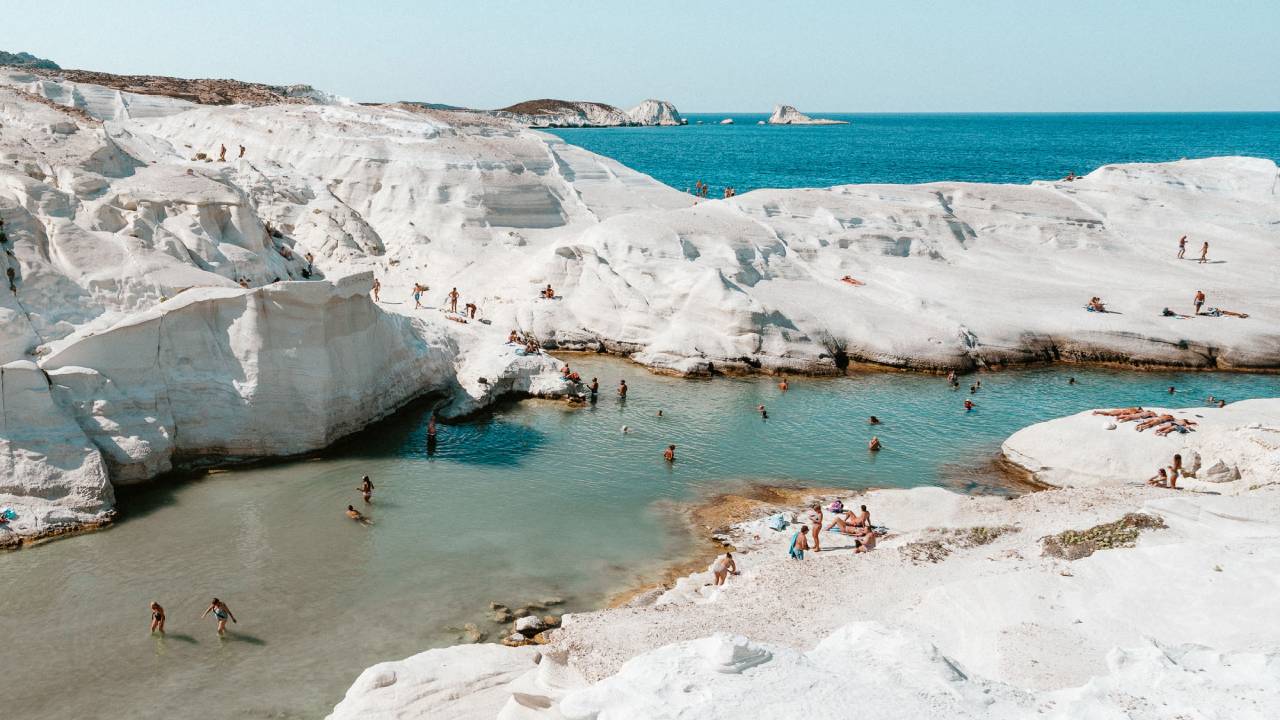
Santorini received 3.4 million tourists in 2023. Mykonos, somewhere between 1.5 and 2 million. Milos — the volcanic island that gave the world the Venus de Milo — received approximately 180,000. This is not because Milos is inferior. It is because Milos is awkward. There is no direct international flight. The ferry from Athens takes between 3.5 and 7 hours depending on route. The island has no megaclubs, no tabloid-courting beach scene, no infrastructure designed for volume. What it has, in extraordinary abundance, is geological drama that exceeds anything its famous neighbours can offer.
Over 70 beaches, the majority accessible only by boat. The Sarakiniko lunar landscape — white volcanic ash formations sculpted by the Aegean into shapes that look computer-generated — is one of the most photographed natural formations in Greece, and yet at 7am on a weekday in late May, it is possible to have it entirely to yourself. The sea stacks at Kleftiko, once a pirate refuge, frame water in a shade of blue that does not have a standard name in English. The island's fishing villages — Klima, Mandrakia, Fourkovouni — have syrmata: boat garages cut directly into the volcanic rock face at sea level, painted in primary colours, with a living quarter built above. Several have been converted into some of the most unusual and sought-after boutique stays in the Aegean. For those seeking to understand why Greece's luxury travel market more broadly is one of the fastest-growing in Europe, our insight into what luxury travel insiders say about the defining travel trends of this era provides important macro context.
Location detail: Milos sits at the southwestern tip of the Cyclades, 86 nautical miles from Piraeus. Its geothermal activity produces warm underwater springs visible from the sea surface near Paleochori Beach.
What draws luxury brands here: Greece's luxury travel market is one of the fastest-growing in Europe. Milos represents an early-stage opportunity. Land values remain a fraction of Mykonos equivalents. The clientele arriving now is exactly the demographic brands want to be visible to first.
5. Lake Nicaragua, Nicaragua - Central America's Most Underestimated Landscape
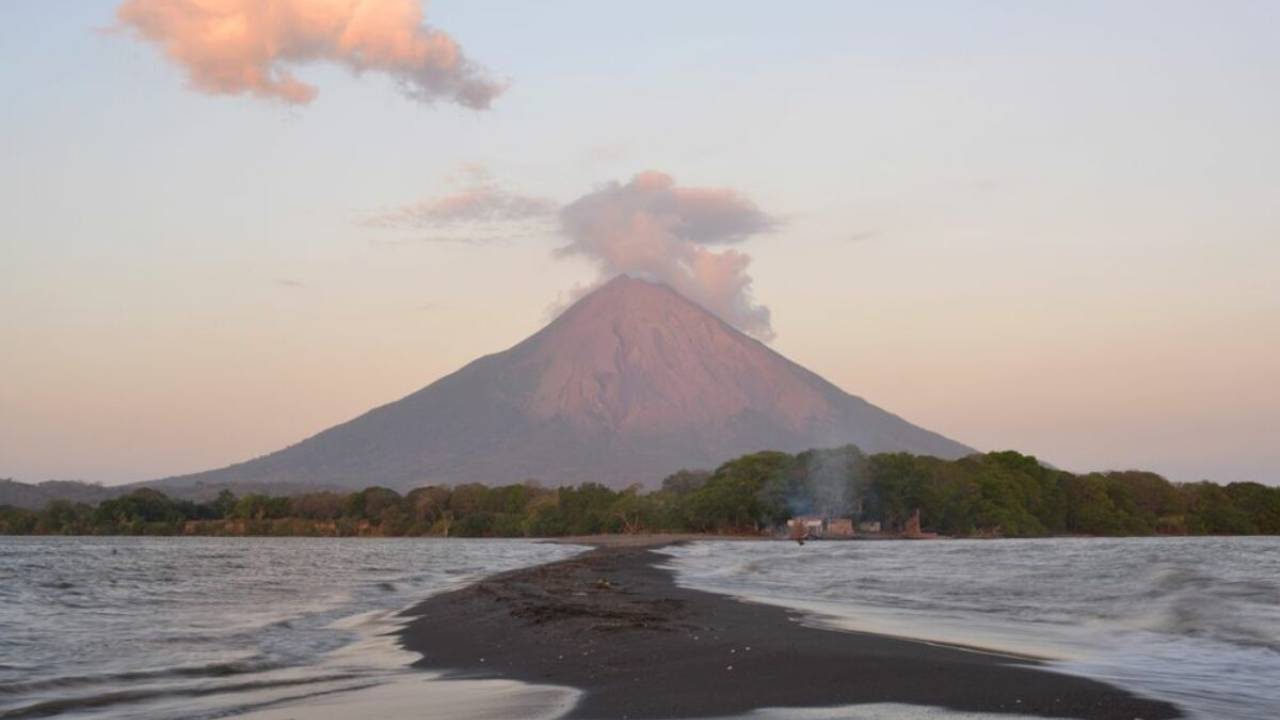
No destination on this list requires more of a traveller's intellectual honesty than Nicaragua. Political instability in 2018 compressed visitor numbers dramatically. They have not recovered. Which means one of Central America's most extraordinary landscapes is currently available in a form that will not last: nearly tourist-free, genuinely affordable for private charter and exclusive use, and in the hands of operators who had to become very good very quickly because their only competitive advantage was quality.
Lake Nicaragua — 8,264 square kilometres, making it the largest freshwater lake in Central America and the 19th largest in the world - contains its own freshwater shark population, an inland archipelago of 365 islands, and a pair of volcanoes rising 1,610 metres from the lake's surface on the island of Ometepe. Jicaro Island Ecolodge occupies its own private island in the Las Isletas archipelago near Granada. Nine casitas, entirely solar-powered, with open-air bathrooms, hardwood decks, and unobstructed views of Concepcion and Maderas volcanoes across the water. The lodge employs entirely from surrounding communities, grows a significant proportion of its food on-site, and has been quietly winning international sustainability awards for over a decade. Ometepe itself is a Biosphere Reserve with howler monkeys, ancient Nahuatl petroglyphs, and zero commercial tourism infrastructure of any kind. For a parallel look at how an eco-luxury property can build genuine quality under similarly exacting conditions, our feature on Raffles Udaipur setting a benchmark for eco-luxury with its prestigious Green Key Certification demonstrates the standard that Jicaro and its peers are building toward.
Location detail: Jicaro Island sits within Las Isletas de Granada, a post-eruption archipelago formed when Volcan Mombacho deposited debris into the lake approximately 10,000 years ago. The lake connects to the Caribbean via the San Juan River — historically significant as a proposed alternative to the Panama Canal.
What draws luxury brands here: Nicaragua is where Comporta was 20 years ago. The clientele currently travelling here are early adopters with significant means. The properties servicing them have built genuine quality under difficult conditions. The market re-rating, when it comes, will be rapid.
The Intelligence Behind Choosing Differently
The destinations above share something more commercially significant than beautiful water or exceptional service. They share timing. Each sits at a point in its luxury travel lifecycle where the ratio of experience quality to visitor volume has not yet been corrected by the market.
The travellers who went to Oman before 2010, to Comporta before 2015, to Milos before 2020 did not get a lesser version of what exists now. They got the same landscape, the same food, the same light — and approximately one-fifth of the people. This is precisely the instinct that drives affluent Indians toward destinations their peers haven't discovered yet, as documented in our comprehensive report on 7 key trends shaping the evolving Indian luxury buyer — where the desire to travel somewhere "before it becomes an Indian destination" is identified as one of the most powerful motivators in the segment.
LuxuryAbode tracks these markets continuously — not just for the traveller seeking the next destination, but for the brands, developers, and hospitality groups for whom timing is everything. For those who want to build their travel calendar around this philosophy of considered scarcity, the broader framework we have developed in our report on the ultimate guide to luxury second home destinations in India and around the world maps the global geography of where that philosophy is translating into long-term capital decisions — not just travel bookings, but property ownership.
The window is always smaller than it appears.
Curated by the LuxuryAbode editorial team. For brand partnerships, destination features, and private client introductions, contact Luxury Abode
Comments
No comments yet.
Add Your Comment
Thank you, for commenting !!
Your comment is under moderation...
Keep reading luxury post