- Blog
- Food and Wine
- France
Veuve Clicquot: The Bold Widow Who Built Champagne's Most Iconic House
 Pradeep Dhuri
- 14th Jun 2026
- 1513
- 0
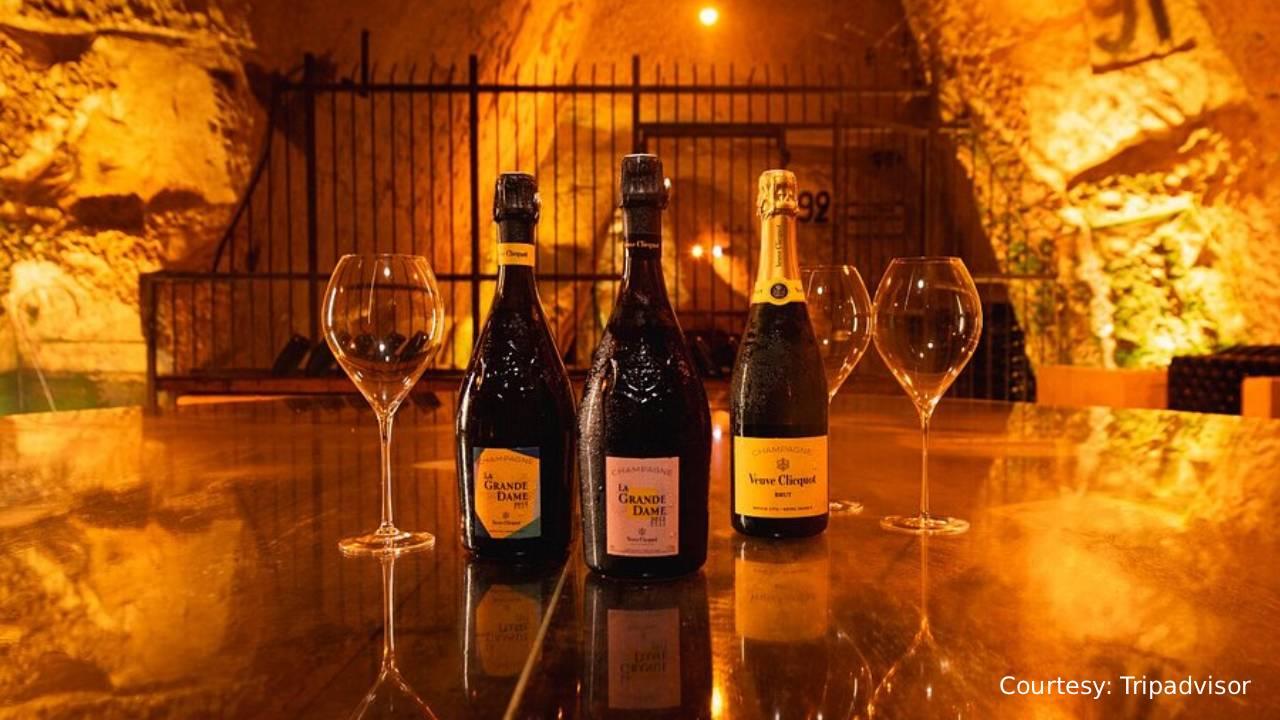
Behind the unmistakable yellow label lies one of the great entrepreneurial stories in luxury - a 27-year-old widow who reinvented how the world makes, sells, and celebrates with champagne.
Veuve Clicquot is the Champagne house founded in Reims in 1772 and immortalised by Barbe-Nicole Clicquot Ponsardin - "Madame Clicquot" - who took its reins in 1805 at the age of 27 after she was widowed. Over a near-sixty-year tenure she invented the first known vintage champagne, the riddling table, and the first blended rosé champagne, building a small family wine concern into a global symbol of luxury. Today, owned by LVMH - whose own rise is told in the incredible brand story of LVMH and crowned by its signature yellow label, Veuve Clicquot is one of the world's largest and most coveted Champagne houses, still guided by the motto its founder set down: "Only one quality, the finest."
That, in a glass, is the story. But the detail is where the legend lives.
A House With Something to Prove
When Philippe Clicquot-Muiron established a wine operation in Champagne in 1772, the great houses already had a head start — Ruinart had been founded in 1729 (and still commissions leading contemporary artists today), Moët in 1743. The Clicquot family fortune came largely from textiles and banking; wine was the ambitious newcomer. From the outset the house declared its intent to "cross borders," and Philippe chose an anchor — a Christian emblem of hope and steadfastness - as its mark, branding it onto corks years before champagne bottles carried paper labels at all.
In 1798, Philippe's son François married Barbe-Nicole Ponsardin, daughter of a prosperous Reims textile manufacturer. Because revolutionary France had banned religious ceremony, the couple is said to have wed in secret in a cellar - a fittingly subterranean beginning for a dynasty that would make its name underground, in the chalk. François threw himself into the wine trade, and by 1804 had grown sales to some 60,000 bottles a year. Then, in October 1805, he died suddenly, most likely of typhoid fever. He was about thirty.
1805: The Widow Takes the Reins
Barbe-Nicole was twenty-seven, with a young daughter, Clémentine, and a business teetering on collapse. The convention of the era was clear: a widow of means withdrew into domesticity or remarried. She did neither. She persuaded her father-in-law to back her, declared her intention not to depend on anyone, and assumed command of the house — becoming one of the first women in modern history to run a major commercial enterprise.
The timing was punishing. The Napoleonic Wars had thrown European trade into chaos; after the Battle of Trafalgar, British and French blockades strangled the export markets on which champagne depended. Many of the widow's best clients were foreign, and her sales reportedly collapsed to barely 10,000 bottles a year. She was, in effect, running a luxury export business at the precise moment that luxury exports had become almost impossible.
What followed is why her name endures.
The Innovations That Built Modern Champagne
In an age when most champagne was cloudy, sweet, and inconsistent, Madame Clicquot pursued clarity, quality, and reliability with an almost scientific rigour.
In 1810 she produced what is widely recognised as the first vintage champagne — a wine made entirely from a single, exceptional harvest, breaking with the prevailing practice of blending across years. Around 1816, working at her own kitchen table according to house lore, she and her cellar master devised the table de remuage, or riddling table: a system of angled holes that let bottles be turned and tilted so sediment collects in the neck for removal, yielding a crystal-clear wine. The technique is still used by sparkling-wine producers around the world more than two centuries later. And in 1818, rather than tinting white champagne with elderberry as others did, she created the first rosé d'assemblage — pink champagne made by blending still red wine into the cuvée, the method behind serious rosé champagne to this day. Our comprehensive guide to champagne and sparkling wines traces how far those methods now reach.
She was also a marketing visionary. She understood the power of putting her own name on the bottle, of selling directly to customers to cut out middlemen, and of building an image of luxury around a drink that had until then been comparatively rustic — an instinct that lives on in today's boldest champagne marketing campaigns. Her riddling breakthrough did something subtler still: by making clarity reproducible at scale, it helped turn champagne from a rarefied curiosity into a product that could travel the world reliably — the foundation of the modern champagne industry.
The Comet, the Blockade, and the Conquest of Russia
The most cinematic chapter came in 1811. A great comet, the Flaugergues comet, blazed over Champagne for much of the growing season, and a superstition as old as winemaking held that comets foretold extraordinary harvests. The 1811 vintage was indeed magnificent, and Madame Clicquot bottled it as her legendary Vin de la Comète.
Then she gambled. Anticipating that Napoleon's blockade against Russia would soon lift, she quietly chartered a ship and dispatched 10,550 bottles of her 1811 champagne to Saint Petersburg, determined to be first to market the moment trade reopened. The wager paid off spectacularly: her champagne arrived to a rapturous reception at the Russian imperial court and was soon celebrated in the writing of Pushkin, Gogol, and Chekhov. It was a masterstroke of timing, nerve, and logistics — and it cemented her reputation as la Grande Dame de la Champagne.
The Most Famous Yellow in Wine
Few labels in the world are as instantly recognisable. The Veuve Clicquot yellow was not an accident of taste but a deliberate signal: registered as a trademark on 12 February 1877, the bold colour was chosen to distinguish the house's dry (brut) champagnes - destined for the British palate — from the white labels of its sweeter styles. In an era of muted, formal labelling, a near-orange yellow was audacious.
It still is. The exact shade is protected today as Pantone 137C, a yellow-orange claimed as a feature of the house's trademarks alongside the silver anchor and the VCP monogram (Veuve Clicquot Ponsardin). The shooting comet that appears on the house's finer bottlings is a permanent nod to 1811 — a star, in the brand's own telling, watching over its destiny. Three symbols, three centuries: the anchor of the founder, the comet of the widow, the yellow of the empire. That yellow has since anchored everything from polo tournaments and the house's mesmerizing immersive pop-ups to luxury collaborations far beyond the bottle.
Inside the Cellars Today
Beneath Reims, Veuve Clicquot's crayères — chalk cellars first quarried in Roman and medieval times — provide naturally cool, humid, light-free conditions ideal for the slow second fermentation and ageing that define great champagne. The house style is built on Pinot Noir, the grape that gives Clicquot its structure and depth, rounded by Meunier and lifted by Chardonnay.
Quality is guarded by an unusually short lineage: in more than 250 years, only eleven cellar masters have shaped the house. The current Chef de Caves, Didier Mariotti, joined in 2019 as the eleventh, charged with protecting what may be the largest library of reserve wines in Champagne — wines kept separately by grape, by cru, and by vintage, some aged for decades. Each year a tasting committee assesses well over a thousand wines to compose the blends, drawing on roughly fifty different crus for the flagship alone. It is this reserve "palette" that lets the non-vintage Brut Yellow Label taste consistent year after year — the quiet engineering behind an apparently effortless glass.
The Cuvées: From Yellow Label to La Grande Dame
- Brut Yellow Label — the signature non-vintage and the house's calling card, a Pinot Noir-led blend prized for its balance of richness and freshness.
- Rosé — heir to the 1818 original, made by blending Pinot Noir red wine into the Yellow Label base.
- Vintage (Brut & Rosé) — single-harvest expressions released only in exceptional years.
- Extra Brut Extra Old — a bone-dry cuvée composed entirely of reserve wines, a showcase for the house's deep cellar.
- Demi-Sec & Rich — sweeter styles, with Rich designed expressly for serving over ice and mixing.
- La Grande Dame — the prestige cuvée and the soul of the house, named for Madame Clicquot herself. Since 2008 it has expressed the brand's devotion to Pinot Noir more emphatically than ever, built around 90%-plus Pinot Noir from the finest parcels. The most recent release, La Grande Dame 2018, arrived in a celebrated artistic collaboration with the celebrated designer Simon Porte Jacquemus.
Such partnerships are part of a wider pattern of cross-category collaboration for the house, which has also lent its name to objects like a limited-edition Veuve Clicquot Polo Classic watch.
Bold by Veuve Clicquot: A Legacy That Still Backs Women
In 1972, to mark its 200th anniversary, the house created an award honouring its founder's defining quality — boldness. More than half a century later, the Bold Woman Award is the longest-running international accolade for women in business, a corporate sibling to the many platforms that celebrate women entrepreneurs today. Since its inception, the Bold programme — expanded in 2014 with the Bold Future Award for emerging entrepreneurs — has recognised over 450 women across 27 countries. Recent honourees range from London Stock Exchange CEO Dame Julia Hoggett to founders reinventing healthcare, sustainability, and finance — each chosen for embodying the spirit of a woman who, in an age when she could not even open a bank account in her own name, ran one of Europe's great houses. It is a spirit worth raising a toast to alongside today's trailblazers.
It is the rare heritage programme that does more than commemorate. It continues the founder's argument.
A Widow on the Big Screen
In 2024, Madame Clicquot's story reached cinemas in Widow Clicquot, starring Haley Bennett (who also produced) and directed by Thomas Napper, adapted from Tilar J. Mazzeo's bestselling biography The Widow Clicquot. The film dramatises the grief, defiance, and sheer commercial daring of a woman building a champagne empire amid the Napoleonic Wars — and introduced a new generation to the meaning hiding in plain sight on every bottle: veuve is French for widow.
Why the Story Endures
Most luxury houses sell heritage — the kind of founding narrative you find in great luxury brand stories such as that of Hermès. Veuve Clicquot sells something rarer: a founding myth that is entirely true, entirely modern, and entirely its own. A young woman, written off by her era, who out-innovated and out-marketed every rival; who shipped clarity, ambition, and audacity across a continent at war; and whose name — the widow's name — became a global byword for celebration.
To pour Veuve Clicquot is to drink a 250-year argument that boldness ages beautifully. The yellow has never faded.
Frequently Asked Questions
What does "Veuve Clicquot" mean?
Veuve is the French word for widow. The house is named for Barbe-Nicole Clicquot Ponsardin, who took over the business after she was widowed in 1805 — hence "the Widow Clicquot."
Who was Madame Clicquot?
Barbe-Nicole Clicquot Ponsardin (1777–1866) was one of the first women to run a major business in the modern era. She led Veuve Clicquot for nearly six decades and is credited with inventing the first vintage champagne, the riddling table, and the first blended rosé champagne.
Why is the Veuve Clicquot label yellow?
The distinctive yellow was trademarked in 1877 to distinguish the house's dry (brut) champagne from its sweeter, white-labelled styles. The exact shade is protected today as Pantone 137C.
What is Veuve Clicquot's most famous champagne?
Brut Yellow Label is its signature non-vintage. Its prestige cuvée is La Grande Dame, named after Madame Clicquot and built predominantly from Pinot Noir.
Who owns Veuve Clicquot today?
Veuve Clicquot is part of the LVMH luxury group and remains headquartered in Reims, France.
What is the Bold Woman Award?
Created by Veuve Clicquot in 1972, it is the longest-running international award recognising women entrepreneurs, having honoured more than 450 women across 27 countries.
Veuve Clicquot is a registered trademark of its respective owner. This editorial feature is published by LuxuryAbode and is not affiliated with or endorsed by the brand.


Comments
No comments yet.
Add Your Comment
Thank you, for commenting !!
Your comment is under moderation...
Keep reading luxury post