The Room Has One Thing to Say. Make Sure It's the Chandelier
 Pradeep Dhuri
- 23rd Apr 2026
- 1949
- 0
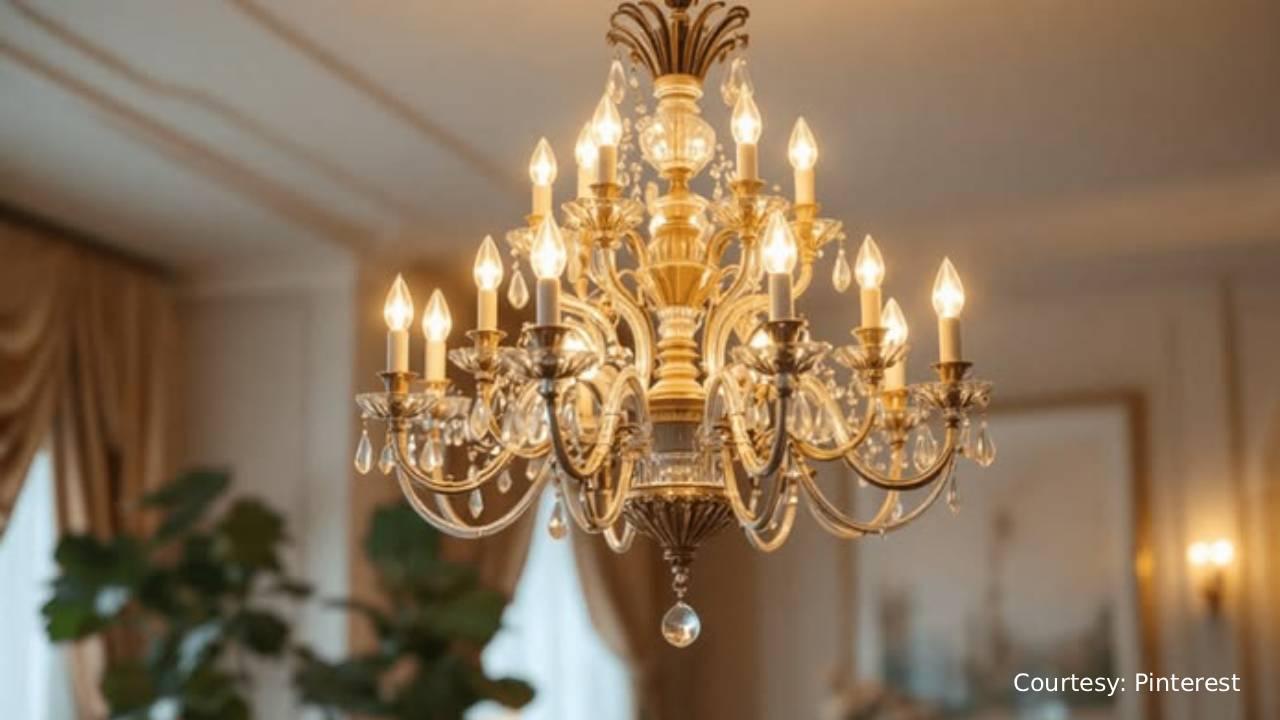
In the age of the quiet room - clean walls, considered furniture, nothing extraneous - the chandelier has stopped being decorative and started being declarative.
Here's why the world's best designers are putting it back at the centre of everything.
Published: 2026
There is a particular kind of room that has dominated luxury interiors for the better part of a decade. You know it immediately. Pale walls, natural stone, furniture chosen for restraint rather than personality. Beautiful, certainly. Considered, undeniably. But also, somehow, quiet in a way that occasionally tips toward silence.
The pared-back interior was a necessary correction. A cleansing of the maximalist excesses that preceded it, a return to proportion and material honesty. It produced some genuinely extraordinary spaces. It also produced a generation of rooms that were difficult to remember after you left them.
Something is shifting. The rooms that are turning heads in 2026 are still restrained in their architecture, still measured in their furniture, still committed to the principle that a space should breathe. But they have one element that the quiet rooms of the previous decade often lacked: a focal point with actual presence. A piece that the eye finds and stays with. A light source that does considerably more than illuminate.
The chandelier is back. Not the chandelier of ballrooms and palaces — the crystal-heavy, gilt-armed fixture that spent twenty years being deliberately excluded from serious interiors. That chandelier is still in exile and probably deserves to be.
What has returned is something more interesting and more difficult to define: the chandelier as statement, as identity, as the single element in a considered room that is permitted to announce itself. The best luxury homes today understand that real luxury homes focus on open spaces — and it is precisely that open, unencumbered quality that makes the contemporary chandelier so powerful.
Why Now: The Logic of the Empty Room
To understand why the chandelier is having this particular moment, you need to understand the opportunity that the pared-back interior has inadvertently created.
When a room is stripped of layering, when the walls are bare, the surfaces clear and the colour palette deliberately narrow, it does not become neutral. It becomes a stage. Every element that remains carries more weight, not less, precisely because it is not competing with anything around it.
This is the chandelier's great opportunity. In a room full of objects, it is merely the light fitting. In a room with almost nothing, it becomes the entire conversation.
"In such spaces, a chandelier becomes the hero element," says Niyati jagirdar, principal designer and founder of Abhikrama Designs. "It adds drama and personality and instantly elevates the room without needing too many other layers."
This logic is being applied by designers across price points and geographies, and the results are consistently striking. A sculptural hand-blown glass fixture above a dining table of bleached oak and undressed linen. A brass armature of unexpected organic form suspended in a double-height entrance hall with nothing else on the walls. A single alabaster globe, lit from within, floating above a bedroom stripped of everything except the essential.
In each case, the chandelier is not decorating the room. It is defining it.
The focus is on one bold statement, balanced with softer, layered lighting for depth.
One bold statement. Balanced. That balance, between the chandelier that announces itself and the ambient lighting that supports it without competing, is the design skill that separates a genuinely successful lighting scheme from a merely expensive one.
The Death of Crystal and What Replaced It
For most of its history, the luxury chandelier's primary material was crystal. Cut, faceted, light-catching crystal hung in drops and arms from a metal armature, catching every candle flame or electric bulb and multiplying it across the room in a thousand prismatic reflections.
It was magnificent. It was also, for a long time, the only option if you wanted a chandelier that qualified as serious.
That era is over. The new-age chandelier speaks an entirely different material language, and the vocabulary it has adopted tells you something important about where luxury itself has moved.
Designers are embracing hand-blown glass, brass and bronze finishes, alabaster, and even combinations with wood and stone. These materials feel warmer, more textured, and more in line with modern luxury, which is now less about shine and more about depth and craftsmanship.
This is the core of what has changed. The old luxury of the chandelier was about brilliance: the quality of light refracted, the quantity of crystal deployed, the sheer visual extravagance of the thing. The new luxury is about materiality. The specific quality of hand-blown glass with its slight imperfections and warm glow. The weight and warmth of alabaster. The particular amber depth of aged bronze that no new finish can convincingly replicate. This same shift from surface spectacle to material depth is precisely what distinguishes the finest luxury furnishings from mere expensive objects.
Murano-inspired Italian glass is generating serious collector interest. Sputnik forms — the radiating armatures that defined mid-century modern's most expressive lighting — are experiencing a considered revival, reinterpreted in materials and proportions that feel current rather than nostalgic. Organic forms, asymmetric silhouettes and nature-referenced shapes are replacing the rigid geometry that crystal demanded.
The move towards organic, sculptural forms reflects a desire for softness and emotional resonance in our homes. Clean, rigid geometries are giving way to fluid silhouettes, asymmetry, and nature-inspired forms.
The room that once centred on a chandelier designed to dazzle now centres on one designed to be studied. The experience of standing beneath it has shifted from spectacle to contemplation. That is the difference between a decorative object and a piece of design.
Bespoke: The Only Brief That Matters
If there is a single word that defines the chandelier conversation in 2026, it is bespoke.
The best-designed rooms in the world are not lit by catalogue fixtures, however well-chosen. They are lit by pieces created specifically for the space, conceived in response to its proportions, its materials, its light quality at different times of day and its owner's sensibility.
Homeowners are looking for bespoke materials as they do not want repetition across homes. Lighting should be custom-designed for the space. The right scale and proportions are key.
Scale is the variable that matters most and is most frequently misunderstood. The instinct in many residential projects is to choose a chandelier that fits comfortably within the room, that does not overpower, does not dominate, does not demand attention it hasn't earned. This instinct is wrong.
A chandelier scaled to be comfortable is a chandelier that will be invisible. In the pared-back room, the single statement piece needs the scale to justify its singularity. The piece that looks almost too large in isolation, that makes you hesitate for a moment before understanding that it is exactly right, that is the piece that works.
The bespoke brief liberates designers from catalogue proportions, which are inevitably calibrated for the average room rather than the specific one. It allows for a fixture conceived in response to ceiling height, floor plan, adjacency to windows and the particular way afternoon light enters from the west. It allows for a piece that is, in the precise sense of the word, site-specific, one that could not succeed anywhere else. The same principle is what makes luxury kitchen design so powerful when executed correctly: a space conceived entirely in response to specific needs, proportions and materials, rather than assembled from catalogue thinking.
The Technology That Changed Everything
Alongside the shift in material and form, there has been a quieter revolution in the way luxury chandeliers operate, and it has made the category considerably more liveable than its predecessors.
Home automation allows luxury chandeliers to be controlled via apps and voice systems like Google Home and Alexa, without the need for switches. Lighting can be scheduled to change colour temperature through the day, with motion sensors enabling hands-free use.
This matters more than it might initially appear. The historic chandelier's great practical limitation was its bluntness: on or off, bright or dark, with limited ability to modulate the quality of light it produced. The result was fixtures that were frequently switched off because their full output was too much for daily living, then switched on for occasions. That dynamic confined the chandelier to a ceremonial role that felt increasingly at odds with how people actually inhabit their homes.
Smart integration removes that limitation entirely. A bespoke chandelier that can shift from a warm, low 2700K glow for an evening dinner to a cooler, brighter 4000K for morning coffee is not the same object at different times of day. It becomes a different experience of the same space. The ability to curate that experience precisely, without effort, is the kind of luxury that is easy to undervalue until you have it.
Energy-efficient LEDs, increasingly set within sustainable and recycled materials, complete the picture. "Homeowners are choosing long-term investments that are sustainable, which is why demand for eco-friendly products is growing rapidly," says Niyati Jagirdar of Abhikrama. A chandelier that costs a serious sum to acquire but costs almost nothing to run, and will outlast every trend that follows it, is a fundamentally different financial proposition from its energy-hungry predecessors. It is the same long-view investment logic that underpins the best strategies for maximising a luxury home's appeal with strategic staging: the pieces with the most lasting impact are the ones that reward both the daily experience of living in a space and its long-term value.
The Chandelier as Collectible: When Lighting Becomes Legacy
The most significant shift in how serious buyers are approaching chandeliers in 2026 is the move from fixture to investment. From something you buy to light a room to something you acquire because it will hold and grow in value.
This is not entirely new. Antique chandeliers from significant makers have always traded as collectibles. What is new is the application of that collecting logic to contemporary work: to hand-blown glass pieces from living artisans, to limited-run sculptural forms from design studios with strong identities, to revival designs whose value compounds with time.
"Collectors and homeowners are investing in hand-blown glass pieces, Murano-inspired lighting, and vintage or revival designs such as Sputnik forms that are making a comeback," says Niyati. "What elevates them to collectible status is craftsmanship, materiality, and narrative or provenance."
Provenance is the word worth dwelling on. A chandelier made by a specific artisan, in a specific workshop, from a specific batch of materials, for a specific space, carries a story that a mass-produced equivalent simply cannot have. That story is part of what collectors are acquiring: the assurance that what hangs in their dining room is genuinely singular, that no identical piece exists anywhere in the world, that its value derives from something that cannot be replicated or scaled.
When something is custom-made or comes from a design studio with a strong identity, it holds long-term value. It's a piece a homeowner invests in, both aesthetically and emotionally.
Aesthetic and emotional investment. Both, simultaneously. That combination, the object that satisfies the eye and the sensibility at once, that works in the room and works in the mind, is the definition of great design. The parallel in furniture is worth noting: Modenese Interiors, the 200-year-old Italian luxury furniture brand, has built its entire legacy on exactly this principle - that pieces made with genuine craft and singular identity hold their value and their meaning across generations. The chandelier market is simply arriving at the same understanding.
What Designers Know That Buyers Often Don't
The chandelier conversation in design studios tends to surface several recurring truths that buyers rarely know going in.
Proportion over price. A perfectly proportioned chandelier of modest cost will outperform an expensive fixture chosen without regard for scale. The piece needs to be large enough to anchor the space — not comfortable, but confident.
Commission before you catalogue. If you are designing a room that deserves a chandelier, engage with the lighting decision at the architectural stage, not after the furniture is placed. The proportion, the drop height, the relationship between the fixture and the ceiling and floor — all of these deserve the same rigour as the floor plan.
Material tells the story. The material of a chandelier tells you immediately what kind of room it belongs in. Hand-blown glass belongs in rooms that celebrate craft and warmth. Alabaster belongs in rooms that want silence and diffuse glow. Brass belongs where the room's other metals can carry the dialogue. Choosing a material that contradicts the room's existing language is the most common error in luxury lighting.
Layering matters. The chandelier is the statement. It is not, and should not be, the only light source. The best chandelier moments in interior design are always supported by ambient lighting that provides depth: wall sconces, uplighters, concealed LED strips at the perimeter. These allow the chandelier to be dramatic without being harsh.
Smart from the start. If you are commissioning a bespoke piece, build the smart-control infrastructure in from the beginning. Retrofitting dimmer systems and colour-temperature control to existing wiring is possible but significantly more complicated than specifying it during the original installation.
The Lasting Argument
There is something quietly radical about the chandelier's return to prominence — not because the object itself is new, but because the context is.
The interiors of the past decade optimised for a particular kind of beauty: serene, considered, almost meditative in its refusal of excess. Those interiors achieved what they set out to achieve. But they also, in their restraint, created a hunger for rooms with something to say. Spaces that do not merely hold objects but curate experience. Rooms that do not merely provide light but produce atmosphere.
A chandelier is no longer just a source of light. It's a statement, a focal point, and often the most memorable element in a space.
The most memorable element. That is the aspiration. Not the largest, not the most expensive, not the most technically complex - the most memorable. The piece that, when someone leaves the room, is the thing they carry with them.
In the quiet, considered interiors of 2026, the chandelier has claimed that role. One bold statement, perfectly placed, impeccably made. Everything else in the room exists in relation to it.
Design it right, and the room needs nothing else. For those approaching a broader interior project with this philosophy, luxury design studios redefining architecture and interior design share this same understanding: that a single, irreplaceable focal point, executed with genuine mastery, is worth more than a room full of considered but ultimately forgettable things.
At a Glance: The New Chandelier Language
| Category | Detail |
|---|---|
| Dominant materials | Hand-blown glass, alabaster, brass, bronze, stone combinations |
| Out | Traditional cut crystal, gilded excess, rigid symmetry |
| In | Organic form, asymmetry, artisanal imperfection |
| Collectible formats | Murano-inspired glass, Sputnik revival, bespoke studio pieces |
| Technology | Smart home integration, tunable colour temperature, energy-efficient LED |
| Scale principle | Confident, not comfortable |
| Pairing approach | One bold statement with layered ambient support |
| Investment logic | Provenance, craftsmanship, singular identity |
FAQ
Why are chandeliers becoming popular again in luxury interiors?
The pared-back interior creates a stage effect. When a room has few objects, each one carries more visual weight. Designers are placing a single, architecturally significant chandelier as the room's focal point, allowing it to provide drama and personality that the restrained surroundings cannot.
What materials are luxury chandeliers made from in 2026?
The dominant materials are hand-blown glass, alabaster, brass, bronze and combinations with natural stone and wood. Crystal remains relevant but is now used with restraint and in modern compositions, rather than as an indicator of opulence in itself.
What makes a chandelier collectible?
Craftsmanship, materiality and provenance. Pieces made by specific artisans from studios with strong design identities, in limited runs or as entirely bespoke commissions, carry stories and singularity that mass-produced equivalents cannot. Murano-inspired glass, Sputnik revival designs and custom studio pieces are the formats attracting serious collector interest.
How do smart lighting systems work with chandeliers?
Modern luxury chandeliers can be integrated with home automation systems such as Google Home and Alexa, allowing control via app or voice command. Colour temperature can be scheduled to shift through the day, dimmer levels can be pre-programmed for different occasions, and motion sensors can enable hands-free operation.
How do you choose the right size chandelier for a room?
Choose for confidence rather than comfort. The piece should be large enough to anchor the space rather than simply fit within it. For dining rooms, the chandelier should be approximately half to two-thirds the width of the table. For entrance halls and double-height spaces, scale up significantly and treat the vertical drop as a design element in itself.
Is a chandelier a good interior design investment?
Increasingly, yes. Bespoke pieces from recognised design studios, artisanal glass work and revival designs in high-quality materials are being treated as collectibles with long-term value. The combination of singularity, craftsmanship and narrative provenance drives appreciation in much the same way it does for other design collectibles.

Comments
No comments yet.
Add Your Comment
Thank you, for commenting !!
Your comment is under moderation...
Keep reading luxury post