Hardware Is Having Its Moment: Why Homes Are Wearing Jewellery
 Pradeep Dhuri
- 4th Aug 2026
- 1314
- 0
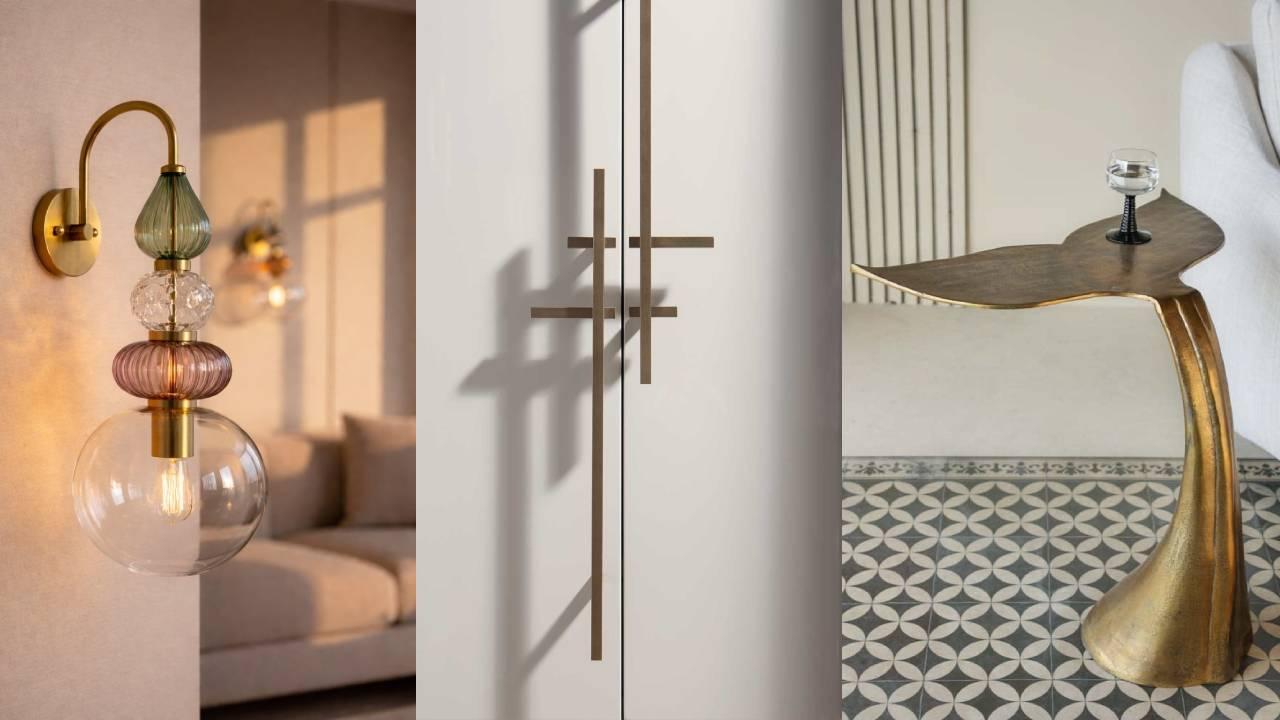
For decades, the objects that opened a door or turned on a tap were treated as afterthoughts, chosen last, after the architecture, the furniture and the finishes had already made their case. That hierarchy is quietly reversing. Decorative hardware, door handles, cabinet pulls, faucets and drawer knobs, is being commissioned, sculpted and priced the way fine jewellery is: as a standalone statement rather than a functional footnote, a shift that mirrors how Louis Vuitton's Star Blossom jewellery collection treats craftsmanship as the entire proposition rather than a finishing touch.
"Luxury hardware has truly become the jewellery of the home, transforming functional fixtures into defining design statements," says Niyati Jagirdar, principal designer at Abhikrama. "Homeowners are increasingly commissioning bespoke fittings that reflect their individual personalities and tastes." What was once selected from a catalogue toward the end of a build is now being designed first, in some projects, with the rest of the material palette built to complement it, a design-led sequencing already visible in the work of Piet Boon, the Dutch master of interior design.
The bespoke shift is visible in the materials clients are now requesting. Rather than standard finishes, designers report a growing appetite for semi-precious stones worked into functional objects: selenite, agate and pyrite shaped into door knobs, decorative accents and tabletop details. "Instead of settling for standard designs, clients are opting for semi-precious natural minerals and crystals to create unique door knobs, decorative accents and tabletops," Jagirdar notes. "Personalised stone art and custom marble sculptures have also become powerful expressions of individuality, making bespoke hardware an integral part of luxury interiors." The logic mirrors fine jewellery commissioning: a piece chosen not for how well it matches a room, but for how specifically it reflects the person who lives in it, the same principle behind Zoya's artisanal jewellery atelier in Pune.
Material experimentation extends well beyond stone. Solid brass, bronze, leather and crystal are being worked with artisanal techniques, textured finishes and sculptural forms that push hardware toward the territory of small-scale art objects, not unlike the material ambition on display when Fendi Casa showcased Italy's furniture craftsmanship. Freelance interior designer Gaurav S points to a growing trend of deliberate material contrast: "Mixing warm metals with cooler materials such as wrought iron and stainless steel creates a curated, eclectic look while offering practicality in moisture-prone areas like kitchens and bathrooms. Even conventional materials like stainless steel can be elevated through molten metal detailing, pewter accents and bespoke finishes that highlight the material's ability to age beautifully while remaining durable," a pairing philosophy that shows up repeatedly across design ideas for a luxury kitchen.
That instinct, mixing warmth against cool, textured against smooth, is becoming a signature of high-end interiors more broadly. Warm-toned metals such as brass and bronze continue to anchor the category for their artisanal quality and nostalgic pull, a finish that reads as collected rather than installed, echoing the silver home accents seen in collections such as Frazer and Haws' exquisite silver home decor. What's changed is the intent behind the choice: hardware is no longer selected to disappear into a room. It is selected to be noticed, the way a well-chosen ring is noticed, small in scale but disproportionate in the impression it leaves.
The LuxuryAbode View: The Micro-Luxury Signal
LuxuryAbode's read on this trend centres on what we're calling the Micro-Luxury Signal: the principle that as homes accumulate obvious, big-ticket luxury markers (marble, bespoke lighting, statement furniture), differentiation increasingly moves down to the smallest touchable surfaces, the objects a homeowner and their guests physically handle dozens of times a day. Hardware wins this category because it is tactile in a way lighting and furniture are not; a door handle is gripped, not merely observed, a principle equally visible in how Luxury Antonovich Design redefines interior detailing down to the smallest specified surface.
This matters commercially because it changes who gets commissioned and how. Hardware is shifting from a procurement decision (specified by an architect from a supplier catalogue) to a design decision (commissioned directly from an artisan or studio), which compresses timelines, raises unit economics and creates a genuinely bespoke supply chain within interiors, parallel to how fine jewellery moved from department-store cases to independent ateliers, and comparable to the commissioning model behind Rolls-Royce's record-breaking year for bespoke business.
| Signal | Traditional Hardware Approach | Luxury Hardware-as-Jewellery Approach |
|---|---|---|
| Selection timing | Late in the build, after finishes are set | Early, sometimes design-led |
| Sourcing | Catalogue or supplier specification | Bespoke commission from artisan or studio |
| Materials | Standard metal finishes | Semi-precious stone, mixed-metal, sculptural forms |
| Value framing | Functional fixture | Standalone design object or long-term investment |
| Tactile role | Incidental | Central to the design statement |
The Micro-Luxury Signal describes the way differentiation in high-end interiors moves toward the smallest physically handled surfaces once larger luxury markers, such as marble, lighting and furniture, have become standard, making tactile objects like hardware a growing site of design investment.
The open question is durability of the trend versus its novelty. Bespoke stone and mixed-material hardware carries genuine craftsmanship value, comparable to the collectible weight given to pieces in AstaGuru's heirloom craftsmanship treasure collection, but as with any category moving from niche to mainstream, the challenge for makers will be maintaining scarcity and artisanal credibility as demand scales, much as ateliers such as Zara's new high-end atelier concept face when scaling exclusivity.
India Opportunity: What This Means for Indian Homeowners
Market Opportunity
India's luxury residential market, already reflected in coverage of the art of buying a luxury home, is a natural setting for this shift, as homeowners investing heavily in architecture and finishes increasingly look to differentiate at the fittings level too. Bespoke hardware commissioning is still nascent in India compared with Europe, which leaves room for both domestic artisans and international ateliers, similar in spirit to the Nordic artisans redefining winter luxury, to build a presence in the category early.
Buyer Notes: GST, Customs and Cross-Border Commissioning
- Decorative hardware manufactured or finished in India attracts Goods and Services Tax at the applicable rate for metal fittings and decorative items, and buyers commissioning bespoke work should confirm whether GST is quoted separately from the artisan's design fee.
- Hardware imported from European or other overseas ateliers is subject to customs duty on entry into India, calculated on the declared value of the fittings, and buyers should factor this into the landed cost when commissioning abroad rather than domestically.
- Indian residents paying an overseas design studio or artisan directly for bespoke commissions should route the payment through the Reserve Bank of India's Liberalised Remittance Scheme, which permits remittances of up to USD 250,000 per financial year for permitted current account transactions.
- Buyers working with architects such as those referenced in coverage of what defines sustainable luxury architecture practices should request material provenance documentation for semi-precious stone or crystal hardware, since authenticity and sourcing paperwork affects both resale value and customs classification.
Quotable Facts (Standalone, Citable)
- Decorative hardware, including door handles, cabinet pulls and faucets, is increasingly commissioned as bespoke design work rather than selected from standard supplier catalogues, according to LuxuryAbode's reading of the category.
- Semi-precious stones such as selenite, agate and pyrite are being worked into functional hardware pieces, including door knobs and tabletop accents, as an alternative to standard metal finishes.
- LuxuryAbode's Micro-Luxury Signal framework identifies hardware as a growing differentiator precisely because it is physically handled, unlike lighting or furniture, which are largely observed rather than touched.
- Mixed-material pairings, warm metals such as brass or bronze against cooler materials like wrought iron and stainless steel, are emerging as a defining aesthetic move in high-end kitchens and bathrooms.
FAQ
Why is decorative hardware being compared to jewellery?
Because homeowners are increasingly commissioning it as a standalone design statement, chosen for personal expression rather than simply to match existing finishes, the same logic behind commissioning fine jewellery.
What materials are in demand for luxury hardware right now?
Solid brass, bronze, leather and crystal remain core materials, alongside a rising trend of semi-precious stones such as selenite, agate and pyrite worked into knobs, accents and tabletop pieces.
Is bespoke hardware considered a good investment?
Designers frame premium hardware as a long-term investment due to its craftsmanship and durability, positioning it alongside other high-value finishing elements in a luxury interior.
What is the biggest material trend in high-end hardware design?
Mixing warm-toned metals like brass and bronze with cooler materials such as wrought iron and stainless steel, creating contrast while remaining practical in kitchens and bathrooms.
Does luxury hardware only apply to new builds?
No. Hardware upgrades are one of the more accessible ways to refresh an existing interior's design tone without a full renovation, since fittings can be replaced independently of structural work.
LuxuryAbode regularly features the designers, ateliers and material specialists shaping how luxury interiors are built and finished. Studios and artisans working in this space are welcome to reach our editorial desk for feature consideration.
Disclaimer: GST, customs and LRS information referenced in this article is provided for general awareness only and does not constitute financial, tax or legal advice. Rates and thresholds are subject to change by GST authorities, Indian customs and RBI, and should be independently verified before commissioning, importing or paying for bespoke hardware or design services.

Comments
No comments yet.
Add Your Comment
Thank you, for commenting !!
Your comment is under moderation...
Keep reading luxury post