- Blog
- Luxury Gadgets
- India
The Private Dhow Circuit: Chartering the Indian Ocean's Last Trade Routes Before They Disappear
 Namrata Parab
- 21st May 2026
- 1571
- 0
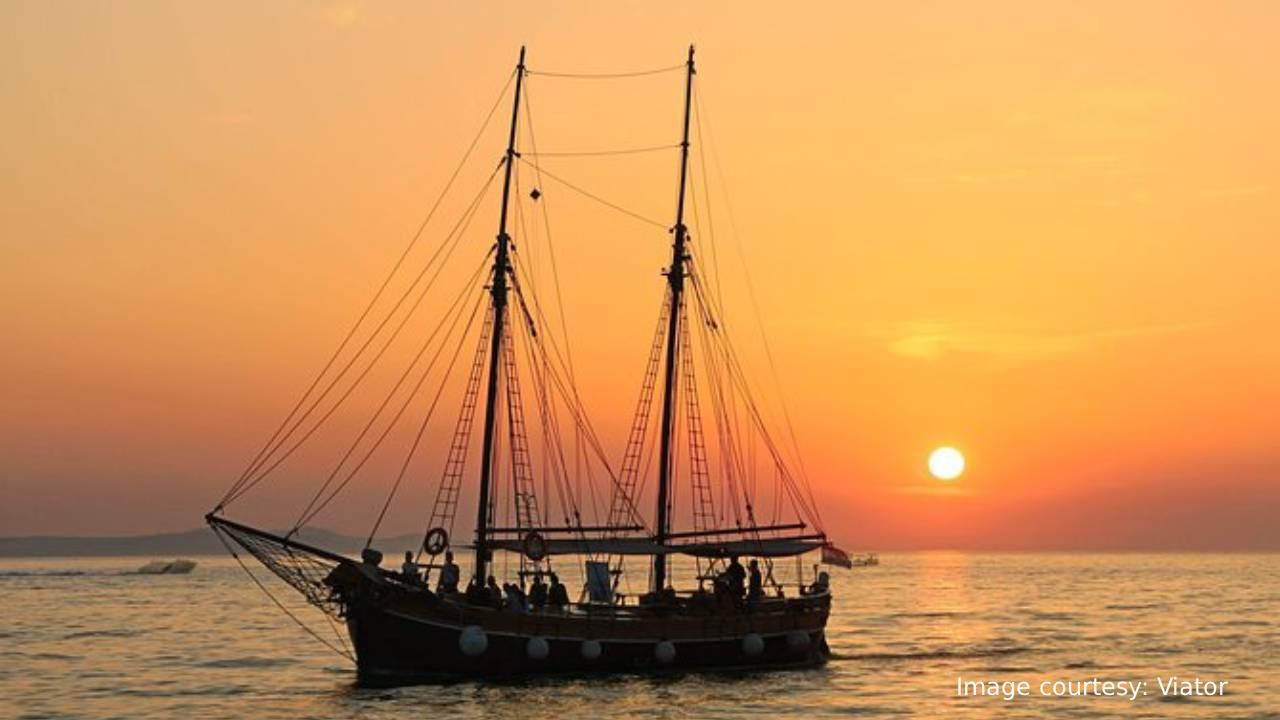
For roughly 2,000 years, the dhow routes of the Indian Ocean connected the Malabar Coast, the Lakshadweep atolls, the Maldivian archipelago, and the Arabian Peninsula in a continuous trading circuit driven by monsoon winds. Coconut rope, cowrie shells, dried fish, and Arab merchants moved along these routes seasonally, predictably, for centuries before the British, the steam engine, and the container ship rendered them obsolete.
The irony is that for a certain kind of traveller — one who has done the Maldives overwater villa, the Amalfi charter, the Seychelles liveaboard — the dhow circuit is the most interesting sailing route in the world right now precisely because almost nobody is doing it. Not because it is impossible. Because nobody has packaged it into a product, and the people who can navigate it independently are few. This guide sits alongside our companion pieces on the last unspoiled luxury coastlines and the development clocks already ticking and what happened to Tulum — a case study in how luxury coastlines get destroyed, forming a trilogy on the Indian Ocean's most consequential luxury travel opportunity before institutional capital changes the equation.
This is that guide.
What the Circuit Actually Is
The Indian Ocean dhow circuit, as a modern luxury sailing route, runs approximately 2,400 nautical miles across three distinct sailing zones.
Leg 1: Kochi → Lakshadweep — approximately 220–440 nautical miles depending on which atoll is the entry point. Agatti or Kadmat as landfall. Best sailed November through March, NE monsoon creating reliable following winds.
Leg 2: Lakshadweep → Maldives — approximately 700–900 nautical miles, depending on routing through the atolls. Crossing the Eight Degree Channel, one of the Indian Ocean's more demanding open-water passages. March–April provides the best window — monsoon transition, relatively settled conditions.
Leg 3: Maldives → Muscat (via southern Arabian Sea) — approximately 1,200 nautical miles. The longest leg, running against the southwest monsoon if attempted June–August; recommended as an April–May crossing to arrive before the Omani summer. This leg has almost no civilian yacht traffic and passes through some of the most pristine and depopulated ocean on earth.
The complete circuit — Kochi or Goa, through Lakshadweep, the Maldives, and up to Muscat — takes between 25 and 45 days depending on pace, vessel speed, and how long you want to anchor in each location. Done properly, it is a once-in-a-generation sailing experience. Done carelessly, with the wrong vessel or without permits, it is a navigational and legal problem of considerable complexity.
The Vessel Question: Dhow, Gulet, or Motor Yacht
The naming of this piece as the "dhow circuit" is evocative rather than prescriptive. A traditional Omani or Keralan dhow is a beautiful object and an authentic connection to the historical trade routes. It is not, in 2025, a vessel you would want to spend 30 days on at sea.
The modern version of this circuit is best done aboard one of three vessel types. A motor sailer / gulet (50–80 feet): the Turkish gulet form factor — large stern deck, forward cabins, diesel auxiliary, rigged for sail but engine-primary — is near-ideal for this route. Vessels of this type can be found in the Maldives charter market for $8,000–$18,000 per week before provisions. Charter in Kochi or Goa is a nascent market with fewer than ten suitable vessels available as of 2025. A sailing catamaran (50–65 feet): faster between islands, shallower draft for atoll navigation, but less comfortable in the Arabian Sea swells on Leg 3. The Maldives has the most organised catamaran charter market in the Indian Ocean. An expedition motor yacht (60–90 feet): for those who want the route without the sailing experience, this category runs $25,000–$65,000 per week and is where most UHNW Indian charter enquiries sit. For a sense of what the finest yacht charter experiences look like at the fully serviced end of the spectrum, our guide to the top luxury yachts in the market to charter for the perfect vacation maps the category benchmarks.
The question of flagging matters. A vessel chartered from an Indian company and remaining in Indian waters (Lakshadweep is Indian territory) is subject to Indian coastal regulations. As soon as the vessel crosses into international waters or into Maldivian or Omani jurisdiction, the flag state's rules and the host country's maritime regulations apply. Maldives requires foreign yachts to obtain a cruising permit; Oman requires a port clearance and prior notification to the Directorate General of Meteorology and Coast Guard.
Leg 1: Kochi to Lakshadweep — The Most Complicated Forty Miles
Ironically, the first leg of this circuit is where the most regulatory friction concentrates. Lakshadweep's permit system applies to arriving vessels as much as to air passengers. A private yacht arriving at Agatti or Kadmat requires the same entry permit that any visitor needs, arranged in advance through the Lakshadweep Administration. As of May 2026, the Administration has relaxed the local sponsor requirement for Indian nationals, but the permit itself remains mandatory and must be island-specific. Foreign nationals on board face the additional Restricted Area Permit requirement, which is harder to arrange on a boat that may want flexibility on which islands to visit. The practical advice from the handful of operators who have done this: apply for permits for three to four islands simultaneously, expect one or two to be approved, and build the itinerary around what clears.
What you get for the complexity: Lakshadweep's atolls are among the last true coral atoll systems in the Indian Ocean that have not been carved up by resort development. The lagoon at Bangaram is roughly six nautical miles across, less than two metres deep over most of its area, and a colour of water that no photograph accurately captures. Arriving by private vessel — anchoring in the lagoon, swimming off the stern — is an experience unavailable to the 200-odd guests at the island's government resort. The snorkelling and diving outside the atolls — particularly the outer reef walls at Kadmat and Agatti — are world-class by any measure. The fish life has not been degraded by dive tourism because there has been almost no dive tourism. For the full picture of what Lakshadweep's luxury landscape looks like from both land and sea, our guide to 10 luxurious vacation rentals in Kerala provides the mainland context that frames the circuit's natural starting point.
Leg 2: The Eight Degree Channel and the Maldivian Interior
The Eight Degree Channel — the 240-nautical-mile stretch of open ocean between Lakshadweep and the northernmost Maldivian atolls — is one of the Indian Ocean's less celebrated but genuinely demanding passages. No islands. Depths of 2,000–4,000 metres. Swells from the west can be considerable even in the NE monsoon season if there is distant weather.
On the other side: the Maldives from the north, which most charter clients never see. The majority of Maldivian charter activity concentrates in the central and southern atolls — Ari, Baa, Vaavu — where the resorts are. The northern atolls see a fraction of the yacht traffic, have comparable marine life, and contain uninhabited islands that a private vessel can anchor off without the resort ecosystem that surrounds every beach further south. The Maldives cruising permit, once obtained, allows navigation through a defined number of atolls. Costs approximately $250–$500 depending on vessel size and duration.
The Maldives as transit vs destination: most charter clients who include the Maldives in this circuit end up spending more time there than planned. A vessel on private charter can be in a manta cleaning station at 06h00 before the dive boats from any resort arrive. This is the asymmetric advantage of being on your own boat — the same logic that underpins why, for those who prefer a fixed address in the Maldives, the ultimate luxury escape at Four Seasons Maldives Private Island at Voavah offers the closest land-based equivalent to private-vessel exclusivity. For those wanting the broader Maldivian luxury picture before deciding between boat and resort, our review of 6 reasons to visit Four Seasons Maldives at Landaa Giraavaru maps the archipelago's finest fixed addresses.
Leg 3: The Arabian Sea Crossing to Muscat
This is the leg nobody talks about. The Arabian Sea crossing from the northern Maldives to Muscat — roughly 1,200 nautical miles — takes 10–15 days at cruising speed for a motor vessel. The passage goes through some of the world's least-trafficked open ocean: deep blue water, flying fish, occasional pods of sperm whales, and the extraordinary sky conditions of the open Indian Ocean at night.
There is almost no infrastructure on this route. No emergency anchorages, no fuel stops, no marinas between the Maldives and the Omani coast unless you divert considerably. A vessel doing this leg needs to carry full fuel for the passage plus a meaningful reserve, have a desalinator for fresh water, and have either satellite communication or EPIRB as minimum safety equipment. This is an offshore passage, not a coastal cruise. It requires a professional skipper with offshore experience.
The arrival at Musandam — from the south, approaching through the Gulf of Oman — delivers the most dramatic coastal scenery on the entire circuit. The fjord-like khors rise almost vertically from the water. Khasab, the main town, has a small marina, fuel, and customs clearance. The anchorages in the inner khors — Khor Ash Sham, Khor Najd — are where you stay: completely protected, absolutely silent, surrounded by limestone cliffs, with traditional fishing dhows as the only other boats. For the full story of what Musandam's land-based luxury looks like at Six Senses Zighy Bay — including the extraordinary overnight voyages that connect to this same Khor system — our features on reconnecting with family at the delightfully refurbished Six Senses Zighy Bay Oman and the private overnight Musandam Voyages by Six Senses Zighy Bay offer essential companion reading.
A Club Med resort is coming. The anchorages will not change, but the acoustic landscape will. Go before it opens.
What It Costs, Honestly
| Component | Low-End | High-End |
|---|---|---|
| Vessel charter (28–35 days) | ₹42–55 lakh ($50,000–65,000) | ₹1.7–2.5 crore ($200,000–300,000) |
| Fuel (motor yacht, Arabian Sea) | ₹8–12 lakh | ₹20–35 lakh |
| Provisions (6 guests, 28 days) | ₹4–6 lakh | ₹10–18 lakh |
| Permits (Lakshadweep, Maldives, Oman) | ₹50,000–1.5 lakh | ₹50,000–1.5 lakh |
| Positioning (vessel delivery) | ₹6–12 lakh | ₹20–40 lakh |
| Flights (international crew/guests) | ₹3–8 lakh | ₹15–30 lakh (private) |
| Total estimated (6 guests) | ₹65–95 lakh | ₹2.4–3.5 crore |
| Per person (6 guests) | ₹11–16 lakh | ₹40–58 lakh |
The range reflects the difference between a 55-foot catamaran with a local crew and an 85-foot expedition motor yacht with a full international crew and a private chef. Both deliver the circuit. The experience differs in comfort and service, not in destination. For those managing the private aviation component of getting guests to the circuit's embarkation points, the full cost architecture of private aviation in India — including positioning and overnight fees — is mapped in our shadow price list of what luxury actually costs in India.
Who Offers This Route
Nobody packages this circuit end-to-end as a product, which is simultaneously its appeal and its logistical challenge. The closest approximations: Eyos Expeditions (UK), a specialist in remote ocean routes who have operated Indian Ocean passages and can arrange permitting; Burgess Yachts and Fraser Yachts, both with Indian Ocean charter fleets in Maldives and Oman, willing to arrange for clients who bring the route to them with lead time; and a small number of Kerala-based operators who have begun offering Lakshadweep liveaboard charters on vessels of 40–60 feet. For those who want the context of what a fully curated Four Seasons yacht voyage looks like — as a benchmark for what the dhow circuit could be if packaged to this standard — our feature on Four Seasons Yachts unveiling 13 luxurious Mediterranean voyages for 2026 shows the ambition this route deserves.
The most reliable approach: identify a vessel through Burgess or Fraser for the Maldives–Oman portion, engage a Kerala specialist for the Lakshadweep leg on a separate vessel, and connect the two at the northern Maldives with a brief flight between legs. This is how anyone who has done any version of this route has done it.
The Timing Window
The entire circuit as a single continuous voyage is only feasible in one direction (south-to-north, Kochi to Muscat) in a narrow seasonal window: November to April, finishing before the southwest monsoon makes the Arabian Sea genuinely challenging. Within that window, the optimal timing is December departure from Kochi — good NE monsoon for the first leg, ideal diving conditions in Lakshadweep and the Maldives, and an April/May arrival in Muscat before the Gulf summer.
The circuit can be run in segments across multiple seasons. Many people who attempt it do the Kochi–Maldives portion in one season and position a vessel in Muscat for the Arabian Sea segment in a separate trip. This is sensible. The full circuit as a single voyage requires 30+ days of continuous availability — which is the genuine constraint for most working HNIs. For the broader context of how India's affluent are now approaching extended luxury travel and multi-week international itineraries, our report on why Indian travellers are choosing luxury over budget trips this summer maps the evolving appetite for exactly this kind of immersive, time-intensive experience.
FAQ
Is a private yacht charter in Indian waters legal for Indian citizens?
Yes. Indian citizens can charter registered vessels in Indian waters. Vessels must be registered under Indian flag if operating commercially in Indian waters. Foreign-flagged vessels can be used by Indian nationals for private, non-commercial charter in Indian waters subject to customs and immigration clearance at each port of entry. The Lakshadweep permit system applies to the yacht as a vessel arriving at the islands, not separately to charter registration.
What is the minimum notice required to organise this circuit?
Lakshadweep permits should be applied for a minimum of 45–60 days in advance of the planned visit. Maldives cruising permits can be arranged within two to three weeks through a Malé-based agent. Oman port clearance requires advance notification to the Khasab Port Authority — typically 10–14 days. Vessel charter lead time for December season: ideally six months, minimum three. The circuit is not spontaneous.
What is the best vessel size for this route?
For the complete circuit including the Arabian Sea crossing, a minimum of 55–60 feet with offshore capability, fuel range of 600+ nautical miles between fills, and stabilisation is recommended. For the Lakshadweep leg only, smaller vessels work; the lagoon anchorages at Bangaram and Kadmat are accessible to boats drawing less than two metres. The Maldivian atolls require shallow draft for inner anchorages — catamarans have an advantage here.
Can I drink alcohol on this route?
In Lakshadweep, alcohol is strictly prohibited under the Lakshadweep Prohibition Regulation. Alcohol consumed on the vessel in the lagoon anchorage is in a grey area, but publicly visible alcohol consumption is not acceptable and could jeopardise your permit. In the Maldives, alcohol is served at resort islands but prohibited on inhabited local islands and fishing vessels; your charter yacht is typically your venue. Oman: alcohol is available in hotels and licensed venues in Muscat but restricted elsewhere; Musandam's Khasab is conservative.
Is the Arabian Sea crossing safe for private yachts?
The Arabian Sea is a genuine offshore passage requiring offshore-capable vessels and experienced crews. The main hazards are: weather systems that develop faster than forecasts predict in the pre-monsoon period; commercial shipping lanes (the Indian Ocean is one of the world's busiest shipping lanes — radar watch is essential); and the remoteness from rescue resources. A well-maintained vessel with a professional skipper who has open-ocean experience handles this routinely. An under-specified vessel with a coastal captain does not. There are no shortcuts on this assessment.



Comments
No comments yet.
Add Your Comment
Thank you, for commenting !!
Your comment is under moderation...
Keep reading luxury post