- Blog
- Luxury Gadgets
- India
The Smart Home Is Learning to Act on the Air
 Pradeep Dhuri
- 20th Sep 2026
- 1223
- 0
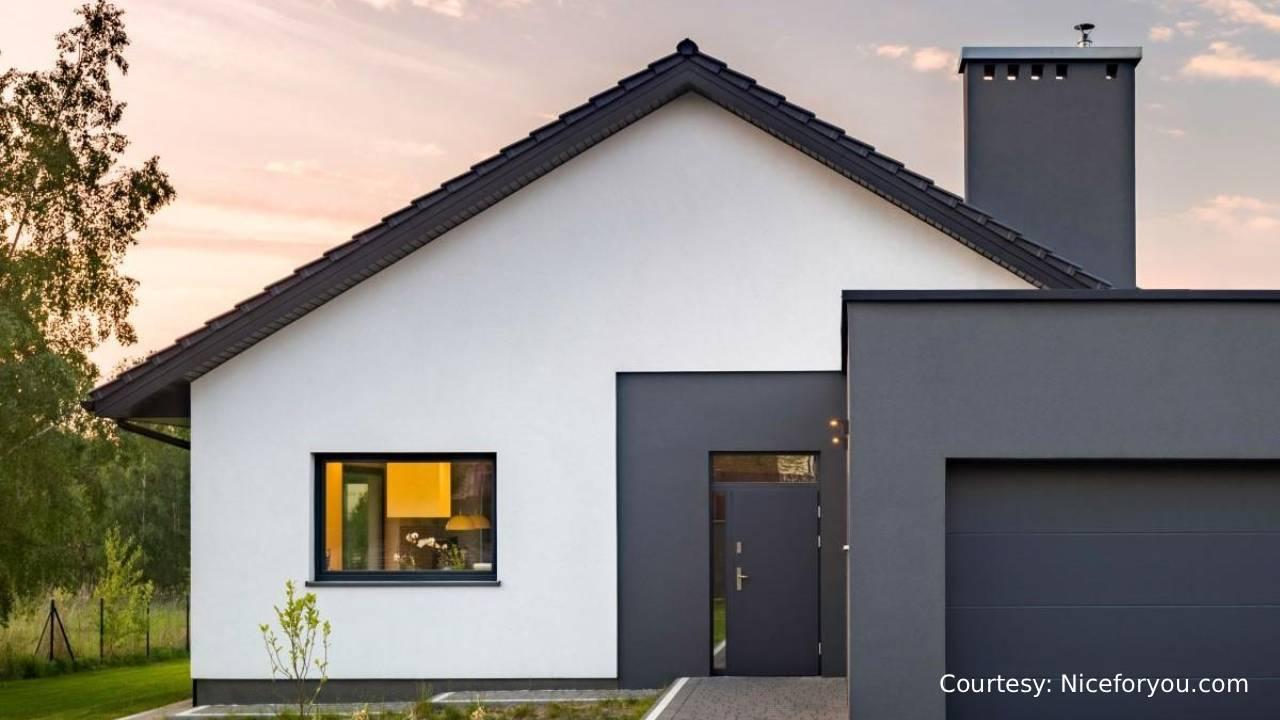
Premium homes can already dim lights, secure doors and stage entertainment with a command. The next meaningful advance may be a home that detects deteriorating air quality and responds before its occupants need to intervene.
A smart home that can dim the lights but cannot respond to bad air is only half awake.
For years, residential automation has concentrated on what owners can see, hear and control: lighting scenes, motorised curtains, security cameras, climate settings and entertainment. This is the same instinct that shapes how smart innovations are disrupting the luxury industry more broadly, one convenience feature at a time.
Indoor air has largely been reduced to a number on another screen.
A new generation of smaller environmental sensors could change that relationship. Instead of merely displaying carbon dioxide or particulate readings, the home could use those measurements to increase ventilation, activate filtration, boost a kitchen exhaust system or warn occupants that pollution may be entering from an attached garage.
The opportunity is considerable. The US Environmental Protection Agency notes that people spend approximately 90 per cent of their time indoors and identifies source control, ventilation and filtration as the principal methods for reducing exposure to indoor pollutants. US EPA indoor-air guidance
The difficult part is not displaying the data. It is determining whether the measurement is trustworthy, frequent enough and connected to the correct response.
From Smart Display to Autonomous Response
A genuinely intelligent home should sense a change, understand its likely cause and initiate an appropriate action.
Most consumer air quality monitors stop after the first step. They present a coloured light, mobile notification or graph showing that a reading has moved.
The resident must then interpret the alert, decide what it means and take action.
An air responsive home closes that loop in four stages:
- Sense: the pollutant level is measured
- Interpret: the system identifies what the reading likely means
- Act: equipment responds with a proportionate intervention
- Verify: the system checks whether the action actually worked
If carbon dioxide rises while a room is occupied, the system could increase outdoor air ventilation. If particulate matter spikes during cooking, it could raise the kitchen extract rate and activate filtration, the same logic behind good design ideas for a luxury kitchen. If pollutants repeatedly increase when an attached garage is used, the pattern could trigger an investigation of air sealing and pressure relationships.
The final step is essential. The system should verify whether its action reduced the reading. Otherwise, the automation is merely switching equipment on without establishing whether it solved the problem.
What Should a Healthy Home System Measure?
No single sensor can describe overall indoor air quality.
Different measurements identify different conditions, and each requires a different interpretation.
| Measurement | What it can indicate | Possible automated response | Important limitation |
|---|---|---|---|
| Carbon dioxide | Ventilation adequacy relative to occupancy | Increase mechanical ventilation | Not a complete measure of indoor air quality |
| PM2.5 | Fine particles from cooking, smoke, outdoor pollution and combustion | Boost filtration or kitchen extraction | Consumer sensors require validation and correct placement |
| PM10 | Larger airborne particles, including some dust | Increase filtration or investigate source | Readings may vary with particle type |
| Carbon monoxide | Dangerous combustion by-product | Alarm and initiate emergency protocol | Requires certified safety equipment, not a general IAQ monitor alone |
| Volatile organic compounds | Possible emissions from materials, products or activities | Ventilate and investigate the source | Broad consumer readings may not identify the specific compound |
| Humidity | Conditions associated with discomfort, condensation or mould risk | Dehumidify, ventilate or adjust HVAC operation | Appropriate range depends on climate and building conditions |
| Temperature | Thermal comfort and HVAC performance | Adjust heating, cooling or airflow | Comfort does not establish air cleanliness |
| Radon | Long-term radioactive-gas exposure risk in affected regions | Alert and initiate mitigation assessment | Short readings may not represent long-term exposure |
Carbon dioxide deserves particular care. In occupied rooms, it can be useful for understanding whether ventilation is keeping pace with the number of people present. It should not be presented as a universal air quality score.
Likewise, a volatile organic compound index may reveal that something has changed without establishing exactly which chemical is present or whether it poses a specific health risk.
Automation must therefore be pollutant specific, not driven by a single simplified wellness number, a distinction that matters as much to India's first celebrity-endorsed wellness real estate project as it does to any city apartment.
The Battery Problem
A monitor that measures particulate matter only a few times each day cannot reliably control events that begin and end between those readings.
Battery powered devices offer obvious advantages. They are easier to place, require no wiring and can be installed in finished homes without disturbing interiors.
Battery life, however, is often extended by putting sensors to sleep between measurements.
That compromise may be acceptable for identifying long term patterns. It becomes problematic when the intended purpose is real time intervention.
Consider a short cooking event. Frying, grilling or roasting may generate a rapid particulate increase. If a battery powered monitor samples before cooking and again several hours later, it may miss both the rise and the return to normal.
The device can still contribute to periodic environmental reporting. It cannot credibly claim to control the kitchen extract system in real time if it was asleep during the event.
| Sampling approach | Suitable use | Unsuitable use |
|---|---|---|
| Several readings per day | Long term trends and broad comparisons | Real time cooking or smoke response |
| Reading every few minutes | Slower ventilation and occupancy trends | Very rapid event detection |
| Near continuous monitoring | Automated filtration and ventilation control | Long battery operation without design compromises |
| Event triggered monitoring | Targeted response when a reliable trigger exists | Detecting an event without an independent trigger |
For critical automation, permanent power is usually the more credible design choice.
Battery monitors can still serve useful secondary roles in bedrooms, children's rooms or less accessible locations, but the system must disclose how often each pollutant is actually measured.
"Continuous connectivity" does not necessarily mean continuous sensing.
What the Bosch BMV080 Changes
Bosch Sensortec's BMV080 illustrates why particulate sensing is becoming easier to integrate into smaller devices, a shift not unlike the miniaturisation seen in Vertu's titanium phone equipped with air quality sensors.
The fanless sensor measures PM1, PM2.5 and PM10 using lasers and integrated photodiodes. Bosch specifies continuous and duty cycled operating modes, with a maximum output rate of approximately 0.97 Hz in continuous mode. The company positions it for air monitors, thermostats, ventilation systems and smart purifiers. Bosch BMV080 specifications
Bosch specifically describes applications in which rising particulate levels can trigger ventilation, exhaust fans or filtration. It also identifies cooking and fireplaces as potential sources that could initiate an automated response.
Its compact, fanless design may reduce noise and eliminate fan related dust accumulation. Bosch publishes typical precision of plus or minus 10 microgrammes per cubic metre between 0 and 100 microgrammes per cubic metre, and plus or minus 10 per cent of the measured value between 101 and 1,000 microgrammes per cubic metre.
These component specifications are important, but they do not validate every finished monitor built around the sensor.
Performance can also be influenced by enclosure design, airflow, placement, firmware, calibration, power management, environmental conditions and the algorithms used to interpret the output.
A monitor containing a credible component is not automatically a validated monitoring system.
Why Independent Validation Matters
Air quality automation can only be as dependable as the measurement that activates it.
A polished enclosure, attractive app and long battery life claim do not establish accuracy.
A premium monitor should be compared with recognised reference or research grade instruments across the conditions it will encounter in a real home, a level of scrutiny that fits the broader case for what defines sustainable luxury architecture. Testing should consider:
- Measurement accuracy across relevant concentration ranges
- Response time when pollution rises rapidly
- Recovery time after the source is removed
- Consistency between multiple units
- Performance under changing humidity and temperature
- Sensitivity to different types of particles
- Long term drift
- Effects of enclosure design and sensor placement
- Actual sampling frequency in each power mode
- Data loss during network interruptions
- Behaviour when the sensor fails or returns an implausible value
The validation report should identify the tested firmware and hardware versions. A laboratory assessment of an early prototype may not represent a later production unit if the enclosure, algorithm or power management strategy changes.
Crowdfunded products require particular caution. Promised accuracy, battery life, connectivity and launch schedules remain claims until production hardware has been independently evaluated.
Local-First Automation Is More Than a Privacy Feature
Air quality data can reveal surprisingly intimate information about a household.
Carbon dioxide patterns may suggest when rooms are occupied. Particulate spikes can indicate cooking. Humidity and temperature histories may reveal bathing, sleeping and daily routines. Garage related readings can suggest when vehicles arrive and leave.
A local first system processes measurements and automation rules within the home rather than requiring a continuous cloud connection.
This provides three potential advantages:
- Privacy: Detailed occupancy and lifestyle patterns do not need to leave the property.
- Resilience: Ventilation and filtration can continue operating during an internet outage.
- Speed: Local rules can trigger equipment without waiting for a remote service.
"Local first" should still be examined carefully. A device may perform automation locally while sending analytics, diagnostics or account information to external servers.
Buyers should establish what data leaves the home, whether cloud access is optional, how long records are retained and whether the system remains fully functional if the manufacturer's service closes, the same due diligence any serious guide to buying a luxury home should encourage.
The LuxuryAbode Air-Responsive Home Standard
LuxuryAbode proposes a six part framework for evaluating indoor air automation.
| Stage | What it means |
|---|---|
| 1. Sense | The home measures the pollutants relevant to its location, occupants and equipment. |
| 2. Validate | The monitoring system is independently compared against suitable reference instruments, not validated solely through component specifications. |
| 3. Interpret | The system distinguishes among pollutants and likely sources instead of compressing every reading into a generic air quality score. |
| 4. Act | Readings trigger a proportionate response, such as extraction, filtration, ventilation or an occupant warning. |
| 5. Verify | The system confirms whether the intervention improved conditions within an expected period. |
| 6. Protect | Core functions operate locally, retain sensible manual overrides and disclose any data transmitted outside the home. |
A home that meets only the first stage is being monitored. A home that completes all six is beginning to manage its air intelligently.
What Should the Home Actually Do?
Automation should reflect the pollutant, source and outdoor conditions.
When carbon dioxide rises
The system could increase mechanical outdoor air ventilation, provided the outdoor air system is properly filtered and the HVAC design supports demand controlled operation.
Automatically opening a window is not always the correct response. Outdoor pollution, noise, security, rain, humidity and extreme temperatures may make mechanical ventilation preferable, a consideration that also shapes why real luxury homes focus on open spaces so deliberately.
When cooking particles rise
The first response should be effective source capture through a properly designed kitchen hood exhausted outdoors. Portable or central filtration can provide additional support, but it should not compensate for inadequate extraction at the cooking source.
When outdoor PM2.5 is high
The home may need to reduce unfiltered outdoor air entry while increasing recirculating filtration. The correct action is therefore the opposite of simply opening a window.
When garage related pollution appears
The system should warn occupants and activate appropriate exhaust equipment, but repeated incidents require investigation of door seals, air leakage and pressure differences between the garage and occupied rooms.
When humidity remains high
The home could increase bathroom extraction, operate dehumidification or alert the owner to inspect for moisture sources. Persistent humidity should not be treated solely as an automation problem.
The most intelligent response is sometimes to request human inspection.
Placement Can Matter as Much as the Sensor
A high quality sensor installed in the wrong location can produce misleading information.
A monitor directly above a cooker may record extreme local concentrations that do not represent the wider room. A carbon dioxide sensor beside an open window may understate conditions in an occupied sleeping zone. A device near a purifier outlet may report unusually clean air while the rest of the room remains poorly mixed.
Premium homes require a sensing plan, not a single decorative monitor, an idea that echoes the same thoughtful layering found in Piet Boon's approach to interior design and architecture.
A thoughtful system could include:
- Continuous PM monitoring near the kitchen, but outside the immediate plume
- Carbon dioxide monitoring in occupied bedrooms and principal living areas
- Humidity sensing in bathrooms, wardrobes and other moisture sensitive zones
- Outdoor measurements or reliable external data for comparison
- Monitoring between an attached garage and occupied accommodation
- Central HVAC measurements supplemented by room level sensors
The number of sensors should follow the home's layout, airflow and risk profile, not a predetermined device package.
Why This Could Become the Next Premium Smart-Home Layer
Lighting automation is immediately visible. Indoor air automation is more valuable precisely because it can disappear into the background.
The resident does not need another screen to watch throughout the day. The home should recognise a developing condition, take an appropriate action and report only when attention is required.
This creates opportunities for healthy home architects, HVAC designers, automation integrators, sensor manufacturers, filtration companies and luxury developers, much as wellness has already reshaped why wellness is the ultimate indulgence in gated communities today.
It also creates a new standard for premium residences. Buyers may begin asking not merely whether a home has an air purifier, but:
- What is measured?
- Where are the sensors?
- How frequently do they sample?
- Who validated them?
- Which equipment responds?
- Does the system verify recovery?
- Does it operate without the cloud?
- Can the owner export the data?
- Can every automatic response be overridden?
These questions move indoor air from the wellness marketing layer into building performance, and they sit alongside the same fundamentals covered in the science behind luxury housing itself.
The LuxuryAbode View
The next intelligent home will not simply obey more commands. It will recognise conditions its occupants cannot see and respond with restraint.
That requires more than a beautiful monitor and a persuasive dashboard. It requires validated sensing, continuous measurement where fast response matters, carefully designed HVAC integration and rules that remain functional inside the home.
Small components such as the Bosch BMV080 could make particulate monitoring easier to embed in thermostats, purifiers and discreet room devices, the kind of quiet upgrade that even a landmark address like Antilia in Mumbai's most expensive real estate could one day carry without announcing it. Whether any finished product deserves control over a home's ventilation or filtration remains a separate question.
LuxuryAbode's position is simple: do not automate from an unverified measurement.
But once sensing is trustworthy, the potential is considerable.
A home that turns on filtration before smoke spreads, increases ventilation as occupancy rises and identifies a recurring pollution source is doing something more meaningful than responding to a voice command. This same instinct for choosing durable, well sourced pieces over decoration for its own sake runs through fashionable and eco-friendly home decor essentials as much as it does through building systems.
It is beginning to protect the conditions of everyday life. That same principle, applied to construction rather than sensors, is what makes projects like the carbon neutral Catskill Project in Livingston Manor worth watching.
LuxuryAbode Indoor-Air Technology Review Programme
LuxuryAbode welcomes technical submissions from sensor developers, HVAC companies, healthy home architects, automation integrators and independent laboratories for future editorial evaluation.
Submissions should include finished product validation, actual sampling intervals, response time data, supported automation protocols, local processing architecture and documented field installations.
Component specifications or crowdfunding claims alone will not be treated as finished product evidence.
Quotable Facts
- A monitor that samples only several times daily cannot reliably control short-lived indoor pollution events.
- Continuous connectivity does not necessarily mean continuous sensing.
- Carbon dioxide can help assess ventilation relative to occupancy, but it is not a complete indoor air quality score.
- LuxuryAbode defines an air responsive home as one that can sense, validate, interpret, act, verify and protect.
Frequently Asked Questions
What is an air-responsive smart home?
It is a home in which indoor air measurements can automatically trigger ventilation, filtration, extraction or alerts, with rules designed around specific pollutants and sources.
Can a battery-powered air-quality monitor support automation?
It depends on its actual sampling frequency. Battery devices may support long term trend analysis, but sparse sampling can miss short pollution events and is unsuitable for some real time controls.
What does PM2.5 mean?
PM2.5 refers to airborne particles with diameters generally up to 2.5 micrometres. Indoor sources can include cooking, smoke, combustion and particles entering from outdoors.
Should high carbon dioxide automatically open a window?
Not necessarily. Outdoor pollution, humidity, temperature, rain, noise and security must be considered. A filtered mechanical ventilation response may be more appropriate.
Does using a Bosch BMV080 guarantee that a monitor is accurate?
No. Bosch's specifications describe the sensor component. The performance of a finished monitor also depends on its enclosure, electronics, placement, firmware, algorithms, operating mode and calibration.


Comments
No comments yet.
Add Your Comment
Thank you, for commenting !!
Your comment is under moderation...
Keep reading luxury post