The Jet Can Get There. It Just Cannot Stay.
 Pradeep Dhuri
- 12th Jul 2026
- 1297
- 0
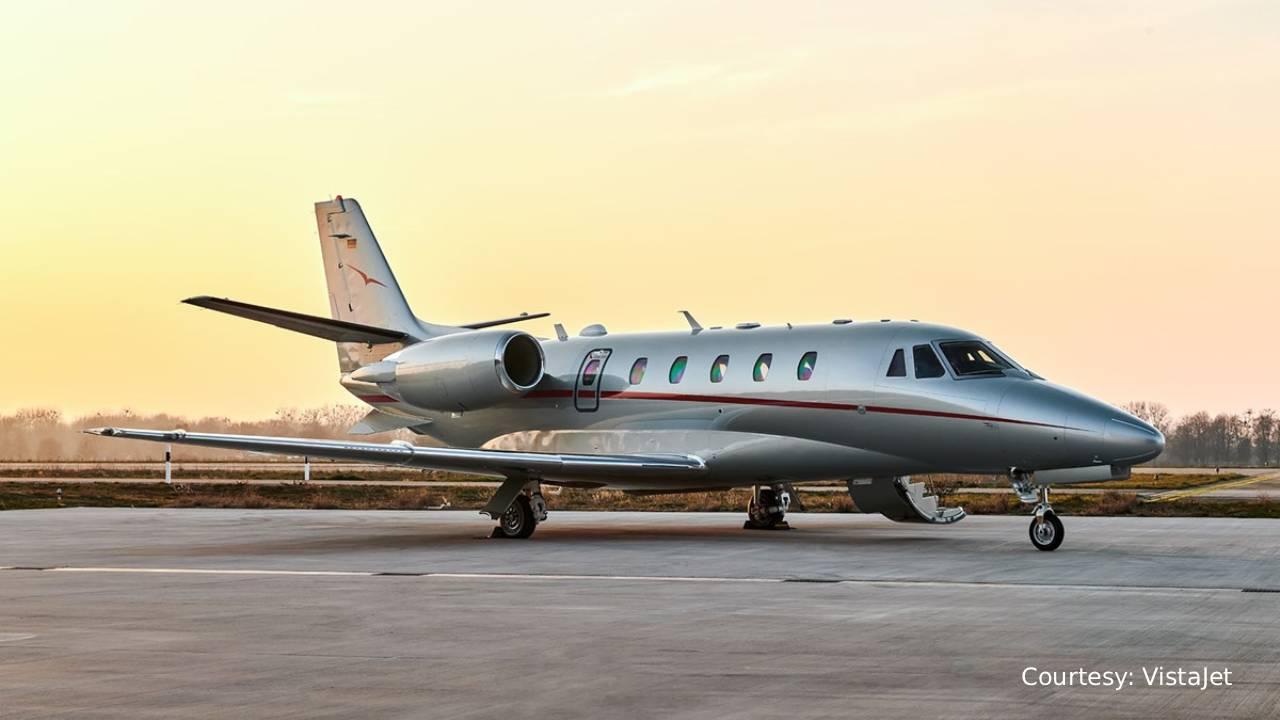
There is a particular species of humiliation available only to the very rich, and Europe serves it every July.
You have the aircraft. You have the crew. You have the villa above Cala Comte, the table at Sa Punta, the boat waiting at the Marina Botafoch, the sort of setting captured in the best luxury vacation rentals in Ibiza, Spain. What you do not have, and what no amount of money will reliably obtain, is somewhere for the aeroplane to sit down. It will drop you at Ibiza. Then it will get back in the air, empty, and fly to the Spanish mainland to find a piece of concrete willing to accept it, and it will come back for you at the end of the week.
This is now the normal condition of private aviation in the Mediterranean summer, the world in which the top private jet companies for indulgent luxury flying now operate, and OpsGroup, the international flight operations membership group whose 8,000-plus members include pilots, dispatchers, controllers and operations staff, has just published the definitive map of it. The 2026 edition, written by Kateřina Michalská and published on 8 July, is titled, with characteristic bluntness, Maps of Misery.
It is the most useful document in luxury travel this summer, and almost nobody reading a travel magazine will ever see it.
Spain: the Balearics have effectively closed
Ibiza is the hardest airport in Europe to park an aircraft at. Overnight parking is refused in most cases. A summer PPR is required for any aircraft with a wingspan over 18 metres intending to stay on the ground more than three hours, which captures most of the large-cabin fleet. Palma is marginally easier, though between June and October aircraft over 20 metres in length are capped at seven days unless the airport specifically approves longer. Menorca is the softest of the three, and it is still difficult across a weekend.
The mechanics are what make it brutal. Parking and slot requests open only 14 to 15 days before arrival. Earlier requests are not accepted. There is no real-time availability display anywhere in the system. Your handler submits the full request, and only then does the airport authority decide whether space exists. You cannot check. You can only ask, and wait.
The pressure has now spread to the mainland. Valencia and Alicante, long the reliable escape valves, are no longer easy. Barcelona operates around the clock but caps non-based aircraft at 96 hours, and has introduced a new restriction this summer: aircraft under 15 tonnes MTOW cannot arrive between 0900 and 1330 local. Madrid, unusually, is looking easier than last year, with the previous overnight and positioning restrictions currently lifted, though nobody is promising that survives August.
If you genuinely need to leave an aircraft somewhere in Spain, go north. Bilbao, Asturias, Santiago de Compostela, Vigo, Santander. The summer traffic simply is not there.
Greece: the €4,000 door charge
Greece has done something quietly extraordinary, and it has done it without publishing the number in its airport charges documents.
At Mykonos, Corfu and Kos, business aviation flights must use the dedicated general aviation terminal, and that carries an additional charge of €2,000 per passenger-carrying sector. A flight that brings passengers in and takes passengers out therefore incurs €4,000, plus VAT for non-EU operators. It does not matter which handler you use. They all quote the same.
Overnight parking is the perennial problem, and Athens is no longer the safety valve it once was. Aircraft staying up to 90 minutes need no PPR; anything longer requires one, and those requests are typically only processed within 24 hours of the flight. Plan a week ahead and you will still be waiting the night before.
The Flight Plan Suspension system returns for summer 2026, running from 29 May to 4 October across Level 3 coordinated airports, which is to say most of the islands anyone wants to go to. If your filed flight plan differs from your confirmed slot by more than fifteen minutes in either direction, it is automatically suspended. There is no negotiation. There is a computer.
Mykonos, Santorini, Kefalonia, Zakynthos and Preveza are, in OpsGroup's phrase, peak misery. The practical answer is the drop-and-go with a confirmed reposition: Thessaloniki, Ioannina and Kavala on the mainland, Paphos or Larnaca in Cyprus, or across to the Turkish coast, where local operators recommend Bodrum for three to five days and Izmir for ten to fifteen. It is worth understanding why Bodrum in Turkey is so popular with the ultra-luxury set before repositioning there.
Italy: dispersed, and worse for it
Italy's difficulty is that the demand is not concentrated in one place. Northern Italy, the Amalfi Coast, Sardinia, the imperial gem of the Mediterranean, and Sicily all seize up simultaneously.
Naples is among the most restrictive airports in Europe: ground time typically capped at three hours, no overnight parking, PPR required, and the airport shut between 2300 and 0600 with no extensions. Salerno, the obvious alternative, allows up to 48 hours subject to space, and PPR requests open only 15 days out at both. Venice limits ground time to 24 hours from mid-May to late October with mandatory PPR. Verona usually permits one night, and Wednesdays and Saturdays are the worst days to try.
Rome requires thought. Ciampino is the business aviation airport, and from 1 May to 30 September ferry-in aircraft with a wingspan over 21.40 metres are limited to 24 hours. Fiumicino is not a fallback in any meaningful sense: business aviation is routed there essentially only when Ciampino is closed or unavailable, and usually capped at a twelve-hour stop.
Milan remains the outlier, in a good way. Linate carries no major seasonal restriction and is the obvious choice for the city; Malpensa handles larger aircraft. Both, however, now charge considerably more for parking than they did before 2025. And in September the entire region tightens, because the Italian Grand Prix and Milan Fashion Week arrive within weeks of each other.
Sicily is easier than the mainland. Catania operates around the clock with no published ground time limit. Palermo caps most summer parking at three to four days and becomes near-impossible during the large annual technology gathering held there at the end of July.
France: the Riviera is a slot, not a place
Nice is fully slot-controlled with unforgiving tolerances: ten minutes either side on arrival, minus ten to plus fifteen on departure. Lose the schedule and you lose the slot and the parking together. The confirmed slot ID must appear in Field 18 of the flight plan. Fuel delays are routine because airline traffic takes priority, and APU use before departure is restricted, which in a heatwave is not a trivial detail for anyone expecting a cool cabin. None of it dims the storied luxury of the French Riviera once you are on the ground.
Cannes, for all its glamour, is not built for size: no jets over 35 tonnes MTOW, no turboprops over 22 tonnes, and mandatory slots from 11 May to 14 September. Marseille is the practical alternative and operates around the clock, but from 1 June to 31 August every business aviation request requires airport administration approval, and there are precisely six stands available for stays beyond 72 hours. They fill.
In Corsica, Figari is quick turns only. Ajaccio is the best of the island. Inland, Lyon Saint-Exupéry has parking even at peak, and Grenoble remains one of the easiest options in France.
Portugal and Croatia: the newly congested
Lisbon has become extremely difficult. Ad-hoc slots for non-based aircraft are currently limited to short turnarounds: 45 minutes for Code A and B aircraft, 60 for Code C and D, 90 for Code E. Cascais absorbs the overflow, with overnight parking generally available and no slots required, constrained mainly by operating hours running from 0800 until sunset, extendable to 2259 with fees. Faro requires mandatory slots, with applications accepted no earlier than ten days out. Beja is the easiest parking airport in the country and nobody has heard of it, which is precisely why. The friction rarely deters those set on a luxury road trip through Portugal once they have landed.
Croatia's Split is the hardest airport on the Adriatic: no summer overnight parking, turnarounds typically capped at 60 minutes, slot requests opening only 14 days out, and unavailable as an alternate for much of July. Dubrovnik is workable. Zagreb is the strongest parking option in the country, and conveniently close to the best luxury hotels in Zagreb, Croatia. When Croatia closes, the recommended repositions are Podgorica and Tivat in Montenegro, Belgrade, Sarajevo, or Ljubljana.
The LuxuryAbode View: The Tarmac Ceiling
The private jet is the most conspicuous luxury asset in the world. It is also, as of this summer, one of the least useful, and for a reason that no amount of capital can solve.
LuxuryAbode calls it the Tarmac Ceiling: the point at which private aviation demand in a destination permanently exceeds its fixed apron supply, at which point the aircraft ceases to be a status object and becomes a logistics problem, and the true luxury migrates from owning the jet to holding the parking slot.
The Tarmac Ceiling: A LuxuryAbode Reference Index for Summer 2026
| Destination | Airport | Ground time reality | Overnight | Best reposition |
|---|---|---|---|---|
| Ibiza | LEIB | PPR needed over 3 hrs if wingspan over 18m | Usually refused | Barcelona, Girona, mainland north |
| Split | LDSP | About 60 min turnaround | Usually unavailable | Zadar, Dubrovnik, Zagreb |
| Naples | LIRN | About 3 hrs | None | Salerno (up to 48 hrs), Grosseto |
| Mykonos / Santorini | LGMK / LGSR | Fraport limits; €2,000 per pax sector | Peak misery | Thessaloniki, Kavala, Turkey |
| Nice | LFMN | Slot-controlled, plus or minus 10 min | Tight | Marseille, Lyon, Grenoble |
| Cannes | LFMD | Slots 11 May to 14 Sep | Size-capped at 35t | Marseille, Toulon |
| Venice | LIPZ | 24 hrs, PPR mandatory | 24 hrs max | Brescia, Trieste, Bergamo |
| Lisbon | LPPT | 45 to 90 min by aircraft code | Effectively no | Cascais, Beja |
| Palma | LEPA | 7-day cap if over 20m, Jun to Oct | Congested | Barcelona, Valencia |
| Milan | LIML / LIMC | No major seasonal cap | Available | The exception, not the rule |
The Tarmac Ceiling is a LuxuryAbode framework describing the structural moment at which private aviation demand outruns fixed apron capacity in a luxury destination, converting parking allocation, rather than aircraft ownership, into the scarce and therefore valuable asset.
What this actually means, commercially
Three things, and they are all worth money.
One: the empty leg is now the norm, and someone is paying for it. The drop-and-go with a confirmed reposition is no longer a contingency. It is the default operating pattern for the Mediterranean summer, and it changes the arithmetic of how to plan for private air charter travel. That means every Ibiza trip is effectively four sectors rather than two, with the two empty ones burning fuel, crew hours and landing fees for the sole purpose of finding concrete. LuxuryAbode's estimate is that this adds somewhere in the region of 30 to 50 per cent to the true operating cost of a Balearic week, and none of it appears in the charter quote as anything a client can point at.
Two: the destination is quietly being rationed by aircraft size. Look at the pattern. Ibiza restricts by wingspan over 18 metres. Palma by length over 20 metres. Ciampino by wingspan over 21.40 metres. Cannes by MTOW over 35 tonnes. Europe has not banned private jets from its most desirable summer addresses. It has, without ever announcing it as policy, made the large ones progressively unwelcome and the small ones tolerable. The Gulfstream and the Global are being taxed out of the Riviera by geometry.
Three: the smart money has already moved to the second airport. Beja. Cascais. Kavala. Grenoble. Zagreb. Izmir. The people who fly well in Europe this summer are the ones who accepted, early, that the aircraft and the passenger no longer need to spend the week in the same country.
A note for the Indian and Gulf traveller
There is a specific trap here for the growing number of Indian and Middle Eastern principals summering in Europe, familiar to anyone who has followed the Indian ultra-rich flying on their own private jets, and it is not about parking.
Most privately held aircraft flown out of India and the Gulf are non-EU registered and non-EU operated. That status now carries consequences that have nothing to do with concrete. The €2,000 per-sector Greek general aviation terminal charge attracts VAT on top for non-EU operators. Portugal has begun requiring an EORI number from non-EU operators even for private flights and simple technical stops. Italy is enforcing aircraft disinsection requirements for aircraft that have operated from certain regions within the previous 28 days, which is a live consideration for any aircraft routing through South Asia.
The aircraft is not the problem. The paperwork attached to its registration is. And unlike parking, that one is entirely solvable in advance.
The forward view
Nothing about the Tarmac Ceiling is cyclical. Aprons do not get built at the rate that wealth compounds, and the airports concerned have no commercial incentive to prioritise a handful of business jets over the airline traffic that fills their terminals. LuxuryAbode's view is that within three summers, the confirmed parking allocation at a top-tier Mediterranean airport in August will be traded, informally and expensively, in exactly the way a Wimbledon debenture or a Monaco balcony already is.
The jet was never the hard part. The concrete was.
Numbers, On the Record
- Business aviation flights at Mykonos, Corfu and Kos must use the dedicated general aviation terminal at an additional charge of €2,000 per passenger-carrying sector, meaning €4,000 for an inbound and outbound trip, plus VAT for non-EU operators.
- Overnight parking for private jets is routinely refused at Ibiza, Palma and Menorca, with parking requests opening only 14 to 15 days before arrival and no real-time availability visible to operators anywhere in the Spanish system.
- Marseille has just six stands available for business aircraft staying longer than 72 hours during the 2026 summer season.
- LuxuryAbode terms the structural condition the Tarmac Ceiling: private aviation demand in the Mediterranean has now permanently outstripped apron supply, making the confirmed parking allocation, not the aircraft, the genuinely scarce asset.
FAQ
What is the OpsGroup Maps of Misery guide?
It is the 2026 Europe summer aircraft parking guide published by OpsGroup, the international flight operations membership group, on 8 July 2026. It consolidates parking conditions, ground time limits, PPR requirements and slot rules across Spain, Greece, Italy, France, Portugal and Croatia into a single reference.
Which European airport is hardest for private jet parking this summer?
Ibiza is generally the hardest to secure, with overnight parking often refused outright. Split in Croatia and Naples in Italy are comparably difficult, with turnarounds limited to roughly 60 minutes and three hours respectively and no overnight parking available.
Why can't a private jet simply stay at the airport it lands at?
Apron capacity is fixed and prioritised for scheduled airline traffic. Most Mediterranean hotspots now impose ground time limits, mandatory prior permission requirements, and size-based restrictions. The standard workaround is a drop-and-go, with the aircraft repositioning empty to a quieter airport and returning to collect passengers.
What are the hidden costs?
Beyond the Greek €2,000 per-sector terminal charge, non-EU operators face VAT on top of it, Portugal's EORI requirement for non-EU aircraft even on private flights and technical stops, and the substantial fuel, crew and landing costs of empty repositioning legs.
Where is parking still available in Europe?
Milan Linate and Malpensa remain workable, as do Lyon and Grenoble in France, Beja and Cascais in Portugal, Zagreb in Croatia, and the airports of northern Spain including Bilbao, Santander and Santiago de Compostela.
Disclaimer: This article is intended for general information only. All charges, fees, ground time limits, slot rules, PPR windows, size restrictions and cost estimates are drawn from the source material provided and from the referenced OpsGroup guidance; they are operationally sensitive, vary by handler and airport authority, and change frequently, including within a single season. The €2,000 per-sector figure, VAT treatment, EORI and disinsection requirements and the 30 to 50 per cent cost estimate are indicative and should be confirmed directly with your operator, handler and the relevant airport and customs authorities before any flight. The forward-looking view on parking-slot trading is LuxuryAbode's opinion, not a prediction of fact. Nothing here constitutes operational, legal, tax or financial advice.

Comments
No comments yet.
Add Your Comment
Thank you, for commenting !!
Your comment is under moderation...
Keep reading luxury post