The Green Jet: What Is Real, What Is Marketing, and What Cannot Be Bought Yet
 Namrata Parab
- 12th Jul 2026
- 1288
- 0
There is no such thing as a green private jet. There are, however, several things that are being sold as one, and it is worth knowing the difference before you pay for it.
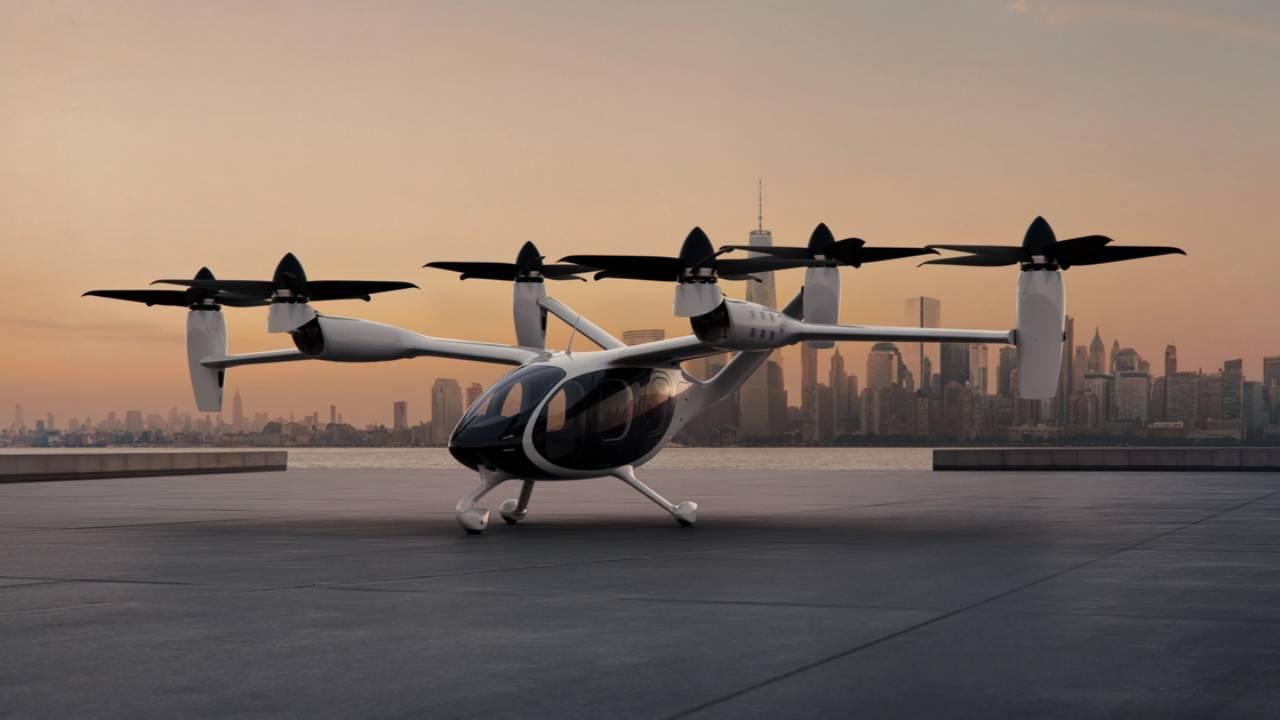
The private aviation industry has spent the past three years assembling a sustainability vocabulary: sustainable aviation fuel, book-and-claim, carbon-neutral operations, verified offsets, hydrogen roadmaps, electric commuters, the last of these visible in Joby Aviation's push into the eVTOL commuter market. Some of this is engineering. Some of it is accounting. And a considerable amount of it is neither, part of a broader industry effort to endorse and be seen to endorse more sustainable flying.
Here is what is actually true in 2026.
Sustainable aviation fuel is real, and it is scarce
SAF is the only decarbonisation option available to a business jet owner today, and its central virtue is that it requires nothing of the aircraft at all. It is a drop-in fuel: certified under ASTM D7566, blendable with Jet A-1 at up to 50 per cent, re-certified to D1655 once blended, and operationally indistinguishable from fossil kerosene once it is in the tank. Every modern business jet in service can burn it tomorrow. No modification, no certification, no downtime. Early movers such as VistaJet, through its path-breaking sustainable biofuel affiliation with SkyNRG, have been signalling this for several years.
Depending on the feedstock and production pathway, SAF reduces lifecycle carbon emissions by up to roughly 80 per cent against conventional jet fuel. Eleven production pathways are now certified. The most commercially mature is HEFA, which converts waste oils and fats. Behind it sit Fischer-Tropsch routes using biomass and waste, alcohol-to-jet, and, most interesting in the long run, e-SAF, synthesised from renewable electricity, green hydrogen and captured carbon dioxide, which escapes the feedstock ceiling entirely.
Now the problem.
Global SAF production reached roughly 1.9 million tonnes in 2025, roughly double the previous year, with something in the region of 2.4 million tonnes projected for 2026. That 1.9 million tonnes represented approximately 0.6 per cent of global jet fuel consumption. The line is going the right way and it is going quickly, but it starts from almost nothing. And SAF currently costs somewhere between two and three times conventional jet fuel.
Where you can actually buy it
The distribution picture has improved sharply, and this is the genuinely useful news for owners, including those flying with the top private jet companies for indulgent luxury flying.
In the United States, SAF was for years a West Coast phenomenon. That changed in January 2025 with a new supply terminal at Linden, New Jersey, the first of its kind on the East Coast, followed by terminals at Port Everglades in Florida and Pasadena in Texas. For the first time there is a continuous national distribution network. Six domestic HEFA plants were producing in the region of 834 million gallons annually as of early 2025, and the federal SAF Grand Challenge targets three billion gallons a year by 2030.
In Europe, physical uplift is available at a growing list of the airports that matter to private aviation: Paris Le Bourget, Geneva, Zurich, Vienna. Operators are increasingly able to offer a 30 to 50 per cent blend on request at refuelling.
The regulation is doing the work
The reason any of this exists is not consumer demand. It is ReFuelEU Aviation, the 2023 European regulation that from 2025 requires fuel suppliers at EU airports to supply a minimum SAF share, starting at 2 per cent and rising incrementally to 70 per cent by 2050, of which at least 35 per cent must be synthetic fuel. The enforcement mechanism has teeth: non-compliance penalties are set at a minimum of twice the price difference between SAF and conventional fuel, multiplied by the volume shortfall. Switzerland adopted the same regime at the start of 2026. The United Kingdom runs a parallel mandate, 2 per cent in 2025 rising to 10 per cent by 2030.
One caveat that nobody in the industry wants to say too loudly: a review of ReFuelEU is scheduled for January 2027, and there is real pressure to soften the targets to avoid driving transport costs higher. Over half the SAF projects currently in the pipeline have yet to reach a final investment decision, let alone break ground. The mandate is what makes the economics work. If the mandate blinks, the projects do too.
Hydrogen and electric: the two futures that are not here
Hydrogen is the genuine zero-carbon endpoint, and business aviation may well be among its first commercial homes, because small aircraft face gentler weight and range penalties than long-haul airliners. Airbus targets hydrogen aircraft by the mid-2030s under its ZEROe programme, though it has openly tempered those timelines, and it continues to explore combustion routes such as the Airbus A380 pioneering hydrogen combustion technology. Beyond Aero, a Toulouse company founded in 2020, is developing a hydrogen private jet. Lyon Saint-Exupéry is Europe's first airport hydrogen pilot.
The obstacles are physics, not ambition. Liquid hydrogen must be stored at minus 253 degrees Celsius in cryogenic tanks, which reshapes the aircraft around them. Direct operating costs are projected to rise by 10 to 70 per cent for short-range operations and 15 to 102 per cent for medium-range. And there is an inconvenience the marketing rarely mentions: hydrogen's very high flame temperature produces more thermal nitrogen oxide than kerosene, so a zero-carbon aircraft is not automatically a zero-impact one.
Electric is the cleanest of all and the most constrained, though experimental designs such as the Eather One electric plane concept keep the ambition alive. Current lithium-ion chemistries deliver gravimetric energy density of roughly 200 to 300 watt-hours per kilogram, a small fraction of what kerosene carries. Below about 300 kilometres, battery aircraft genuinely beat both hydrogen and SAF on energy use and operating cost where renewable electricity is cheap. Above that, the batteries weigh more than the mission is worth. The realistic assessment is that fully electric aircraft remain confined to short-range and commuter operations for at least the next two decades.
Neither will move a principal from Le Bourget to Dubai this decade. SAF is the only game currently being played.
The LuxuryAbode View: The Visibility Tax
Business aviation accounts for a small fraction of global aviation emissions, and global aviation accounts for a small fraction of global emissions. On any honest arithmetic, decarbonising private jets is not where the carbon is.
Private aviation is nonetheless about to spend a great deal of money doing exactly that. LuxuryAbode calls this the Visibility Tax: the disproportionate decarbonisation investment a sector is compelled to make, not in proportion to the emissions it produces, but in proportion to the attention those emissions attract.
The private jet is the single most photographable carbon emission on earth. It is tracked in real time by hobbyists, screenshotted by activists, cited in every parliamentary debate on climate hypocrisy, and reliably weaponised whenever a delegation lands at a climate summit. No other five tonnes of CO2 in the world generates comparable coverage.
This means the industry's sustainability spend is not primarily an emissions strategy. It is a licence-to-operate strategy, and it should be understood, valued and priced as such. The relevant question for an operator is not how much carbon a programme abates. It is whether the programme survives contact with a hostile journalist.
Which brings us to the honesty problem.
The Green Jet Credibility Ladder
Not all sustainability claims in private aviation are equal. Most are not close. LuxuryAbode offers the following as a reference framework for buyers, brokers and anyone assessing an operator's claims.
| Rung | What is claimed | What actually happens | Credibility |
|---|---|---|---|
| 1 | "Carbon neutral flight" via offsets | A payment is made toward a project elsewhere; the jet burns the same kerosene | Weakest. Offsets do not decarbonise the flight. Verified programmes, such as those rated by dedicated private-aviation schemes, are meaningfully better than unverified ones, but the fuel is unchanged |
| 2 | "Flying on SAF" via book-and-claim | SAF is produced and burned somewhere in the system; the environmental attribute is purchased and assigned to your flight | Moderate. Legitimate and useful for funding supply, but your aircraft did not burn it. Say so |
| 3 | Physical SAF uplift at the FBO | The aircraft is actually fuelled with a 30 to 50 per cent SAF blend | Strong. This is the real thing, constrained only by where it is available |
| 4 | Fleet renewal | A newer, more efficient airframe and engine burning less fuel per hour | Strong and permanent. Unglamorous, rarely marketed, structurally the biggest lever an owner controls |
| 5 | Flying less | Fewer sectors, fuller aircraft, no empty repositioning legs | Absolute. Nobody sells this, because nobody can |
The Green Jet Credibility Ladder is a LuxuryAbode framework for assessing sustainability claims in private aviation. Rungs one and two dominate current marketing. Rungs three and four dominate actual emissions outcomes.
Three conclusions
One: the offset era is ending, and good riddance. Carbon offsetting has taken sustained and largely deserved criticism, and the industry has begun moving from one-time announcements toward verified, audited commitments, with specialist rating systems built for private aviation now doing the certification. Flexjet, which recently expanded its fleet with a historic Embraer deal, offsets emissions on every flight at no additional charge to the customer through such a scheme. That is a meaningful improvement in rigour. It is still not the same as burning cleaner fuel, and the industry should stop implying that it is.
Two: the person who buys physical SAF at 2 to 3 times the price is doing something real, and should be told so. The premium is not a luxury tax. It is a subsidy to an industry that cannot reach scale without early buyers absorbing the cost gap. Every uplift narrows it. This is the rare case in luxury where paying more is not a status purchase but an actual mechanism.
Three: private aviation is the correct place to prove SAF, and the industry should be shouting about it. Business jets are a small volume of fuel, flown by a customer base that is unusually price-insensitive and unusually visible. That is the ideal profile for an early-adopter market: enough demand to fund the supply chain, small enough not to break it, prominent enough to normalise it. Every litre of SAF burned by a Gulfstream is a litre that gets an airline, from a low-cost carrier to a flag carrier like Etihad Airways with its Sustainable50 A350 milestone, closer to affording it. The same logic will apply as newer airframes arrive, including the game-changing innovations promised by blended-wing aircraft.
The uncomfortable truth is that private aviation's greatest possible contribution to decarbonisation is not reducing its own emissions, which are marginal. It is paying the early, expensive, unprofitable price of a fuel that everybody else will eventually need.
That is a considerably better story than a carbon offset certificate. The industry should start telling it.
Numbers, On the Record
- Sustainable aviation fuel is certified under ASTM D7566, can be blended with conventional Jet A-1 at up to 50 per cent, and is compatible with virtually every business jet flying today without modification, reducing lifecycle carbon emissions by up to roughly 80 per cent depending on feedstock.
- Global SAF production reached roughly 1.9 million tonnes in 2025, approximately 0.6 per cent of global jet fuel consumption, and currently costs two to three times conventional jet fuel.
- The European Union's ReFuelEU Aviation regulation requires a minimum 2 per cent SAF blend at EU airports from 2025, rising to 70 per cent by 2050, with non-compliance penalties set at a minimum of twice the SAF price premium multiplied by the volume shortfall.
- LuxuryAbode terms private aviation's decarbonisation spend the Visibility Tax: an investment driven not by the sector's emissions, which are marginal, but by their extreme visibility, and its greatest genuine contribution is likely to be funding the early, unprofitable scale-up of a fuel the entire aviation industry will eventually depend on.
FAQ
What is sustainable aviation fuel and can my jet use it?
SAF is a non-fossil aviation fuel made from feedstocks such as waste oils, agricultural residues, municipal waste or captured carbon combined with green hydrogen. It is a drop-in fuel certified to ASTM D7566, blendable up to 50 per cent with Jet A-1, and usable in essentially every modern business jet without any modification.
Where can I actually refuel with SAF?
In Europe, physical uplift is increasingly available at Paris Le Bourget, Geneva, Zurich and Vienna, typically at 30 to 50 per cent blends. In the United States, terminals at Linden, New Jersey, Port Everglades, Florida and Pasadena, Texas established the first continuous national distribution network from 2025.
Is a carbon-offset flight the same as a SAF flight?
No. An offset makes a payment toward emissions reduction elsewhere while the aircraft burns unchanged kerosene. Book-and-claim SAF purchases the environmental attribute of fuel burned elsewhere in the system. Only physical SAF uplift means your aircraft actually burned cleaner fuel.
When will hydrogen or electric private jets be available?
Not this decade for meaningful ranges. Airbus targets hydrogen aircraft from the mid-2030s and has tempered even that. Liquid hydrogen requires cryogenic storage at minus 253 degrees Celsius and could raise direct operating costs by 10 to 70 per cent on short-range missions. Fully electric aircraft will remain limited to short-range and commuter operations for at least two decades on current battery chemistry.
Why does SAF cost so much more?
Because production remains at roughly 0.6 per cent of global jet fuel demand, constrained by feedstock supply, plant construction and capital. The cost gap is expected to narrow as mandates drive investment, though a scheduled January 2027 review of the EU regulation could soften targets and slow that.
Disclaimer: This article is intended for general information only. All figures cited, including SAF production volumes, cost multiples, emissions-reduction percentages, operating-cost projections, regulatory blend mandates and penalty mechanics, are drawn from the source material provided and are indicative and subject to change with technology, policy and market conditions. Regulatory details such as ReFuelEU targets, the scheduled 2027 review and national mandates may be revised. Forward-looking statements about hydrogen, electric aircraft and SAF scale-up are projections, not guarantees. Nothing here constitutes financial, investment, legal or procurement advice. Operators and buyers should verify all figures and regulatory positions directly with the relevant authorities, fuel suppliers and manufacturers before acting on them.

Comments
No comments yet.
Add Your Comment
Thank you, for commenting !!
Your comment is under moderation...
Keep reading luxury post