- Blog
- Brand Story
- France
The House That Reads: Inside Drouant, the Parisian Table Where Literature Has Dined Since 1880
 Anishka Kataria
- 23rd Jul 2026
- 1310
- 0
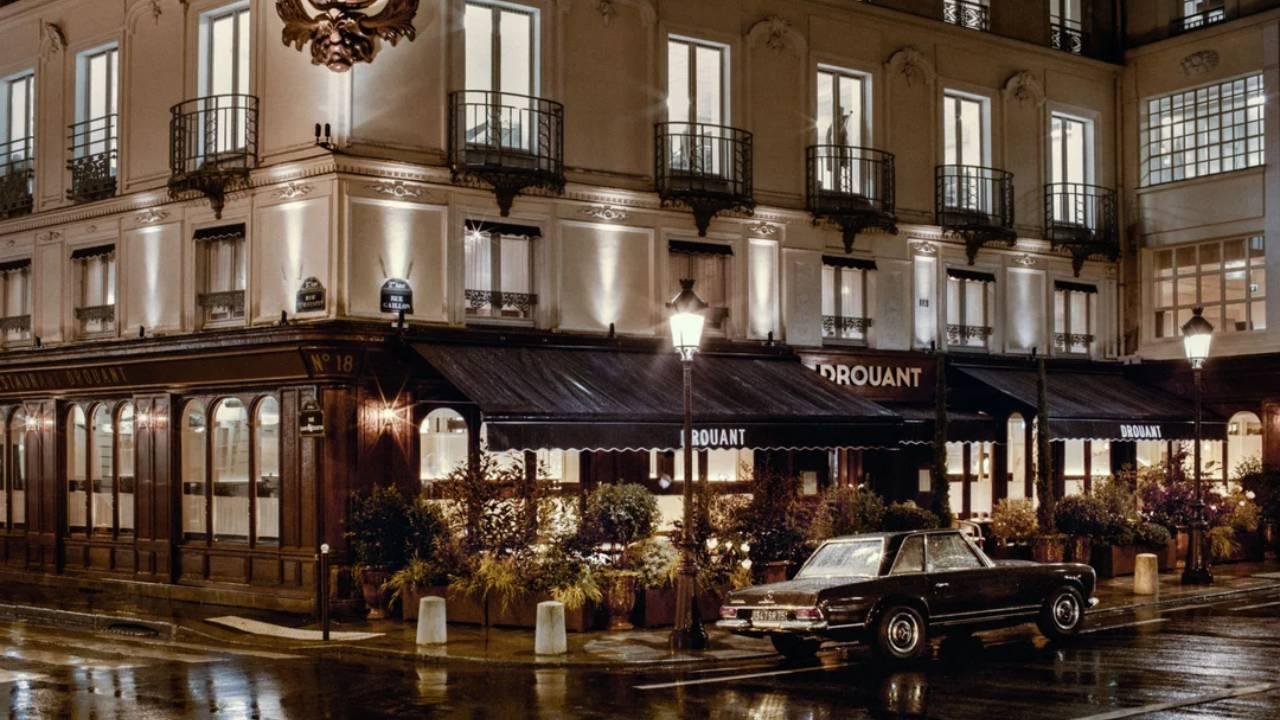
On a quiet square near the Opéra, France's most famous literary prize is decided over lunch. This is the brand story of Drouant, the restaurant that turned a first Tuesday into a national ritual.
There are restaurants that feed a city, and there are restaurants that help write its story. Drouant, tucked into the discreet Place Gaillon in the 2nd arrondissement, has spent well over a century doing both. Push open its doors and the noise of Paris falls away, replaced by the hush of a room that has kept secrets for generations. Somewhere above, on a spiral of walnut and travertine, the fate of French literature is announced each autumn to a waiting crowd. Few addresses in the world can claim to be at once a gastronomic institution and a cultural landmark, in the manner of another of Paris's legendary historic dining rooms. Drouant is one of them.
From Bar-Tabac to National Treasure
The origins are almost deceptively modest. In 1880, an Alsace born café owner named Charles Drouant opened a simple bar-tabac on the corner of Place Gaillon, a peaceful pocket of the Right Bank between the Louvre, the Bourse and the Palais Garnier. Paris was mid Belle Époque, intoxicated by its own creativity, and this was the golden age of Paris as the romantic heart of Europe. Drouant's zinc counter quickly drew the painters, musicians and writers circulating through the neighbourhood. What began as a place for a coffee and a smoke became something rarer: a salon with an open door, where artists lingered and ideas found an audience.
The turning point arrived with the writers. In 1914, the members of the Académie Goncourt chose Drouant as the setting for their monthly deliberations, and in doing so lifted a neighbourhood café into the pantheon of French cultural life. The Prix Renaudot followed in 1926, announced alongside its more famous sibling. From that moment, Drouant was no longer merely a restaurant. It was the stage on which the literary season opened.
The Pope of Art Deco Sets the Scene
If the writers gave Drouant its soul, an architect gave it its face. In 1924, Jean Drouant commissioned Jacques-Émile Ruhlmann, the designer contemporaries reverently called the pope of Art Deco, to bring the house in step with the glamour of the age. Ruhlmann answered with a staircase that has become the restaurant's signature: a sweeping, sculptural ascent, later crowned by a towering crystal chandelier, worthy of the grand entrance of a film heroine. It remains a touchstone for anyone drawn to the enduring glamour of Art Deco design.
That staircase is not decorative theatre alone. Each autumn, the jurors descend it to announce their winners, and a media scrum gathers at its foot, cameras trained upward, waiting for a name that will define a publishing year and, quite often, a writer's entire career. It is one of the few pieces of interior architecture in Paris that regularly makes the evening news.
The rest of the house lives up to it. Guests dine beneath a ceiling that evokes the marine reveries of Jean Cocteau, all seashells and shifting light, in rooms panelled in walnut and floored in travertine mosaic. Upstairs, intimate private salons carry names such as Goncourt and Colette, spaces designed for the kind of conversation that prefers not to be overheard.
The First Tuesday Ritual
To understand Drouant is to understand its calendar. On the first Tuesday of every month, the ten members of the Académie Goncourt take their seats around a single historic table to lunch, to argue and, eventually, to decide. Menus have been debated as fiercely as manuscripts. The tradition is so entrenched that the jury's monthly meal is itself a fixture of French literary life, a private ceremony conducted a few metres above the dining public. It is the living embodiment of a stirring tribute to the power of literature.
This is the quality that sets Drouant apart from every other celebrated table in Paris. Its prestige is not borrowed from a guidebook rating alone but earned through a living, unbroken relationship with the country's intellectual life. A century of literary history is not a marketing line here. It is a standing lunch reservation.
A Kitchen That Rewrites the Classics
A house this steeped in the past could easily become a museum. Drouant has refused that fate, largely through its kitchen. The restaurant's culinary lineage is formidable. In the 2000s it was led by the Alsatian chef Antoine Westermann, a Michelin decorated name and, remarkably, a relation of the founding family, who gave it a generous, precise vision of French bourgeois cooking rooted in the artistry of Michelin-starred chefs.
Today the stoves belong to Romain Van Thienen, a chef who arrived in 2022 having trained alongside some of the most exacting names in French gastronomy. A committed champion of short supply chains, he composes seasonal French cuisine lit with unexpected grace notes: edible flowers, botanical infusions, a lightness of touch that keeps the great classics feeling current rather than embalmed. His pâté en croûte and his reinterpretations of the French canon have drawn recognition from the Michelin Guide, placing Drouant within the conversation about recognition among the world's finest restaurants. His manner in the kitchen is as warm as his plating is disciplined. Heritage, in his hands, is a living recipe rather than a fixed one.
A Cellar Tilted Toward the Rhône
No account of Drouant is complete without a descent into its cellar, which reads like a love letter to French terroir. The list runs to roughly 2,000 references drawn from some 400 winemakers, with more than 30 wines offered by the glass. Its distinguishing passion is the Rhône Valley: nearly half of those references, close to 1,000 bottles, come from that single storied corridor of vineyards. Few Parisian cellars express such a clear point of view. To dine here is to be quietly encouraged to explore one of France's most soulful wine regions, an education in the art of collecting and enjoying fine wines, guided by a house that has made it a genuine specialism.
Heritage, Reauthored
The most recent chapter began in 2018, when the restaurant passed to the Gardinier family, whose Maisons Taillevent group is a custodian of some of France's most revered names in hospitality, a lineage of French hospitality that revives old-world luxury. Rather than modernise the character out of the place, they chose to restore it. A meticulous 2020 renovation, guided by the interior designer Fabrizio Casiraghi, brought back the original luminosity of Ruhlmann's woodwork and mosaics and installed a library holding first editions of every Goncourt winning novel. Sunlit tones, deep armchairs and shelves of prize winning literature now compose an atmosphere that manages to feel both grand and unmistakably lived in.
It is a telling instance of a wider movement in luxury, the turn away from novelty for its own sake and toward provenance, patina and cultural depth, the same instinct that animates a luxury brand story rooted in heritage. The most desirable addresses today are not the loudest but the most rooted. Drouant, with its literary pedigree and its refusal to trade heritage for trend, sits precisely at the centre of that sensibility.
The Last Word
Most restaurants aspire to be remembered. Drouant is woven into the memory of a nation. It is the place where a bar-tabac became a canon, where an Art Deco staircase doubles as a stage for literary history, and where lunch on the first Tuesday of the month can shape which novel a country reads next. For the discerning traveller, a table here is not simply dinner near the Opéra. It is a seat at the long, unfinished conversation between French gastronomy and French letters, a testament to the deep connection between France and luxury, a conversation Drouant has been hosting, with quiet authority, since 1880.
Drouant: Brand Profile
- Founded: 1880 (over 140 years ago)
- Headquarters: 16-18 Place Gaillon, 75002 Paris, France
- Founder: Charles Drouant
- Ownership: Maisons Taillevent (Gardinier family), since 2018
- Executive Chef: Romain Van Thienen (since 2022)
- Company type: Private
- Industry: Fine dining, gastronomy and hospitality
- Cuisine: Seasonal contemporary French cuisine, recognised by the Michelin Guide
- Cellar: Around 2,000 references, roughly 400 winemakers, with a signature focus on the Rhône Valley
- Distinctions: Home of the Prix Goncourt (since 1914) and Prix Renaudot (since 1926), Michelin selection
- Area served: Paris, France, and an international clientele
- Website: drouant.com
About the Brand
Since 1880, Drouant has stood on Place Gaillon as one of Paris's most storied tables, where gastronomy and literature share the same address. Birthplace of the Prix Goncourt and stage for the Prix Renaudot, it pairs an iconic Ruhlmann Art Deco staircase with seasonal French cuisine under chef Romain Van Thienen. Now cared for by Maisons Taillevent, this historic restaurant blends heritage, craftsmanship and cultural prestige into an experience few addresses in the world can rival. To dine here is to join a century of French letters.


Comments
No comments yet.
Add Your Comment
Thank you, for commenting !!
Your comment is under moderation...
Keep reading luxury post