- Blog
- Brand Story
- Italy
The Brunello Cucinelli Brand Story: How Cashmere, Conscience, and a Medieval Village Rewrote the Rules of Luxury
 Anishka Kataria
- 5th Jul 2026
- 1535
- 0
In the green heart of Umbria, a farmer's son turned a coloured sweater into a philosophy, and a forgotten hamlet into the most quietly radical address in fashion. This is the Brunello Cucinelli brand story - a study in beauty, dignity, and the long game.
The Man Who Read Philosophy Instead of Finishing School
Every great luxury house has a founding myth. Few have one as genuinely unlikely as Brunello Cucinelli's. He was born in 1953 in Castel Rigone, a farming settlement outside Perugia, into a home with neither electricity nor running water. The family worked the land. Comfort was scarce, but not the thing that would later define him. What shaped Cucinelli was witnessing his father come home from factory work quietly humiliated, worn down not by labour itself but by the indignity of how that labour was treated.
He enrolled in engineering, then abandoned it at twenty-four, choosing instead to read philosophy on his own terms - Kant, the Stoics, Saint Benedict, the Renaissance humanists. It sounds like an affectation until you realise it became a business plan. Cucinelli emerged from those pages with a single, stubborn conviction: that work could be restored to grace, and that a company might exist to serve the human being rather than consume him. The rest of his life has been an argument in favour of that idea, conducted in cashmere.
A Splash of Colour That Started a Revolution
In 1978, with roughly five hundred euros to his name and no background in fashion, Cucinelli made a bet that the industry found almost eccentric. He would dye cashmere in vivid, joyful colours and sell it to women. At the time, the finest Italian knitting mills dealt almost exclusively in cautious, muted naturals — camel, grey, ivory. The notion of a bright pink or a deep violet cashmere sweater bordered on provocation.
His first order was for fifty-three sweaters. To finance the fragile young enterprise, he sought out reliable buyers in Germany, reasoning that they paid on time. The gamble worked. The colour caught, the quality spoke, and a sleepy category woke up. Within two decades the fashion world had crowned him the "King of Cashmere," a title that flatters and undersells in equal measure. What he actually founded was not a knitwear label but an entire grammar of understated wealth — decades before the phrase "quiet luxury" entered the lexicon of style editors. It is a trajectory that echoes the arc of other great Italian houses; the brand story of Bottega Veneta charts a remarkably similar journey from quiet craft to global icon status, built on restraint rather than spectacle.
The Castle, the Village, and the Ferryman's Vow
In 1985, the same year he married his hometown love, Federica, Cucinelli bought a ruined 14th-century castle in the hilltop hamlet of Solomeo. The seller trusted him enough to extend the terms. After a painstaking two-year restoration, the company moved in during 1987, and a crumbling fortress became the headquarters of a rising fashion house.
But the castle was merely the overture. Across the following four decades, Cucinelli funnelled the profits of commercial success back into the stones and streets around him. He restored the hamlet building by building, raised a theatre and an amphitheatre facing the vineyards, founded a Forum of the Arts, and in 2014 inaugurated a sweeping Park of Beauty in the valley below. He established a School of Arts and Crafts in 2013 to keep endangered skills alive in young hands — from tailoring and mending to stonemasonry and horticulture. He commissioned a Universal Library and a monument he calls the Tribute to Human Dignity.
Cucinelli describes himself not as a proprietor but as a "ferryman," a custodian carrying inherited values from one shore of time to the next. Cynics have occasionally found the register too grand. The evidence, however, is built into the landscape. Solomeo is no marketing set. It is a functioning village where much of the population has drawn its livelihood from the company, where the workday ends at half past five, and where sending an email after hours is discouraged as a theft of a colleague's life. He calls the underlying creed "humanistic capitalism," and he means it with the precision of an accountant. This philosophy of making one's enterprise inseparable from the community it inhabits finds a parallel in Vitale Barberis Canonico's 350-year-old blueprint for the luxury fashion industry's future.
What Fifteen Microns of Magic Actually Feel Like
The material at the centre of the story carries a mythology worthy of its price. Cashmere is combed from the fine underfleece of the Hircus goat, which grows the gossamer layer to endure the savage temperature swings of the Mongolian and Chinese highlands. Each strand measures roughly fifteen microns — delicate enough to conceal a microscopic pocket of air that regulates warmth and breath, a natural technology no synthetic has fully matched. Centuries ago, a single cashmere shawl could cost more than a horse and carriage, and empresses wore it to signal their standing.
Cucinelli's genius lies less in the fibre than in the reverence of its handling. Production remains almost entirely Italian, concentrated in Umbria and stitched through a constellation of roughly four hundred small artisan workshops the company treats as extended family rather than mere vendors. The house holds an unusual discipline: it sets retail prices at seven to eight times the industrial cost and willingly accepts slimmer margins to keep that supply chain healthy rather than squeezed. In 2022 it took a stake in the celebrated cashmere spinner Cariaggi, later partnering with Chanel over the same mill, securing the very origin of its softness.
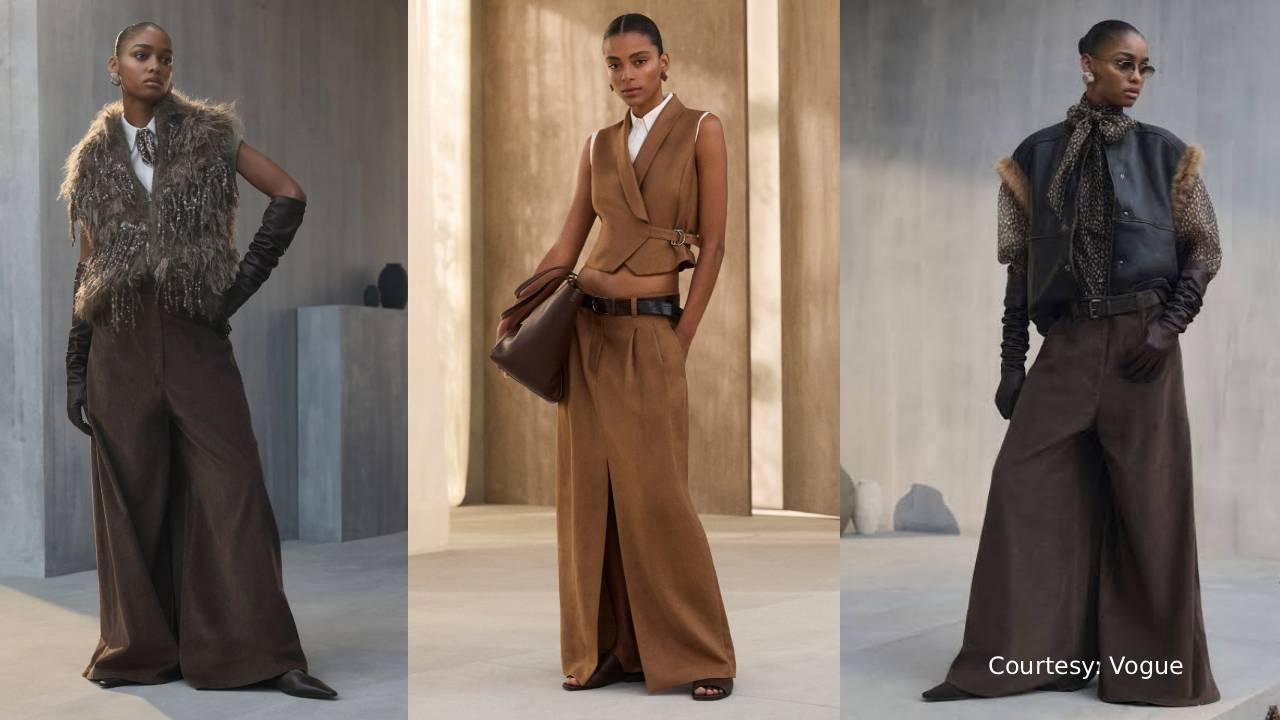
The resulting aesthetic is instantly legible to those who can read it and invisible to everyone else. Unstructured tailoring softened for daily wear, suede outerwear in the colours of wet earth and autumn, a discreet strand of monili beading, a cashmere hoodie sitting without irony beside a sport coat. Nothing shouts. The garment simply feels like the finest possible version of itself. This devotion to artisanal process over industrial scale is a value Cucinelli shares with Anavila's DABU collection — a celebration of hand-process and material honesty — though expressed through entirely different cultural vocabularies.
Why the Billionaires Whisper
There is a reason the world's wealthiest — reportedly including Jeff Bezos and a broad cohort of Silicon Valley founders, alongside a quiet roster of Hollywood names — have gravitated to the label. In an age exhausted by loud logos, Cucinelli offers status that murmurs. The pieces function as private signifiers, obvious to insiders, mute to the crowd, which is perhaps the truest definition of luxury for a generation that finds ostentation faintly embarrassing.
The market has rewarded the restraint handsomely. While conglomerates chasing aspirational shoppers stumbled through a broad luxury slowdown, Cucinelli closed 2025 with record revenues of 1.41 billion euros, up more than ten percent, with the Americas alone generating some 37 percent of turnover across a network of 136 boutiques. The house deliberately caps its own expansion at a controlled annual clip, prizing exclusivity over volume. As chief executive Riccardo Stefanelli, the founder's son-in-law, put it with disarming candour, greed simply means taking value from someone else in the chain. The company prefers what it calls "gracious growth." For a deeper look at how the world's most valuable luxury brands have maintained relevance across generations, the top ten luxury brands that remain reigning champions through every market cycle offer instructive comparison.
A Legacy Handed Down, Not Sold Off
Now in his seventies, Cucinelli has arranged his succession with the same deliberation he brings to a hem. A family trust retains just over half the company, ensuring the long view survives the short-term pressures of the stock exchange, where the house has traded since its 2012 debut. His daughters, Camilla and Carolina, serve as vice presidents overseeing product and image, their husbands work within the business, and Stefanelli shares the chief executive role with Luca Lisandroni.
In 2025 the acclaimed director Giuseppe Tornatore released a documentary on Cucinelli's life, scored by Nicola Piovani, and the brand took command of the windows of Harrods for two festive months — a cultural coronation no marketing budget can simply purchase. The interplay between family stewardship and public markets is a dynamic that defines many of Italy's most enduring luxury institutions; the story of Italy's Agnelli family and their multi-generational luxury stewardship offers a compelling parallel study in how great dynasties manage succession without diluting identity.
The Quiet Revolution That Refused to Shout
The lasting achievement of Brunello Cucinelli is a gentle refutation of an old assumption. For nearly fifty years he has insisted that a company can pay fair wages, refuse overtime, restore a village, safeguard its craftspeople, and still return a healthy profit — that beauty and dignity are not costs to be trimmed but the engine of enduring value. In a hamlet in the green heart of Italy, wrapped in the softest fibre on earth, that once romantic idea has hardened into a billion-euro fact. The philosopher, it turns out, was also the shrewdest businessman in the room.
For collectors and connoisseurs of enduring luxury, the Cucinelli model holds a lesson worth studying alongside what sustainable luxury truly means as a long-term business philosophy and why authentic storytelling remains the most powerful tool a luxury brand possesses.
Brunello Cucinelli — Brand Profile
| Industry | Luxury fashion and lifestyle |
|---|---|
| Founded | 1978; over 45 years ago |
| Products | Cashmere knitwear, ready-to-wear, tailoring, footwear, leather accessories, eyewear, fragrance |
| Headquarters | Solomeo, Perugia, Umbria, Italy |
| Founder | Brunello Cucinelli |
| Company type | Public, listed on Euronext Milan since 2012, family controlled through a majority trust |
| Key people | Brunello Cucinelli (Executive Chairman and Creative Director), Riccardo Stefanelli and Luca Lisandroni (Chief Executive Officers), Camilla and Carolina Cucinelli (Vice Presidents) |
| Area served | Europe, the Americas, and Asia across 136 directly operated boutiques |
| Subsidiaries | A network of Italian production and distribution companies plus regional divisions including Brunello Cucinelli USA, Japan, Hong Kong, and England |
| Website | brunellocucinelli.com |
About the Brand: Founded in 1978 by an Umbrian dreamer who read philosophy instead of finishing engineering school, Brunello Cucinelli transformed coloured cashmere into the world's emblem of quiet, absolute luxury. From a restored medieval castle in Solomeo, the house practises what its founder calls humanistic capitalism — paying fair wages, protecting artisanal craft, and reinvesting fortune into a village made beautiful. Beloved by tech titans and Hollywood alike, the family-run maison closed 2025 with record revenues near 1.4 billion euros. It endures as living proof that dignity, craftsmanship, and profit can share the same graceful seam.

Comments
No comments yet.
Add Your Comment
Thank you, for commenting !!
Your comment is under moderation...
Keep reading luxury post