The Considered Home: Why Luxury Furniture Is the Most Personal Investment You Will Ever Make (2026)
 Pradeep Dhuri
- 5th Apr 2026
- 2350
- 0

A definitive guide to the world's finest furniture brands, the materials that endure, and why the most sophisticated homeowners are treating their interiors as seriously as their portfolios.
There is a moment, familiar to anyone who has ever furnished a home with genuine intention, when a room stops being a collection of objects and becomes something else entirely. A statement of who you are, what you value, and how you choose to live. That moment does not arrive with a fast-shipping sofa from a flash-sale site. It arrives when the pieces in a room have been chosen with the same deliberateness that one brings to any significant long-term commitment. It arrives, in other words, when furniture stops being decoration and starts being investment.
Nina Lichtenstein of Westchester, New York, designer, author, and one of the more thoughtful voices in American residential interiors, has long argued that foundational furniture pieces provide the structural integrity required for a truly sophisticated interior. Not the Instagram-ready surface layer of cushions and candles, but the bones: the sofa that anchors a living room, the dining table around which a family assembles across decades, the bed frame that outlasts three mattresses and two apartments. Get these right, she argues, and everything else follows. Get them wrong, and no amount of clever accessorising will save you.
The luxury furniture market in 2026 is responding to exactly this logic — and doing so with an intelligence and diversity that makes this one of the most interesting moments in residential design in a generation.
The Market at a Glance
The numbers behind the luxury furnishings sector tell a story of deliberate, values-driven consumption rather than conspicuous spending. Affluent homeowners are increasingly allocating their renovation budgets with the discipline of capital investors, concentrating spend on pieces built to outlast trends rather than define them. To understand why this shift is happening now, it helps to appreciate the science behind luxury housing choices — the psychological and behavioural drivers that consistently lead the world's most discerning buyers toward permanence over novelty.
Table 1 — Luxury Furniture Market: Key Behaviours and Metrics (2026)
| Metric | Figure | Context |
|---|---|---|
| Share of renovation budget allocated to foundational pieces | 40%+ | Designers reporting higher concentration on core items |
| Cost per use: quality sofa ($10,000 over 20 years) | $500 per year | vs. $667 per year for a $2,000 sofa replaced every 3 years |
| Primary driver of furniture resale value | Material provenance | Solid marble, hand-carved wood, high-grade leather |
| Dominant consumer shift | Conscious consumption | Story behind a piece valued as highly as the piece itself |
| Fastest growing aesthetic | Coastal minimalism | Driven by UHNWI relocation to waterfront properties |
| Emerging design movement | Heritage modern | Pieces designed today with intent to become future antiques |
| Market outlook FY 2026 | Biophilic and wellness design | Natural light, organic shapes, materials for mental wellbeing |
| Property premium from well-furnished homes | Measurable uplift | Turnkey presentation commands higher resale valuations |
The figure that deserves the most attention is the cost-per-use calculation. A $10,000 sofa built from North Carolina hardwood and performance-grade fabric, maintained properly and reupholstered once across a twenty-year lifespan, costs approximately $500 per year in real terms. A $2,000 fast-furniture alternative, replaced every three years as the frame warps and the cushions collapse, costs $667 per year and produces landfill, not legacy. The mathematics of quality are rarely discussed in design media, but they are among the most persuasive arguments for investing at the top of the market.
The Major Houses: A Brand Reference Guide
The luxury furniture landscape in 2026 is richly varied, spanning century-old American heritage manufacturers, curated Italian artisan aggregators, direct-to-consumer disruptors, and a new generation of sustainability-first brands redefining what premium means. Our dedicated exploration of the top 10 exclusive luxury furniture brands defining the market today provides a complementary lens through which to read the table below.
Table 2 - The Luxury Furniture Brand Landscape (2026)
| Brand | Origin | Est. | Speciality | Primary Materials | Positioning |
|---|---|---|---|---|---|
| Bassett | Virginia, USA | 1902 | Handcrafted Americana | Solid wood, performance fabrics | Heritage traditional |
| Artemest | Milan, Italy | — | Artisanal small batch | Marble, leather, hand-blown glass | Ultra-prime curated |
| Le Maé | USA | 2024 | Coastal minimalism | Rattan, muted textiles | Contemporary boutique |
| Urban Natural | New Jersey, USA | — | Sustainable luxury | Chemical-free wood, organic fibres | Ethical premium |
| Lemieux Et Cie | Global | 2020 | Artisan-led design | Plaster, hand-carved wood | Designer centric |
| Joybird | California, USA | — | Mid-century modern | 100% blown fibre, hardwood | Custom contemporary |
| Maiden Home | New York, USA | — | Scandinavian modern | North Carolina hardwoods | Direct to consumer luxury |
| Woven | California, USA | — | Textural organic | Seagrass, bamboo, rattan | Coastal high end |
| Abask | Global artisan network | — | Collectible décor | Hand-engraved wood, silk | Art-adjacent luxury |
| GreenRow | USA | — | Heritage sustainability | Responsibly sourced natural fibres | Eco-conscious investment |
What the table reveals, when read as a whole, is a market in elegant bifurcation. On one side stand the heritage houses — Bassett, now well past its centenary, still producing handcrafted American furniture with institutional knowledge that cannot be acquired or rushed. On the other stand the new-generation brands: Le Maé, founded only in September 2024 and already influencing coastal interiors across the American Northeast; Lemieux Et Cie, Christiane Lemieux's 2020 venture into artisan partnerships; and Maiden Home, which has demonstrated that the direct-to-consumer model can deliver genuine luxury without the retail markup that has historically priced younger buyers out of quality furniture entirely. For a deeper view into how global furniture brands are actively redefining luxury, the contrast between these generations of makers is the central story of 2026.
The Case for Foundational Investment
The conventional approach to furnishing a home is sequential and incremental. Start with what you can afford, upgrade as resources allow, and tolerate the visual incoherence of rooms furnished across multiple eras of your financial life. Nina Lichtenstein proposes a different framework — one that inverts the conventional logic entirely: identify the two or three foundational pieces that define each room, invest in those without compromise, and supplement thoughtfully with high-quality finds at more accessible price points.
The foundational piece in a living room is almost always the sofa. It is the object around which every other decision is calibrated: rug scale, side table height, lighting placement, cushion palette. A sofa from Maiden Home, built on North Carolina hardwood frames with down-wrapped cushions, will anchor a room for twenty years and accommodate every decorative change that life brings. The same investment in a fast-furniture alternative will anchor nothing. It will simply occupy space while slowly undermining the credibility of everything around it.
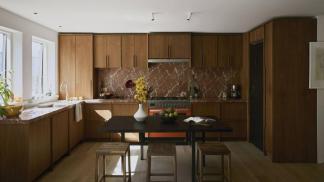
The dining table is the second foundational investment that repays disproportionately. A solid marble or hand-finished hardwood table is not merely furniture - it is a surface around which life happens. Homework, dinner parties, late-night conversations, the daily choreography of a household. And beyond the dining room, the kitchen deserves the same foundational thinking: our feature on six design ideas for a truly luxury kitchen explores how the room that works hardest in any home can also be its most considered expression of quality and intention.
Artisanal Heritage and the Small-Batch Revolution
The most significant structural shift in the luxury furniture market over the past five years has been the decisive pivot toward artisanal provenance and small-batch production. This is not a trend in the conventional sense. It is driven by a fundamental reassessment of what luxury actually means.
Artemest, operating out of Milan, has become one of the most important platforms in this movement. By aggregating small-batch craftsmanship from independent workshops in Paris, São Paulo, and across the Italian peninsula, Artemest offers access to pieces simply unavailable through traditional retail channels - hand-blown Murano glass, marble objects finished by stonecutters whose families have worked the same quarries for three generations, leather goods produced in workshops where the tools have not changed in a century. Italy's craft legacy in furniture runs extraordinarily deep. Modenese Interiors, a 200-year-old Italian luxury furniture brand, is perhaps the most vivid illustration of what that depth looks like when translated into living objects, a house whose institutional memory of materials, form and finish spans two centuries of European interior life.
Abask represents a complementary approach. Through collaborations with artisans such as Osanna Visconti, the platform produces hand-crafted objects including stools, decorative pieces, and functional sculptures that sit at the precise intersection of furniture and fine art. For the collector who views their interior as a curated environment rather than a decorated room, Abask offers pieces that will be as interesting in thirty years as they are today.
The commercial logic of small-batch production is also worth noting. Limited runs create genuine scarcity, which in turn supports value retention in ways that mass production structurally cannot. A piece from an Artemest workshop edition of forty is not merely more beautiful than its mass-market equivalent. It is fundamentally different in its market behaviour. It does not depreciate on the drive home.
Sustainability: From Ethical Choice to Quality Benchmark
The relationship between sustainability and luxury has undergone a philosophical revolution. A decade ago, sustainable furniture was positioned as a compromise: the ethical choice, but not necessarily the beautiful or durable one. In 2026, that framing is not only outdated but inverted. The most sustainable materials are, almost without exception, the most durable ones. And durability is the foundation of genuine luxury.
Urban Natural, based in New Jersey, has made this argument through product rather than marketing. Their commitment to chemical-free, domestically produced furnishings is not simply an environmental statement — it is a quality statement. GreenRow operates within the same philosophy, using responsibly sourced natural fibres to produce pieces explicitly designed to become future heirlooms. This heritage-modern approach aligns perfectly with the growing UHNWI interest in legacy: in creating environments that will outlast their creators and carry meaning across generations. To understand the full commercial and philosophical case for this shift, our deep-dive into what sustainable luxury really means in 2026 offers essential context — and explains why the sustainability conversation has moved from the periphery to the centre of every serious luxury brand's strategy.
Table 3 — The Sustainability and Quality Equation in Luxury Furniture
| Material Category | Conventional Alternative | Longevity Advantage | Ageing Quality | Health Benefit |
|---|---|---|---|---|
| Solid hardwood (domestic, FSC) | Particleboard or MDF | 3 to 5 times longer lifespan | Improves with age; develops patina | No off-gassing |
| Organic textile upholstery | Synthetic polyester blend | Comparable longevity | Natural fade; recoverable | No VOC emissions |
| Hand-blown glass | Machine-pressed glass | Indefinite if maintained | Each piece unique | Inert material |
| Natural marble or stone | Engineered quartz composite | Indefinite if sealed | Deepens in character over time | Non-toxic |
| Rattan, seagrass, or bamboo | Plastic wicker or vinyl | Comparable with care | Graceful weathering | Biodegradable |
| High-grade leather | Bonded leather or PU | 5 to 10 times longer | Develops patina with use | No microplastics |
In every category, the sustainable choice is also the objectively superior long-term choice. The luxury homeowner who chooses solid hardwood over particleboard, organic textiles over synthetic blends, and natural marble over engineered composite is not making a sacrifice for their values. They are making the most rational possible decision for the longevity and quality of their interior. This philosophy is also beautifully expressed in design that begins with nature — as Sang E Casa, made in partnership with nature, demonstrates so compellingly: luxury interiors rooted in natural materials are not a stylistic choice but an ethical and aesthetic inevitability.
Wealth Migration and the Geography of Taste
The luxury furniture market does not exist in a vacuum. It is intimately connected to the movement of wealth, the performance of ultra-prime residential real estate, and the lifestyle preferences of the people who occupy the world's most significant properties.
The current patterns of UHNWI relocation, from high-tax metropolitan centres toward tax-friendly jurisdictions and coastal retreats in Florida, the Mediterranean, and the Gulf, are having a direct and measurable impact on interior design demand. Waterfront estates require interiors that respond to their environments: lighter palettes, organic textures, materials that breathe and move with the humidity of proximity to water. This is precisely the aesthetic that Le Maé, founded by designer Lindye Galloway in September 2024, has distilled into a brand identity.
At the other end of the geographic spectrum, the ultra-prime corridors of Midtown Manhattan, London's Mayfair, and Dubai's Palm Jumeirah continue to drive demand for the most formal and architecturally imposing furniture. Understanding how different cultures interpret interior luxury at the highest level offers fascinating insight here — the billionaire's guide to authentic Swedish luxury and Stockholm's elite design secrets reveals how restraint, natural materials and functional beauty define one of the world's most sophisticated interior traditions — a philosophy that is influencing designers far beyond Scandinavia.
The interior design industry's sensitivity to these geographic shifts is one of its most underappreciated qualities. The best designers are not simply decorators; they are readers of place, culture, and the particular psychological needs of people in transition. And as our feature on how real luxury homes focus on open spaces demonstrates, the most powerful interiors are rarely those that fill every corner, they are those that understand what to leave out.
Technology, Personalisation, and the Curation Economy
The luxury furniture market has historically been resistant to technological disruption, for understandable reasons. A sofa cannot be downloaded. A hand-blown glass vase cannot be algorithmically improved. The craft at the heart of the category is, by definition, resistant to the efficiency logic of technology.
But technology is finding its place at the edges of the transaction rather than its centre. Häti Home has implemented interactive design tools including curation quizzes, spatial visualisers, and material selectors that streamline the selection process for buyers overwhelmed by choice rather than constrained by budget. The workspace dimension of this shift is equally compelling - when Bentley Home advanced into luxury home office furniture at Milan Design Week 2024, it signalled that even the most heritage-defining luxury marques recognise that the home's evolving functional demands require furniture to evolve with them.
The deeper trend here is the curation economy: the growing commercial value of taste, context, and editorial judgment in a world of infinite product. Artemest's curation of European craft, Abask's selection of artisan collaborators, Lemieux Et Cie's designer-led partnerships: these are all expressions of the same market truth. In luxury, the most valuable thing a brand can offer is not a product but a perspective.
Investment Implications: The Furniture Portfolio
For the homeowner who approaches their interior as an extension of their broader investment philosophy, several principles emerge from the current market landscape with particular clarity.
Buy foundational pieces without compromise. The sofa, dining table, primary bed frame, and key storage pieces define the structural integrity of every room they inhabit. A Maiden Home sofa at $6,000 is not six times the investment of a $1,000 alternative. It is a fundamentally different category of object, with a fundamentally different trajectory of value over time.
Prioritise material provenance. Solid marble, hand-carved wood, high-grade leather, and hand-blown glass are the primary drivers of furniture resale value. These materials do not merely last longer than their alternatives — they age more beautifully, develop character with use, and carry the provenance narrative that authenticated luxury demands.
Consider the collectible tier. Pieces from Abask and Artemest produced in limited runs or through named artisan collaborations represent the furniture market's equivalent of a numbered edition print. The parallel with fine art as an asset class is instructive. Just as we explored in our analysis of whether art is a good investment, the characteristics that support value retention in collectible objects - scarcity, provenance, maker identity, and material integrity - apply with equal force to the finest furniture.
Document and authenticate. Furniture with documented provenance including purchase receipts, maker certificates, and artisan attribution will always be more valuable than an identical piece without that paper trail. This is not bureaucracy. It is the infrastructure of value.
The most successful interiors are those that reflect the personal narrative of the inhabitant while standing as a definitive statement of quality and intent.
Outlook: The Considered Home in 2026 and Beyond
Looking toward the latter half of 2026 and the near-term future of residential luxury, several trajectories are clear enough to act on.
Biophilic design will move from trend to standard. The integration of natural light, living plants, organic forms, and materials with biological warmth - wood, stone, linen, and leather — into primary living spaces is no longer a stylistic preference among the aesthetically adventurous. It is becoming the baseline expectation of anyone furnishing a home with genuine intention.
The heritage modern movement will deepen. The deliberate creation of objects designed to become the antiques of the future furniture made today with the material quality, craft integrity, and design intelligence to be passed down represents the most honest possible response to the sustainability crisis and the most compelling value proposition for the legacy-minded buyer. GreenRow and Hetta are leading this conversation, but the idea will spread.
Direct-to-consumer luxury will continue to mature. Maiden Home, Joybird, and their peers have demonstrated that the retail markup historically the price of access to quality in the furniture market — is not inherent to quality itself. As these brands deepen their material sourcing and build institutional knowledge, the gap between them and their heritage competitors will narrow further.
The collectible furniture market will grow. As the line between interior design and art collecting continues to blur, pieces from named artisans and limited-run collaborations will attract the kind of serious collector attention historically reserved for paintings and sculpture. Our broader exploration of the mesmerising world of luxury furniture traces exactly how this shift has unfolded from purely functional objects to culturally resonant pieces that carry the weight of their makers' vision long after the moment of their creation.
Conclusion
The considered home is not an aesthetic statement. It is a life philosophy made physical: an argument, expressed through materials and objects and the spaces between them, for the kind of permanence, craftsmanship, and intentionality that the modern world makes increasingly rare and increasingly valuable.
The luxury furniture brands navigating 2026 from Bassett's century-old American heritage to Le Maé's debut coastal minimalism, from Artemest's curated Italian craft to Urban Natural's chemical-free sustainability are all in their different ways making the same argument. That the objects you choose to live with matter. That quality, honesty of material, and artisanal integrity are not premiums to be paid for luxury's sake but investments in the texture and depth of a well-lived life.
The mathematics support it. A $10,000 sofa built to last twenty years costs less per year than its disposable alternative. A hand-carved marble table from an Artemest artisan will outlast every trend it witnesses and every owner it serves. A piece from Abask produced in a limited run of forty will never be mass-produced, never be replicated at scale, never lose the singularity that makes it worth owning.
Buy well. Buy once. And furnish your home as you would furnish your life — with intention, with patience, and with an uncompromising commitment to the things that last.
Disclaimer: This article is based on publicly available information and designer commentary current to April 2026. Furniture prices and market conditions are subject to change. This article is for informational purposes only and does not constitute financial or investment advice.


Comments
No comments yet.
Add Your Comment
Thank you, for commenting !!
Your comment is under moderation...
Keep reading luxury post