Luxury Home Decor and Furnishing Brands Are Witnessing a Rise in India: The Definitive 2026 Industry Deep Dive
 Anishka Kataria
- 7th May 2026
- 3668
- 0
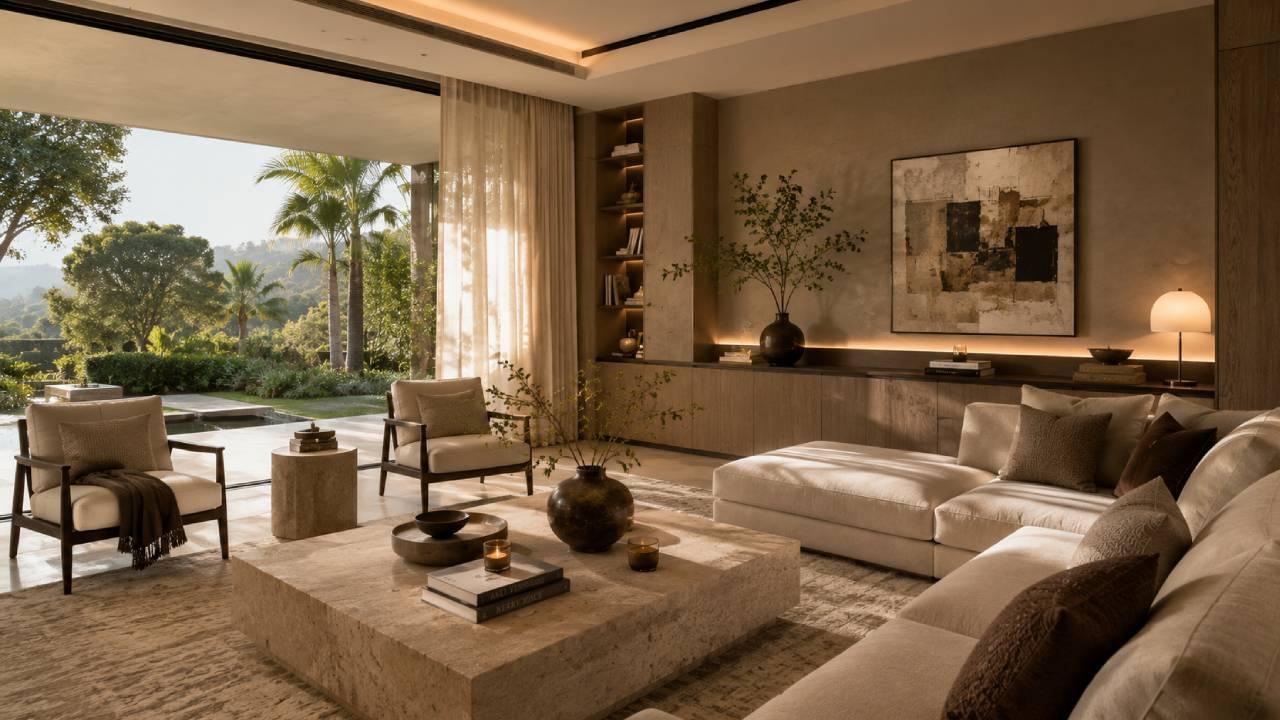
A LuxuryAbode Research Report on Wealth, Wallpaper, Wardrobes, and the Reinvention of the Indian Home
Prologue: When the Home Became the New Status Symbol
For decades, the great Indian luxury narrative was scripted in jewellery vaults, garage bays, and tailoring ateliers in Milan and Paris. Wealth wore itself on the body. Then the pandemic happened, square footage became scarcer than handbags, and a generation of Indian millionaires looked around their living rooms and decided that a Patek Philippe on the wrist meant little if the wall behind it was painted in a builder's beige.
Today, the home is the most considered luxury purchase an affluent Indian makes. It is the longest-held, the most photographed, the most social-media-curated, and increasingly, the most expensive. And the brands that furnish it - from Roche Bobois in Paris to Sarita Handa in Defence Colony, from Poliform in Brianza to Beyond Designs in Sultanpur - are witnessing a sustained, structural rise in India that the data now makes impossible to ignore. To understand what drives this buyer, our deep-dive into 7 key trends shaping the evolving Indian luxury buyer offers essential context.
This is the story of that rise. Not a trend piece. A reckoning.
I. The Numbers That Changed The Conversation
The Indian home has quietly become one of the world's most consequential consumer markets. The India home decor market was valued at USD 26.88 billion in 2025 and is projected to reach USD 42.36 billion by 2034, expanding at a CAGR of 5.18% from 2026 through 2034. Other forecasters peg the trajectory more aggressively: Grand View Research projects USD 27.6 billion by 2030 at an 8.4% CAGR, while Praxis Global Alliance estimates the broader sector hitting USD 48.1 billion by 2028, with home furnishings alone growing at an 11.4% CAGR.
The luxury slice within this is where the action - and the margin - lives.
Table 1: India's Home Decor & Luxury Furnishing Market - The Hard Numbers
| Segment | 2024 / 2025 Value | Forecast Value | CAGR | Source / Period |
|---|---|---|---|---|
| India Home Decor Market (Total) | USD 26.88 Bn (2025) | USD 42.36 Bn (2034) | 5.18% | IMARC, 2026–2034 |
| India Home Decor Market (Alt forecast) | USD 17.20 Bn (2024) | USD 27.62 Bn (2030) | 8.4% | Grand View Research |
| India Luxury Furniture Market | USD 1.12 Bn (2025) | USD 1.74 Bn (2031) | 7.62% | Mordor Intelligence |
| India Luxury Furniture (alternate study) | USD 3.27 Bn (2024) | USD 4.79 Bn (2032) | 4.88% | Verified Market Research |
| India Home Furniture Market | USD 25.20 Bn (2025) | USD 40.53 Bn (2031) | 8.24% | Mordor Intelligence |
| India Furniture Market (broad) | USD 26.41 Bn (2025) | USD 50.51 Bn (2035) | 6.70% | Expert Market Research |
| India Luxury Residential Real Estate | USD 57.87 Bn (2025) | USD 107.99 Bn (2031) | 10.95% | Mordor Intelligence |
| India Branded Residences Market | – | USD 1 Bn (2027); 22% of global supply by 2030 | – | Fine Acers / Knight Frank |
| Luxury Furniture Imports into India | INR 200 Bn (2024) | – | – | Ken Research |
| Furniture Imports (20-yr trajectory) | USD 630 Mn → USD 2.3 Bn | – | – | IndexMundi / Mordor |
What this constellation of figures reveals is not a single market but a layered ecosystem - mass furnishing growing at one velocity, premium at another, and ultra-luxury at a third, with branded residences acting as the accelerant pulling international design houses into Indian postcodes.
II. The Wealth Engine: Who Is Actually Buying
A market of this scale demands a buyer base of this scale. India now has one. According to the Capgemini World Wealth Report 2025, India added more than 33,000 new millionaires in 2024 alone, taking the total HNWI population to 378,810, a 5.6% jump in a single year. Total HNWI wealth crossed USD 1.5 trillion, growing 8.8% - faster than any major economy including China. The Ultra-HNWI base (those with over USD 30 million in investable assets) stands at 4,290 individuals.
Knight Frank's Wealth Report tracked an 11% increase in India's UHNI population in 2024, with projections indicating a 39% rise by 2025. Mordor Intelligence reports that India's roughly 13,600 ultra-high-net-worth individuals allocate around 32% of their portfolios to real estate - and increasingly, that real estate is being filled with international branded furniture. For more on how this translates to property investment strategy, see our analysis of ten strategic reasons India's ultra-wealthy are building ultra-luxury real estate empires.
The behavioural shift is what matters most. Capgemini found that 85% of Indian next-gen HNWIs plan to switch their parents' wealth management firms within 1–2 years, with 61% of millennials and Gen Z HNWIs willing to take on more risk for differentiated experiences. This is the same demographic that views a Minotti sofa not as furniture but as a portfolio decision.
The Real Estate Catalyst
You cannot understand the rise of luxury home decor in India without understanding what is happening in luxury housing. The first half of 2025 saw luxury housing sales jump 85% year-on-year across India's top seven cities, with nearly 7,000 units sold above the INR 4 crore threshold. The Kotak Private Luxury Index (KPLI) 2025 recorded a 10.8% annual growth in luxury real estate, outperforming all other residential segments. Premium homes priced above ₹1 crore captured 62% of all residential sales in H1 2025.
Average luxury housing prices across the top 7 cities have risen from ₹14,530 per sq ft in 2022 to ₹20,300 per sq ft by December 2025. In 2025, a Lutyens' Delhi bungalow sold for ₹1,100 crore - the most expensive home transaction in India's history. Every one of those homes needs to be furnished. And the buyers are no longer asking for "good Indian furniture." They are asking, by name, for B&B Italia, Poliform, Roche Bobois, Minotti, Fendi Casa, Armani/Casa. Read more on what the mesmerising world of luxury furniture looks like for those entering it for the first time.
III. The Foreign Invasion: Global Luxury Brands Crossing the Threshold
The decisive shift of the past three years has been the arrival - and depth of commitment - of international luxury furniture and decor houses in India.
Italian and European Brands Now Active in India
Roche Bobois (France) operates flagship stores in Mumbai, Delhi, and Bengaluru, with its Mah Jong sofa and Bubble collection now standard fixtures in Worli penthouses and Lutyens bungalows. The brand operates 128 owned stores and 210 franchises across 56 countries, and India has become one of its fastest-growing markets in Asia.
Natuzzi Editions has established a meaningful presence in Bengaluru, Mumbai, and Delhi NCR, with Italian leather expertise that resonates particularly with India's Tier-1 buyers. Poliform, present in over 85 countries, features prominently in five-star hotels and luxury real estate developments across India through partners like Ventura Interiors. Its modular wardrobes and kitchen systems have become standard specifications in Mumbai branded residences.
B&B Italia, Minotti, Cassina, Flexform, Molteni & C, Cattelan Italia, Désirée, Arketipo, Saba, Glas Italia, Bontempi Casa, and Gamma are all distributed in India through specialist multi-brand luxury showrooms in Bengaluru, Hyderabad, Delhi NCR, and Mumbai. BoConcept brings Danish minimalism, while Fendi Casa has helped define how fashion houses translate to home interiors - a category that now includes Armani/Casa at Lodha World Towers and Versace Home in select branded residences.
Table 2: Major International Luxury Furniture & Decor Brands in India (2025–2026)
| Brand | Country of Origin | Indian Presence | Signature Strength |
|---|---|---|---|
| Roche Bobois | France | Flagship stores in Mumbai, Delhi, Bengaluru | Avant-garde French luxury, Mah Jong sofa |
| B&B Italia | Italy | Multi-brand luxury retailers | Modernist Italian iconography |
| Poliform | Italy | Bengaluru, Hyderabad, Mumbai | Modular systems, custom kitchens |
| Minotti | Italy | Multi-brand luxury showrooms | Family-owned Italian craftsmanship |
| Natuzzi Editions | Italy | Bengaluru, Mumbai, Delhi NCR | Italian leather mastery |
| Fendi Casa | Italy | Branded residences, select showrooms | Fashion-house interiors |
| Armani/Casa | Italy | Lodha World Towers (Mumbai) | Couture-style residential interiors |
| Versace Home | Italy | Select branded residences | Maximalist baroque luxury |
| Cassina | Italy | Specialist showrooms | Museum-grade modernist reproductions |
| Flexform | Italy | High-end design retailers | Minimalist comfort |
| Molteni & C | Italy | Multi-brand luxury retailers | Architectural modular systems |
| Cattelan Italia | Italy | Bengaluru, Hyderabad | Glass dining tables, contemporary |
| BoConcept | Denmark | Bengaluru, NCR | Scandinavian functionalism |
| Ralph Lauren Home | USA | Sourcing partners (Sarita Handa) | American heritage luxury |
| Pottery Barn / Williams-Sonoma | USA | Sourcing & private label partnerships | Classic American interiors |
| Talenti | Italy | Specialist showrooms | Outdoor luxury furniture |
| Elie Saab Maison | Lebanon | M3M residential (Gurugram) | Couture-branded residences |
| Jacob & Co Residences | Switzerland | M3M (Sector 111, Gurugram) | Watchmaker-branded residences |
IV. The Indian Champions: Homegrown Luxury Comes of Age
The rise is not only imported. India's domestic luxury home decor industry has matured into a credible competitor, often blending heritage craftsmanship with global design sensibility. For a broader view of the homegrown brands making their mark across categories, our guide to top Indian luxury brands you did not know were Indian is essential reading.
Sarita Handa, founded in 1992, has grown from a private-label exporter for Pottery Barn, Macy's, Bloomingdale's, Zara Home, Ralph Lauren Home, and Ethan Allen into a domestic luxury powerhouse with a reported turnover of ₹500 crore. Five experiential stores across Mumbai, Delhi, and Ahmedabad now serve as benchmarks for what luxury Indian textile-led home decor looks like. The Defence Colony flagship spans 1,800 sq ft of curated retail.
Beyond Designs, founded by Sachin and Neha Gupta in 2000, operates an 8,000 sq ft flagship at MG Road, Sultanpur, in the Delhi Design District - a museum-like showcase of stone, mirror, metal, crystal, semi-precious inlay, and gold-and-silver-leaf furniture. Nivasa, founded by Rohit Kapoor in 1993 and headquartered in Sultanpur, New Delhi, has built a cult following for bespoke furniture solutions that marry traditional Indian craftsmanship with contemporary form.
Stanley Lifestyles is targeting INR 550 crore revenue in FY25, expanding aggressively into Tier 1 and Tier 2 cities. Wakefit has opened its largest manufacturing unit yet, spanning 600,000 sq ft in Tamil Nadu. Furlenco has set goals of furnishing 500,000 homes and reaching INR 5,000 million (USD 57.13 million) in revenue by 2027. Furniturewalla, Mor Decor, Benoit Furniture, IOTA Furniture, Vita Moderna, Address Home, Good Earth, Jaypore, The Purple Turtles, Elvy Lifestyle, Nicobar, Gulmohar Lane, VRSA (with Sabyasachi wallpapers), and Evok (Hindware's luxury division) round out a domestic ecosystem that no longer plays second fiddle to imports.
Table 3: Leading Indian Luxury Home Decor & Furnishing Brands
| Brand | Founded | Headquarters | Specialty | Notable Footprint |
|---|---|---|---|---|
| Sarita Handa | 1992 | New Delhi | Soft furnishings, bed/bath linen, fabrics, furniture | 5 stores; ₹500 cr turnover; Defence Colony, Greater Kailash, Mumbai, Ahmedabad |
| Beyond Designs | 2000 | New Delhi | Maximalist luxury furniture, lighting, accessories | 8,000 sq ft flagship at MG Road, Sultanpur |
| Nivasa | 1993 | New Delhi | Bespoke furniture, customised interiors | Sultanpur design hub |
| Furniturewalla | – | Mumbai | Imported and domestic luxury furniture | Multi-city showrooms |
| Stanley Lifestyles | – | Bengaluru | Premium leather sofas | Targeting ₹550 cr FY25 revenue |
| Address Home | – | Delhi NCR | Curated luxury home decor | Pan-India retail + e-commerce |
| Good Earth | – | New Delhi | Sustainable luxury, hand-crafted decor | Multi-city flagships |
| Gulmohar Lane | – | New Delhi | Handcrafted customisable furniture | 1 lakh sq ft facility |
| Jaypore | – | New Delhi | Curated artisan luxury | E-commerce + select stores |
| Nicobar | – | New Delhi | Modern minimalist Indian luxury | Pan-India |
| The Purple Turtles | – | Bengaluru | Eclectic statement decor | Multi-city |
| Elvy Lifestyle | – | New Delhi | Luxury furniture, lighting, tableware | Pan-India |
| IOTA Furniture | – | New Delhi | Designer luxury furniture | NCR |
| Wakefit | – | Bengaluru | Mass-premium furnishing | 600,000 sq ft manufacturing in TN |
| Evok (Hindware) | – | New Delhi | Luxury home decor & furniture | Franchise expansion pan-India |
| VRSA | – | New Delhi | Sabyasachi wallpapers, decor | Premium lifestyle |
| Marshalls | 1975 | Mumbai | Wall coverings, premium imports | 21 cities, two 10,000 sq ft Mumbai flagships |
V. The Branded Residence Phenomenon: When the Home Becomes the Brand
Perhaps no single development has accelerated luxury furnishing demand in India more than the rise of branded residences - homes co-developed with global hospitality, fashion, or design houses, often delivered fully furnished or with mandated design specifications. According to Savills, the global branded residences market reached 910 projects worldwide by end-2025, growing nearly 20% year-on-year. India's share of this has expanded by 160% over the past decade, and India is now ranked 6th globally in the segment, per Knight Frank's Residence Report India.
Marquee projects shaping the category include Three Sixty West Worli (Ritz-Carlton residences), Trump Tower Mumbai and Trump Towers Noida (Sector 94), Lodha World Towers with Armani/Casa interiors, Lodha Altamount Mumbai, M3M Jacob & Co Residences Sector 111 Gurugram, M3M ELIE SAAB Residences Delhi-NCR (₹3,500 crore investment), Four Seasons Private Residences Mumbai, Embassy Boulevard and Prestige Kingfisher Towers Bengaluru, Panchshil Towers Pune, and Whiteland Westin Residences Gurugram. Speaking of the Westin Residences, our dedicated feature on where hospitality meets haute living in Gurugram explores what this branded residence model means for buyers. Similarly, Lodha Juhu's Avalon, One & Palazzo projects redefine Mumbai's premier beachfront real estate.
Sales in Mumbai's USD 2.3–5.78 million segment for branded residences surged 143% in 2024. Each one represents a furnishing specification - frequently mandated, often Italian, almost always premium - that flows directly to luxury home decor brands.
VI. The Geography of Luxury: Where India Buys Its Most Expensive Sofas
Luxury home decor demand in India is concentrated, but the concentration is widening. Mumbai holds the largest share of the India luxury residential real estate market at 32.55% in 2025, anchored by financial-sector wealth and severely constrained coastal land. Delhi-NCR dominates 64% of luxury launches among major cities, with 168,000 households earning over ₹1 crore annually (a 42% growth) and a 34% jump in luxury home furnishing spend in 2023, per CII. Delhi-NCR is also home to over 15,800 luxury housing units priced above ₹2.5 crore introduced in 2023, up 56% YoY. You can read more about luxury homes in Delhi NCR witnessing a positive boom in our dedicated coverage.
Bengaluru carries India's highest rental yields at 4.45% and the deepest concentration of new-money tech wealth, with Whitefield, Indiranagar, Koramangala, and Sadashivnagar driving designer-residence demand. Hyderabad is the fastest-growing luxury market with a projected 12.60% CAGR through 2031, fuelled by IT and aviation corridor expansion. Pune, Chennai, Kolkata, Ahmedabad, and increasingly Goa, Jaipur, Coimbatore, Lucknow, Chandigarh, Amritsar, Ayodhya, Dwarka, and Kochi are the new geography of Indian luxury home decor.
Table 4: India's Luxury Home Decor Geography - 2025 Snapshot
| City / Region | Market Position | Key Indicators |
|---|---|---|
| Mumbai | 32.55% share of India luxury residential real estate (2025) | Branded residences hub; ₹2.3–5.78 mn segment up 143% |
| Delhi NCR | 64% of luxury launches in major cities | 168,000 households earning ₹1 cr+; ELIE SAAB, M3M, Trump |
| Bengaluru | 4.45% rental yields (highest in India) | Tech UHNWIs; Whitefield, Indiranagar villas |
| Hyderabad | Fastest-growing at 12.60% CAGR to 2031 | IT corridor expansion |
| Pune | Premium emerging market | Panchshil Towers; quiet luxury demographic |
| Chennai | Steady growth | South India luxury anchor |
| Goa, Jaipur, Coimbatore, Lucknow | Emerging luxury secondary markets | Tier-2 luxury infiltration |
VII. What Affluent Indians Are Actually Buying: The Aesthetics of 2026
The taxonomy of Indian luxury taste has matured. The conspicuous bling of 2014 has given way to what designers across MG Road and Bandra now call "quiet luxury." Quiet Luxury translates to bouclé and chenille upholstery (replacing high-gloss leather), open-pore veneers and matte lacquers (replacing high-gloss PU), and exotic stones - Black Marquina, Grey William, translucent Onyx - on dining table tops. Sculptural metal or stone bases ground the room. Curved silhouettes have replaced sharp edges. Earthy palettes - latte, terracotta, sage, espresso, coffee tones - have replaced glossy whites.
Hotel-Style Bedroom Furniture with extended headboards, integrated USB charging, hydraulic-lift storage beds, and "zero-gravity" lift systems are standard requests in both Mumbai sea-facing penthouses and Gurugram farmhouses. Statement Lighting has moved from chandelier to sculpture, with parametric lighting, bespoke glass fixtures, and AI-pattern-generated wall sculptures appearing in designer specifications.
Sustainable Luxury has graduated from niche to expected. JLL India reports over 40% of new luxury projects in 2024 incorporated eco-conscious features. Approximately 22% of major global luxury furniture companies launched eco-friendly collections in 2024 using recycled and sustainable materials. Indian buyers now actively request FSC-certified solid wood, traceable origin, organic cotton, GOTS certification, natural dyes, and low-VOC finishes. Brands pioneering this shift in the Indian market include Raffles Udaipur, which is setting a benchmark for eco-luxury with its prestigious Green Key Certification - a standard increasingly demanded by home decor consumers too.
Digital Craft - the fusion of AI-generated patterns translated into cushions, rugs, wallpapers and parametric furniture - is the most unexpected luxury aesthetic of 2026. For a glimpse of how traditional Indian craftsmanship is being reimagined for this moment, the eco-friendly home decor essentials from ICHKAN offer an instructive case study.
Table 5: Luxury Home Decor Trends Defining 2026 in India
| Trend | What It Means | Brands Leading |
|---|---|---|
| Quiet Luxury | Bouclé, chenille, matte finishes, open-pore veneers | Minotti, Flexform, Beyond Designs |
| Exotic Stone Statements | Black Marquina, Onyx, Grey William dining tables | Cattelan Italia, Glas Italia |
| Hotel-Style Bedrooms | Extended headboards, integrated tech, hydraulic storage | Poliform, Stanley, Sarita Handa |
| Curved Silhouettes | Organic, rounded furniture forms | Roche Bobois, B&B Italia |
| Sculptural Lighting | Parametric, bespoke glass, AI-design fixtures | The Purple Turtles, White Teak |
| Sustainable Luxury | FSC wood, GOTS textiles, traceable sourcing | Good Earth, Nicobar, Sarita Handa |
| Digital Craft | AI-generated patterns × handcraft | Emerging Indian designers |
| Earthy Palettes | Latte, terracotta, sage, espresso | Across the segment |
| Branded Residence Specs | Armani, Versace, Fendi, Elie Saab interiors | Lodha, M3M, Panchshil |
| Acoustic Interiors | Cork tiles, fabric-wrapped walls, slatted baffles | Luxury fit-out specialists |
VIII. The Tax-Cut Tailwind, the BIS Tightening, and the Consumer Shift
Three macro forces have converged to accelerate this market. The 2025-26 Union Budget waived income tax on annual incomes up to ₹12 lakh under the new regime, redirecting a meaningful share of household discretionary budgets toward premium home upgrades. Mordor Intelligence's analysts directly link this restructuring to acceleration in luxury furniture demand.
Renovation cycles have shortened to 10–12 years (from 15–20 historically), reflecting a structural craving for contemporary aesthetics that align with global design narratives. This compresses the replacement cycle and creates recurring spend rather than once-in-a-generation purchases. The BIS certification regime effective February 2026 will require batch testing and factory audits for furniture sold in India. This is expected to prune non-certified vendors from institutional tenders and consolidate demand with established branded suppliers - both international and Indian. The unorganized sector, which still dominates the broader furniture market, faces a structural compression. Organized luxury brands stand to gain disproportionately.
Layered onto this: the PLI (Production Linked Incentive) scheme and Make in India are lowering the cost of premium domestic manufacture, while NRI investment in Indian residential real estate rose 12% in 2024, with luxury and ultra-luxury segments accounting for nearly 40% of NRI spend. For the full picture on how NRI buyers and India's rich are choosing to invest in land and property, our feature on why India's rich are preferring land investments over luxury apartments adds important texture to this capital reallocation story.
IX. The Channel Shift: Omnichannel Has Won
The architecture of how affluent Indians buy luxury home decor has fundamentally changed. B2C retail still dominates with a 66.88% share in 2025, but B2B project sales (hospitality fit-outs, branded residences, Grade-A office work) are growing faster at a 7.91% CAGR. Brands typically secure furnishing packages worth USD 1–3 million per five-star hotel.
Specialty stores - the multi-brand luxury showrooms in Mumbai's Lower Parel, Delhi's MG Road and Sultanpur, Bengaluru's Indiranagar, Hyderabad's Jubilee Hills - remain the dominant retail format for luxury. But these are now backed by AR/VR room planners that cut decision anxiety and elevate average order values, 3D digital visualization tools accelerating the concept-to-contract journey, direct-to-consumer luxury platforms, IKEA's omnichannel build-out including a 180,000 sq ft distribution center in Gurugram, and experiential flagship stores functioning as design libraries for bespoke orders.
The online home decor channel is projected to grow by 4.9 percentage points from 2025 to 2029, with Indian e-commerce overall hitting USD 129.72 billion in 2025 per IMARC Group. The shift mirrors what is happening in India's broader luxury landscape - as explored in our piece on how India's luxury market is driven by exclusivity, emotion, and elegance, a dynamic that applies equally to furniture as to automobiles.
X. The Export Mirror: India Furnishes The World
A complete picture of the Indian luxury home decor rise must include the export mirror. India is now the second-largest exporter of home decor in the world by volume, with 20,940 shipments of hand-made and factory-made products exported by mid-July 2025, per IBEF. Regional craft anchors - Rajasthan's blue pottery, Bihar's Madhubani paintings, Kerala's woodcraft, Gujarat's handwoven textiles, West Bengal's terracotta, Uttar Pradesh's brassware, Kutch's mirror work, Jaipur's bone inlay - are increasingly distilled into luxury collections that sell in showrooms from London to New York. The extraordinary quality of Indian handcraft was on full global display when 74 million knots of handmade Kashmiri beauty decorated the G20 Summit room - a moment that announced Indian craft to the world's most powerful audience.
Sarita Handa supplies private-label linen to Pottery Barn, Dillard's, Ethan Allen, Bloomingdales, Zara Home, and Ralph Lauren Home. Indian artisan partnerships now anchor the supply chains of multiple US, UK, and European luxury brands. India's 3,000+ traditional craft forms are no longer a heritage footnote - they are a strategic moat for premium pricing. The implication: when global luxury brands partner with Indian retail, they often discover that the supply chain is already Indian. The relationship is increasingly bidirectional.
XI. The Challenges Worth Naming
No serious analysis of this rise can omit the constraints. India's premium furniture imports rose from USD 630 million two decades ago to USD 2.3 billion by 2024, exposing the segment to currency volatility and freight surcharges. Luxury furniture imports alone were estimated at ₹200 billion in 2024. Soft-sawn wood averaged INR 27,500 per metric ton in April 2024, with month-to-month fluctuations exceeding 15%, complicating cost forecasts for manufacturers locking project bids six months ahead.
Approximately 15,000 businesses were impacted in 2024 by new environmental regulations on sustainable material sourcing, particularly affecting timber. The forthcoming February 2026 BIS certification regime will further restructure the supply landscape. The unorganized sector remains a significant share of the broader furniture market - simultaneously a competitive challenge for organized luxury and, paradoxically, a wellspring of artisanal authenticity that organized luxury cannot easily replicate. For context on how such disruptions are being interpreted by affluent Indian consumers, our analysis of how the new TCS rule affects luxury purchases over Rs 10 lakh in India remains highly relevant reading.
XII. The Outlook: A Decade of Premiumization
Three convictions emerge from the data. First, the segment is not cyclical, it is structural. The wealth base, the real estate base, the renovation cycle, the cultural shift, the policy tailwind, and the supply chain are all aligned. Even if any single variable stalls, the others continue to push. Second, India is becoming a strategic geography for global luxury, not a tactical one. Brands are not opening one Mumbai store and waiting. They are signing 5-year lease commitments, building India-specific collections, partnering with developers, and treating the country as a growth pillar comparable to the GCC or Southeast Asia. Third, the Indian luxury home decor consumer of 2030 will look profoundly different from the consumer of 2020. Younger, more globally fluent, more sustainability-conscious, more design-literate, more direct in their relationship with brands, and far less willing to accept the "import and mark-up 4x" economics of the previous decade. The brands that win will be the ones that build genuine local presence, genuine craft credibility, and genuine post-purchase service. For more on the broader forces shaping India's luxury trajectory, our guide to India's rising luxury real estate market for investors and industry experts examines the structural drivers that underpin this decor revolution.
Epilogue: Why This Is The Decade of the Indian Home
There is a reason this is suddenly happening at this scale, in this geography, at this moment. India's wealth is no longer being made by people who saw their parents furnish a single home for a lifetime. It is being made by professionals, founders, inheritors, and global Indians who understand that a home is a continuously curated object - a portfolio asset, an aesthetic statement, a wellbeing infrastructure, and the most reliable luxury they will ever own. The brands that recognise this shift are already inside India. The ones that do not will spend the next five years explaining why they are late. For luxury home decor and furnishing in India, the rise is no longer a forecast. It is a fact in the post.
At LuxuryAbode
LuxuryAbode is India's premier destination for affluent buyers, sellers, and curators of luxury homes, branded residences, premium furnishing, and sophisticated lifestyle. We work with global and Indian luxury home decor and furnishing brands seeking meaningful presence with India's HNWI and UHNWI audience. Brands interested in editorial features, partnership opportunities, or audience access are invited to reach out.
Key Sources & Further Reading
Capgemini World Wealth Report 2025 · Knight Frank Wealth Report & Residence Report India · IBEF (India Brand Equity Foundation) · IMARC Group · Mordor Intelligence · Grand View Research · Verified Market Research · Ken Research · Expert Market Research · Business Research Insights · Praxis Global Alliance · Statista · Kotak Private Luxury Index 2025 · ANAROCK · CBRE India Market Monitor · JLL India · CREDAI · NHB RESIDEX · Colliers India · Savills · Fine Acers · Realty Nxt · CII · Press Information Bureau · RBI Household Finance Report · Capgemini Research Institute · Architectural Digest India · Indian Retailer · Outlook Traveller · Business Standard · Economic Times · Construction Week India
© LuxuryAbode. This research-led editorial may be cited with attribution and a backlink to LuxuryAbode.com. Brands, developers, and partners interested in collaborative opportunities are invited to reach out via our editorial desk.



Comments
No comments yet.
Add Your Comment
Thank you, for commenting !!
Your comment is under moderation...
Keep reading luxury post