- Blog
- Brand Story
- France
Galeries Lafayette: How a Parisian Department Store Turned Shopping Into Theatre
 Anishka Kataria
- 5th Oct 2026
- 1244
- 0
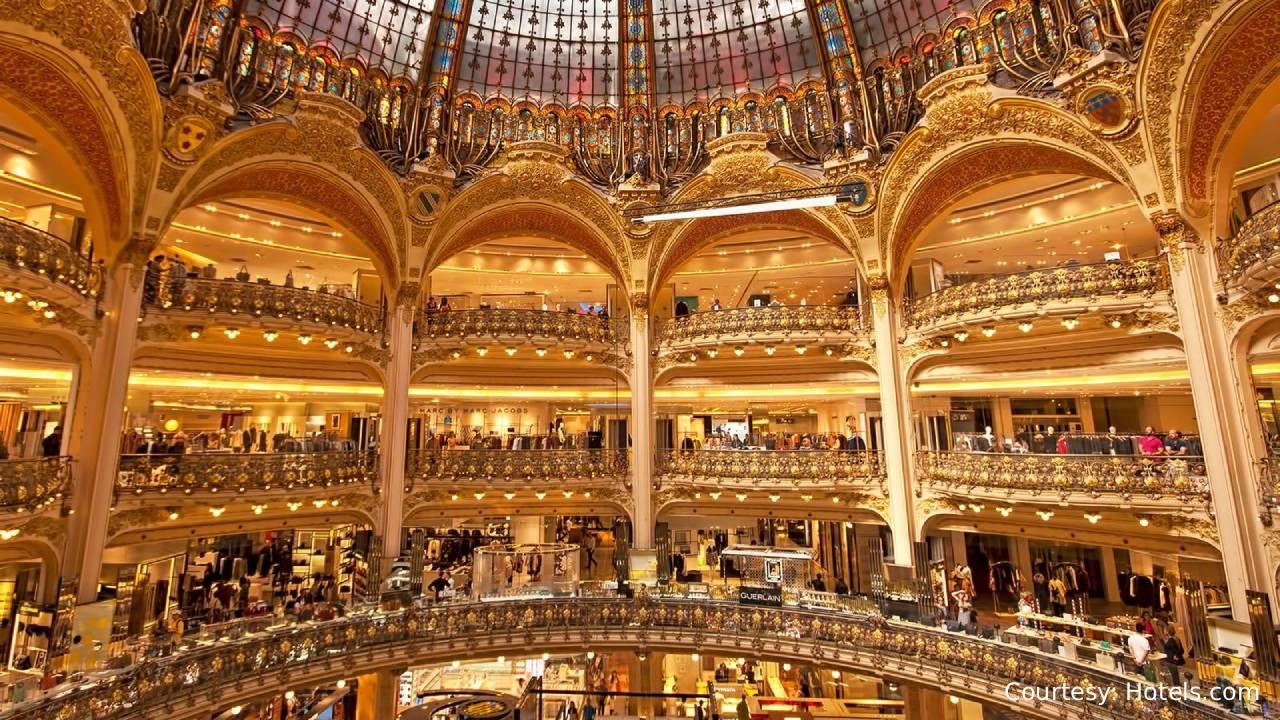
From a modest shop on rue La Fayette to one of the most recognisable temples of luxury retail in the world, Galeries Lafayette has spent more than 130 years proving that the finest department stores do not merely sell beautiful things. They create a world around them.
There are shops people visit because they need something.
And then there are places people visit because they want to see what the world looks like through someone else's eyes.
Galeries Lafayette has belonged to the second category for more than a century.
Its great Paris flagship on Boulevard Haussmann is ostensibly a department store, yet that description has always felt inadequate. Beneath its soaring Art Nouveau dome, fashion, fragrance, jewellery, gastronomy, architecture, spectacle and the rhythms of Parisian life have long converged.
For generations of visitors, a trip to Galeries Lafayette has been less about purchasing a particular object than entering a particular atmosphere.
That distinction is central to understanding the brand.
Before luxury retailers spoke of "experiences", before stores became content studios and cultural venues, Galeries Lafayette had already grasped the fundamental idea: shopping can be theatre.
It Began with 70 Square Metres
The origins are strikingly modest.
In 1894, cousins Théophile Bader and Alphonse Kahn opened a small haberdashery measuring roughly 70 square metres on rue La Fayette in Paris.
The location was strategic. Paris was expanding rapidly, the Opéra district was increasingly fashionable, and the nearby railway stations brought provincial visitors into the capital. The cousins saw an opportunity not simply to sell goods, but to place themselves at the intersection of commerce, mobility and modern urban life.
Business flourished.
The original shop expanded into adjoining properties, and within a few years the enterprise had outgrown the proportions of an ordinary retailer.
What emerged was part of a larger transformation taking place in late nineteenth and early twentieth century Paris.
The department store was becoming one of the great inventions of modern consumer culture. Its modern descendants, such as the renovated Samaritaine luxury department store in Paris, show how enduring the format remains.
Under one roof, shoppers could encounter an unprecedented range of products. Displays became more sophisticated. Window dressing became an art. Fixed prices increased transparency. Fashion became faster moving and more democratic.
Galeries Lafayette would take these ingredients and add something distinctive of its own: spectacle.
The Dome That Defined a Brand
If one architectural element captures the spirit of Galeries Lafayette, it is the famous cupola of its Haussmann flagship.
Completed in 1912, the great Art Nouveau dome rises above the central space in an explosion of coloured glass, ornamental metalwork and theatrical light.
It transformed retail architecture into destination architecture.
That was no small achievement.
The department store was no longer simply a container for merchandise. The building itself became part of the product.
Visitors looked upwards.
They photographed the space.
They remembered it.
More than a century later, that instinct feels remarkably contemporary. The world's most ambitious luxury retailers now commission celebrated architects, artists and designers to create spaces capable of generating attention far beyond their immediate commercial function, as seen in the reopening of the iconic Dior 30 Montaigne in Paris.
Galeries Lafayette understood this decades before retail became a branch of experiential design.
Its genius was to make commerce feel cultural.
Fashion for the Modern City
The name itself offers a clue to the company's early character.
Galeries Lafayette grew at a time when Paris was consolidating its position as the global capital of fashion. Couture houses shaped taste at the highest end of society, while department stores translated fashion into a more accessible urban language.
Galeries Lafayette became an important intermediary.
Its buyers watched the couture salons carefully. Trends could be interpreted, adapted and offered to a broader clientele with remarkable speed.
This responsiveness gave the store a sense of immediacy.
Fashion was not something preserved behind glass. It moved through the building.
The approach also helped establish an idea that remains fundamental to Galeries Lafayette today: the department store as curator.
A mono brand boutique presents one worldview.
A great department store assembles many.
The skill lies not merely in stocking prestigious labels but in deciding which designers, objects, fragrances and ideas deserve attention at a particular moment. That judgement is one of the top trends transforming the luxury retail space.
In that sense, the buyer is almost an editor.
And the store becomes a magazine you can walk through.
The Art of Discovery
Luxury retail is often associated with certainty.
A customer knows the watch, handbag or fragrance they want. They enter, purchase and leave.
Galeries Lafayette has historically cultivated the opposite impulse: serendipity.
Wandering matters.
A visitor might arrive for shoes and find themselves exploring emerging designers, contemporary jewellery, niche perfume or an unfamiliar culinary experience.
This capacity for discovery is one reason the department store retains relevance even in the age of ecommerce.
The internet is extraordinarily efficient at helping people find something they already know they want. Yet luxury retail and technology can be a perfect recipe for customer delight when used to enhance the store rather than replace it.
Physical retail can do something different.
It can surprise them.
For a luxury department store, that element of surprise has become increasingly valuable.
Today's affluent consumer has unprecedented access to information. New collections appear instantly online. Fashion shows can be streamed globally. Products can be purchased across borders with a few gestures.
Access alone is no longer enough.
Curation has become the luxury.
More Than a Store
Over time, Galeries Lafayette has steadily broadened the meaning of the department store.
Fashion remains central, but the contemporary Galeries Lafayette universe extends into beauty, jewellery, watches, food, design, experiences and culture.
At the Haussmann flagship, the rooftop overlooking Paris has itself become an attraction. Restaurants and gastronomy draw visitors who may have no immediate shopping list. Events, installations and seasonal displays transform the building repeatedly throughout the year, much like the most interesting pop-up stores by luxury brands.
Perhaps nowhere is this instinct more visible than Christmas.
Galeries Lafayette's festive windows and monumental Christmas tree have become Parisian rituals in their own right. Families arrive simply to see them. Tourists plan visits around them. The commercial calendar becomes urban culture.
This ability to create ritual may be one of the most underestimated assets in luxury.
The strongest brands are not simply consumed.
They become woven into memories, which is why the importance of storytelling for a luxury brand cannot be overstated.
Paris as Provenance
Luxury brands frequently speak about heritage, but heritage has value only when it continues to influence the present. For a broader view, see what defines a luxury brand.
For Galeries Lafayette, Paris is not merely an address printed beneath a logo.
It is part of the operating system.
The city's relationship with fashion, art, architecture, gastronomy and street life has shaped the way the brand understands retail.
Paris also provides something that cannot easily be manufactured through marketing: provenance.
A visitor to Boulevard Haussmann is not entering a recently invented "luxury experience". They are stepping into an institution that has participated in Parisian commercial life for more than a century.
That history confers authority.
Yet Galeries Lafayette has avoided becoming simply nostalgic.
This is important.
Legacy can easily become a trap for heritage brands. Reverence for the past can produce interiors that feel more museum than marketplace.
Galeries Lafayette's survival has depended on continuously placing newness inside an old framework.
Historic architecture meets contemporary fashion.
Established maisons sit alongside younger designers.
Tradition provides context rather than confinement.
The Department Store as Cultural Editor
Perhaps the most interesting way to understand Galeries Lafayette today is not as a retailer but as an editor of global luxury culture.
That role becomes increasingly important as consumers face an almost infinite number of choices.
The old definition of luxury centred on scarcity of goods.
The new definition increasingly involves scarcity of attention.
Consumers can see thousands of products in minutes. What they cannot easily acquire is trusted judgement.
Which young designer matters?
Which fragrance house deserves attention?
Which piece feels culturally relevant rather than merely expensive?
Which established maison is producing something genuinely interesting?
A carefully curated department store answers those questions implicitly through selection, adjacency and presentation.
Its authority lies in saying: of everything available, look here.
That editorial instinct places Galeries Lafayette in an interesting position within contemporary luxury.
It sells brands, yet the Galeries Lafayette name itself influences how those brands are encountered.
Taking Paris Beyond Paris
Galeries Lafayette has gradually carried its identity beyond France, entering international cities while attempting to retain the sensibility of its Parisian origins.
This is a delicate exercise.
A luxury institution can expand too aggressively and dilute precisely the qualities that made it desirable.
The challenge is particularly acute for a department store because its identity depends not only on a logo but on architecture, merchandise, service, atmosphere and location.
Successful internationalisation therefore requires translation rather than duplication.
The store must feel unmistakably Galeries Lafayette without appearing as though a slice of Paris has simply been dropped into another city.
This philosophy is visible in its contemporary expansion into markets including China, the Middle East and India. The Gulf, in particular, is a region where global partners are tapping the Middle East luxury market, while India is increasingly seen as a new hub for global luxury brands.
The Mumbai flagship, created through the partnership with Aditya Birla Fashion and Retail, is particularly telling.
Its Kala Ghoda location, home to the Anita Dongre flagship store in Kala Ghoda, does not attempt to reproduce Boulevard Haussmann literally. Instead, French retail codes interact with Indian craftsmanship, art and architectural references.
That is a more sophisticated expression of global luxury.
The brand travels.
The culture of the destination remains visible.
Why the Department Store Still Matters
The department store has endured a difficult period across several mature markets.
Online shopping has weakened the advantage of inventory. High operating costs have challenged enormous retail footprints. Consumers have become less loyal to traditional shopping destinations.
Yet to conclude that the department store itself is obsolete would be to confuse a format with its weakest executions.
The uninspired department store may indeed be endangered.
The extraordinary one may become more valuable.
Galeries Lafayette offers a useful case study.
Its strongest locations function as destinations rather than distribution centres. Architecture is important. Curation matters. Food matters. Tourism matters. Events matter. Service matters. Such destinations belong in any list of the ultimate luxury shopping destinations in the world.
The physical environment supplies something that ecommerce cannot replicate: occasion.
This may ultimately be the department store's strongest defence.
Efficiency belongs online.
Emotion belongs to places.
Luxury Without the Velvet Rope
There is another subtle element in the Galeries Lafayette identity.
Its world is luxurious, yet historically more open than the rarefied universe of a private maison.
Anyone can walk beneath the Haussmann dome.
Visitors can admire the architecture without buying a couture dress. They can explore perfume, eat, browse or look across the Paris rooftops.
This openness has helped make Galeries Lafayette both aspirational and democratic.
That combination is difficult to achieve.
Luxury usually derives part of its power from exclusion. Department stores operate by encouraging circulation.
Galeries Lafayette has spent generations balancing those seemingly contradictory impulses.
Prestige without intimidation.
Grandeur without requiring membership.
Discovery without obligation.
It is one reason the store has become as meaningful to first time visitors to Paris as it is to serious luxury consumers.
A Brand Built Around Wonder
The enduring power of Galeries Lafayette cannot be explained by assortment alone.
Other retailers sell exceptional brands.
Others possess beautiful buildings.
Others have more than a century of history.
Galeries Lafayette's distinction lies in how these elements have been assembled into a particular philosophy of retail.
The store should astonish.
It should seduce visually.
It should anticipate taste without becoming predictable.
It should create reasons to visit even when nothing is needed.
And it should never allow commerce to feel merely transactional.
That final point may be the most important.
Luxury ultimately concerns how an object, place or experience makes a person feel.
Galeries Lafayette has understood for more than a century that the feeling can begin long before the purchase.
It begins beneath the dome.
It begins in the window.
It begins with the unexpected discovery on another floor.
It begins with Paris outside and an entire world waiting within.
More than 130 years after a tiny shop opened on rue La Fayette, that sense of possibility remains the brand's greatest product.
Galeries Lafayette: Brand Profile
| Founded | 1894 |
| Birthplace | Paris, France |
| Founders | Théophile Bader and Alphonse Kahn |
| Signature address | Boulevard Haussmann, Paris |
| Industry | Luxury retail and department stores |
| Known for | Fashion, beauty, accessories, jewellery, watches, gastronomy and lifestyle |
| Architectural signature | The celebrated Art Nouveau cupola at Galeries Lafayette Paris Haussmann |
| Brand character | French, fashion led, experiential, cosmopolitan and culturally driven |
| International presence | Galeries Lafayette has extended its retail concept beyond France through selected international locations and partnerships |
| India chapter | The brand entered India with a flagship in Kala Ghoda, Mumbai, in partnership with Aditya Birla Fashion and Retail |
| Website | galerieslafayette.com |
About the Brand
Founded in Paris in 1894, Galeries Lafayette transformed the department store from a place of transaction into a stage for fashion, architecture and discovery. Its celebrated Haussmann flagship remains one of the world's most recognisable luxury retail destinations, pairing historic grandeur with an ever changing edit of contemporary style. Across fashion, beauty, jewellery, gastronomy and cultural experiences, the brand has retained a distinctly Parisian ability to make commerce feel theatrical. More than a century later, Galeries Lafayette continues to evolve by carrying that spirit of curation and wonder into a new generation of global luxury cities.

Comments
No comments yet.
Add Your Comment
Thank you, for commenting !!
Your comment is under moderation...
Keep reading luxury post