Senkoe: Mexican Mural Art Where Mythology Meets the Contemporary City
 Anishka Kataria
- 27th Nov 2026
- 1167
- 0

In Chicago's Pilsen neighbourhood, a young figure sits among flowers and hummingbirds, watching over the everyday life of a city far from the origins of its imagery. The figure is Xochipilli, the Aztec deity associated with flowers, dance and celebration. Mexican artist Senkoe has imagined him as a child, creating a connection with the children who gather nearby at Harrison Park.
The mural, Heritage, offers an unusually clear introduction to Senkoe's art. Mythology enters a lived neighbourhood. Colour establishes an immediate invitation, while a culturally specific story remains available to those who stay with the image. The encounter requires neither a museum threshold nor advance familiarity with Mesoamerican symbolism. It begins on the street, in the course of an ordinary day. It is also a city that readers may know for other reasons, from a look at the most expensive houses in Chicago to the neighbourhood walls where everyday life unfolds.
A Wall as a Point of Encounter
Senkoe's route into painting began in the streets of Mexico. Gallery XXL's account describes an early lack of access to formal art classes in his hometown. Artist Replete identifies another formative encounter: graffiti covered trains travelling from California into Mexico. Here was a visual language already crossing a border, arriving on the surfaces of moving infrastructure.
That image of a travelling surface is an apt way to approach his later practice. A mural is attached to a particular place, yet the vocabulary that forms it can carry histories, influences and experiences from elsewhere. The wall becomes a meeting point between the immediate surroundings and a much wider imaginative geography. Walls can also carry sharp political messages, as shown in Banksy's iconic street art masterpieces that sparked political awakening, which makes an instructive contrast with Senkoe's more mythic and gentle address.
His work has developed through this relationship between public address and individual authorship. A passerby does not have to choose a gallery visit to encounter it. The artist must therefore establish a presence within a setting that already contains movement, distraction and competing visual information. Colour and recognisable forms provide an opening, while narrative gives the encounter somewhere to go.
An Education Beyond a Single Label
The shorthand of the self taught street artist captures only part of the story. Talking Walls, the Charlotte mural festival, documents Senkoe's study of pedagogy at the National Autonomous University of Mexico and art workshops at the San Carlos Academy in Mexico City. His development includes both independent practice and structured learning.
That background is a useful reminder of how much the phrase street art can conceal. It describes a setting and a set of histories, but it does not prescribe a single education, ambition or relationship with other artistic forms. Senkoe's work draws together illustration, graphic design and an interest in the knowledge carried through cultural objects.
Pedagogy also offers an intriguing context for considering his public work, although it should not be mistaken for a complete explanation of it. A mural can introduce a story without resembling a lesson. Its capacity to make someone curious may be as important as the information it contains. An unfamiliar figure can become a reason to look, ask and remember.
Several Histories in One Image
Senkoe's visual language brings together pre Hispanic symbolism, textile references, ecological concerns and contemporary graphic culture. The combination resists the idea that a cultural inheritance must remain visually unchanged to retain its significance. A reference can be recognisable while acquiring a new role in an unfamiliar setting. Readers in India will recognise this layering of craft and symbol from India's glorious textile diversity and its living traditions.
The distinctions within that inheritance deserve care. Mesoamerican mythology and alebrijes, the fantastical creatures associated with Mexican folk art, belong to different cultural histories. Their appearance within a contemporary practice creates a conversation between those histories. It does not make every vivid animal an ancient symbol, or every folkloric reference interchangeable with another.
This specificity is part of the pleasure of looking closely. A striking image can first be encountered through its rhythm and colour, then understood through the references it brings together. The work makes space for both responses. Immediate attraction and sustained cultural enquiry can occupy different stages of the same encounter. Indian artists work with myth in comparable ways, as seen in the modern art and mythology series by Trishna Patnaik.
Heritage, Reimagined for Pilsen
In Heritage, Xochipilli's youthful appearance connects the deity to the mural's surroundings. The nearby park matters to the choice of representation. The image belongs to a neighbourhood in which children play, rather than to an abstract location selected only for the availability of a wall.
Flowers and hummingbirds create a vivid setting around the figure. The University of Notre Dame's HUE mural archive identifies the birds with the role of messengers in Mexican cultural references. Its account also places the work within a wider concern for cultural memory among people living away from their homeland.
The result suggests a thoughtful form of public intimacy. A large wall can become part of a familiar route, seen repeatedly without the ceremony of an exhibition visit. The image accumulates a relationship with its surroundings through that repetition. A mythological figure may become a neighbourhood presence, while a daily journey acquires a point of connection to a more distant history. This quiet bond between image and place is also explored in the relationship between art and luxury real estate.
The Animal at Human Scale
For Gallery XXL's 2023 exhibition Outsiders in Mumbai, Senkoe brought his visual language into a different kind of encounter. Balam, a jaguar work, was made with spray paint on canvas stretched over plywood. Measuring 213 by 110.5 centimetres, it retained a substantial physical presence within the gallery.
The material description is revealing. Spray paint carries an association with the street, while the supported canvas establishes a transportable object. The artwork can be encountered individually, at a controlled distance and within a deliberately arranged exhibition. These conditions differ from those of a public façade, even when the artist's visual vocabulary remains recognisable.
The exhibition also included a deer figure, with Gallery XXL connecting the works to the fantastical creatures of Mexican folk art. Bringing that imagery to Colaba created another cultural encounter. An audience in Mumbai could approach the animals through their immediate visual appeal, then consider the particular imaginative traditions that informed them. Colaba's wider creative life is captured in Colaba Arts Mumbai, where intention becomes art, while the city's gallery culture also shows up at Tao Art Gallery's Textures and Layers exhibition.
The Challenge of Changing Scale
Moving between a mural and a gallery work involves more than reducing dimensions. A public wall shares its setting with pavement, buildings and the movement of people. A gallery object has edges, a mounting system and a different expectation of sustained looking. Each format brings its own demands to composition and presence.
Senkoe's practice makes that movement especially interesting because its appeal is both graphic and narrative. A figure needs to establish itself at a distance, but its cultural references invite closer attention. The relationship between those two modes of viewing can change with the setting, allowing the same broad visual language to operate at different speeds. The same idea of pop imagery inside a refined space appears in The Designera, India's first luxury pop art gallery.
For collectors, the rewarding question concerns what a particular object makes possible. A work such as Balam offers an encounter with material, proportion and the presence of a single figure. Its connection to mural practice adds context, while the object still deserves to be considered on the terms of its own construction. Collectors weighing such works may also follow luxury art deals at Art Basel despite the market slump, or consider why the wealthy are leveraging their art collections through lending.
A Contemporary Mexican Imagination
Senkoe's official practice spans public art, illustration, hospitality projects, festivals, commercial murals and private commissions in Mexico, the United States and elsewhere. The range demonstrates the different settings in which a recognisable artistic language can be asked to function. Each setting changes the relationship between the work, its commissioner and its audience. Readers drawn to Mexican culture beyond art can explore why mesmerizing Mexico suits your next luxury vacation.
The essential interest remains the meeting of a particular cultural imagination with contemporary visual life. Textile references can coexist with graphic design; a mythological figure can inhabit an urban neighbourhood; a fantastical animal can establish a forceful presence within a gallery. These relationships give the work its interpretive richness beyond the first impact of saturated colour. A similar dialogue between Latin American imagination and the gallery appears in Brazilian artist Rivane Neuenschwander's paintings at Stephen Friedman Gallery, and Indian audiences can trace how AstaGuru explores the metamorphosis of Indian art through auctions.
Back in Pilsen, Xochipilli's youthful presence offers a memorable expression of that possibility. The mural allows an inherited story to enter the present through a gesture of recognition. Someone passing the park may see a child, a deity, a familiar cultural reference or simply an arresting image. Senkoe makes room for those encounters to begin together, and for curiosity to carry them further.
Senkoe: Artist Profile
| Perspective | Details |
|---|---|
| Cultural roots | Mexico; identified by the HUE mural archive as a Mexico City native |
| Defining practice | Murals, illustration and contemporary urban art |
| Visual vocabulary | Mesoamerican references, nature, textiles and fantastical figures |
| Documented training | Pedagogy at UNAM and art workshops at the San Carlos Academy |
| Selected public work | Heritage, Pilsen, Chicago |
| Selected gallery work | Balam, 2023, spray paint on canvas stretched on plywood |
| International contexts | Public art, exhibitions, festivals and commissioned projects |
| Website | senkoe.art |
About the Brand
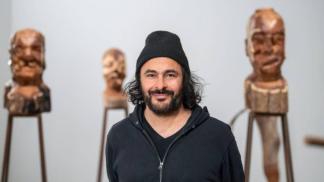
Senkoe is a Mexican muralist and illustrator whose vivid visual language connects cultural memory with contemporary urban life. His work draws on Mesoamerican references, nature, textile traditions, graphic design and fantastical imagery. Moving between public walls and gallery settings, he creates encounters that can begin with colour and unfold through narrative. Works such as Heritage in Chicago and Balam in Mumbai demonstrate how his practice brings a distinctly Mexican imagination into dialogue with different places, audiences and forms of artistic experience.

Comments
No comments yet.
Add Your Comment
Thank you, for commenting !!
Your comment is under moderation...
Keep reading luxury post