Saudi Arabia's First National EV Has the Specifications. Can It Earn the Trust?
 Pradeep Dhuri
- 25th Sep 2026
- 1166
- 0
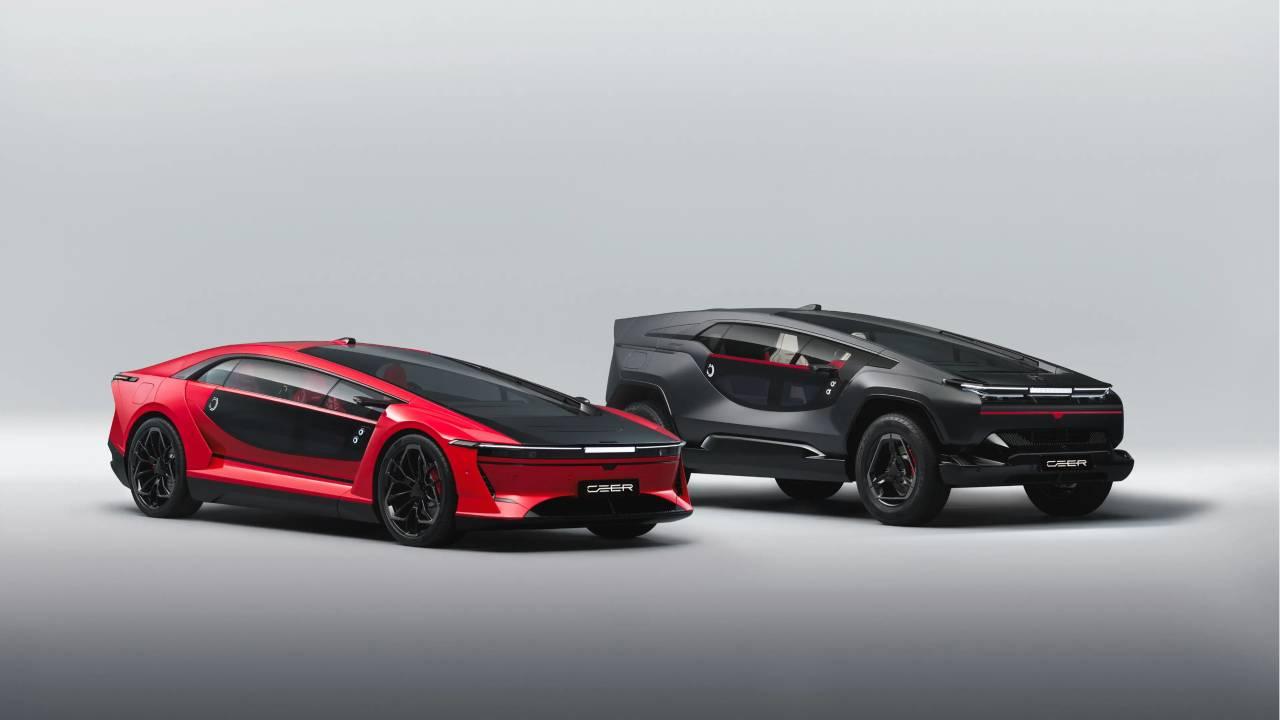
On 21 September 2026, Crown Prince Mohammed bin Salman pulled the covers off two cars in Riyadh and, with them, an ambition: the CEER EXOBOT sedan and SUV, the first vehicles from Saudi Arabia's first national car brand. The headline numbers did their job instantly. Up to 850 horsepower. A claimed 670 kilometres of range. Zero to 100 km/h in 2.6 seconds for the sedan, with a top configuration CEER has quoted at around 1,111 horsepower. Wedge silhouette, no B-pillar, gullwing "Shahin" doors, a 48-inch 8K dashboard spanning the windscreen. On paper, it is a credible rival to anything from Stuttgart or Silicon Valley.
Which is precisely why the paper is the least interesting part. Every one of those specifications can be, and was, bought. The genuinely hard specification, the one no supplier ships in a crate, is trust: the buyer's confidence that the car will still start in five years, that a warranty claim will be honoured, that a service centre will exist within reach, that the residual value will not collapse, that the company will still be selling cars at all. That is what enthusiasts dissecting the EXOBOT moved to within hours of the reveal, past the European engineering and the drama, to durability in 45-degree heat, to servicing, to whether state sponsorship steadies the venture or complicates it. They are asking the right question. A new marque can purchase performance. It cannot purchase inherited trust, and CEER is attempting the hardest version of the problem: launch two vehicles at once, invent Saudi automotive provenance from zero, and convince buyers to depend on an ownership infrastructure that does not yet have a track record.
This is an analysis of that gap, between the specification sheet, which is excellent, and the trust sheet, which cannot yet exist.
What CEER Actually Built, and Who Built It
Strip away the national-champion framing and the EXOBOT is best understood as a careful assembly of the global auto industry's best available parts, wrapped in Saudi design intent and capital. That is not an insult. It is the modern playbook, and CEER has run it well.
The company is a joint venture between Saudi Arabia's Public Investment Fund and Taiwan's Foxconn, formed in November 2022. The supplier map, now confirmed, reads like a who's who. BMW provided a technology licence, not a drivetrain, but component technology and engineering know-how, signed at launch; CEO James DeLuca has openly credited BMW's century of experience, the heritage behind BMW's brand story and German legacy, for getting the operation off the ground. Foxconn supplies the platform and electrical architecture, the same underpinnings it uses for its own Foxtron EVs. The rear electric drive unit comes from Rimac Technology in Croatia, the Gulf's first Rimac customer, under a contract signed in October 2024. The front motors come from Hyundai Transys, part of a drive-system deal reported at $2.2 billion. The exterior was drawn by an ex-McLaren designer.
The honest reading is that CEER has done what a well-capitalised newcomer should: license the hard-won intellectual property rather than reinvent it, and buy motors from the people who make the best ones. The result is not less legitimate for being sourced. But it does complicate the "national car" story, because the parts of the EXOBOT that make it fast and sophisticated are, by design, not Saudi. What is Saudi so far is the capital, the design direction, the assembly, and the ambition. The localisation, CEER's own target is 45 per cent local content by 2034, is a future promise, not a present fact.
The Specifications, and the Asterisks
The numbers are real, in the sense that CEER has published them. They also carry asterisks that a discerning buyer should read before the horsepower.
The sedan is built on a 112 kWh battery and an 800-volt architecture, with tri-motor all-wheel drive quoted up to 850 hp (625 kW) and a 2.6-second 0-100 km/h time. CEER has separately cited a range-topping configuration of roughly 1,111 hp (817 kW) and 1,500 Nm, with a 2.1-second sedan time and 2.4 seconds for the SUV. The sedan's 2.6-second figure is marked "IVM" on CEER's own materials, meaning it is measured from initial vehicle movement, with rollout excluded, a common but flattering convention. The engineering headline is genuinely advanced: steer-by-wire (reducing lock from 400 to 160 degrees), rear-wheel steering, and adaptive dual-chamber air suspension.
The range figure needs the loudest asterisk. The claimed 670 km (560 km for the SUV) is quoted on the NEDC cycle, an old and notoriously generous standard that real-world and WLTP figures routinely undercut by a wide margin. A buyer should mentally discount it, especially when comparing it with the car once billed as the world's longest-range electric vehicle. And none of the performance or range claims has yet been independently tested; these are manufacturer figures at reveal, not verified results.
Then there is the specification the brochure cannot answer and the Gulf will test daily: sustained performance in 45-degree heat. Battery longevity, thermal management under repeated hard charging, and cabin durability in extreme sun are exactly where inexperience shows, and exactly where CEER has no field data because no customer car has yet been delivered. The two EXOBOTs are homologated for the Gulf only, which is sensible, but it also means the car has been engineered for the one climate most punishing to EVs, with everything to prove and nothing yet proven.
Where the EXOBOT Sits: The Specs Have Commoditised
The most useful thing a comparison reveals is not that CEER wins or loses, but that at the top of the EV market, headline specifications have largely converged and ceased to be a differentiator at all. Legacy luxury marques have reached the same conclusion, from Maserati's switch to electric power to Mercedes' battery-powered Maybach plans.
The table below uses manufacturer claims. Read it with care: range figures are quoted on different, non-comparable cycles (NEDC, WLTP, EPA, CLTC), and prices are indicative.
| Model | Claimed power | 0-100 km/h | Claimed range (cycle) | Indicative price |
|---|---|---|---|---|
| CEER EXOBOT Sedan | Up to 850 hp (top ~1,111 hp) | 2.6 s (top 2.1 s) | 670 km (NEDC) | Undisclosed |
| Lucid Air Sapphire | ~1,234 hp | ~2.0 s | ~687 km (EPA) | ~$250,000 |
| Porsche Taycan Turbo GT | ~1,092 hp | ~2.2 s | ~555 km (WLTP) | ~$230,000 |
| Mercedes-AMG EQS 53 | ~658-751 hp | ~3.4 s | ~586 km (WLTP) | ~$150,000 |
| Xiaomi SU7 Ultra | ~1,527 hp | ~2.0 s | ~630 km (CLTC) | ~$73,000 |
Two conclusions fall out. First, CEER's figures are competitive with cars costing a quarter of a million dollars, which is the entire point of the exercise and a real achievement for a first product. Second, and more importantly, the Xiaomi line at the bottom shows that a well-funded newcomer can now deliver flagship specifications at a fraction of legacy pricing. Raw performance is no longer scarce. It has been commoditised by exactly the supplier ecosystem, Rimac motors, Foxconn platforms, Chinese battery cells, that CEER itself drew on. When everyone can buy 1,000 horsepower, horsepower stops being the product. What remains scarce, and therefore what actually sells a car at this level, is everything the table does not measure.
The Thing You Cannot License: Trust
Trust is the one specification with no supplier. And CEER's launch strategy suggests the company knows it, because the most revealing part of the EXOBOT reveal was not the performance figures. It was the ownership package.
The limited First Edition ships with a Companion Pack bundling a six-year vehicle warranty, roadside assistance, and scheduled service and maintenance. That is not a garnish; it is the strategy stated out loud. A six-year commitment is CEER pre-buying the confidence it cannot yet have earned, telling first customers that the risk of being an early adopter of an unproven marque will be carried by the manufacturer, not the buyer. It is the correct move, and it is an admission: credibility here is built after delivery, in service bays and warranty decisions, not at a reveal. Lucid learned the same lesson early, which is why Lucid launched a studio and service centre alongside its first cars.
The obstacles to that credibility are substantial and worth naming plainly. CEER is launching two vehicles simultaneously, doubling the engineering, validation and after-sales surface it must get right on day one, when most new marques struggle to get one car right. Its ownership infrastructure, service network, parts supply, trained technicians, has no history; a buyer cannot check CEER's reliability record because there isn't one. And the timeline itself is a trust signal. When CEER launched in 2022, it promised vehicles in 2025. Series production at the King Abdullah Economic City plant is now scheduled for January 2027, with deliveries in March, roughly two years late. DeLuca's position, that nothing launches "until the product is absolutely ready," is defensible, even reassuring, but delay is still the first data point buyers have about whether CEER delivers on what it says.
The funding question sits underneath all of it. CEER's money comes from PIF, the same sovereign fund that has scaled back the NEOM megacity and withdrawn support from LIV Golf. DeLuca's insistence that the business plan is "fully funded" through 2040 is an answer to a question buyers are already asking: will the company that sells you a car, and warranties it for six years, still be committed to this project when the warranty matures? State backing cuts both ways. It provides deep capital and national will, and it ties the brand's fate to the priorities of a fund that has publicly reprioritised before.
Saudi Provenance, and the Lucid Question
State sponsorship is CEER's greatest asset and its most complicated one. The asset is obvious: patient capital, a captive early market, national prestige, and the industrial muscle of Vision 2030, which targets a domestic auto sector, 30,000 jobs and an $8 billion GDP contribution by 2034 from CEER alone. The same ambition is reshaping Saudi luxury more broadly, from Nujuma, the first Ritz-Carlton Reserve in the Middle East, to plans for a five-star luxury train in Saudi Arabia. Few startups get to launch under a Crown Prince.
The complication is provenance. A "national car" invites the question of how national it really is, and the EXOBOT's Croatian motors, Taiwanese platform, German licence and Korean drive systems make that a fair question rather than a hostile one. It also invites comparison with the venture in the very same industrial cluster: Lucid, the maker of the Lucid Air luxury electric sedan, majority-owned by the same PIF, which opened its King Abdullah Economic City plant in 2023 backed by a Saudi government order for up to 100,000 cars. Saudi Arabia now has two PIF-connected EV bets in one economic city, which raises a reasonable strategic question about whether the Kingdom is building one automotive future or hedging between two. For a buyer, the relevant version is narrower: does the state's involvement make CEER more likely to endure, or does it make CEER a policy instrument whose priority could shift with the fund's?
For the Gulf's large Indian expatriate and NRI community, and for LuxuryAbode readers watching from India, the EXOBOT is not yet purchasable, homologation is Gulf-only, but the lesson travels. Indian buyers now weighing new Chinese luxury EVs, in a luxury EV market in India that is transitioning quickly, face the identical calculation the EXOBOT forces: specifications have become cheap and abundant, while service networks, parts availability, warranty reliability and resale confidence have not. The specification sheet is where these cars compete for attention. The ownership experience is where they earn, or lose, the customer. That is as true in Mumbai or Dubai as it is in Riyadh.
The Principle
CEER has proven the easy half of the thesis: with enough capital and the right suppliers, a nation can now stand up a technically credible luxury EV from a standing start in four years. The EXOBOT is real, fast and sophisticated, and dismissing it as a badge on borrowed parts underrates how hard even assembly at this level is.
But the reveal answered the question that specifications answer, and left untouched the one that matters. Horsepower is bought. Range is claimed. Design is commissioned. Trust is accumulated, slowly, through delivered cars that do not fail, warranties that pay, service that shows up, and a company that is still there in year six. CEER's own six-year Companion Pack is the clearest evidence that the company understands this: it is a promise made precisely because a reputation cannot yet be pointed to. The right way to judge CEER, therefore, is not by the number on the reveal stage but by what happens after March 2027, in the first heat-soaked summers, the first warranty disputes, the first resale listings. Saudi Arabia has engineered an 850-horsepower car. Whether it has engineered a trustworthy one is the specification that only time, not a sovereign fund, can certify.
Frequently Asked Questions
What is the CEER EXOBOT?
The EXOBOT is the first model line from CEER, Saudi Arabia's first national car brand. It launched on 21 September 2026 as an electric sedan and a large electric SUV, both wedge-shaped with gullwing "Shahin" doors, built on a 112 kWh battery and an 800-volt architecture with tri-motor all-wheel drive. CEER is a joint venture between Saudi Arabia's Public Investment Fund (PIF) and Foxconn.
How much horsepower and range does the CEER EXOBOT have?
CEER quotes the sedan at up to 850 hp (625 kW) with a 2.6-second 0-100 km/h time, and has cited a range-topping configuration of around 1,111 hp (817 kW) and 1,500 Nm with a 2.1-second time. Claimed range is up to 670 km for the sedan and 560 km for the SUV, but on the older, generous NEDC cycle, so real-world figures will be lower. None of the figures has been independently tested yet.
Who makes the CEER EXOBOT, and is it really Saudi?
CEER is Saudi-owned (PIF and Foxconn) and the cars will be assembled in Saudi Arabia, but the core technology is sourced internationally: BMW provided a technology licence, Foxconn the platform and electrical architecture, Rimac the rear motor, and Hyundai Transys the front motors. The design was led by an ex-McLaren designer. CEER targets 45 per cent local content by 2034, so the "national car" is heavily internationally sourced at launch.
When will the CEER EXOBOT be available and how much will it cost?
Series production is scheduled to begin at the Ceer Manufacturing Complex in King Abdullah Economic City in January 2027, with customer deliveries expected around March 2027, initially in Saudi Arabia and the wider Gulf. Pricing has not been announced. This timeline is about two years later than the 2025 availability CEER indicated at its 2022 founding.
Is the CEER EXOBOT better than a Lucid Air or a Porsche Taycan?
On paper, its performance and range claims are competitive with cars costing far more, which is a real achievement. But specifications at the top of the EV market have largely converged and are no longer the deciding factor. Lucid, Porsche and Mercedes have established service networks, proven reliability and known resale values; CEER, as a brand-new marque, has none of these yet. For most buyers, that ownership track record matters more than a tenth of a second.
Can you trust a car from a brand-new manufacturer like CEER?
Trust in a car brand is built over years through proven reliability, honoured warranties, available service and stable resale value, none of which a first-year manufacturer can demonstrate. CEER is addressing this with a six-year First Edition ownership package covering warranty, roadside assistance and maintenance, effectively underwriting early-adopter risk. Whether that trust is earned will only be clear after deliveries begin and the cars are tested by real ownership, especially in Gulf heat.
Comments
No comments yet.
Add Your Comment
Thank you, for commenting !!
Your comment is under moderation...
Keep reading luxury post