Bentley Reinvents the Luxury Car Showroom for the Torcal Era
 Namrata Parab
- 24th Sep 2026
- 1192
- 0
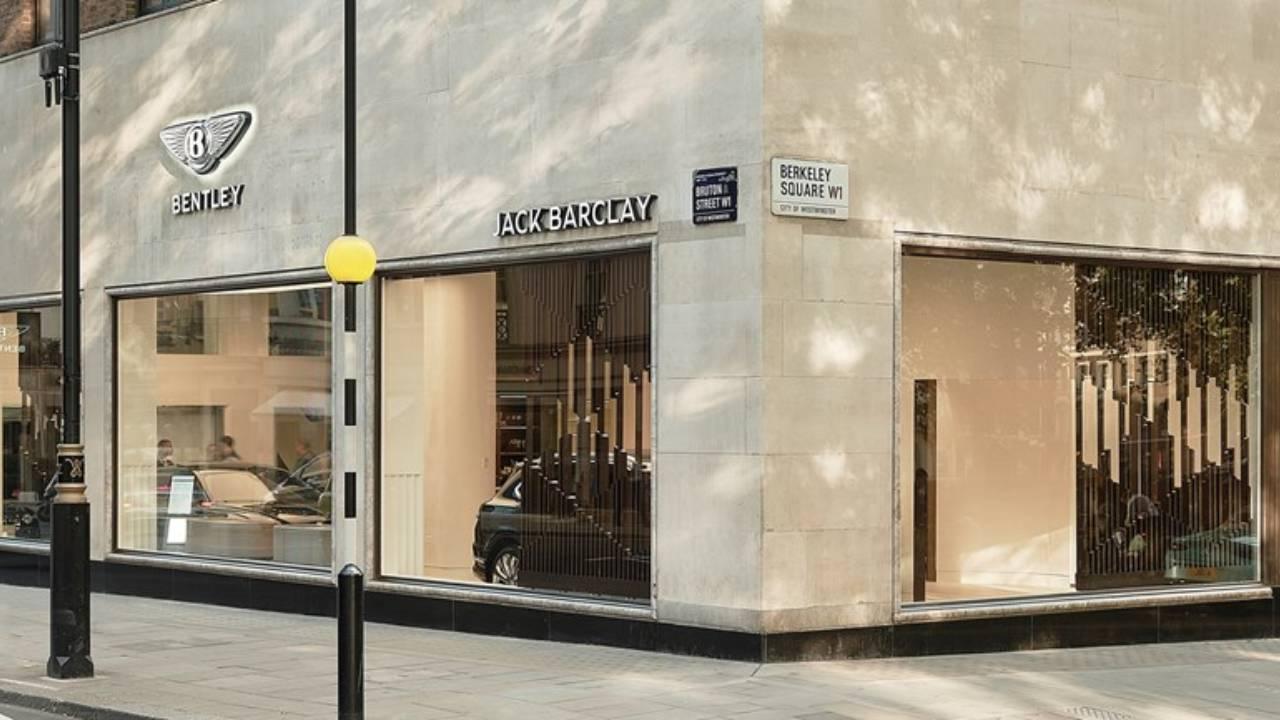
Bentley's new global retail concept begins at London's historic Jack Barclay dealership before expanding across more than 220 retailers in over 60 markets, placing personalisation, physical materials and digital immersion at the centre of the customer journey.
Bentley Motors has unveiled a new global retail concept designed to change how customers encounter, configure and commission its cars.
The concept makes its debut at Jack Barclay in London, the world's oldest Bentley retailer, and will progressively influence a network of more than 220 retail locations across over 60 markets.
This is more than a showroom redesign. It is the physical expression of Bentley's changing identity.
The announcement follows the global debut of the Torcal, Bentley's fourth model line and first fully electric vehicle, a milestone that builds on the ambitions first outlined in Bentley's Beyond100 vision for an urban luxury SUV. Together, the car and the retail environment signal a coordinated transition: a century-old marque is changing not only what it sells, but how luxury is experienced around the product.
From Displaying Cars to Commissioning Them
Traditional automotive showrooms are organised around inventory. Cars occupy the floor, specification sheets communicate differences, and the customer moves through a largely transactional sequence from viewing to test drive and purchase.
Bentley's new concept is organised around personalisation.
Physical samples, finishes and materials are combined with immersive digital content to help customers understand how colour, veneer, leather, stitching, metalwork and other choices will come together in a finished vehicle. The showroom becomes less like a conventional dealership and more like a commissioning atelier.
That distinction is essential at the highest end of the market. A Bentley customer is rarely choosing only between models. The customer is assembling a highly personal object from a complex vocabulary of materials, colours and specifications, much as seen when Bentley created a bespoke Bentayga fleet for The Peninsula Hong Kong.
The value of the showroom therefore lies not in displaying the largest possible number of cars. It lies in making imagination easier, decisions more confident and personalisation more emotionally rewarding.
Why Jack Barclay Is the Right Starting Point
The first installation has opened at Jack Barclay, Bentley's flagship London retailer.
Established in 1927 and named after racing driver John Donald "Jack" Barclay, the dealership is the oldest Bentley retailer in the world. Barclay competed successfully at Brooklands and was associated with the marque during the era that shaped the mythology of the Bentley Boys, a chapter central to the motorsport-rooted brand story of Bentley.
Beginning the global rollout here gives the concept historical legitimacy. Bentley is introducing a future-facing retail language inside a business that has represented the brand for almost a century.
That creates a useful tension between continuity and reinvention. Heritage is not treated as a room filled with memorabilia. It becomes the foundation from which a new customer experience can emerge.
Jack Barclay has long functioned as more than a point of sale. Its Mayfair location, commissioning spaces and relationship-led service have made it a destination for international clients. The new concept formalises that role and provides a prototype that other Bentley retailers can interpret across very different global markets.
A Global Brand System, Not 220 Identical Rooms
Rolling out a retail identity across more than 220 locations in over 60 markets creates a difficult design problem.
Too much standardisation can make an ultra-luxury environment feel corporate and anonymous. Too much local freedom can weaken the consistency of the brand.
The strongest global retail systems solve this by separating permanent brand codes from adaptable local expression.
| Consistent Bentley codes | Locally adaptable elements |
|---|---|
| Visual identity and core materials | Artwork and cultural references |
| Personalisation journey | Hospitality rituals |
| Digital configuration system | Event programming |
| Quality of lighting and finishes | Spatial response to the building |
| Service principles | Market-specific product emphasis |
Bentley has not yet disclosed the complete rollout schedule or the exact level of architectural variation permitted across markets. Those details will determine whether the new concept becomes a living luxury system or simply a global showroom template.
The London debut suggests the intention is broader than cosmetic renovation. The objective is to connect physical materials, digital visualisation and human consultation throughout the customer journey.
Why Digital Matters More in a Highly Physical Purchase
A Bentley is defined by materiality. Leather must be touched. Veneer must be seen under changing light. Paint needs scale and depth. Stitching and metal details reveal their quality through proximity.
Digital technology cannot replace those experiences. It can make them more intelligible, which is why luxury retail and technology together have become such a powerful combination.
An effective digital system can show how a small material sample will behave across an entire cabin, how exterior paint changes in daylight, or how different combinations alter the character of the vehicle. It can preserve configurations, compare alternatives and connect decisions made online with those discussed inside the retailer.
The purpose is not to add screens for spectacle. It is to remove the gap between a customer's imagination and the final car.
That makes the new showroom a test of Bentley's ability to integrate three forms of intelligence:
- Material intelligence: understanding the character and compatibility of physical finishes.
- Digital intelligence: visualising combinations, preserving choices and creating continuity across channels.
- Human intelligence: interpreting a customer's preferences and guiding decisions without overwhelming them.
Luxury fails when any one of these dominates. Materials without guidance create confusion. Digital tools without tact feel impersonal. Human service without accurate visualisation leaves too much to guesswork.
Personalisation Becomes the Main Product
At mainstream automotive brands, optional equipment is usually presented as a hierarchy of packages. At Bentley, personalisation is part of the reason to buy, reflecting how personalisation is enhancing the experience of luxury across categories.
The new retail concept acknowledges that the commercial centre of ultra-luxury mobility is shifting from the base vehicle towards the commissioning journey.
This matters for several reasons.
First, personalisation deepens emotional ownership before the car is delivered. A customer who has participated in a detailed creative process is less likely to view the finished vehicle as interchangeable inventory.
Second, bespoke specifications can support higher transaction values without relying only on model upgrades. The appetite is visible in markets such as India, where young buyers are splurging on luxe car customisations.
Third, the commissioning process generates a richer relationship between customer, retailer and marque. That relationship can continue into servicing, events, future purchases and collector programmes.
The showroom is therefore becoming a revenue environment, a brand theatre and a clienteling platform at the same time.
The Torcal Connection
Bentley revealed the retail concept immediately after launching the Torcal, its first fully electric vehicle and new model line.
The timing is significant because electrification changes some of the traditional cues through which performance luxury has been communicated.
Engine architecture, exhaust character and mechanical drama have long shaped the emotional appeal of Bentley. An electric Bentley must express performance and identity differently, through effortless torque, silence, software, cabin atmosphere, design and the quality of interaction. Rivals face the same test, as shown by the Rolls-Royce Black Badge Spectre electric statement.
The retail environment must help explain that transition.
A customer considering Torcal may need to understand charging, range, connected services and digital ownership alongside paint, hide and veneer. Bentley's dealership therefore has to operate simultaneously as an atelier, technology guide and hospitality space.
The challenge is to make this additional complexity feel effortless. Ultra-luxury customers do not want a technical seminar disguised as a showroom visit. They want confidence that the technology will work around their lives.
Bentley's New Wings Need a Physical Home
The retail redesign also follows Bentley's introduction of a new interpretation of its Winged B emblem in 2025, the fifth major version in the company's history. Other marques have taken similar steps, with Jaguar redefining its iconic logo for an electric future.
A visual identity becomes meaningful only when it is consistently translated across objects, communications and spaces. Retail is where a brand mark acquires physical scale through signage, architecture, materials, furniture, lighting and staff behaviour.
The new concept gives Bentley's evolving identity a three-dimensional home.
This is particularly important because automotive luxury now competes far beyond the motor industry. Customers compare a Bentley showroom with private aviation lounges, fashion flagships, watch salons, members' clubs, art galleries and leading hotels, and even with spaces such as Bugatti's first-ever home boutique in Dubai.
The benchmark is no longer the dealership across the road. It is the most memorable luxury environment the customer encountered anywhere in the world.
What the New Concept Must Get Right
The press announcement establishes Bentley's ambition. The real measure will be the consistency of execution across its retailer network.
1. Digital continuity
A configuration begun at home should arrive intact at the retailer, evolve during consultation and remain accessible after the visit. Customers should not have to repeat preferences or rebuild choices across disconnected systems.
2. Material truth
Digital visualisation must remain faithful to physical colour and texture. The final car cannot feel different from what the showroom promised.
3. Privacy
High-value commissioning often involves personal information, residences, usage patterns and financial decisions. Private consultation spaces and disciplined data handling are part of the luxury experience.
4. Human expertise
The best interface cannot compensate for an adviser who lacks product and material knowledge. Bentley will need training standards equal to the sophistication of the environment.
5. Local relevance
A customer in London, Mumbai, Dubai, Shanghai or Los Angeles may have different preferences, climatic concerns and ownership patterns. In India, for instance, India's luxury car market is driven by exclusivity and emotion as much as specification. The global concept must make room for local intelligence.
6. After-sales continuity
The experience should not collapse after delivery. Servicing, software support, charging guidance, collection management and future commissioning must feel like parts of the same relationship.
The LuxuryAbode Retail Continuity Test
LuxuryAbode proposes a simple framework for evaluating digitally enabled luxury showrooms. A concept succeeds only when it preserves continuity across five stages:
| Stage | Customer expectation |
|---|---|
| Discover | The physical and digital brand promise feels consistent |
| Imagine | Materials and technology make possibilities understandable |
| Commission | Expert guidance turns preferences into a coherent specification |
| Deliver | The finished object matches the visualised promise |
| Own | Service and digital support continue the relationship |
Many retail concepts concentrate investment on the middle of this journey. They create a beautiful room and an impressive configurator, but fail to connect those tools to delivery and ownership.
Bentley's opportunity is to make the showroom the visible centre of a continuous client relationship rather than an isolated place where a transaction occurs.
What This Means for Luxury Automotive Retail
Bentley's redesign reflects a broader transformation in luxury automotive distribution and echoes the top trends transforming the luxury retail space.
Large glass showrooms filled with vehicles were built for an era when discovery depended heavily on physical inventory. Today, customers often arrive after extensive online research. The retailer must add something the website cannot provide: sensory understanding, expert interpretation, social recognition, privacy and trust.
This changes the economics of space.
Fewer displayed cars can be offset by better consultation environments. Material libraries become more valuable. Hospitality is integrated into selling. Digital content expands the apparent inventory without requiring every specification to be physically present. EV makers have tested similar formats before, such as when Lucid Motors launched its Beverly Hills studio.
Most importantly, the retailer shifts from product custodian to relationship manager.
For Bentley, this is especially relevant as electric vehicles bring more software, services and continuing digital interaction into ownership, a shift already visible as Indian luxury car buyers lead the charge toward EVs. The transaction may happen once, but the relationship becomes more continuous.
The LuxuryAbode View
Bentley is not merely redesigning its showrooms. It is redesigning the moment at which engineering, craftsmanship and customer imagination meet.
The debut at Jack Barclay gives the transformation historical weight. The connection with Torcal gives it strategic urgency. The scale of more than 220 retailers gives it global consequence.
The concept's success will not be determined by how photogenic the first London location appears. It will depend on whether a customer in every market receives the same depth of personalisation, digital continuity and human expertise.
If Bentley achieves that, the dealership will cease to feel like the final stage of automotive distribution. It will become the first stage in creating a singular object.
That is the real shift: from selling a Bentley that has already been imagined to helping each customer imagine a Bentley of their own.
Key Facts
- Bentley unveiled its new global retail concept on 24 September 2026.
- The concept debuted at Jack Barclay, Bentley's flagship retailer in London.
- Jack Barclay was established in 1927 and is the world's oldest Bentley retailer.
- The concept is intended to influence more than 220 Bentley retailers across over 60 markets.
- The environment combines physical materials, digital content and personalisation.
- The announcement followed the debut of Torcal, Bentley's first fully electric vehicle and fourth model line.
Frequently Asked Questions
What is Bentley's new retail concept?
It is a redesigned global showroom and customer-experience system focused on personalisation, physical material selection and digitally enabled visualisation.
Where did the new Bentley retail concept debut?
It debuted at Jack Barclay in London, Bentley's flagship retailer and the oldest Bentley dealership in the world.
How many Bentley retailers will adopt the concept?
Bentley says the concept will shape its network of more than 220 retailers in over 60 markets. The company has not yet published a complete location-by-location rollout timetable.
How does the concept use digital technology?
The environment is designed to connect physical samples and personalisation choices with immersive digital content throughout the customer journey.
Why was the concept unveiled alongside Bentley Torcal?
Torcal begins Bentley's fully electric era. The new retail concept gives the company an updated environment in which to explain electric technology while preserving the craftsmanship and personalisation associated with the marque.

Comments
No comments yet.
Add Your Comment
Thank you, for commenting !!
Your comment is under moderation...
Keep reading luxury post