Pranayama, Decoded: Every Major Yogic Breath Technique and What the Evidence Actually Shows
 Namrata Parab
- 8th Jun 2026
- 1401
- 0
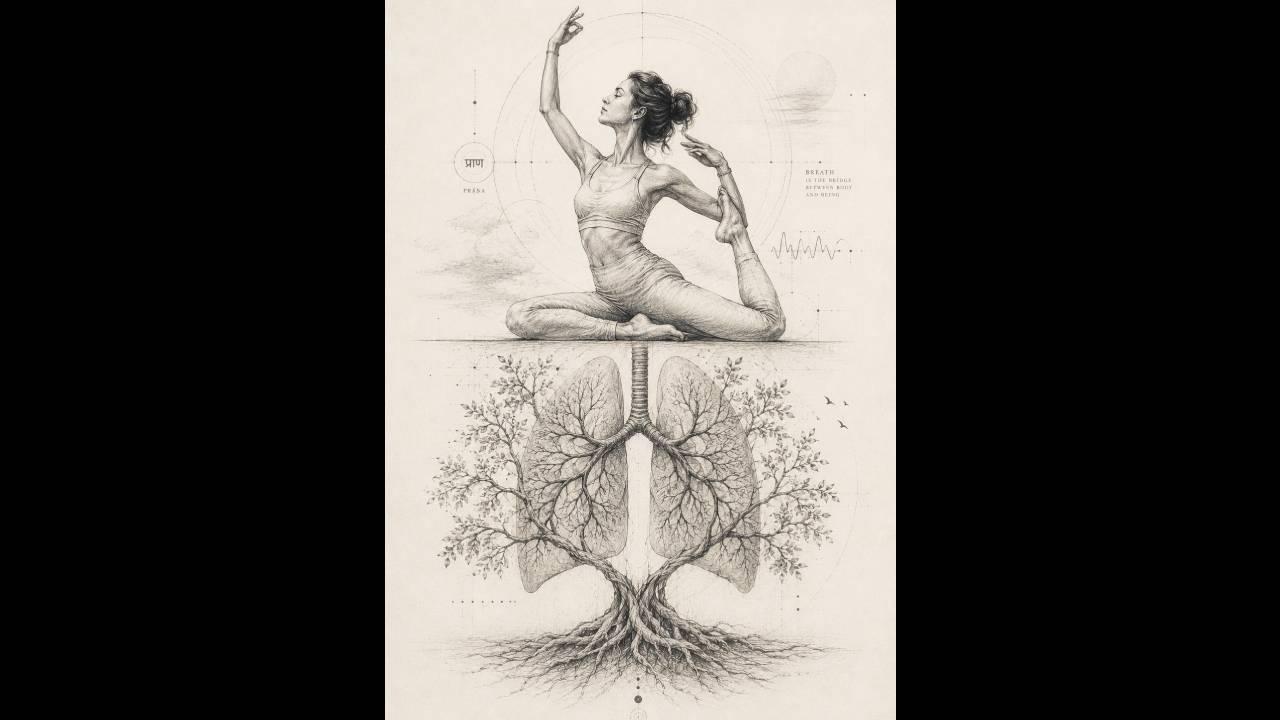
Breathwork is having its commercial moment, and the marketing has outrun the evidence. Apps sell "ancient" protocols at subscription prices; retreat brochures attach Sanskrit names to claims the underlying studies never made; and a Silicon Valley vocabulary of "coherence" and "resonance" breathing quietly rebrands techniques that Indian texts codified centuries ago. It is the latest chapter in a longer story about how wellbeing became the defining luxury trend of the post-pandemic era. Somewhere in the noise sits a genuine question the wealthy wellness consumer rarely gets answered straight: which of these actually does something, how do we know, and which ones can hurt you?
This is the reference. Each major technique below is graded against the clinical literature, not the brochure. Three things will become clear. First, the evidence is real but uneven — some techniques rest on dozens of randomised trials, others on a handful of small studies run by people with a stake in the result. Second, there is an almost perverse inverse relationship between how dramatic a technique looks and how well it is supported: the flashiest, most forceful practices have the thinnest evidence and the highest risk, while the dullest — slow breathing at six breaths a minute - has the cleanest mechanism and the broadest support. Third, and least convenient for the Western wellness industry: the best-validated "new" breathing science is, almost without exception, the rediscovery of Indian practice.
A note on grading.
Strong means multiple randomised controlled trials and/or systematic reviews converge.
Moderate means several controlled trials with reasonably consistent findings but limitations.
Preliminary means small or single studies, or significant conflicts of interest.
Weak means the benefit claims outrun the data. Risk is graded separately, because a technique can be both well-evidenced and contraindicated for some readers.
The taxonomy nobody explains
Every pranayama technique does one of two things to your autonomic nervous system: it calms (parasympathetic, vagal, "down") or it arouses (sympathetic, adrenergic, "up"). The yogic tradition understood this experientially long before anyone measured RMSSD - a lineage celebrated each year when luxury resorts mark International Day of Yoga with curated spa rituals. The commercial mistake and it is everywhere — is to treat all "breathwork" as interchangeably good for you. It is not. A forceful, fast technique and a slow, smooth one are as different as a sprint and a nap. Knowing which axis a technique sits on is the entire game.
Slow / coherent breathing (the foundation)
Strip pranayama to its mechanical core and you get slow breathing - roughly six breaths per minute, exhale at least as long as the inhale. The Western wellness world calls this "coherence" or "resonance" breathing and presents it as a discovery. It is the measured skeleton of classical pranayama, and the same principle that underpins the sunrise meditation sessions offered at Four Seasons Mumbai and similar guided programmes.
The mechanism is now well understood. Slow-paced breathing at six cycles per minute reliably increases cardiac vagal activity — indexed by RMSSD, a core heart-rate-variability metric — across session durations from five to twenty minutes. The pathway runs through stimulation of baroreceptors and pulmonary stretch receptors that feed the vagus nerve and brainstem, raising parasympathetic tone - the physiological signature of calm. Evidence grade: Strong (acute autonomic effects). Risk: minimal. This is the one practice essentially everyone can do safely, and it underlies most of what follows.
Nadi Shodhana / Anulom-Vilom (alternate nostril)
The most clinically studied calming technique. You breathe through one nostril at a time, closing the other with the fingers, alternating sides. It exploits the body's natural "nasal cycle," in which dominance shifts between nostrils through the day.
The evidence is unusually deep for a yogic practice. A systematic review identified forty-four randomised controlled trials examining alternate nostril breathing's effects on the autonomic nervous system, cardiopulmonary function, and cognition, with a high level of evidence for improved cognitive functioning with regular practice. Reasonably consistent findings across two decades include reduced resting heart rate, lower systolic blood pressure (particularly in pre-hypertensive subjects), improved heart-rate variability, and better sustained attention. The mechanism is vagal: slow exhales, especially when slightly longer than the inhale, stimulate vagal afferents that downregulate the sympathetic nervous system.
Evidence grade:
Moderate-to-Strong for autonomic and cognitive effects; the trial quality is variable but the direction is consistent.
Risk: low, with sensible cautions: those with severe untreated hypertension should ease in under guidance and avoid retentions, pregnant women should avoid retention variations, and anyone with breath-triggered panic should start with very short sessions.
Bhramari (humming bee)
A slow exhale carrying a low humming sound. Underrated, and mechanistically interesting. The humming component introduces an additional form of vagal stimulation through the modulation of vocal-fold vibrations and the production of nitric oxide in the paranasal sinuses. Nitric oxide matters — it is a vasodilator with roles in circulation and immune defence — which gives Bhramari a plausible edge over silent slow breathing. The trial base is smaller than Nadi Shodhana's but consistent in direction, with studies pairing it with alternate-nostril work in hypertensive patients and measuring HRV and blood-pressure improvements.
Evidence grade: Moderate (smaller literature, consistent signal).
Risk: minimal.
Ujjayi (victorious / ocean breath)
The soft-throated, audible breath that underpins most flowing asana practice. It is foundational rather than therapeutic — a slow, controlled, nasal breath that keeps the practitioner in a calm, sustained rhythm. As a standalone clinical intervention it has limited dedicated trial evidence; its value is largely as a vehicle for slow, regulated breathing during movement, where it inherits the slow-breathing benefits above.
Evidence grade: Preliminary as a standalone intervention;
Moderate as an enabler of slow breathing.
Risk: minimal.
Sudarshan Kriya Yoga / SKY (the well-studied controversy)
This is the most-researched branded pranayama, and it is where evidence-grading earns its keep — because the honest answer is more complicated than either its promoters or its detractors admit. SKY is a procedure involving rhythmic breathing at different rates, devised by Sri Sri Ravi Shankar of the Art of Living Foundation in Bangalore.
Several individual trials are genuinely striking. In a 2000 randomised study of 45 hospitalised melancholic-depression patients, SKY was compared against electroconvulsive therapy and the antidepressant imipramine; remission rates were 93%, 73% and 67% respectively — SKY was inferior to ECT but comparable to the drug, with no clinically significant side effects, leading the authors to call it a potential first-line alternative. More recently, a randomised clinical trial of 129 practising physicians found SKY significantly reduced stress, anxiety and depression by 4 to 6 points on a standard scale and improved insomnia, all statistically significant against control.
And yet. A systematic review and meta-analysis pooling six studies with 388 participants found the overall effect of SKY on depression was essentially null — a standardised mean difference of 0.02, with a confidence interval crossing zero. When individual positive trials wash out to nothing on pooling, two explanations compete: the effect is real but heterogeneous (different protocols, populations, durations), or the positive trials reflect small samples, unblinded designs, and the structural reality that much of this research is conducted by people affiliated with the organisation that teaches the technique. Both are probably partly true.
Evidence grade:
Preliminary-to-Moderate, with an explicit conflict-of-interest caveat. SKY is promising and, by all accounts, low-risk but the confident claim that it rivals antidepressants is not yet supported by the pooled evidence.
Risk: low.
Kapalabhati & Bhastrika (the forceful ones)
Here the inverse law bites hardest. Kapalabhati ("skull-shining") is rapid, forceful exhalations driven by the abdomen; Bhastrika ("bellows") is forceful inhalation and exhalation. These are the dramatic, sweat-inducing techniques that anchor energetic class sequences and YouTube thumbnails. They are also the least-supported by quality evidence and carry the most real risk.
The benefit claims — fat loss, metabolic boost, "detox" — rest largely on small studies and tradition rather than robust trials. The risks are concrete. Excessive practice can cause hyperventilation and a drop in blood carbon-dioxide levels; incorrect technique can strain the abdominal muscles; practising on a full stomach can cause nausea. Practitioners with high blood pressure or cardiac problems should avoid the practice, and forceful breathing should stop immediately if dizziness occurs, as continuing can deepen the hyperventilation that reduces blood flow to the brain and causes confusion. The cautions extend further: hyperventilation can worsen migraines, abdominal contractions can promote acid reflux in those with GERD, and consultation is advised for anyone with heart, lung or neurological disorders. Most seriously, the literature contains a published case linking forceful yogic breathing to lung injury — a case report in the journal Chest raised Kapalabhati as a possible cause of pneumothorax, with reviewers warning that improperly done fast-breathing pranayama can hyperactivate the sympathetic nervous system. Rare, but real.
Evidence grade:
Weak for the headline benefits;
Risk: moderate, materially higher than any other technique here. These belong under a competent teacher, on an empty stomach, built up gradually — never improvised aggressively by a beginner.
Kumbhaka (breath retention)
Retention — holding the breath after inhalation or exhalation — is woven through advanced pranayama. It is also the component most worth caution. Retention and the associated internal "locks" (bandhas) raise intrathoracic, intracranial and intraocular pressure, which is why forced breath retention can increase pressure in the head and eyes, and why experts advise against unnecessary strain during pranayama. The practical rule is consistent across sources: those with hypertension, glaucoma, cardiovascular disease, or who are pregnant should avoid retentions, and everyone else should add them slowly and under guidance.
Evidence grade: Insufficient for standalone benefit claims;
Risk: moderate in vulnerable groups.
Evidence-at-a-glance
| Technique | Autonomic direction | Evidence grade | Risk | Best-supported claim |
|---|---|---|---|---|
| Slow / coherent breathing (~6/min) | Calms | Strong (acute) | Minimal | Raises HRV / vagal tone |
| Nadi Shodhana (alternate nostril) | Calms | Moderate-Strong | Low | Lower systolic BP, better HRV & attention |
| Bhramari (humming) | Calms | Moderate | Minimal | Vagal stimulation; nitric-oxide pathway |
| Ujjayi (ocean breath) | Calms | Preliminary standalone | Minimal | Sustains slow breathing in movement |
| Sudarshan Kriya (SKY) | Mixed | Preliminary-Moderate (COI caveat) | Low | Mood/stress in individual trials; null when pooled |
| Kapalabhati / Bhastrika | Arouses | Weak | Moderate | Energy/arousal; benefit claims unproven |
| Kumbhaka (retention) | Variable | Insufficient | Moderate (vulnerable groups) | None robustly established alone |
Grades reflect the weight and quality of clinical evidence, not traditional importance. Risk grades are independent of efficacy. This guide is intended for general information only and is not a substitute for personalised medical advice; readers with existing health conditions should consult a qualified clinician before beginning any breathing practice.
The reclamation, and the verdict
The throughline is hard to miss once you look for it. The breathing science the West is busy monetising — "resonance breathing," "coherence training," the HRV-biofeedback industry — is the instrumented rediscovery of pranayama. The six-breaths-per-minute cadence at the centre of it is Indian practice, measured. The same heritage now anchors the most considered hospitality experiences in the country, from the Vedanta-rooted wellness programming at Four Seasons Bengaluru to the Ayurveda-led rituals at the Four Seasons Mumbai spa. The most-studied branded protocol, SKY, originated in Bangalore. The deepest single research engine in this field, the institution behind a striking share of the trials, is S-VYASA in Bengaluru — the same city whose hotels now build entire mindful escapes around the science of stillness. None of this is a nationalist point; it is an accuracy point. When a wellness brand sells "coherence breathing" as innovation, it is selling a renamed inheritance.
The editorial verdict cuts against the market. The techniques with the strongest evidence and lowest risk — slow breathing, alternate-nostril, humming — are precisely the ones least likely to be sold to you at a premium, because they are undramatic and freely teachable. The techniques most aggressively marketed for their intensity — the forceful, fast, "detoxifying" practices — have the weakest evidence and the highest risk. And the best-studied branded technique sits in an honest grey zone: promising individual trials, an unconvincing pooled result, and a conflict-of-interest problem its promoters rarely mention.
For the reader who can buy any wellness experience on earth, the useful conclusion is unglamorous. The value is not in the brand, the app subscription, or the forcefulness. It is in doing a well-supported, low-risk technique consistently, ideally learned from a competent teacher who knows the contraindications — the kind of resident expertise that destination retreats such as Six Senses Vana in the Himalayan foothills are built to provide. As the alternate-nostril literature bluntly concluded, the single biggest predictor of whether someone benefits is whether they practise it consistently. That is the whole secret, and no one can sell it back to you at a markup.

Comments
No comments yet.
Add Your Comment
Thank you, for commenting !!
Your comment is under moderation...
Keep reading luxury post