IHG Signs Landmark 14-Hotel Kyoto Deal in One of Japan's Largest Hotel Conversions
 Namrata Parab
- 26th Aug 2026
- 1256
- 0
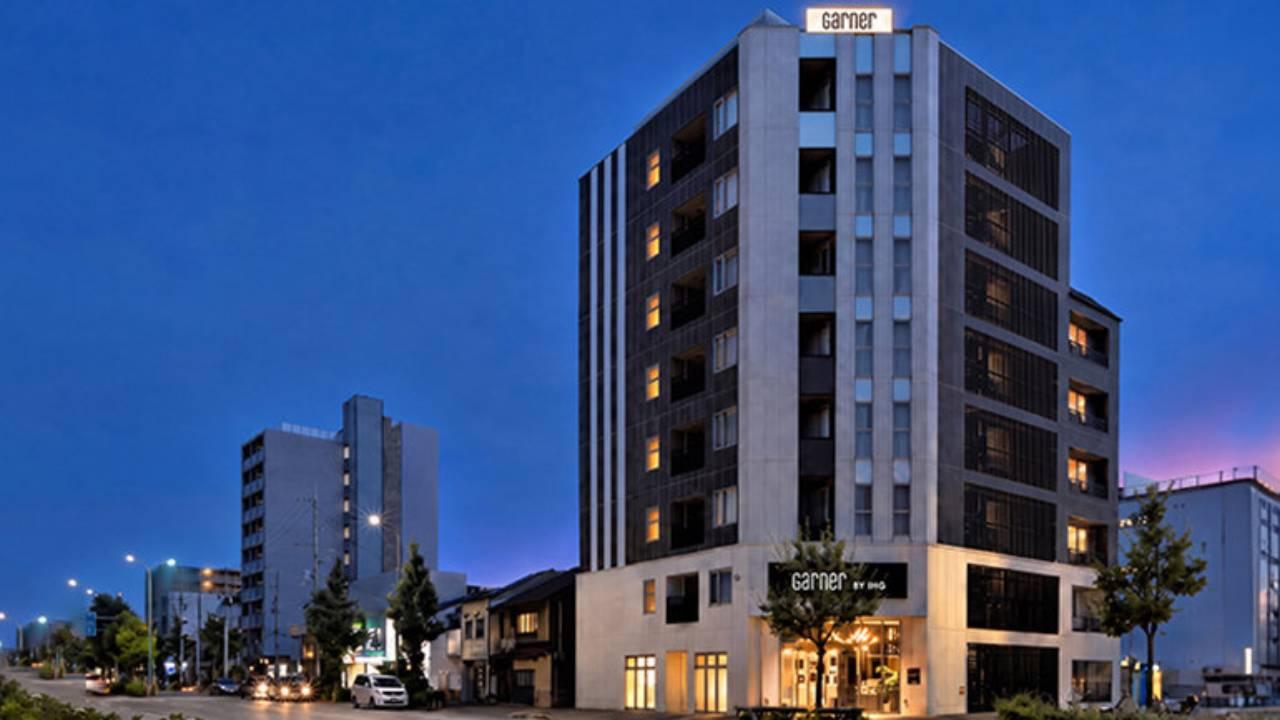
IHG Hotels and Resorts has signed a landmark agreement covering 14 hotels and 1,063 rooms in Kyoto, in what the hospitality group describes as one of Japan's largest hotel portfolio conversion deals in recent years, with 12 properties becoming Garner hotels, one converting to a Holiday Inn Express and one remaining unbranded.
Kyoto's hotel landscape is about to undergo a significant international brand reshuffle.
The transaction, agreed with GCP Hospitality, the hospitality arm of Gaw Capital Group, will see the properties repositioned in phases following renovations and rebranding, with the hotels expected to enter the new system over the next 12 months.
More than a sizeable portfolio signing, the agreement illustrates an important change taking place within Japanese hospitality. Global hotel groups are increasingly using conversions to expand rapidly into a market historically dominated by domestic business hotel operators.
For IHG, Kyoto has become one of the clearest demonstrations of that strategy.
What Exactly Has IHG Signed in Japan?
The agreement comprises 14 existing hotels across Kyoto with a combined 1,063 rooms.
The portfolio will be repositioned as follows: Garner will take on 12 hotels, Holiday Inn Express will take on 1 hotel and 1 hotel will remain unbranded, bringing the total to 14 hotels and 1,063 rooms across Kyoto, agreed with GCP Hospitality for phased conversion over the next 12 months.
IHG describes the signing as one of Japan's largest conversion portfolio deals in recent years.
Importantly, this is a conversion transaction rather than the construction of 14 new hotels. Existing properties will be renovated and repositioned, allowing IHG to add substantial inventory considerably faster than would ordinarily be possible through ground up development.
Why Is Kyoto Central to the Deal?
The properties are distributed across important districts of Kyoto, including locations around Kyoto Station, Shijo and Gojo, giving them access to major transport connections as well as some of the city's principal cultural and tourism areas.
Kyoto occupies an unusual position within Asian hospitality.
Its temples, gardens, traditional neighbourhoods and centuries of cultural history give it extraordinary international recognition, while sustained domestic travel provides another important layer of demand, a dynamic already visible in the city's upper tier through openings such as a heritage focused luxury collection hotel and spa in Kyoto.
For hotel groups, this creates a market capable of supporting everything from ultra luxury experiential hospitality to efficient midscale accommodation.
IHG already operates several distinct propositions in the city, including Six Senses Kyoto, ANA Crowne Plaza Kyoto, Holiday Inn Kyoto Gojo and Garner Hotel Kyoto Shijo Karasuma. The Six Senses name in particular reflects the same design led ambition seen elsewhere in the brand's portfolio, including its energy positive hotel positioned beside a Norwegian glacier.
The 14 hotel agreement will significantly deepen that presence and position IHG among the largest international hotel companies operating in Kyoto.
Why Garner Is the Real Story Behind IHG's Kyoto Expansion
Twelve of the 14 hotels will become Garner, making the conversion brand the centrepiece of the transaction.
IHG launched Garner globally in August 2023 as a midscale proposition designed around straightforward, high quality stays for value conscious business and leisure travellers.
Its growth has been remarkably rapid.
By March 2026, Garner had reached 100 open hotels worldwide, making it the fastest brand to reach that milestone in IHG's history. It also had almost 80 additional hotels in its global pipeline.
Japan has emerged as an important market for the brand.
Garner entered the country in 2025 with three hotels in Osaka before expanding into Kyoto with Garner Hotel Kyoto Shijo Karasuma, a market where competing groups have also been active, as seen in the planned Four Seasons hotel development announced for Osaka.
The new transaction takes that strategy to an entirely different scale.
Why Are Global Hotel Groups Targeting Japan's Business Hotel Market?
Japan possesses a mature business hotel ecosystem characterised by compact rooms, efficient operations, convenient locations and relatively consistent service standards.
Historically, domestic hotel operators have dominated this segment.
That makes it particularly attractive territory for an international conversion brand such as Garner.
IHG believes the Japanese business hotel segment remains underpenetrated by international brands, creating an opportunity to combine an established local accommodation format with its global reservation, technology, marketing and loyalty infrastructure.
The proposition to owners is relatively straightforward.
Instead of rebuilding a hotel from scratch, an existing independent or domestically operated property can be repositioned within an international brand system, a capital efficient approach that echoes broader trends in how owners are choosing to acquire and reposition existing hospitality assets rather than build new.
For travellers, the physical hotel may remain fundamentally local. Behind it, however, sits a global distribution engine.
The Conversion Model Is Changing Hotel Expansion
Conversions are becoming one of the most important mechanisms in global hotel development.
In 2025, conversions represented 52 percent of IHG's room openings worldwide. Garner has been designed specifically to take advantage of this trend through flexible standards, competitive conversion economics and relatively rapid repositioning. IHG says some Garner properties have moved from signing to opening in little more than a month.
Japan provides an especially interesting environment for the model because it already possesses substantial existing hotel inventory.
The strategic opportunity is therefore not always to build another hotel. It is to place a more powerful brand and distribution infrastructure behind an existing one.
The LuxuryAbode Conversion Advantage: Why Existing Hotels Are Becoming Strategic Assets
LuxuryAbode identifies four forces behind what we call the Conversion Advantage in modern hospitality.
| Force | What It Means | How It Shows Up in Kyoto | Why It Matters |
|---|---|---|---|
| Speed | Converting an existing property can bring rooms into an international system faster than ground up development | Phased conversions are expected to complete within 12 months | Owners and brands capture demand years ahead of a comparable new build |
| Capital Efficiency | Owners can potentially reposition existing assets without assuming the full cost and development risk of constructing a new hotel | Twelve properties are being rebranded rather than rebuilt from the ground up | Lower capital outlay makes scale achievable within a single transaction |
| Distribution | Conversion gives an existing property access to international reservations, marketing, technology and loyalty ecosystems | Previously independent or domestic hotels gain IHG's global booking and loyalty infrastructure overnight | Distribution access, more than the physical product itself, is often what most changes a hotel's performance |
| Market Density | Portfolio conversions allow hotel groups to establish meaningful scale in a destination almost immediately | IHG moves from a handful of Kyoto hotels to among the largest international operators in the city in one signing | Density strengthens negotiating power with owners, guests and corporate travel accounts alike |
The Conversion Advantage holds that repositioning an existing hotel within a global brand system can deliver comparable competitive impact to new development, at a fraction of the time and capital cost.
The Kyoto transaction demonstrates all four.
IHG is not adding one hotel to the city. It is using a single portfolio agreement to reposition more than a thousand rooms and materially increase its presence within one of Japan's most internationally recognised destinations.
What Does the Deal Mean for GCP Hospitality?
GCP Hospitality will lead management across the 14 hotel portfolio, while IHG contributes its brands, global systems, distribution capabilities and loyalty infrastructure.
The agreement expands an existing relationship between the two companies.
For GCP Hospitality, the strategy combines local hotel management and asset knowledge with the international reach of IHG.
For IHG, working with an established portfolio partner offers something equally valuable, the ability to scale several properties simultaneously rather than building market share hotel by hotel, a model comparable to how brands such as Kimpton have grown internationally through partnership driven projects, including Kimpton's role in redefining hospitality within a Mexican tower development, notable given Kimpton also features in IHG's own upcoming Osaka project.
IHG's Japan Expansion Is Bigger Than Kyoto
The Kyoto transaction forms part of a much broader expansion strategy.
IHG passed the milestone of 50 open hotels in Japan in early 2025, after introducing Six Senses, Vignette Collection and Garner into the country. Japan had welcomed more than 36 million international arrivals in 2024, reinforcing the market's importance to international hospitality groups, and a city that has increasingly captured that attention is Tokyo, described in coverage of how the Japanese capital has become a modern city of dreams and reinforced by its culinary standing in Tokyo's dominance across Asia's 50 Best Restaurants rankings.
By April 2026, IHG reported 59 hotels across 10 brands in Japan with another 24 properties in the pipeline.
The group is expanding at several price points.
At the luxury end, it is growing Six Senses and Vignette Collection, including the recent addition of a Hokkaido luxury property joining the Vignette Collection. Hotel Mount Fuji, for example, is being transformed into a Vignette Collection property overlooking Lake Yamanaka and Mount Fuji.
In Osaka, IHG is also developing an 817-room, triple branded InterContinental, Kimpton and Holiday Inn project near Universal Studios Japan, scheduled to open in 2029.
Kyoto therefore represents one part of a deliberately multi brand Japanese strategy spanning luxury, lifestyle, premium and mainstream hospitality, a pattern echoed elsewhere in Asia through openings such as Seoul's own new luxury collection hotel in the Gangnam district.
IHG's 14-Hotel Kyoto Deal at a Glance
| Detail | Information |
|---|---|
| Deal | 14 hotel portfolio conversion |
| Location | Kyoto, Japan |
| Rooms | 1,063 |
| Garner Hotels | 12 |
| Holiday Inn Express Hotels | 1 |
| Unbranded Hotels | 1 |
| Partner | GCP Hospitality |
| Conversion Timeline | Phased openings over the next 12 months |
| Key Kyoto Locations | Kyoto Station, Shijo and Gojo areas |
| Strategic Significance | One of Japan's largest hotel conversion portfolio agreements in recent years (as reported) |
| Primary Growth Brand | Garner |
| Garner Global Milestone | 100 open hotels reached in March 2026 (as reported) |
| IHG Japan Presence | 59 hotels across 10 brands and 24 pipeline properties, as reported in April 2026 |
What This Means for Indian Travellers and Hospitality Investors
IHG's Kyoto deal is a Japan story first, but it carries two points of relevance for LuxuryAbode's Indian readership.
Indian outbound travel to Japan has been rising steadily, with Kyoto ranking among the most sought after cities for Indian leisure travellers, a growing cultural connection also visible in crossover events such as a celebrated Tokyo cocktail bar bringing its mixology to Bengaluru. A larger, more consistent IHG footprint across the city, spanning everything from Six Senses to Garner, gives Indian travellers more predictable options at multiple price points, whether they are booking a heritage stay or a straightforward midscale stay through a familiar loyalty programme.
Second, the conversion model itself is directly relevant to India, where IHG already operates a comparable multi brand strategy across the country. Domestic examples include Crowne Plaza's established presence in New Delhi and newer airport focused additions such as the launch of a premium business hotel near Mumbai's international airport, both illustrating how international operators are increasingly targeting India's own large, fragmented mid market hotel segment using strategies similar to the one now reshaping Kyoto.
Why the IHG GCP Deal Matters
The headline number is 14 hotels.
The more important number may be 12.
By choosing Garner for 12 of the properties, IHG is making a significant bet on the internationalisation of Japan's enormous midscale and business hotel market.
That is fundamentally different from the international hotel industry's traditional Japanese strategy, which often concentrated attention on trophy luxury properties in Tokyo, Kyoto and Osaka.
International groups increasingly see opportunity across a much broader hospitality spectrum.
And conversions provide a particularly powerful route into it.
The Kyoto transaction therefore offers a useful indication of where the next phase of hotel competition in Japan could take place, not only among five star towers and destination resorts, but across the vast middle of the market where scale, distribution, loyalty and operational efficiency become decisive advantages.
For IHG, 1,063 rooms acquired through one portfolio relationship represent more than growth.
They demonstrate how quickly the balance of Japan's hotel market can begin to change when international branding meets existing domestic inventory.
Frequently Asked Questions
How many hotels are included in IHG's new Japan deal?
IHG's agreement with GCP Hospitality covers 14 hotels and 1,063 rooms in Kyoto.
Which IHG brands will the Kyoto hotels become?
Twelve properties will be converted into Garner hotels, one will become a Holiday Inn Express and one will remain unbranded.
When will the 14 Kyoto hotels be converted?
IHG expects phased openings following renovation and rebranding over the next 12 months.
Why is Garner important to IHG's strategy in Japan?
Garner is IHG's midscale conversion brand and the fastest brand to reach 100 open hotels in the company's history. IHG sees significant opportunity for international brands within Japan's traditionally domestically dominated business hotel segment.
How large is IHG in Japan?
IHG reported 59 hotels across 10 brands in Japan and 24 additional properties in its pipeline in April 2026. The new Kyoto portfolio will substantially strengthen that presence.
Figures relating to hotel counts, room counts, conversion percentages and pipeline numbers are reported by IHG as of the announcement and have not been independently re-verified. Readers considering hospitality investments, brand partnerships or hotel bookings based on this information are advised to confirm current figures directly with the company and consult a qualified advisor where relevant.



Comments
No comments yet.
Add Your Comment
Thank you, for commenting !!
Your comment is under moderation...
Keep reading luxury post