Luxury Hotels 2026: New Hotels & Global Luxury Travel Hotspots
 Namrata Parab
- 6th Oct 2026
- 1287
- 0
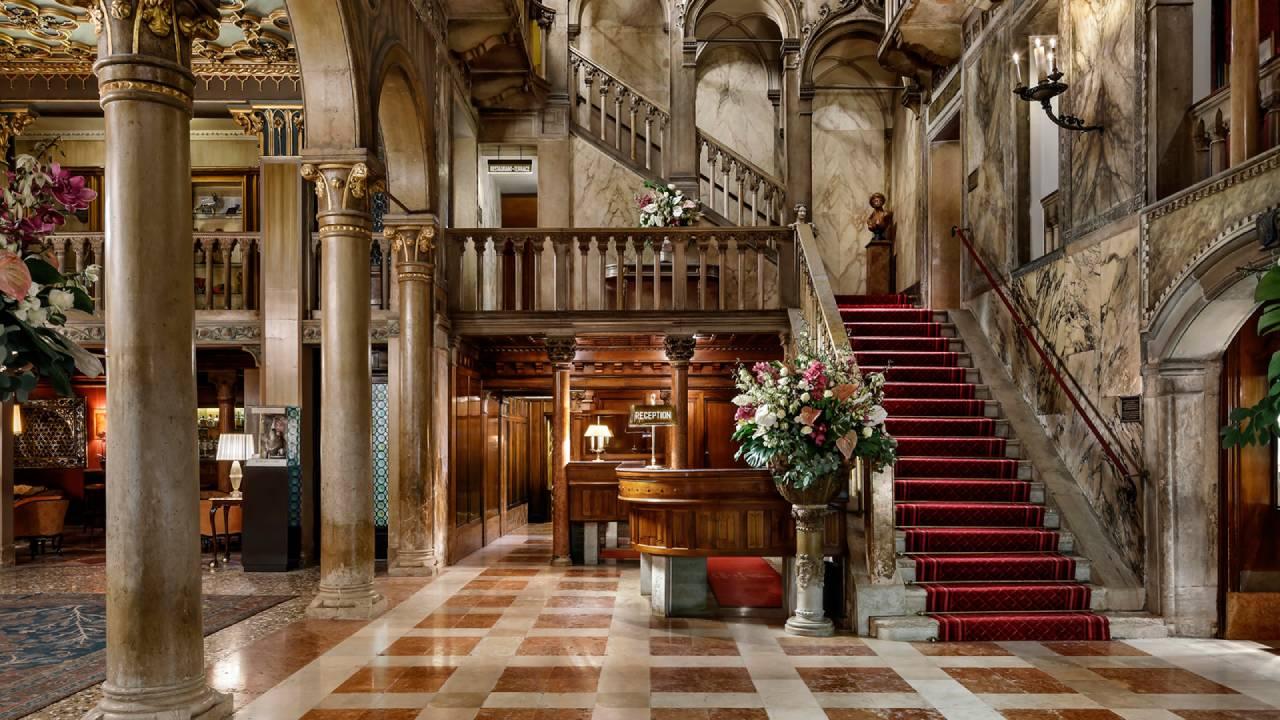
From Venetian palazzos and Kyoto's historic quarters to the empty coastline of Baja California, the world's luxury hotel groups are competing for something far more valuable than another five-star address: places that cannot be replicated.
The most important luxury hotels of 2026 tell a different story from the conventional hotel-development boom. This is not simply a race to add more rooms in Paris, London, Dubai or New York. The world's leading hospitality brands are increasingly hunting for properties with history, cultural relevance, natural scarcity or neighbourhood prestige, attributes that cannot easily be recreated through architecture or capital alone.
Venice has seen two extraordinary historic buildings reborn under Four Seasons and Orient Express. Capella has entered Japan through Kyoto rather than Tokyo. Aman has chosen the largely untouched East Cape of Baja California Sur for its first Mexican resort. Four Seasons has entered Mykonos, while luxury operators are also looking increasingly at mountain landscapes, affluent neighbourhoods and historic European buildings as the foundations of their next generation of hotels.
The shift is happening against a remarkably powerful backdrop. Global Travel & Tourism contributed US$11.6 trillion to the world economy in 2025, representing around 9.8% of global GDP, according to the World Travel & Tourism Council. International visitor spending reached a record US$2.02 trillion, while global Travel & Tourism investment exceeded US$1 trillion. The United States, China, India and Saudi Arabia together accounted for almost half of global tourism capital investment in 2025.
Luxury demand appears particularly resilient. Virtuoso's 2026 Luxe Report, drawing on more than 2,400 travel advisers across over 50 countries, found that roughly two-thirds expected luxury travel demand to increase in 2026. Some 55% expected spending per trip to rise modestly, while cultural immersion, authenticity, adventure, beach resorts, gastronomy and meaningful family travel ranked among the major trends shaping affluent travel. Italy, Japan and Greece occupied the first three places in Virtuoso's ranking of the most popular global destinations for luxury travellers in 2026. Readers who want to see how this appetite was already building can revisit our look at luxury travel trends shaping 2025 in the Maldives.
That combination of capital, traveller demand and scarcity is creating what may be the defining luxury-hospitality trend of the year.
The New Luxury Hotel Map of 2026
| Destination | Hotel / Development | 2026 Significance |
|---|---|---|
| Venice, Italy | Danieli, Venezia, A Four Seasons Hotel | Historic Venetian icon reopened under Four Seasons |
| Venice, Italy | Orient Express Venezia | 15th-century Palazzo Donà Giovannelli reborn as a 47-key hotel |
| Kyoto, Japan | Capella Kyoto | Capella's first Japanese hotel; 89 keys in historic Miyagawa-cho |
| Mykonos, Greece | Four Seasons Hotel Mykonos | Major global luxury operator enters one of Europe's strongest island markets |
| Baja California Sur, Mexico | Amanvari | Aman's first Mexican resort on the East Cape |
| Dallas, US | The Knox, Auberge Collection | Luxury hotel and residences embedded in an affluent lifestyle district |
| Florence, Italy | La Réserve Firenze | Ultra-low-density residential hospitality in a historic palazzo |
| Rome, Italy | Baccarat Hotel Rome | Former Hotel Majestic conversion; expected in 2027 after earlier 2026 guidance |
| Milan, Italy | Six Senses Milan | Brera luxury and wellness project now scheduled beyond 2026 |
These properties are geographically diverse, but strategically they have something important in common. They are not competing only on rooms, service or restaurants. They are competing on place.
Italy Has Become Luxury Hospitality's Great Laboratory
No market demonstrates the shift more clearly than Italy.
Deloitte recorded more than 4.7 million luxury tourist arrivals and 14.1 million luxury overnight stays in Italy in 2024. Hotel investment reached approximately €2 billion, with more than half directed to luxury hospitality. In Deloitte's subsequent survey of investors and operators, 60% identified Italy as Europe's most attractive luxury-hospitality investment destination, considerably ahead of Greece and Portugal.
That interest is not difficult to understand. Italy possesses something that hotel developers elsewhere struggle to manufacture: an extraordinary supply of historically significant buildings in globally desired destinations. The same pull is visible in property, as explored in the enchanting world of luxury real estate in Italy, and in the wealth flows covered in why millionaires are choosing Italy, UAE and Portugal.
Venice has become the clearest expression of this phenomenon.
On 30 July 2026, the legendary Hotel Danieli reopened as Danieli, Venezia, A Four Seasons Hotel. Located on Riva degli Schiavoni near Piazza San Marco, the property brings Four Seasons into one of Venice's most recognisable historic addresses and became the group's fourth hotel in Italy. Four Seasons describes the Danieli complex as comprising three historic palaces, with elements dating to the 15th century. Its initial 2026 phase includes 120 accommodations, including 52 suites, before expanding further in 2027.
Only a few months earlier, Orient Express Venezia opened on 30 March 2026 inside Palazzo Donà Giovannelli in Cannaregio. The building dates to the 15th century and, according to Orient Express, became a hotel for the first time in almost six centuries. The intimate property contains just 47 rooms and suites, with accommodation ranging from roughly 30 sq m to expansive suites and apartments of up to 148 sq m. The brand's Italian ambitions also extend to the rails, as seen in a journey on La Dolce Vita Orient Express.
The small room count is important. Ultra-luxury hospitality increasingly operates under a different economic philosophy from conventional hotel development. More keys do not necessarily mean more prestige. At the highest end of the market, limited inventory can itself become part of the product.
Florence is moving in a similar direction, with La Réserve Firenze pursuing an almost residential model inside a restored historic palazzo, a city whose appeal to affluent buyers is captured in a journey through the luxury homes in Florence. Meanwhile, Rome's former Hotel Majestic on Via Veneto is being repositioned as Baccarat Hotel Rome. Earlier projections pointed towards a late-2026 debut, although the opening has subsequently moved into 2027.
Milan's Brera district is attracting the same attention. Six Senses has long been expanding across the country, as covered when Six Senses confirmed its second Italian property, while the city's wellness ambitions were already visible when Mandarin Oriental in Milan debuted a wellness retreat. For the residential side of the city, see the amazing world of luxury real estate in Milan.
The pattern is bigger than any individual property.
Luxury brands are increasingly discovering that history can function as an economic moat.
The Palazzo Effect: Why Heritage Is Becoming More Valuable
LuxuryAbode defines this phenomenon as The Palazzo Effect: the prestige, desirability and potential pricing power a luxury hospitality brand gains by occupying an irreplaceable historic property instead of creating a conventional new-build hotel.
A new hotel can commission an extraordinary architect. It can source rare stone, employ master craftsmen and spend hundreds of millions on construction. What it cannot manufacture is four or five centuries of provenance.
A Venetian palazzo arrives with a façade recognised by generations, rooms that have already witnessed history, centuries-old craft traditions, a relationship with the streets surrounding it and a story that existed long before the hotel operator arrived. Similar logic powered Matild Palace Budapest, a luxury hotel steeped in history, long before the current wave.
That distinction is increasingly valuable in a luxury market where material extravagance has become easier to reproduce.
Scarcity strengthens the economics. There may be hundreds of sites where a five-star hotel could theoretically be developed, but there is only one Palazzo Donà Giovannelli and only one Danieli overlooking the Venetian lagoon. Once one of these assets enters a long-term relationship with a particular hospitality brand, competitors cannot simply reproduce it across the street.
The result is a new kind of hotel arms race. The battle is no longer merely for the strongest development pipeline.
It is becoming a battle for the world's hardest-to-copy addresses.
Deloitte's investment research supports the broader repositioning thesis. More than 70% of investors and operators it surveyed planned to invest in food and beverage as part of luxury-hotel repositioning, while more than 21% of CapEx across repositioning projects was allocated to sustainability initiatives. Luxury hotels are consequently becoming much larger ecosystems encompassing restaurants, wellness, culture, retail, events and social spaces rather than simply accommodation.
Kyoto Shows Why Culture May Be the Ultimate Luxury Amenity
If Italy demonstrates the value of architectural heritage, Kyoto demonstrates the value of cultural context.
Capella Kyoto opened on 22 March 2026 in the historic Miyagawa-cho kagai, one of Kyoto's traditional geisha districts, close to Kenninji Temple and the Kamo River. Designed by Kengo Kuma & Associates with Brewin Design Office, the four-storey hotel contains 89 rooms, including 29 suites. Rooms start from approximately 50 sq m and surround a central courtyard and water feature. Kyoto's pull on global hotel brands is not new, as shown when Hotel The Mitsui Kyoto prepared to launch in Japan.
The significance of Capella Kyoto lies less in its room count than in the philosophy behind the property. Its architecture interprets Kyoto's traditional machiya townhouses, using gardens, layered passageways, materials and spatial sequences that attempt to connect the hotel to the city rather than insulate guests from it.
This illustrates an important reversal in global luxury hospitality.
For decades, large hotel groups exported recognisable international luxury to destinations around the world. Travellers knew what to expect when they entered a global five-star property, regardless of whether they were in Singapore, London or New York.
The emerging model promises something different: global standards without erasing the destination.
Luxury travellers increasingly want the confidence of an international operator while still feeling unmistakably in Kyoto, Venice, Marrakech or Mexico.
That is why culture itself is becoming one of hospitality's most important amenities.
Mykonos Proves That Established Destinations Still Have Pricing Power
Not every important hotel opening is about discovering an emerging destination. Sometimes the opportunity comes from entering a mature luxury market where demand and global recognition are already deeply established.
Four Seasons Hotel Mykonos opened in 2026 above Kalo Livadi Bay, bringing the brand into one of the Mediterranean's most internationally recognised leisure destinations. The property offers guest rooms, suites and villas with sea views, alongside multiple restaurants and lounges.
The logic behind Mykonos is almost the opposite of an emerging-market hotel strategy. The island already possesses global brand recognition, private aviation traffic, yachts, beach clubs, restaurants, villas and a well-established concentration of wealthy travellers.
The opportunity is therefore not to create demand but to capture more value from it.
This helps explain why Virtuoso ranked Greece third among the world's most popular luxury destinations for 2026, behind Italy and Japan. The wider Greek picture includes One&Only Kea Island as a new pinnacle of luxury and the 10 best luxury vacation rentals in Greece.
For luxury groups, destinations such as Mykonos demonstrate that constrained geography combined with global desirability can sustain premium pricing even in highly competitive hotel markets.
Amanvari and the Luxury of Empty Space
At the opposite end of the hospitality spectrum lies a completely different form of scarcity.
Aman chose the East Cape of Baja California Sur for its first Mexican resort, Amanvari. The property began accepting guests from 1 August 2026 and occupies a landscape where desert, estuary, mountains and the Sea of Cortez converge.
Here, the luxury product is not centuries-old architecture or proximity to cultural institutions.
It is distance.
The global affluent traveller has increasingly started assigning economic value to silence, privacy, nature and controlled isolation. In heavily visited destinations, genuine emptiness has itself become difficult to find.
Aman has built much of its global reputation on precisely that proposition: relatively small-scale hospitality located in environments where the setting carries as much value as the physical resort.
Baja's East Cape fits that strategy particularly well because it remains connected to the established Los Cabos tourism ecosystem while offering a landscape that feels considerably less developed. Travellers can already see that contrast in top experiences at Four Seasons Los Cabos in Baja, while buyers have been watching luxury real estate in Cabo San Lucas booming.
This is likely to become an increasingly important hospitality formula: remote enough to feel rare, but accessible enough to remain commercially viable.
From Hotels to Luxury Ecosystems
Another major transformation is occurring in cities such as Dallas, where luxury hospitality is becoming more closely connected to branded residences, premium retail and neighbourhood life.
The Knox, Auberge Collection, is scheduled to debut in Dallas in late 2026 as part of the Knox Street district. Auberge describes the project as combining a luxury hotel with private residences and access to one of Dallas's strongest shopping and dining neighbourhoods, alongside the Katy Trail. The hotel itself is planned with 140 rooms, with interiors by Martin Brudnizki Design Studio.
The Knox represents a broader change in how luxury hotels make money.
Historically, the guest was primarily someone who slept at the property. Today's most ambitious urban hotels want local residents to eat there, drink there, exercise there, entertain there, buy residences there and potentially treat the hotel as part of their social identity.
The business model consequently becomes much richer.
Hotels are evolving into combinations of hospitality, restaurants, wellness, real estate, private clubs, retail and social infrastructure.
Branded residences accelerate the same trend. Hotel operators can extend their brands into residential real estate, while developers gain pricing power and buyers gain access to hospitality services. The appetite is real: one Dubai broker once recorded Four Seasons private residences selling out in three months. Operators are also planting flags in capital cities, as when Four Seasons made its debut in Madrid.
The boundary between luxury hotel and luxury lifestyle brand is becoming increasingly difficult to see.
What the Luxury Hotels of 2026 Are Really Telling Us
Taken together, the year's most important projects suggest that five major forces are reshaping the luxury-hospitality market.
| Luxury shift | What it means |
|---|---|
| Place over standardisation | Travellers increasingly want hotels that amplify rather than conceal the destination |
| Scarcity over scale | Small inventories and difficult-to-replicate locations can command significant luxury premiums |
| Heritage as an asset | Palazzos, grand hotels and historic buildings provide instant provenance |
| Nature as infrastructure | Beaches, mountains, deserts and protected landscapes are becoming luxury assets |
| Hotels as ecosystems | Residences, wellness, dining, clubs and retail expand the hotel far beyond guestrooms |
The first shift may be the most important.
For much of the modern hotel era, international consistency was an advantage. A traveller could enter a great hotel thousands of kilometres from home and immediately understand the service, design standards and rituals.
At the highest end of the market, sameness is now becoming a weakness.
The luxury traveller increasingly wants to know why the hotel could only exist in that particular place.
That is why a Kengo Kuma interpretation of Kyoto can be more compelling than another international glass tower. It explains the rebirth of Venetian palazzos, the attraction of Baja's open coastline and the continuing pricing power of Mykonos.
Luxury hospitality is becoming simultaneously more global in ownership and more local in expression.
The Numbers Behind the Luxury-Hospitality Opportunity
The economics underlying this shift remain substantial.
| Indicator | Latest figure |
|---|---|
| Global Travel & Tourism contribution to GDP, 2025 | US$11.6 trillion |
| Share of global economy | 9.8% |
| Global tourism jobs supported | 366 million |
| International visitor spending, 2025 | US$2.02 trillion |
| Global Travel & Tourism investment, 2025 | More than US$1 trillion |
| Virtuoso advisers expecting increased 2026 luxury demand | Approx. 67% |
| Advisers expecting spending per trip to increase modestly | 55% |
| Luxury tourist arrivals in Italy, 2024 | 4.7 million+ |
| Luxury overnight stays in Italy, 2024 | 14.1 million |
| Italian hotel investment, 2024 | Approx. €2 billion |
| Investors ranking Italy Europe's most attractive luxury-hospitality market | 60% |
Sources: WTTC, Virtuoso and Deloitte.
The figures make one thing clear: luxury hospitality is no niche corner of global travel. It sits at the intersection of tourism, real estate, architecture, wealth creation, branded residences, gastronomy and experience-led consumption.
That helps explain why some of the world's strongest hotel groups and luxury brands continue competing for prestigious properties despite elevated construction costs and uncertain global conditions. Earlier cycles looked similar, as in our roundup of the most awaited luxury hotels on the planet.
The asset is not merely a hotel.
It can become a global stage for the brand.
The LuxuryAbode View: The Next Hotel War Is for the Irreplaceable
For decades, hotel groups competed through distribution. The larger the global footprint, the stronger the network appeared.
The next phase of luxury hospitality may be more selective.
Instead of asking how many hotels a brand can open, the more interesting question may be: how many truly exceptional places can it secure?
The Venetian palazzo, the Kyoto courtyard, the Roman grand hotel, the Mykonos cliffside, the Baja coastline and the protected mountain landscape all derive part of their value from the same principle.
They cannot simply be duplicated.
That makes scarcity both an emotional and commercial asset.
The strongest luxury hotels of the coming decade may therefore be those that combine the operating sophistication of a global hospitality company with something much harder to manufacture: cultural legitimacy, history, landscape and a genuine sense of place.
Luxury hospitality is not abandoning grandeur.
It is redefining where grandeur comes from.
And in 2026, the most valuable hotel amenity may be the one thing money alone cannot build:
an address with a story.
Frequently Asked Questions
What are the most important new luxury hotels of 2026?
Important luxury hotel openings and debuts include Danieli, Venezia, A Four Seasons Hotel; Orient Express Venezia; Capella Kyoto; Four Seasons Hotel Mykonos; Amanvari in Baja California Sur; and upcoming projects such as The Knox, Auberge Collection in Dallas.
Which destinations are most popular for luxury travel in 2026?
Virtuoso's 2026 Luxe Report ranks Italy first, followed by Japan, Greece, France, Croatia, Portugal, Spain, South Africa, Australia and Canada among its most popular global destinations for affluent travellers.
Why is Italy attracting so much luxury-hotel investment?
Italy combines strong international tourism demand with historic buildings, globally recognised cities, cultural heritage, gastronomy and constrained prime real estate. Deloitte reports more than 4.7 million luxury arrivals and 14.1 million luxury overnight stays in Italy in 2024, with hotel investment of approximately €2 billion.
What is the Palazzo Effect?
The Palazzo Effect is LuxuryAbode's term for the prestige, scarcity and potential pricing advantage created when a luxury hotel brand occupies an irreplaceable historic building rather than a conventional new development.
When did Orient Express Venezia open?
Orient Express Venezia opened on 30 March 2026 inside the 15th-century Palazzo Donà Giovannelli in Venice. The hotel has 47 rooms and suites.
When did Capella Kyoto open?
Capella Kyoto opened on 22 March 2026 in Kyoto's historic Miyagawa-cho district. It contains 89 rooms and was designed by Kengo Kuma & Associates with Brewin Design Office.
Where is Amanvari?
Amanvari is located on Baja California Sur's East Cape in Mexico, where desert, mountains, estuary and the Sea of Cortez meet. Aman began welcoming guests from 1 August 2026.
What are the biggest luxury-hotel trends in 2026?
The strongest trends include heritage-hotel conversions, culturally immersive hotels, ultra-low-density resorts, destination wellness, branded residences, luxury neighbourhood hotels and growing demand for authentic local experiences.
Get Featured on LuxuryAbode
LuxuryAbode works with leading hotels, resorts, destination brands, designers and hospitality groups to tell stronger luxury stories to a discerning global audience. Hotels launching a new property, repositioning a heritage asset, introducing a signature experience or entering a new market can approach the LuxuryAbode editorial team for consideration across editorial features, brand stories, destination coverage and curated luxury-hospitality placements. The strongest submissions are those with a distinctive design, destination, heritage, culinary, wellness or experiential story worth documenting.


Comments
No comments yet.
Add Your Comment
Thank you, for commenting !!
Your comment is under moderation...
Keep reading luxury post