AI is Reshaping Luxury - But Not in the Way Anyone Predicted
 Namrata Parab
- 13th Jul 2026
- 1348
- 0
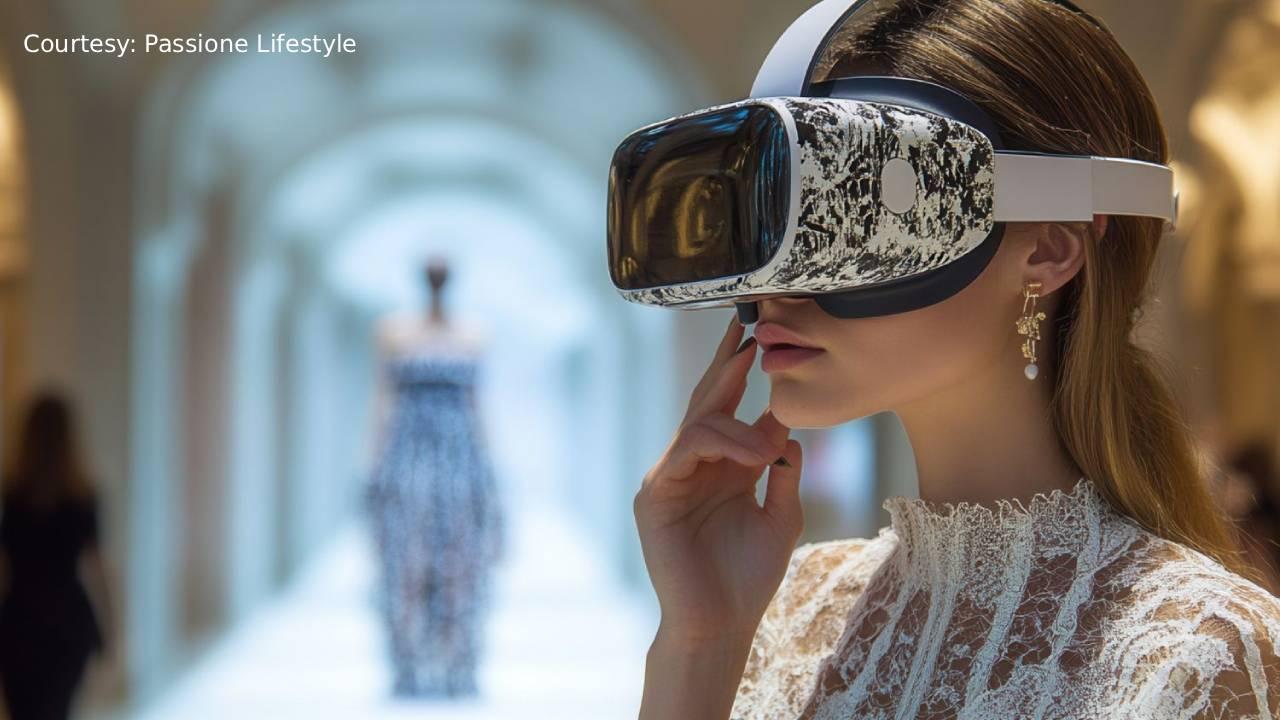
The machines did not come for the craft. They came for the attention.
In 2026, artificial intelligence is quietly rebuilding the way luxury is discovered, desired, sold and verified - while the hand-stitching, the movement finishing and the marble stay exactly where they were. Here is the definitive picture of what has actually changed, what has not, and how the affluent should read it.
Key takeaways
| Signal | What it means |
|---|---|
| Roughly 87% of luxury consumers now use generative AI in daily life, and about 79% use it for luxury research | The first conversation about your next watch, villa or suite no longer happens with a brand. It happens with a model. |
| AI assistants are trusted by around 29% of luxury buyers, against 36% for word of mouth | AI has quietly become the second-most trusted advisor in luxury, ahead of influencers and social media. |
| Global luxury spend sat near 1,443 billion euros in 2025 and is projected roughly flat for 2026 | Growth is no longer free. AI is being adopted as a margin and relationship tool, not a hype cycle. |
| Hyper-personalisation can cut acquisition costs by up to 50% and lift marketing ROI 10 to 30% | The economics of intimacy have flipped. Attention is now scalable. |
| Hospitality players deploying AI personalisation report over 23% in additional revenue | The concierge is being cloned, not fired. |
| Counterfeits drain over 30 billion dollars a year while resale has grown past 210 billion dollars | Provenance is the new luxury battleground, and AI is the weapon. |
Sources: Bain and Altagamma, BCG, McKinsey State of Fashion, industry estimates.
The reversal nobody saw coming
For twenty years the assumption was that technology would democratise luxury and therefore destroy it. Scale kills scarcity. Algorithms kill taste.
What is actually happening in 2026 is the opposite. AI is not making luxury more mass. It is making the most expensive thing in luxury, undivided human attention, reproducible at scale. The white-glove relationship that once existed only between a Bond Street director and forty clients can now exist between a maison and forty thousand, without the maison forgetting a single anniversary, a single sizing quirk, a single completed collection. Understanding this shift begins with understanding why artificial intelligence is the need of the hour for luxury brands.
That is not democratisation. That is the industrialisation of intimacy. And it is the single most important thing happening in luxury today.
The Quiet Intelligence Doctrine
The houses getting this right share one operating principle, and it is worth naming: the more visible the AI, the cheaper the brand feels.
Mass retail advertises its algorithms. Luxury hides them. LVMH internally frames this as "quiet tech", a principle visible across the incredible brand story of LVMH. The test of a successful AI deployment in a maison is not that a client is impressed by it, it is that the client never perceives it at all, and simply feels remembered.
This produces a clean architecture that any luxury operator can audit against:
| Layer | Where AI belongs | Where AI must never appear |
|---|---|---|
| Operations | Demand forecasting, inventory, supply chain, pricing discipline | |
| Intelligence | Client 360 profiles, predictive clienteling, trend detection | |
| Interface | Discovery, curation, virtual try-on, conversational styling | Final persuasion |
| Emotion | The atelier, the boutique, the closing conversation, the handover |
The rule: AI handles the invisible. Humans handle the memorable.
1. Discovery has moved upstream, and brands no longer own the first impression
This is the most under-discussed shift in the industry, and the most dangerous.
The affluent buyer no longer begins at a brand's website or a boutique door. They begin inside a model, asking for comparisons between a Patek 5711 and a Nautilus successor, or between Worli and Downtown Dubai, or between an Aman and a Six Senses. By the time a client reaches a brand, the frame has already been set by a machine the brand did not build, does not control and cannot advertise on. Luxury brands must embrace technology precisely to reclaim that upstream moment.
The strategic consequence is stark. Search engine optimisation is no longer sufficient. Generative engine optimisation, GEO, is now the discipline that decides whether a house exists in the answer or not. A traditional search page shows ten links, of which a brand needs one. An AI answer surfaces two or three names. There is no page two.
Houses that are not structurally legible to language models, clear provenance data, structured product and property information, authoritative editorial, consistent third-party corroboration, are not losing rank. They are vanishing.
Ralph Lauren's conversational stylist, Brunello Cucinelli's narrative AI environment and Swarovski's digital flagship are all early attempts to reclaim that upstream moment. So is the sophisticated strategy behind luxury digital marketing, which now has a new layer to address: the model, not the search engine.
2. Clienteling 2.0: the advisor with perfect memory
The second front is the sales floor, and here AI is not replacing the associate. It is arming them.
Zegna's ZEGNA X copilot, Burberry's application of machine learning to reshape how technology impacts luxury brands, and the CRM-layered systems now standard across the majors all do the same thing: they hand the associate a client's wish list, purchase history, sizing, past gifting occasions and predicted next need before the client has finished walking through the door.
The economic logic is undeniable. Personalised interactions can drive up to 40% more revenue in luxury retail. Acquisition costs fall by as much as half. The metric shifts from conversion to lifetime value. It is precisely the transformation that AI in luxury retail is driving across the segment's evolution.
But there is a failure mode, and it is fatal: the uncanny valley of intimacy. A client who feels remembered is delighted. A client who feels surveilled is lost forever, and does not tell you why. The line between the two is not technical. It is a matter of taste, and no model has taste.
3. The atelier: augmentation, not automation
Generative AI now compresses the design cycle, mood boards, colourways, thousands of variations, regional trend detection across millions of runway and street images. It surfaces micro-trends months before a human forecaster would.
What it has not done, anywhere, is replace the creative director. Brunello Cucinelli's framing is the most honest in the industry: AI as a companion that accompanies human genius rather than substitutes for it.
The reason is structural, not sentimental. Luxury pricing is a claim about human time. A 300-hour movement, a hand-rolled edge, a hand-tufted rug, the premium is the labour. Automate the labour and you have not made luxury more efficient. You have deleted the thing being paid for. This is the very insight behind the technology and luxury retail combination that works best as a recipe for customer delight: augment the artisan, never replace them.
4. Provenance: where AI genuinely saves the industry
If AI does one unambiguous good for luxury, it is here.
Counterfeit operations bleed the sector over 30 billion dollars a year, and high-quality fakes now defeat human authentication services a meaningful share of the time, which is precisely why LVMH, Cartier and Prada joined forces to battle counterfeits. Meanwhile the secondary market has swollen past 210 billion dollars, a surge reflected in the rapid growth of luxury resale and the business of flipping fashion into profits, populated by buyers with no reliable way to verify what they are buying.
AI authentication, machine vision trained on vast libraries of genuine dial printing, engraving depth, stitch pitch and material signature, combined with blockchain-anchored digital passports and embedded NFC and chip authentication, is building something luxury has never had: an unbroken, machine-verifiable chain of custody from atelier to third owner. The groundwork was laid by initiatives like Zurich-based Adresta, a luxury goods digital certificate creator and blockchain start-up.
The luxury authentication services market is projected to roughly double from about 1.8 billion dollars in 2026 to over 4 billion by the mid-2030s. For collectors, this is the most consequential development of the decade. Provenance is becoming a data asset, and a watch or a bag without one will trade at a discount.
5. Luxury real estate and hospitality: the sleeping giants
Prime real estate is the least digitised corner of luxury and therefore the one with the most to gain.
The AI-native shift is already visible in four places. Buyer intelligence: predictive models identify which UHNWI is likely to transact, in which micro-market, at which price band, before a listing goes live. Discovery: buyers now interrogate LLMs about a locality's infrastructure pipeline, rental yield, RERA status and price trajectory before ever contacting a broker. Visualisation: generative rendering and immersive walkthroughs let a Dubai buyer experience a Worli sea-facing residence at 3am from Zurich. Underwriting: comparable analysis, absorption modelling and yield forecasting that once took an analyst a week now takes a machine a minute. All of this accelerates the ambitions of India's ultra-wealthy who are building ultra-luxury real estate empires.
In hospitality, AI-driven personalisation delivers over 23% additional revenue and has lifted cancellation forecasting accuracy by around 40%. The deeper point is philosophical: the personalised guest experience was always the definition of luxury hospitality, and its economics restricted it to the top of the market. AI removes that restriction. Which means the luxury hotel's moat is no longer personalisation. It has to become something machines cannot fake.
The India and Gulf dimension
For the Indian and Middle Eastern affluent, the shift lands with particular force.
New wealth in these markets skews decisively toward durable, high-ticket assets, real estate, cars, yachts, then hard luxury such as jewellery and watches. These are precisely the categories where AI research adoption is highest and where verification, valuation and provenance matter most. This cohort is growing fast: millionaire migration data shows 142,000 ultra-rich choosing UAE, Italy and Portugal in pursuit of precisely this calibre of asset.
At the same time, experiential luxury, travel, hospitality, food and beverage, is expected to expand from roughly a fifth of luxury spending toward two-fifths. India's HNWI cohort is moving in exactly that direction, and it is a cohort that has grown up mobile-first and is unusually comfortable letting a model do the first round of research. The implications for luxury brands here are compounded by the ongoing digital transformation of luxury fashion shopping in India.
The implication for Indian developers, hoteliers, jewellers and brokerages is uncomfortable and urgent: your next ultra-prime buyer will meet a language model before they meet you. Nothing in your marketing budget currently addresses that.
The Discretion Index: five questions to audit any luxury brand's AI
A brand's AI maturity in 2026 can be assessed in five questions. Score one point each.
- The Answer Test. If a client asks a leading AI model for the best in your category, in your market, does your name appear?
- The Memory Test. When a client walks into your boutique or site office, does your team know who they are, without asking?
- The Invisibility Test. Can a client complete a full journey with you and never once perceive that AI was involved?
- The Provenance Test. Can a buyer verify the authenticity and full history of what you sold them, ten years from now, without you?
- The Human Reserve Test. Have you explicitly protected the moments, the closing, the handover, the atelier, where no machine is permitted?
Score 4 or 5 and you are ahead of most of the industry. Score 2 or below and you are competing on price without knowing it.
What AI cannot do, and never will
It cannot make scarcity. It cannot confer status, status is a social consensus, not a computation. It cannot create the reassurance of a trusted advisor's hesitation before a bad purchase. It cannot manufacture the passage of time that makes heritage heritage.
Luxury's deepest moat was never technological. It was that certain things cannot be hurried, cannot be copied, and cannot be scaled. AI does not threaten that moat. It floods everything around it, which makes the island more valuable, not less.
The 2026 verdict is therefore precise: AI is not disrupting luxury. It is disciplining it. It is stripping away the parts of the business that were never really luxury, the guesswork, the friction, the forgetting, the fakes, and leaving the houses standing exactly where they must compete: on craft, on judgment, on human beings.
The brands that understand this will let the machines do the remembering. And they will keep the meaning for themselves.
FAQ
Is AI making luxury less exclusive?
No. It is making service scalable, not products abundant. Scarcity is still a deliberate business decision, and AI does not touch it.
Will AI replace luxury sales associates?
No. It replaces the associate's paperwork and memory gaps. Every credible deployment in 2026, Zegna, Burberry, the major maisons, positions AI as a copilot to the human, not a substitute.
Should I trust AI recommendations for a high-value purchase?
Use it for research, comparison and shortlisting, where it now outperforms most human intermediaries. Do not use it for authentication, valuation or final judgment on a unique asset. For those, a machine-assisted human expert remains the standard.
What is GEO and why does it matter to luxury brands?
Generative engine optimisation is the practice of making a brand legible and credible to AI models so it surfaces in AI-generated answers. Since a growing share of buyers begin their search inside an AI assistant, a brand absent from those answers is effectively invisible at the moment of intent.
Which luxury sector will AI change most by 2030?
Provenance and resale. Machine-verified authentication and digital product passports will make a verified history a priced component of every luxury asset, watches, jewellery, handbags and, increasingly, property.
Disclaimer: This article is intended for general information only. All statistics, percentages, market-size figures and revenue estimates cited, including AI adoption rates, personalisation ROI ranges, counterfeit loss estimates, resale market size, authentication market projections and AI revenue uplifts in hospitality, are drawn from the source material provided and attributed to third-party research bodies (Bain and Altagamma, BCG, McKinsey and industry estimates). These figures are indicative, subject to methodological variation and may have changed since publication. Forward-looking statements about market growth, authentication market projections and technology adoption represent estimates, not guarantees. Nothing here constitutes financial, investment, marketing or legal advice. Brands and operators should verify all statistics and obtain independent professional counsel before acting on them.



Comments
No comments yet.
Add Your Comment
Thank you, for commenting !!
Your comment is under moderation...
Keep reading luxury post