The Rise of Fine Water: Why the World's Finest Tables Now Taste Water Like Wine
 Anishka Kataria
- 12th Jul 2026
- 1293
- 0
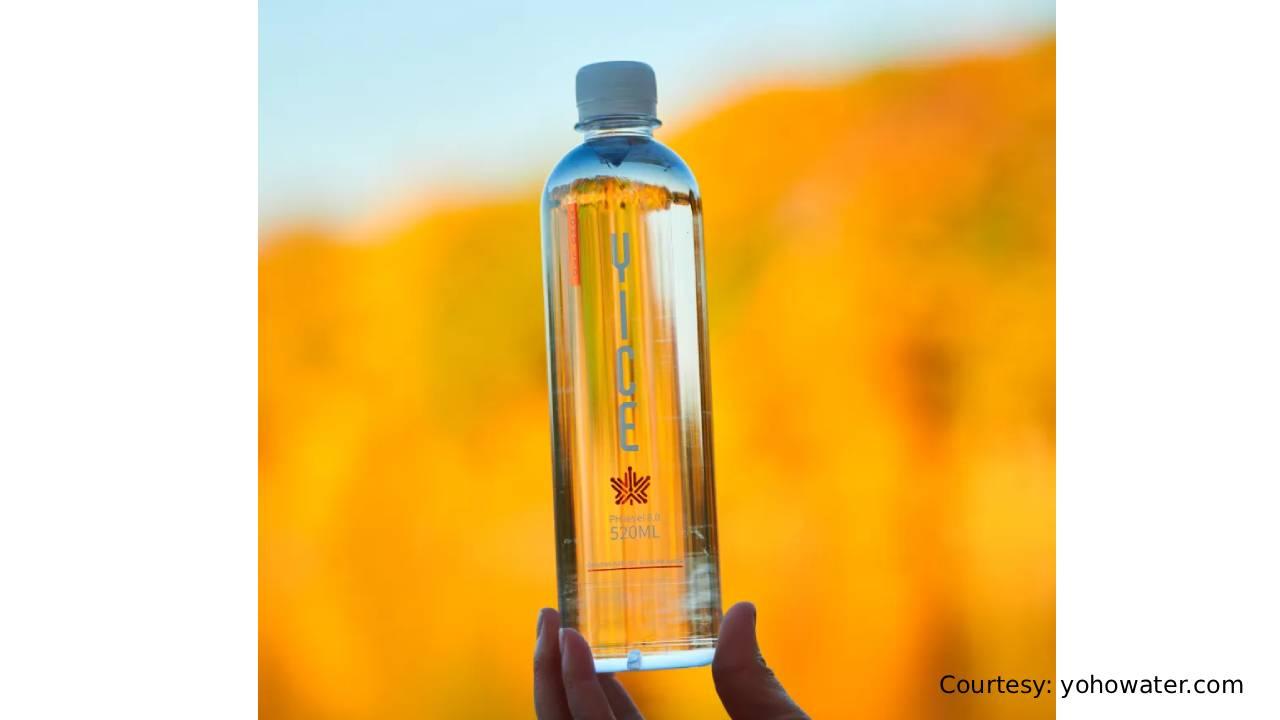
There was a time when ordering water at dinner meant choosing between still and sparkling. In a room in Montreal this year, some of the most exacting palates alive spent an afternoon doing something else entirely: judging water. Bottles were decanted into wine stemware, swirled, held to the light and scored on minerality, mouthfeel and terroir, the way a sommelier might interrogate a first-growth Bordeaux. At the closing dinner of the 2026 Fine Water Summit, not a drop of alcohol was poured. Water was the guest of honour, paired course by course, each pour chosen for how it would lift or quiet the plate in front of it.
The winners read like wines with a vintage and a backstory. Norway's EIRA took gold for a still water filtered through ancient granite and glacial rock. Austria's Wossa, drawn from a marble spring in the Lavanttal valley, won among the sparkling waters. A Czech bottling called Balbin was honoured for water pulled from a 20-million-year-old artesian aquifer and perfumed with aromatic compounds captured during grape fermentation.
Welcome to the world of fine water, where geology matters as much as gastronomy, and where a single bottle can cost more than an excellent bottle of wine. That instinct has now crossed into India. In the private dining rooms of Mumbai and the members' clubs of Delhi, a small, discerning set is beginning to choose its water the way it once learned to choose its wine. This is the definitive guide to that world: what fine water is, how to read it, what it costs here in rupees, and how to taste it well. For those who have followed a similar journey with wine, the art of collecting, enjoying and complementing wines offers the closest intellectual parallel — fine water asks the same questions of provenance, character and pairing that wine education has always asked.
What Is Fine Water?
Fine water is bottled terroir. It is a rarefied category of natural mineral and spring waters prized not for purity alone but for where they come from, what the earth has dissolved into them over centuries, and the sense of place they carry to the glass. Its character is defined entirely by its source.
The distinction that anchors the whole category is simple. Natural mineral water is discovered. Packaged drinking water is manufactured. Where ordinary bottled water is filtered and standardised to taste identical regardless of origin, fine water is bottled close to its source with its naturally occurring minerals intact, and it is celebrated for its variation rather than its uniformity.
The idea is borrowed from wine: terroir, the unique combination of geology, altitude, climate and rock through which the water has travelled, sometimes for thousands or millions of years. Evian is shaped by the French Alps. Aava rises through the Aravallis, one of the oldest mountain ranges on earth, and is bottled in Gujarat. Himalayan draws from Paonta Sahib in Himachal Pradesh, Veen from a remote spring in Bhutan, and Svalbardi is harvested, iceberg by iceberg, from the Arctic fjords of Svalbard. No two taste alike, and that is the entire point.
The LuxuryAbode Fine Water Index
The simplest way to understand a fine water is through its mineral concentration, measured as total dissolved solids, or TDS. LuxuryAbode classifies premium waters into four tasting tiers. Mineral concentration is not a measure of quality; it is a measure of character. Just as red differs from white, every mineral water expresses itself differently.
| Tier | TDS | Taste profile | Best food pairing |
|---|---|---|---|
| Ultra Light | Below 100 ppm | Delicate, silky, near-neutral | Sushi, oysters, sashimi |
| Light Mineral | 100 to 300 ppm | Crisp, clean, refreshing | Salads, seafood, soft cheeses |
| Medium Mineral | 300 to 700 ppm | Balanced, rounded | Indian vegetarian, khichdi, poultry |
| High Mineral | 700 to 2,000 ppm | Rich, savoury, complex | Biryani, barbeque, aged cheese, dark chocolate |
Waters above 2,000 ppm exist too, so intensely mineralised that some are treated as curative and taken for therapeutic benefit rather than pleasure.
Why Fine Water Is the New Luxury Beverage
Luxury today is defined by authenticity rather than excess, and that single shift explains the rise of fine water. Naturally sourced waters are quietly replacing alcohol at many of the world's premium tables, driven by a growing cohort of non-drinkers and wellness-minded diners who want ceremony and interest without intoxication. The same force is reshaping the spirits world: zero-alcohol luxury beverages are gaining serious ground on fine dining menus, and fine water is the most ancient and purest expression of that shift.
There is status in it too. Serving a considered water at dinner now signals taste the way a single malt once did. At the Montreal summit, sommeliers judged entries on the same terms a wine competition would recognise: minerality, mouthfeel, balance, finish, carbonation, terroir and overall harmony. The alcohol-free gala that followed made the argument plainly. Hydration itself can be an element of fine dining, and water can carry a menu. The parallel with champagne culture is instructive: the comprehensive guide to champagne and sparkling wines maps exactly the same vocabulary of bubbles, terroir, finish and food harmony that the fine water world is now applying to its own category.
Why a Bottle of Water Can Cost More Than Wine
Fine water is priced on provenance and the difficulty of getting it into the bottle. The rarer the source and the harder the harvest, the higher the price climbs. Svalbardi is the extreme case: bringing its water to shore can take an expedition of up to a week at sea, selecting and lifting individual pieces of iceberg before they melt back into the ocean. That labour, not the water, is what you pay for. Why Acqua di Cristallo Tributo a Modigliani is considered the world's most expensive luxury water tells the same story in its most extreme form: the bottle itself — gold-dusted, handcrafted — is an objet d'art that happens to contain water.
Most of the world's fine waters flow from one of four great provenances: glacial and iceberg sources, deep artesian aquifers under natural pressure, gravity-fed mountain springs, and the rarest of all, water harvested from cloud and fog. For Indian buyers, geography adds a second premium. Imported European labels carry duties of roughly 30 percent before they reach the shelf, layered on top of GST. A litre of ordinary bottled water costs around ₹20 in India; a premium 750ml bottle can cost fifteen times that. The markup is not accidental. It is exclusivity, engineered.
What Fine Water Costs in India
Fine water in India runs from roughly ₹100 a bottle to well over ₹9,000, with collector editions climbing into the lakhs. The table below sets out indicative retail prices at the time of writing. Expect GST and, for imports, duty on top.
| Water | Origin | Style | Character | Indicative India price |
|---|---|---|---|---|
| Aava | Aravallis, Gujarat | Still, naturally alkaline | Medium, TDS around 300, pH 8+ | ₹100 to ₹290 |
| Vedica Sparkling | Uttarakhand, India | Sparkling | Light to medium | Around ₹175 (300ml) |
| San Pellegrino | Lombardy, Italy | Sparkling | Medium | Around ₹225 (750ml) |
| Perrier | Vergeze, France | Sparkling | Medium | ₹200 to ₹250 (330ml) |
| Veen | Samtse, Bhutan | Still and sparkling | Light | Around ₹250 (330ml) |
| Evian | French Alps | Still | Light | Around ₹300 (750ml) |
| Vichy Catalan | Catalonia, Spain | Sparkling | Very high minerality | Premium import, where stocked |
| Svalbardi | Svalbard, Norway (Arctic iceberg) | Still | Ultra light, TDS around 21 | Around ₹9,000 and up; collector bottles in lakhs |
Svalbardi sits in a category of its own. Standard bottles have sold internationally at close to €100, and rare collector's editions have changed hands for several thousand euros, making it a bottle of water that can cost more than a small car. Production is now limited, and the remaining bottles are treated as objects rather than refreshment.
The World's Most Remarkable Fine Waters
A handful of waters have become icons of the category, prized for the extremity of their origins.
EIRA, Norway. Gold winner at the 2026 awards. Filtered slowly through granite and glacial rock, it is exceptionally soft and low in minerals, the natural partner for the most delicate food. Norway's position as a source of some of the world's finest water sits alongside its growing reputation in the luxury lifestyle world: the rise of luxury Nordic wines reflects the same Scandinavian terroir story applied to a different bottle — a region where the land, water and climate conspire to produce products of exceptional purity.
Wossa, Austria. Drawn from a marble spring in the Lavanttal region, prized for a fine, delicate sparkle.
Balbin, Czech Republic. Pulled from a 20-million-year-old artesian aquifer and scented with aromatic compounds captured during grape fermentation, among the most unusual premium waters made today.
Svalbardi, Arctic Norway. Harvested from floating icebergs off Svalbard in an expedition that can take days before a drop is bottled. The rarest and most expensive water most connoisseurs will ever taste.
Vichy Catalan, Spain. Naturally rich in minerals with an assertive sparkle, frequently poured against rich cuisine, aged cheese and dark chocolate, where its intensity deepens savoury notes.
India holds its own on this map. Himalayan, sourced from Paonta Sahib, brings a soft mountain profile; Aava carries the naturally alkaline signature of the Aravallis; Veen arrives from the foothills of the Bhutanese Himalayas. Increasingly, these domestic labels appear on the same table as bottles from France, Spain and Norway.
How to Pair Water With Food: The LuxuryAbode Indian Pairing Grid
The rule of water pairing is the same as the rule of wine: complement the dish or contrast it. A delicate plate needs a soft, low-mineral water so the food leads. A rich, spiced dish can take an assertive, high-mineral water that stands up to it and, sommeliers note, aids digestion. Carbonation is a tool of its own, adding acidity and lift much as a squeeze of lime might.
The grid below is built for the way India actually eats — the first pairing framework mapped to the Indian table rather than translated from a Western one.
| Dish | Water to reach for | Why it works |
|---|---|---|
| Sushi, oysters, sashimi | Ultra-light still, glacial or iceberg | Adds nothing of its own; lets delicate flavour speak |
| Seafood, salads, soft cheese | Light sparkling mineral | Bubble and acidity refresh and cut through |
| Khichdi and light home cooking | Medium sparkling | Gentle effervescence without overpowering subtle food |
| Biryani, kebabs, barbeque, desi Chinese | High-mineral still | Mineral weight matches spice and eases digestion |
| Dark chocolate and aged cheese | High-mineral sparkling, as contrast | Draws out a deeper savoury, umami note on the palate |
| Everyday hydration | Light to medium mineral | The balanced daily drinking range |
The objective is not simply hydration. It is flavour optimisation. The same principle governs the pairing exercises run at India's finest luxury dining tables: wine-paired dinner experiences at properties like the Ritz-Carlton have trained a generation of Indian diners to think about what is in the glass as carefully as what is on the plate — fine water extends that education to every meal, with or without alcohol.
India's Growing Fine Water Culture
The water menu has arrived in India. From five-star tables in Mumbai and Delhi to boutique hotels, a curated list of waters is becoming a discreet marker of sophistication, offered alongside the wine list rather than in its place. The logic is persuasive: if a guest is spending ₹2,000 on a considered meal, the argument goes, that meal deserves a natural mineral water chosen to flatter it. India's fine dining ecosystem has matured rapidly enough to sustain exactly this conversation: the World's 50 Best Restaurants 2025 list confirmed that the global culinary centre of gravity is shifting, and water — as a considered beverage — travels with that shift.
Alongside the restaurants, a small culture of water tasting is taking root. Certified sommeliers now host sessions built on blind tasting, on the principle that water, above all, is about trust; strip away the label and only the liquid can argue for itself. One Indian format, Sip & Sense, teaches guests to tell true natural mineral water from ordinary packaged water, and has introduced a water passport — a travel diary in which tasters log the waters they meet around the world. It turns hydration into a collection.
The audience is curious rather than credulous. A couple who attended a recent tasting in Hyderabad signed up expecting a quirky date and left describing it as eye-opening; for them it was less about chasing better water than understanding what they drink every day. That is the quiet promise of the category here. It is nascent, but it is moving, and within a few years a considered water list may be as ordinary in a fine Indian restaurant as a wine list is today. The trajectory is not unlike what happened with whisky tasting culture in India: whisky royalty arriving in Bengaluru for exclusive tastings would have seemed eccentric a decade ago — today it fills rooms.
How to Taste Water Like a Sommelier
Start blind, and start with glass. Pour into wine stemware at room temperature rather than chilled, because cold mutes minerality and flattens the experience. Look, swirl gently, sip and hold. Ask three questions. What is the texture: silky, crisp, dense? What is the mineral presence: soft and neutral, or savoury and mouth-filling? And what is the finish: clean and short, or long and lingering? With sparkling water, judge the bubble — whether it is fine and integrated or coarse and aggressive. Taste two or three side by side and differences that seemed imperceptible become obvious. That is the whole education, and it takes an afternoon.
Why Fine Water Is the Future of Luxury Dining
Fine water is unlikely to replace wine. It is creating an entirely new category within luxury hospitality. As wellness moves to the centre of affluent life, premium hydration offers something increasingly rare: sophistication without intoxication. For restaurants, a curated water programme adds a fresh layer of service, storytelling and revenue. For the guest, it turns an everyday necessity into an exploration of geography, geology and taste.
Luxury has always celebrated provenance. Water is simply its newest expression. The same principle that sends a serious collector to a Lanzarote vineyard to understand volcanic terroir — wines forged in fire and crafted by time in Lanzarote's lava fields — sends a fine water enthusiast to the Norwegian Arctic or the Aravalli foothills to understand what the earth puts into a glass. The language is the same. The glass is the same. Only the grapes are missing.
Frequently Asked Questions
What is fine water?
Fine water is natural mineral or spring water bottled at its source with its minerals intact, valued for its origin and terroir. Ordinary packaged water is purified and standardised to taste the same everywhere; fine water is prized for its variation.
Is expensive water healthier?
Not necessarily. Premium water is valued primarily for its natural mineral profile, provenance and taste rather than any proven superiority in health benefits.
What is the most expensive water available in India?
Svalbardi, harvested from Arctic icebergs off Svalbard, sits at the top, typically upwards of ₹9,000 a bottle, with rare collector's editions valued in lakhs. It is now produced in limited quantity and treated as a collector's object. For context on how luxury water can become an investment-grade object, Acqua di Cristallo Tributo a Modigliani — the world's most expensive luxury water — represents the extreme end of that logic, where the vessel commands more than the liquid.
What TDS of water is best for everyday drinking?
Light to medium mineral water, roughly the 100 to 700 ppm range, is the everyday sweet spot: balanced, mineral-rich and versatile enough to drink with most food.
How do you pair water with Indian food?
Match delicate dishes such as sushi with soft, ultra-light still water, and rich, spiced dishes such as biryani and kebabs with high-mineral still water that holds up to the spice. Medium sparkling water suits lighter cooking like khichdi, while a high-mineral sparkling sipped after dark chocolate deepens its savoury note. The same instinct that guides reading between the wines to find the right pairing applies here - the goal is always harmony between the glass and the plate.


Comments
No comments yet.
Add Your Comment
Thank you, for commenting !!
Your comment is under moderation...
Keep reading luxury post