Why Bentley Took Its Electric Future Into a New York Art Gallery
 Namrata Parab
- 15th Oct 2026
- 1302
- 0
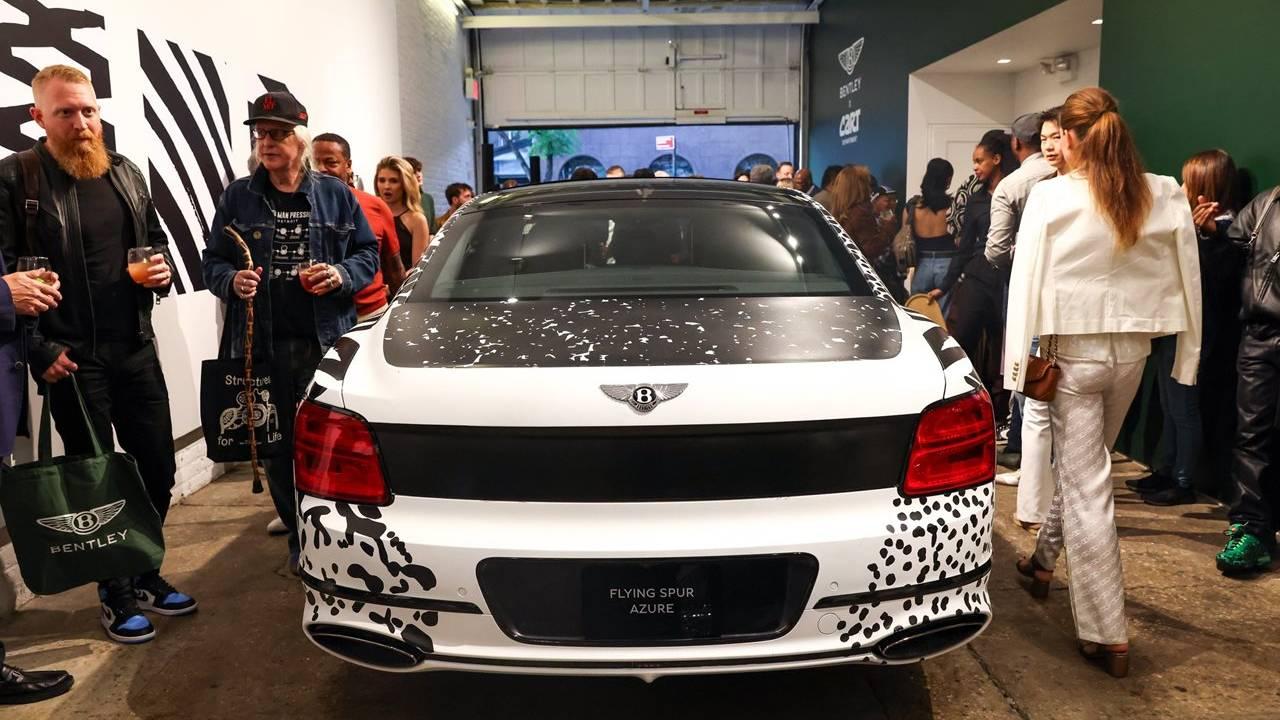
There is something revealing about where Bentley chose to introduce its newest electric ambition to a New York audience. Not at a conventional motor show or a dealership, but in an art-gallery setting, alongside a Flying Spur transformed by British artist Death Spray Custom.
On 13 October 2026, Bentley presented its new Torcal electric SUV alongside the customised Flying Spur at CART Department in Manhattan's West Village. The event, organised with CART Department and Jing Daily, brought automotive engineering into conversation with contemporary art, collecting and design culture.
The two vehicles represent different expressions of Bentley's identity. The Flying Spur art car draws on the theatrical possibilities of automotive personalisation. The Torcal, Bentley's first fully electric production model, represents a much more consequential departure from tradition.
Together, they raise an interesting question for the luxury industry: when engineering performance becomes increasingly accessible across competing brands, can cultural relevance become a more important source of differentiation?
For Bentley, whose appeal has historically rested on grand touring, craftsmanship and the emotional character of its combustion engines, that question is particularly relevant.
Two Bentleys, Two Very Different Ideas of Luxury
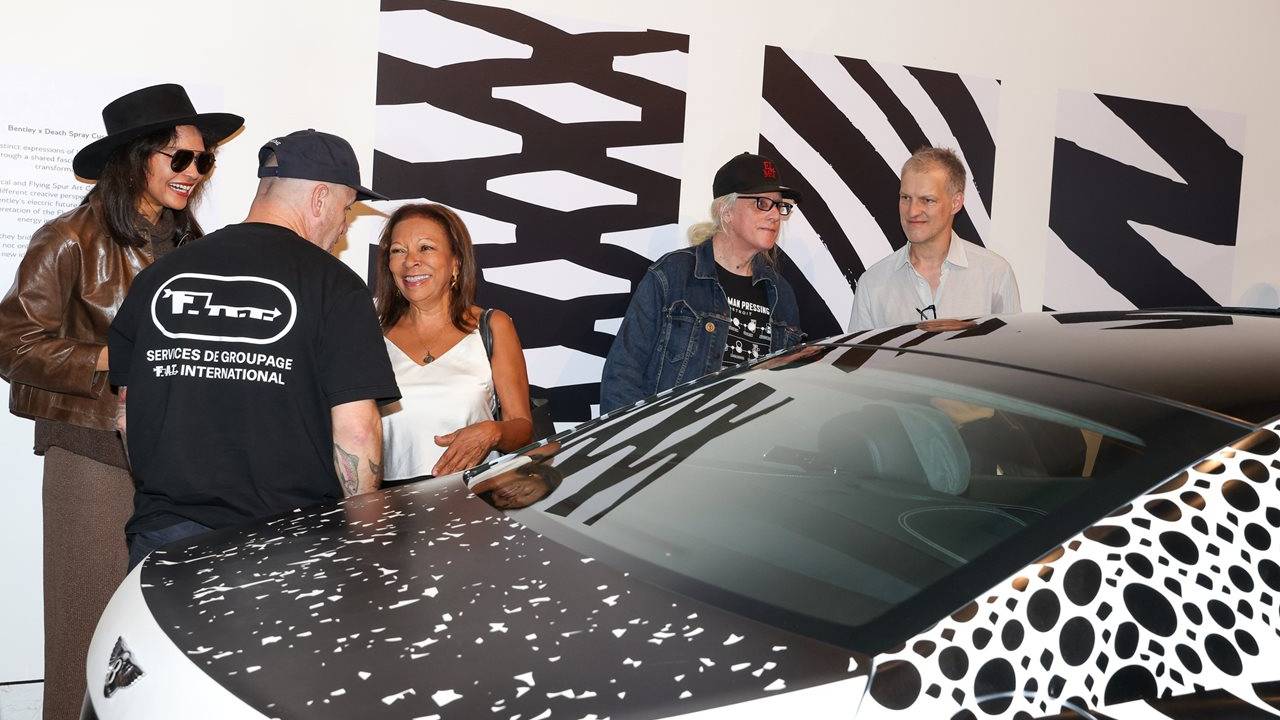
At the centre of the Manhattan presentation was a deliberate contrast.
The Torcal introduces an entirely new electric architecture to Bentley's luxury portfolio. The Flying Spur, meanwhile, remains rooted in the established language of traditional grand touring, but uses its exterior as a canvas for an artist better known for motorsport-inspired graphics and subversive visual design.
Death Spray Custom is the working name of British artist David Gwyther. His practice has included motorcycle design, racing helmets, automotive bodywork and collaborations associated with the late motorsport personality Ken Block.
His aesthetic is very different from Bentley's usual world of restrained paint finishes, polished veneers and carefully coordinated upholstery.
That contrast is precisely what gives the collaboration its interest.
Art cars have a history of turning functional vehicles into cultural objects. The value of the exercise is not simply that a particular car receives an unusual paint treatment. It is that the artist imposes an independent visual language on an industrial product.
The distinction matters. A factory-designed special edition expresses the manufacturer's taste. A convincing art car should also express something recognisably belonging to the artist.
Whether the Death Spray Flying Spur will become an important collectible depends on details beyond its appearance, including provenance, the artist's involvement, contractual rights and the vehicle's eventual ownership history.
The Torcal Is a More Significant Departure Than Its Styling Suggests
Bentley's Torcal is its fourth model line, joining the Bentayga, Continental GT and Flying Spur. The electric SUV was unveiled in London on 23 September 2026, with customer deliveries expected in 2027.
For earlier context on where the marque was heading, revisit Bentley's Beyond100+ urban luxury SUV vision.
The headline specifications are substantial.
- 876 bhp: Torcal S maximum output
- 1,350 Nm: Peak torque, Torcal S
- 600 km: Claimed maximum range, standard Torcal
- 113.2 kWh: Standard Torcal battery capacity
Manufacturer specifications. Performance, range and charging figures vary by model and test conditions.
The Torcal S produces more power than any previous production Bentley, according to the company. The standard version offers 809 bhp, with a claimed 0 to 100 km/h acceleration time of 3.4 seconds.
Yet raw performance is unlikely to be the decisive factor for a prospective Bentley buyer.
High-output electric vehicles have made extraordinary acceleration less exclusive than it once was. The challenge for a marque such as Bentley is to deliver an experience that feels distinctly more considered, more comfortable and more enduring than less expensive alternatives.
The Torcal's interior offers some clues.
There are familiar Bentley materials and veneers, but also merino wool, a carefully integrated lighting system and a sound programme called Bentley Dynamic Symphony, which uses musical instruments to reinterpret the character of a combustion-powered Bentley.
The 76 individually applied illuminated elements in the front grille and more than 450 LEDs used for the cabin's Dynamic Waterfall Lighting illustrate another change. Lighting and software are becoming part of the car's emotional architecture.
This is an important commercial shift. Electric motors can provide impressive figures across numerous price points. A distinctive combination of craftsmanship, acoustic design, tactile controls and personalisation is much harder to reproduce convincingly.
The Real Luxury Question: What Makes an Art Car Collectible?
A unique vehicle is not automatically an investment-grade collectible.
That distinction can become blurred when a prestigious automotive marque collaborates with an artist.
The established art-car tradition includes BMW's long-running programme, with contributions from artists such as Alexander Calder, Andy Warhol, Roy Lichtenstein and Jeff Koons. Other marques have also taken art-led projects to fairs, including customised Rolls-Royce Cullinan models at Art Basel.
Those vehicles have cultural histories that extend beyond their automotive specifications. Their significance comes from the participating artists, the institutional context, the originality of the work and their documented provenance.
For contemporary collectors considering artist-customised vehicles, five issues deserve attention: whether the work is a formally documented artist commission, how permanently it has been executed, whether alterations are authorised, the terms governing future reproduction or modification, and whether any established secondary market exists for comparable work.
A Bentley with an unusual exterior treatment might be exceptionally desirable to one buyer while remaining difficult to value for another.
The same customised appearance that establishes individuality can narrow the future buyer pool. Maintenance, conservation and accident repair can introduce additional complications, particularly if an artist-specific finish cannot be reproduced by an ordinary authorised bodyshop.
The appropriate comparison is not simply a standard Bentley versus a painted Bentley. It is a documented artwork with automotive utility versus a customised luxury automobile.
Those are different propositions, and collectors should not confuse them.
Readers new to the field can start with our look at the biggest luxury car collectors in the world.
What the Bentley Torcal Actually Costs
Bentley's move into electric motoring does not remove the traditional cost structure associated with ultra-luxury automobile ownership.
UK reporting places the standard Torcal at approximately £173,300, while the Torcal S is reported at approximately £199,300. These are indicative UK prices before individual configuration differences.
For Indian buyers, Autocar India currently indicates an estimated on-road price of approximately ₹4.79 crore for the Torcal S in Mumbai, with a mid-2027 launch anticipated. It is a forecast rather than a confirmed final transaction price.
Bentley Torcal: Published Prices vs Ownership Considerations
| Cost component | Published figure or assessment |
|---|---|
| Standard Torcal, UK | Approx. £173,300 |
| Torcal S, UK | Approx. £199,300 |
| India, Torcal S | Approx. ₹4.79 crore estimated on-road |
| Optional personalisation | Depends on configuration and commission |
| Private charging installation | Property-specific, requires quotation |
| Insurance | Owner, location and insured-value dependent |
| Specialist finishes or artist commissions | Individually negotiated |
| Resale value | No established Torcal transaction history yet |
These figures should not be treated as a fully comparable international price list. UK specifications and tax treatment differ from India, while dealer quotations may include configuration-specific charges.
For an Indian buyer considering a Torcal, a realistic decision involves more than the purchase price. Residential charging infrastructure, manufacturer-supported servicing, battery warranty provisions and long-term depreciation all matter. It helps to understand why the luxury EV market in India is transitioning quickly and how Indian luxury car buyers lead the charge toward EVs, with top luxury brands obliging.
An additional practical consideration is the physical size of the car. At 5,008 mm long and 2,198 mm wide including mirrors, the Torcal requires serious attention to basement parking dimensions, turning space and charging-bay design.
For an owner with several residences, having dependable charging facilities at each property may prove more valuable than squeezing a marginally faster acceleration time out of the vehicle.
Why Manhattan Was an Interesting Place for This Presentation
A gallery event places a luxury car in front of an audience that may evaluate it quite differently from traditional motoring enthusiasts.
Collectors and design patrons are accustomed to considering authorship, rarity, provenance and cultural context. Automotive buyers are more frequently presented with performance, specification and brand heritage.
Bringing the two audiences together allows Bentley to position the automobile as an object of cultural significance rather than merely a means of transport.
That is not necessarily proof of artistic achievement. Luxury houses have long used art-world associations to build social relevance and reach influential audiences, as seen with the Rolls-Royce Phantom Gallery for bespoke art.
What distinguishes a credible relationship from an elaborate marketing exercise is whether the cultural collaboration produces something independently meaningful.
Death Spray Custom's practice already exists outside Bentley. The artist has a recognisable aesthetic, a body of previous automotive work and a history within motorsport culture. That provides a more credible basis for collaboration than simply attaching a fashionable name to a limited-edition vehicle.
The gallery context also introduces a useful tension. Art often derives its significance from challenging convention, while luxury manufacturing tends to protect tightly managed design codes.
The strongest collaborations allow those instincts to coexist without making the artist subservient to the brand.
Bentley's Bigger Challenge Is Not Electrification. It Is Distinction.
For more than a century, Bentley has used engineering refinement, material quality and grand-touring performance to justify its position in the automotive hierarchy.
Electrification changes the relative importance of those attributes.
Electric powertrains can deliver smoothness, silence and rapid acceleration by their very nature. These qualities are no longer sufficient, independently, to establish a major price premium.
The Torcal therefore represents an attempt to move the conversation towards an experience shaped by cabin materials, software, personalised lighting, sound, service and the continuing heritage of Bentley craftsmanship.
The New York art-car presentation belongs within that broader effort.
It is a reminder that luxury manufacturers increasingly compete for a place in the cultural lives of their customers, not only in their garages.
For the wealthy collector, however, cultural association and financial collectibility must remain separate considerations.
An artist-designed Bentley can be personally compelling without becoming a valuable artwork. An electric Bentley can deliver extraordinary performance without automatically becoming a classic. Both propositions have to establish their significance over time.
The most revealing aspect of Bentley's Manhattan presentation was therefore not the contrast between an electric SUV and a boldly customised sedan.
It was the suggestion that the future value of an ultra-luxury automobile may depend as much on the identity, experience and cultural meaning built around it as on what happens beneath its bonnet.
Frequently Asked Questions
What is the Bentley Torcal?
The Bentley Torcal is the British manufacturer's first fully electric production model. Introduced in September 2026, the luxury SUV is available in standard Torcal and higher-performance Torcal S versions, with production based in Crewe, England.
Who is Death Spray Custom?
Death Spray Custom is the artistic identity of British artist David Gwyther, known for graphic artwork influenced by motorsport, racing liveries and contemporary visual culture. His work has included motorcycles, helmets, body panels and cars.
What happened at Bentley's New York art-car event?
On 13 October 2026, Bentley presented the new electric Torcal alongside a Flying Spur art car by Death Spray Custom at CART Department, 16 Morton Street, Manhattan. The presentation included a discussion involving the artist and figures from the art world.
How much does the Bentley Torcal cost in India?
Autocar India estimates the Torcal S at approximately ₹4.79 crore on-road in Mumbai, with an expected launch around mid-2027. Final pricing, specification and delivery details remain subject to official confirmation.
Can a customised Bentley become a collectible?
Yes, but collectibility is not assured. Documented provenance, the artist's importance, originality, conservation condition, rarity and the existence of a secondary market all influence potential long-term demand.
How far can the Bentley Torcal travel on one charge?
Bentley quotes a maximum range of approximately 600 km for the standard Torcal. Actual range depends on speed, driving conditions, temperature, wheel specification and use of climate-control systems.
Comments
No comments yet.
Add Your Comment
Thank you, for commenting !!
Your comment is under moderation...
Keep reading luxury post