The World's Most Colourful Buildings, and What It Actually Takes to See Them
 Pradeep Dhuri
- 18th Aug 2026
- 1299
- 0
Most lists of "the world's most colourful buildings" are the same stock photographs reshuffled, with no distinction drawn between a building you can walk into, a private residence you can only photograph from the pavement, and a concrete sculpture that was never a building at all. That last category is not a technicality. One of the most reproduced images in the genre, the Torres de Satelite in Mexico City, is routinely captioned as a "building." It has no floors, no doors and no interior. It is a gateway marker, not architecture you can occupy.
The distinction matters enormously if you intend to actually go. Some of what follows is a paid museum with four ticket tiers. Some is a private apartment block where security will politely ask you to leave. Some is a working waste incinerator offering better public access than most residential landmarks on this list. This index ranks by architectural and cultural significance, separates fact from tourist board copy, and flags every point where a source is disputed or a figure needs confirming before you build a trip around it.
1. Casa Batllo, Barcelona, Spain
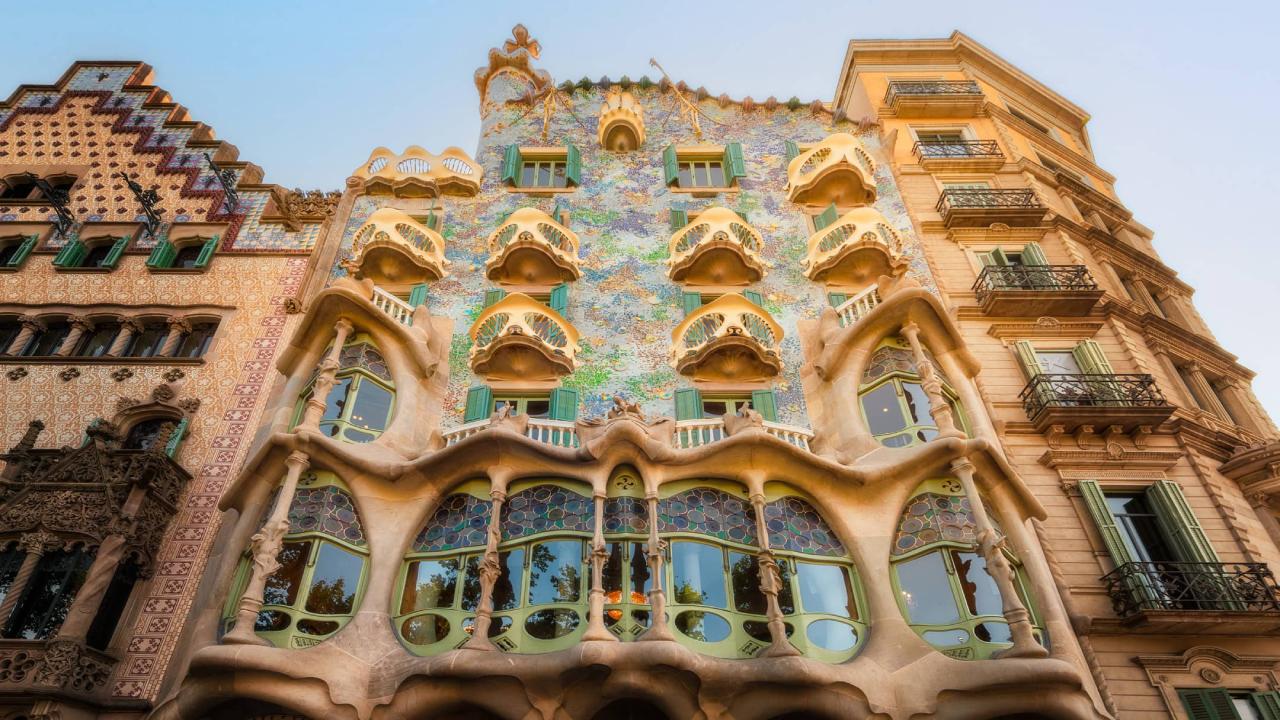
Antoni Gaudi redesigned this 1877 townhouse for the textile merchant Josep Batllo between 1904 and 1906. The mosaic facade and bone shaped balconies earned it the local nickname Casa dels Ossos, the House of Bones. UNESCO listed it as a World Heritage Site in 2005.
Casa Batllo is not a fully surrendered museum. Parts of the building still function as offices, and it draws over a million visitors a year across four ticket tiers, from a self guided Silver pass to an actor led Theatrical tour, plus the seasonal rooftop concert nights called Magical Nights, running roughly March to November. Anyone building a wider Catalonia itinerary around it will find our roundup of the best luxury tours available across Spain a useful companion.
Cost: Silver from around EUR 29 booked online in advance, Gold EUR 35 to 45, the 08:30 pre opening Be the First tier EUR 45 to 50, Magical Nights from EUR 55. Under twelves free.
2. La Muralla Roja, Calpe, Spain
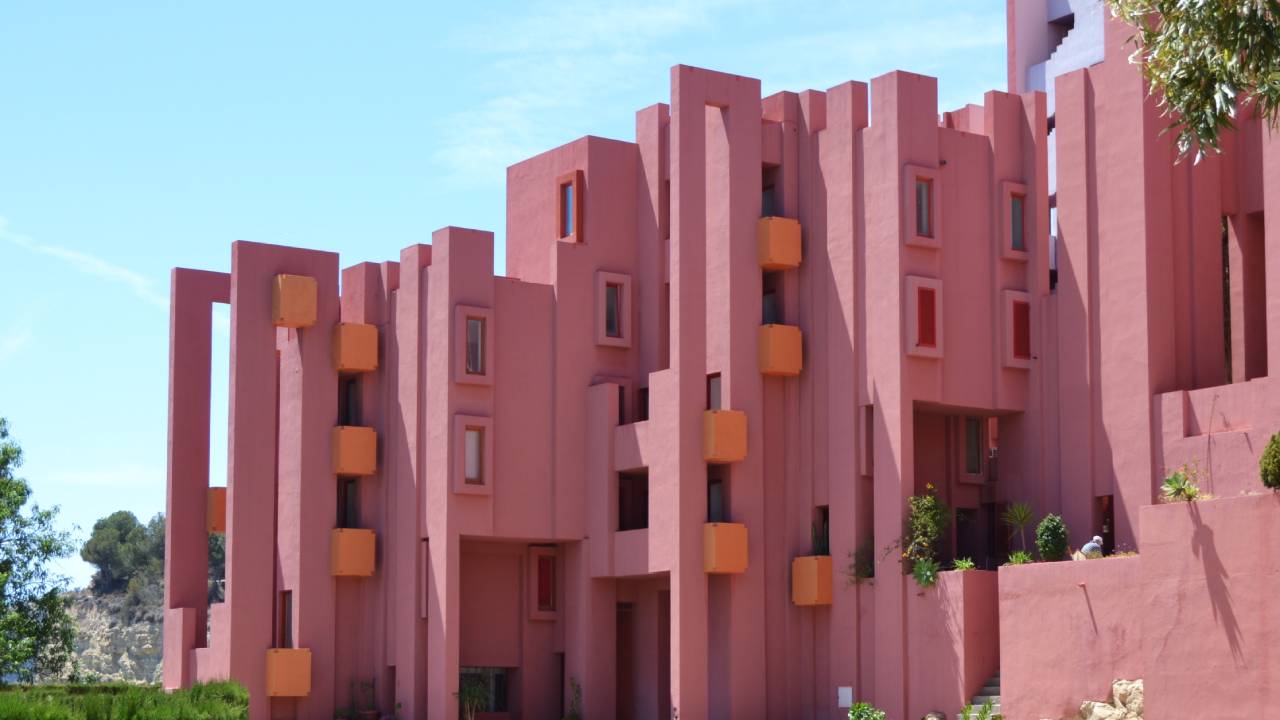
Ricardo Bofill designed this fifty unit apartment complex in 1968, completed in 1973, reinterpreting the North African casbah in interlocking red, pink, blue and violet geometry. It is a private residential building with no public access whatsoever, and there is no indication that will change. Occasional apartments surface on specialist short term rental platforms, though pricing and availability are inconsistent and not something we would recommend booking sight unseen. Travellers determined to base themselves on the Costa Blanca regardless should consult our guide to the strongest hot spots for vacation rentals in Spain.
Cost: Free to view from outside. No interior access.
3. Hundertwasserhaus, Vienna, Austria
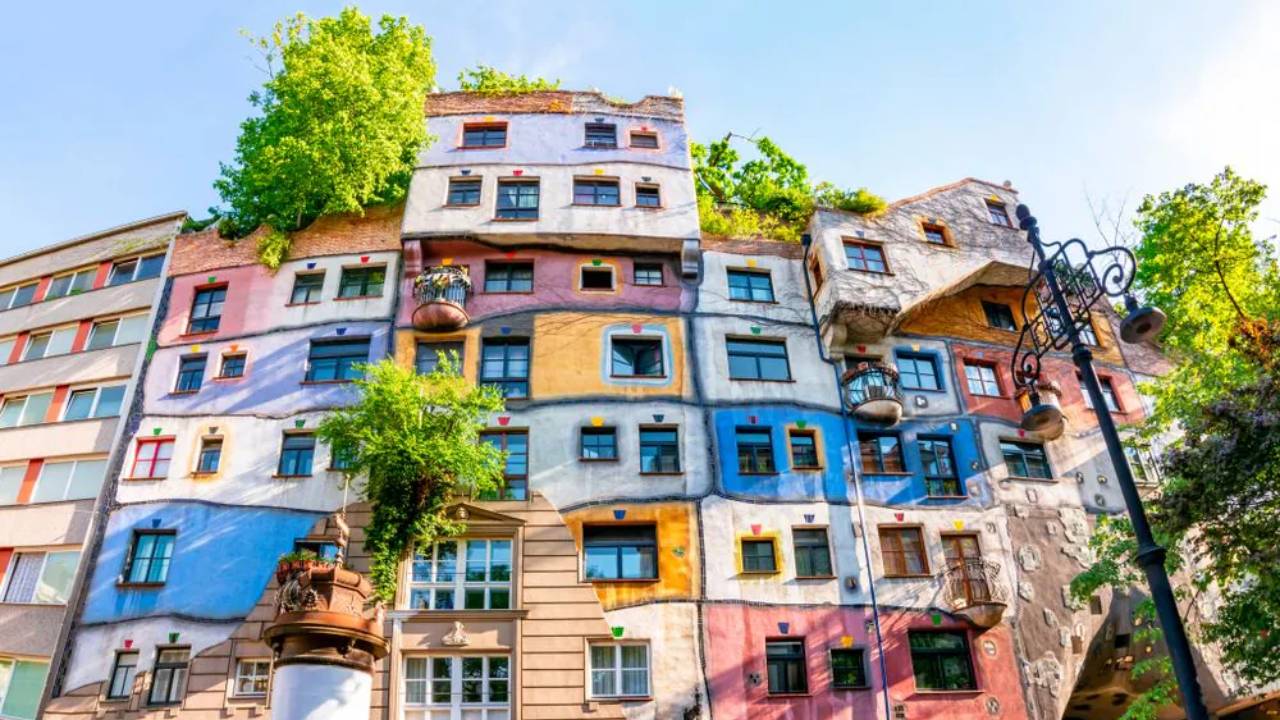
Friedensreich Hundertwasser and the architect Josef Krawina built this social housing block for the City of Vienna between 1983 and 1985: 52 apartments, 16 private terraces, roughly 250 trees integrated into the facade, and deliberately uneven floors. Residents hold a standing right to paint the area around their own windows however they choose. This is city owned public housing, not a private developer project. There are no interior tours, ever. It should not be confused with a second, entirely different Hundertwasser building covered later in this index.
The city's wider property market sits at an interesting distance from this kind of subsidised experiment, a contrast our comprehensive guide to luxury property in Austria sets out in detail.
Cost: Free, exterior only.
4. Kunsthaus Graz, Austria
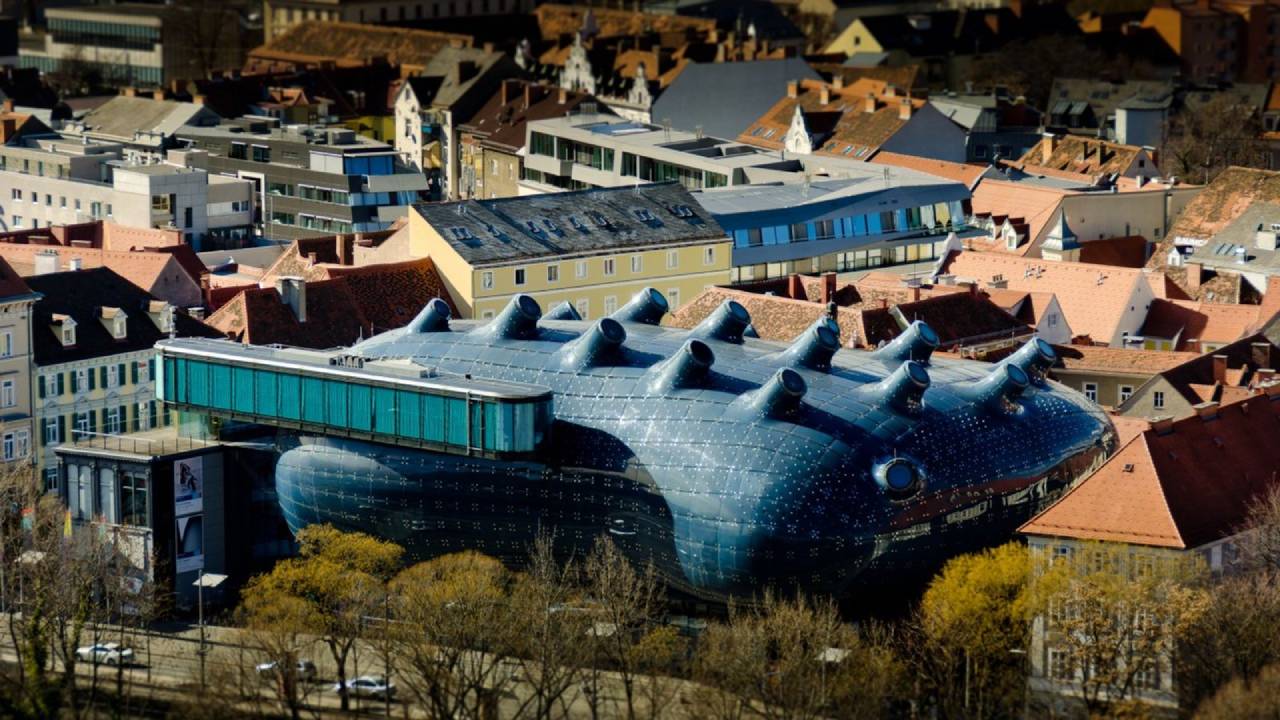
Peter Cook and Colin Fournier's 2003 contemporary art museum, nicknamed the "Friendly Alien" by its own architects. The eastern BIX facade uses 930 fluorescent rings as individually controllable pixels, functioning as a low resolution public screen. It remains one of the earliest permanent media facades built into a structure rather than bolted onto it.
Cost: Standard admission roughly EUR 10 to 12.
5. Torres de Satelite, Mexico City, Mexico
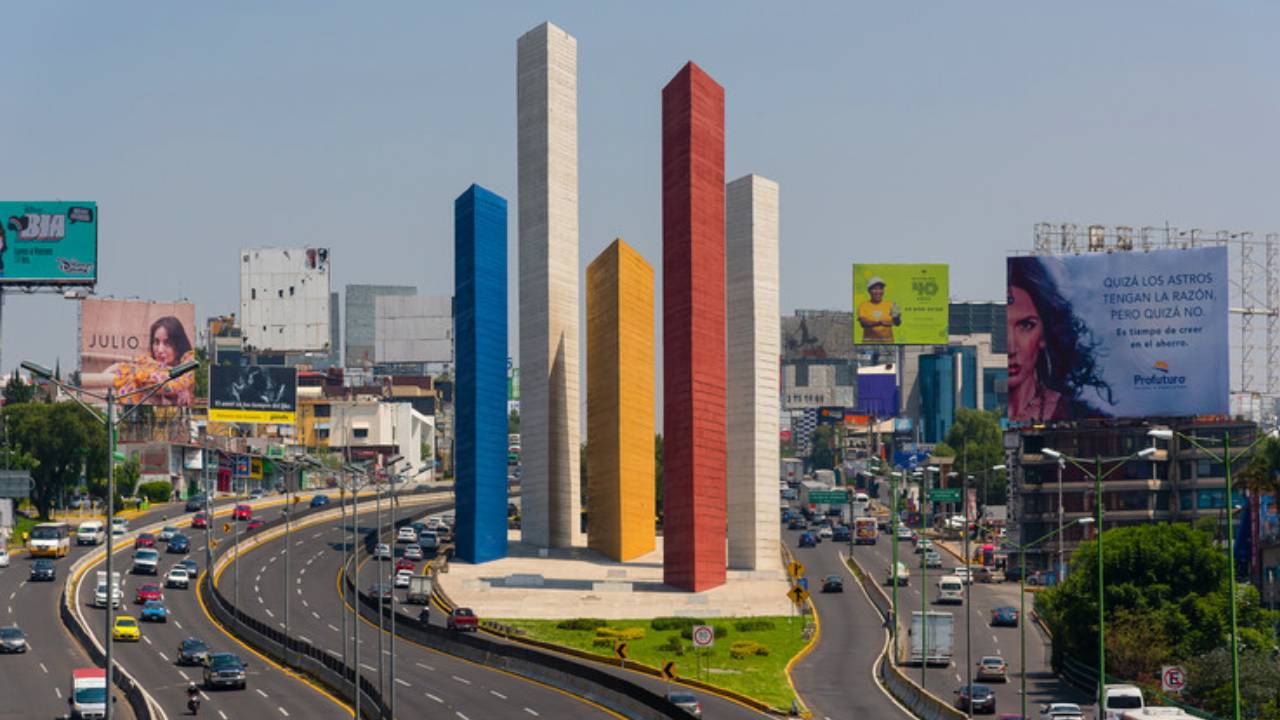
Designed between 1957 and 1958 by Luis Barragan with the sculptor Mathias Goeritz and the colourist Jesus "Chucho" Reyes Ferreira, these five hollow concrete prisms mark the entrance to Ciudad Satelite. Heights range from 30 to 52 metres, painted red, blue, yellow and white. These are not buildings. They are hollow, unoccupiable, windowless concrete shells conceived as roadside sculpture, sitting in the middle of a traffic circle on the Periferico highway. Pedestrian access is genuinely unsafe.
Cost: Free. No interior, because there isn't one.
6. Casa Luis Barragan, Mexico City, Mexico
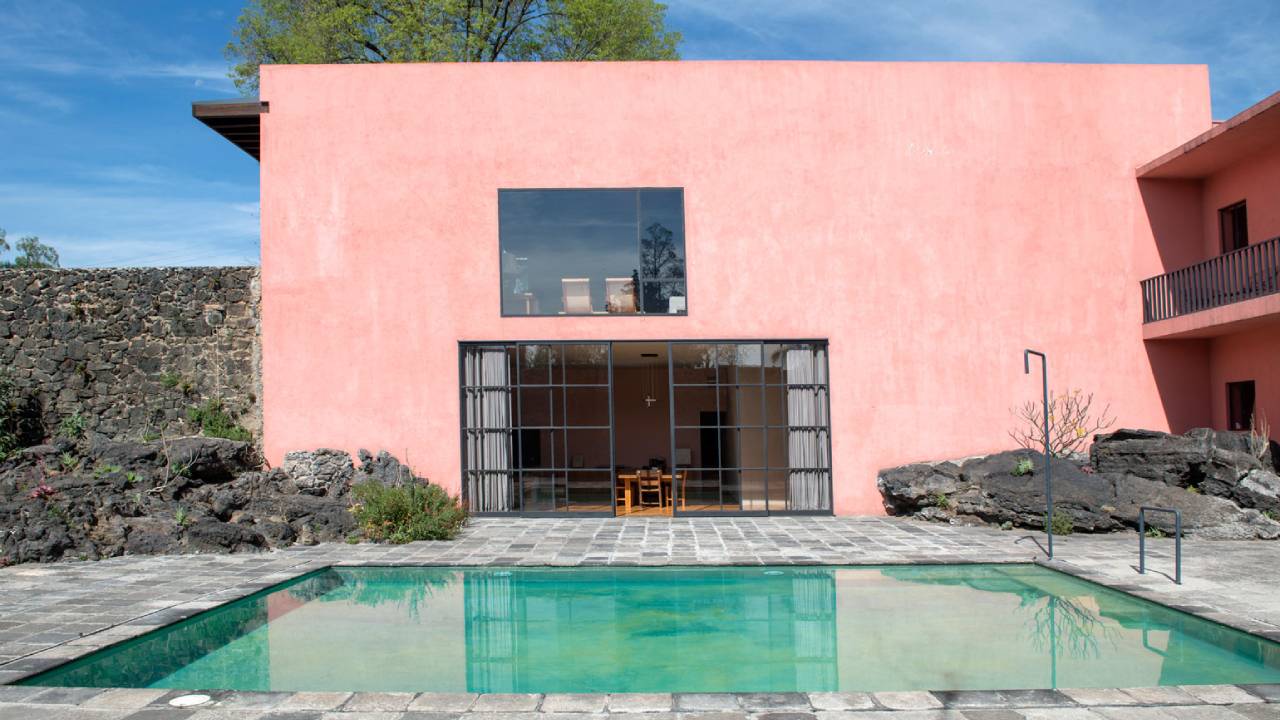
Barragan's own house and studio, built in 1948 and UNESCO listed in 2004, preserved almost exactly as he left it: saturated pink and magenta walls, framed light shafts, courtyard gardens. Self guided visits run Thursdays only at 450 MXN. Guided tours on other weekdays require advance booking. There is a minimum age of twelve to thirteen, and a fixed one directional route, so you cannot revisit a room once you have passed through it. This is the hardest legitimate access on the entire list. For readers weighing Mexico as a broader destination, our piece on choosing Mexico for your next luxury vacation covers the wider picture.
Cost: 450 MXN self guided on Thursdays; guided tours priced higher.
7. Cube Houses, Rotterdam, Netherlands
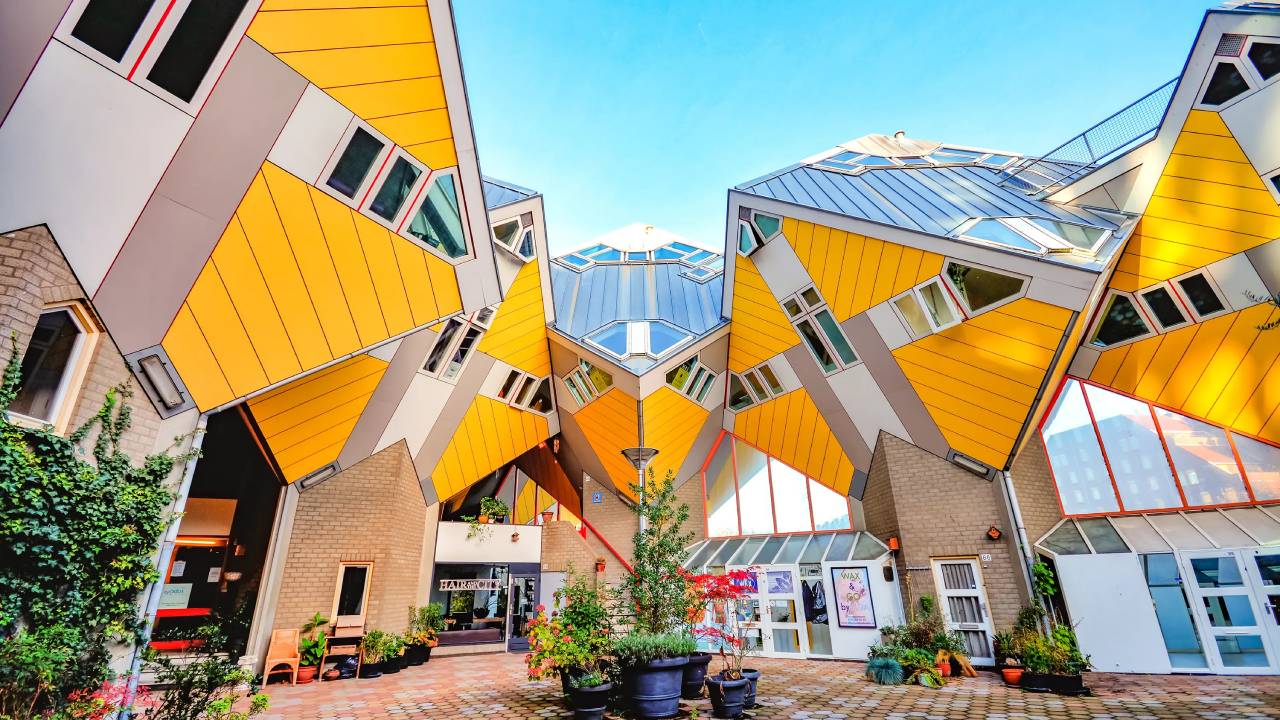
Piet Blom's 1984 Kubuswoningen tilt roughly 38 to 40 house forms 45 degrees onto hexagonal pylons, each representing a tree in a conceptual forest. Almost the entire complex is private housing or student accommodation. Only one unit, the Kijk Kubus show cube, is furnished and open to the public. Dutch design's wider tendency toward disciplined eccentricity is well illustrated by Piet Boon, the Dutch master of interior design, whose restraint sits at the opposite pole from Blom's tilted cubes.
Cost: Roughly EUR 3 to 3.50 for the Kijk Kubus show house.
8. The Blue City, Jodhpur, India
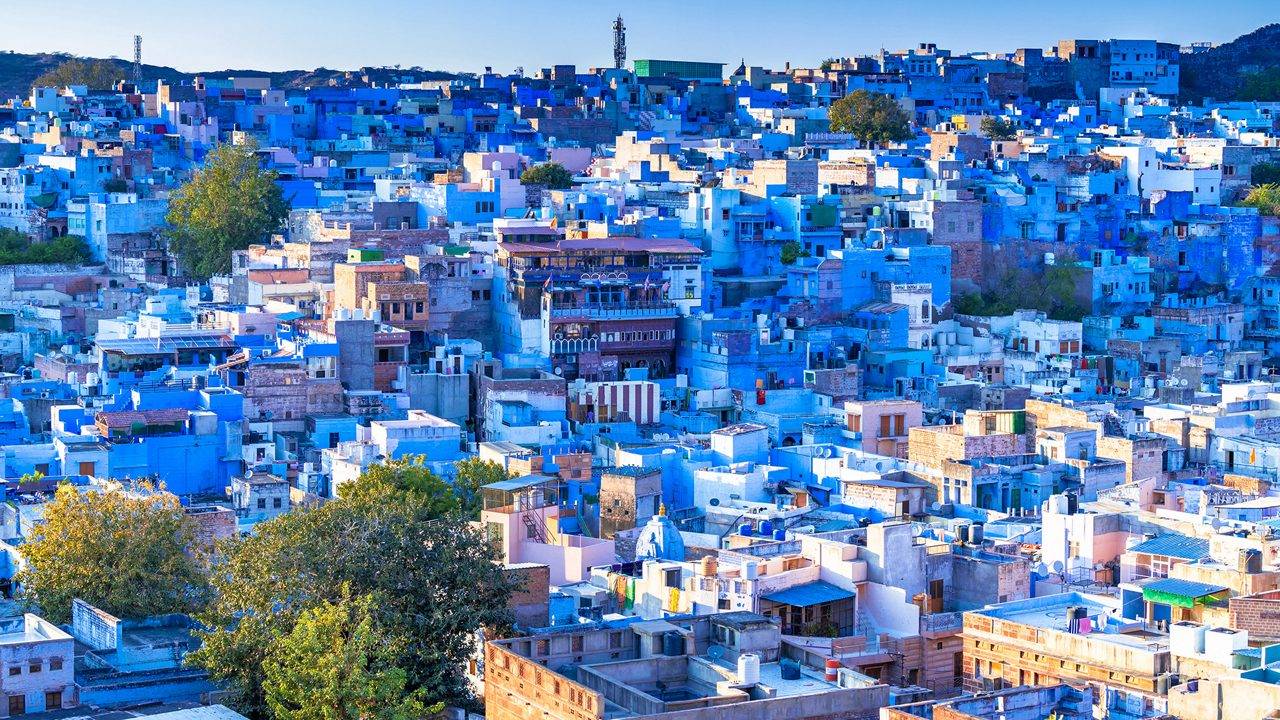
Brahmpuri, the old quarter beneath Mehrangarh Fort, is a vernacular colour tradition applied across an entire neighbourhood: limewash mixed with indigo and often copper sulphate, cooling interiors and repelling termites. It is most commonly traced to Brahmin households marking status, since the wash was historically the costliest option available, and was later adopted more broadly.
The colour has been fading as indigo costs rise and air conditioning removes the practical need for it. A local revival campaign has pushed households back toward the traditional wash, though the scale of that campaign is reported inconsistently. Rajasthan's luxury hospitality has meanwhile learned to trade on exactly this palette, as Sujan Jawai in Rajasthan and its rustic glory demonstrates.
Cost: Free; best viewed from the ramparts of Mehrangarh Fort.
9. Wat Rong Suea Ten, the Blue Temple, Chiang Rai, Thailand
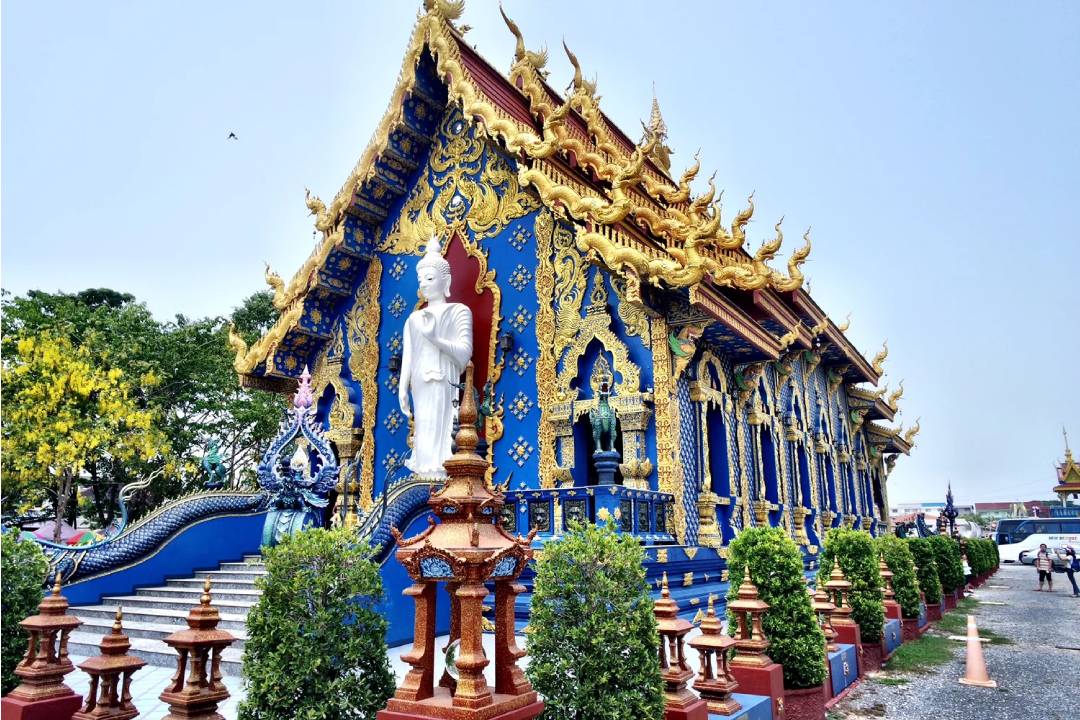
Built between 2005 and 2016 by the artist Putha Kabkaew, a student of Chalermchai Kositpipat, who built Chiang Rai's more famous White Temple. Cobalt blue, symbolising wisdom and dharma, is paired with a large white Buddha figure and gold detailing. It is a functioning place of worship, still being added to, with an enforced dress code. Visitors planning around it should read our guide to the cultural and spiritual heart of northern Thailand.
Cost: Free entry; donations requested. Older sources cite 100 THB, so confirm current policy on arrival.
10. National Aquatics Center, the Water Cube, Beijing, China
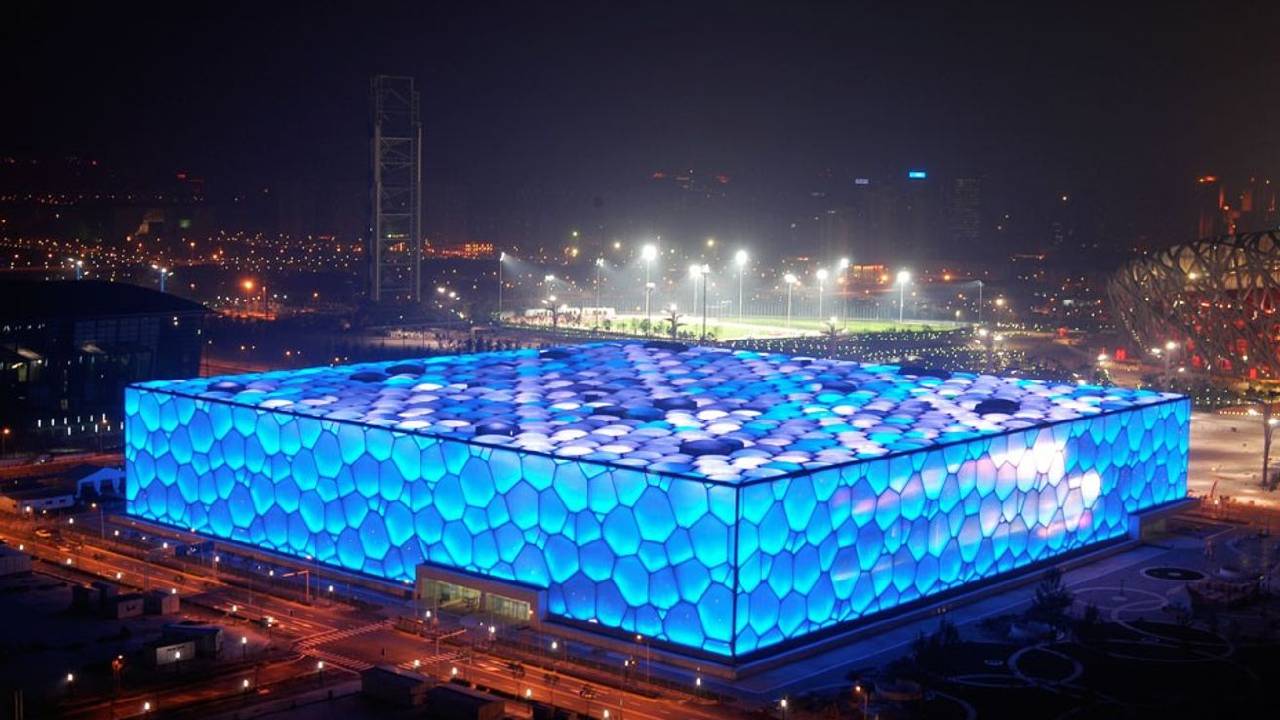
PTW Architects and Arup built this for the 2008 Olympics, with ETFE bubble cladding modelled on soap bubble geometry, a genuine piece of biomimicry rather than a decorative gesture. For the 2022 Winter Olympics, a water to ice conversion system built a curling rink directly over the swimming pool basin, rebranding it the "Ice Cube." It is very likely the only venue in Olympic history to have hosted both Summer swimming finals and Winter curling finals inside the same physical structure.
Cost: Roughly 30 to 48 RMB for general entry.
11. Pena Palace, Sintra, Portugal
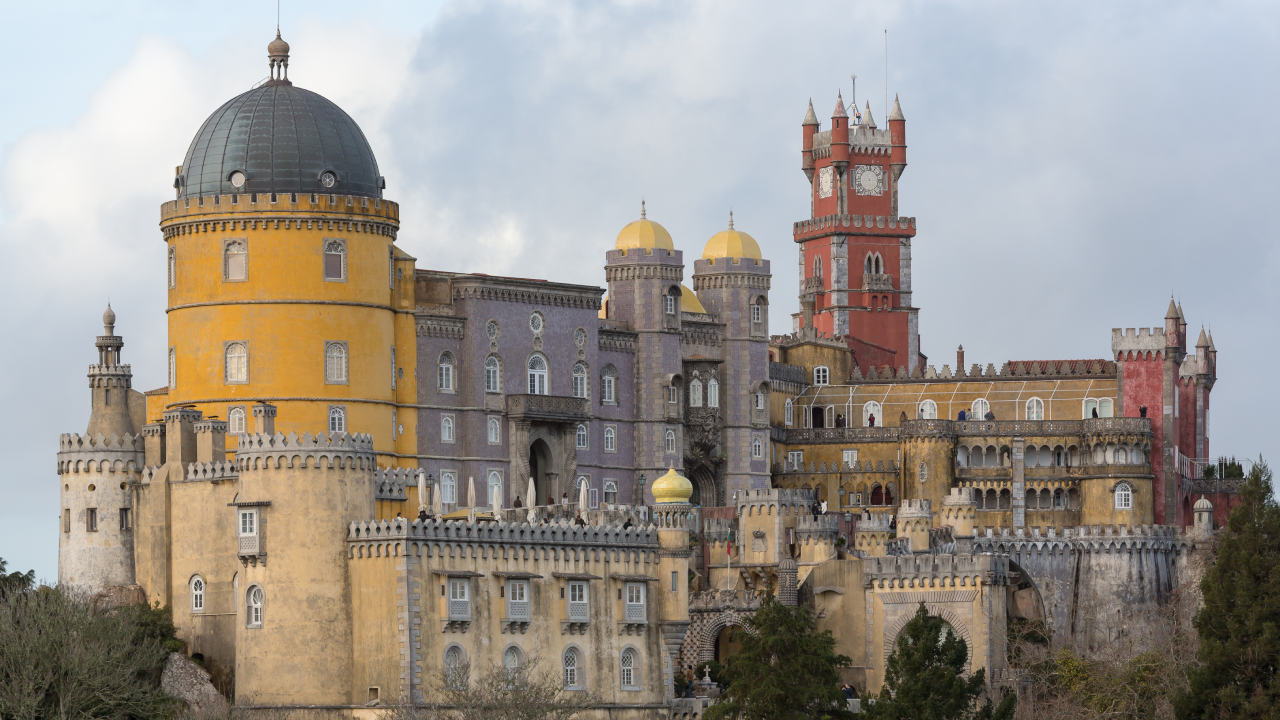
Built between 1842 and 1854 for King Ferdinand II on the ruins of a monastery, blending Gothic, Moorish, Manueline and Renaissance styles, painted in solid blocks of red and yellow. UNESCO listed since 1995. The vivid scheme reportedly unsettled conservative Sintra residents when first applied, a reaction that later restoration work reversed rather than muted. It anchors most itineraries covered in our feature on why a luxury road trip through Portugal works so well.
Cost: EUR 14 to 20 for palace and park, depending on season and booking channel.
12. Saint Basil's Cathedral, Moscow, Russia
Commissioned by Ivan the Terrible and built between 1555 and 1561 to mark victory over the Kazan Khanate. The nine onion domes were not originally colourful at all: white stone and red brick until seventeenth and eighteenth century restorations added gilding, ceramic inserts and the candy striped patterning now treated as iconic. The popular story that Ivan blinded the architects to prevent them repeating the design is widely repeated but has no credible historical basis. Treat it as legend.
Cost: Roughly 2,000 RUB for adult foreign visitors.
13. Biomuseo, Panama City, Panama
Frank Gehry's only completed building in Latin America, commissioned in 2004 and opened in 2014 after a decade of delays. The multicoloured canopy roof references Panamanian tin roofing rather than Gehry's usual metallic language, a deliberate departure from his signature vocabulary.
Cost: Roughly USD 18 to 22 for adults, with a fifty percent statutory discount for holders of SENADIS disability certification.
14. Burano, Venice, Italy
An entire fishing island where house colour is municipal law rather than preference. Owners cannot repaint without government approval, and the local authority assigns an approved palette to each property lot. The most commonly cited origin is that fishermen painted homes distinctly in order to navigate lagoon fog. This is the only entry on the list where the real cost is not money but bureaucracy, a theme that recurs throughout the enchanting world of luxury real estate in Italy.
Cost: Free to walk; roughly a 45 minute vaporetto from Fondamente Nove, Venice.
15. Sri Ranganathaswamy Temple, Srirangam, Tamil Nadu, India
Construction began around the first century AD and continued under successive dynasties, Chola, Hoysala and Vijayanagara, into the twentieth century. It is the largest functioning Hindu temple complex in the world: roughly 156 acres, seven concentric enclosures, and 21 gopurams carrying dense, saturated pigment work. The main Rajagopuram runs to roughly 236 to 240 feet, the tallest temple tower in Asia.
Cost: Free general entry; special darshan and camera fees vary. Gate fee reports for outside visitors conflict, so confirm current policy directly with temple authorities.
16. Palau de la Musica Catalana, Barcelona, Spain
Lluis Domenech i Montaner's 1908 concert hall, built for the choral society Orfeo Catala, has been a UNESCO World Heritage Site since 1997 and is one of only a handful of concert halls to hold that status. Stained glass mosaic columns and an inverted glass dome flood the hall with colour during matinee performances. Unlike Casa Batllo, there is no self guided entry: a paid tour or a concert ticket is the only way in.
Cost: Guided tour EUR 18 to 24; concerts EUR 20 to 200 and above.
17. Guardian Building, Detroit, Michigan
Wirt C. Rowland's 1929 Art Deco skyscraper, nicknamed the "Cathedral of Finance," was once the tallest brick clad building in the world. A 150 foot lobby sits under a three storey vaulted, tiled ceiling, with Pewabic and Rookwood pottery glazes and Tiffany and Co. clockwork. The lobby and banking hall are free to enter during business hours, making this the rare major landmark on the list with zero cost access to the main event.
Cost: Free lobby; paid tours roughly USD 15 to 25 unlock the vaults and the 32nd floor club.
18. Reversible Destiny Lofts, Mitaka, Tokyo, Japan
Shusaku Arakawa and Madeline Gins built this nine unit complex in 2005, painted in fourteen colours, with deliberately uneven floors and tilted walls designed to keep residents physically alert on the theory that comfort accelerates decline. This is the access exception on the whole list. Two to three units rent short term, historically priced at around USD 2,000 to 2,400 a month, though that figure traces to older reporting and needs current verification. Guided tours run in Japanese, with private English tours for groups of ten or more at roughly JPY 32,400 per group.
The building is a useful counterpoint to the conventional top end of the market, which our examination of how luxury housing in Tokyo has evolved tracks in detail, and to the broader story of how Tokyo became the modern city of dreams.
Cost: Tours from roughly JPY 32,400 per group of ten; rental pricing requires current verification.
19. Maishima Incineration Plant, Osaka, Japan
This is a second, entirely different Hundertwasser building, not the Vienna apartment block covered above. Built in 2001 and completed the year of his death, it is one of only two garbage plants he designed. Red stripes signify flame, the blue chimney signifies Osaka Bay, and gold at the chimney's crown signifies hope for the future, by the architect's own stated symbolism.
Where the Hundertwasserhaus offers no interior access at all, ever, this working incinerator offers free 90 minute guided interior tours by advance reservation. Tours run on weekdays, and non Japanese speakers should arrange their own interpreter.
Cost: Free, by advance reservation only.
20. Croydon Colonnade, London, United Kingdom
Adam Nathaniel Furman's porcelain tiled colonnade near East Croydon station uses thousands of handmade glazed three dimensional tiles running deep blue at the base to cream at the top. It is freely accessible public infrastructure. One flag on the inclusion: this is the work of Furman himself, appearing in a "world's most colourful buildings" ranking he co authored, timed to a book launch. Worth seeing, and worth knowing why it appears. Readers assembling a wider London culture itinerary should also see our guide to the most popular art galleries in London.
Cost: Free, permanent public installation.
Also worth noting, briefly
De Bijenkorf in Eindhoven, Netherlands, Gio Ponti's 1969 green ceramic tiled department store, still trading and free to enter as retail, and the Leganes Central Library near Madrid, completed in 2019 with a pastel ceramic facade by BN Asociados under standard municipal access, are both genuine colour architecture. Neither carries the access complexity or the correction that earns a full entry here.
The True Cost of Seeing Them
| Building | City | Entry cost | Interior access | Note |
|---|---|---|---|---|
| Casa Batllo | Barcelona | EUR 29 to 55 | Yes, ticketed | Still partly private office use |
| La Muralla Roja | Calpe | Free, exterior | No | Private residential, no exceptions |
| Hundertwasserhaus | Vienna | Free, exterior | No | City owned social housing |
| Kunsthaus Graz | Graz | EUR 10 to 12 | Yes | Working media facade, not decorative |
| Torres de Satelite | Mexico City | Free | Not applicable | Sculpture, not a habitable building |
| Casa Luis Barragan | Mexico City | 450 MXN and above | Thursday self guided only | Hardest legitimate access here |
| Cube Houses | Rotterdam | EUR 3 to 3.50 | One unit only | Remainder is private housing |
| Blue City, Jodhpur | Jodhpur | Free | District, not a site | Vernacular tradition, currently fading |
| Wat Rong Suea Ten | Chiang Rai | Free | Yes | Active place of worship |
| Water Cube | Beijing | 30 to 48 RMB | Yes | Now doubles as the Ice Cube |
| Pena Palace | Sintra | EUR 14 to 20 | Yes | Colour was controversial on reveal |
| Saint Basil's Cathedral | Moscow | About 2,000 RUB | Yes | Colour added later, not original |
| Biomuseo | Panama City | USD 18 to 22 | Yes | Gehry's only Latin American building |
| Burano | Venice | Free | District, not a site | Repainting requires municipal approval |
| Sri Ranganathaswamy Temple | Srirangam | Free, fees vary | Yes | Largest functioning Hindu complex |
| Palau de la Musica Catalana | Barcelona | EUR 18 to 24 | Tour or concert only | No self guided option |
| Guardian Building | Detroit | Free lobby | Yes, free | Rare zero cost major landmark |
| Reversible Destiny Lofts | Tokyo, Mitaka | JPY 32,400 per group | Yes, and rentable | Only entry you can stay in |
| Maishima Incineration Plant | Osaka | Free, reservation only | Yes, free | Hundertwasser's other landmark |
| Croydon Colonnade | London | Free | Public installation | Designed by the ranking's co author |
The Chromatic Access Ladder
Colour is the reason these buildings are famous. Ownership is the reason you can or cannot get inside them, and the two variables are almost entirely unrelated. The Chromatic Access Ladder sorts colour led architecture by who holds the title deed, which turns out to predict visitor access far more reliably than fame, footfall or architectural merit.
| Tier | Ownership | What the visitor actually gets |
|---|---|---|
| Open civic | Religious bodies, municipalities, public infrastructure | Free, permanent, largely unrestricted entry |
| Managed institutional | Foundations, museums, heritage trusts | Ticketed, timed, route controlled, reliably available |
| Conditional industrial | Municipal utilities and operating facilities | Free but reservation gated, capacity limited, weekdays only |
| Sealed residential | Private owners and housing cooperatives | Exterior only, permanently, regardless of visitor demand |
Sealed residential is the condition in which a building's photographic fame is complete and its physical accessibility is zero, with no mechanism by which the former can ever change the latter.
The ladder explains the two most counterintuitive entries on this list. A working Osaka incinerator sits in the conditional industrial tier and offers free guided interior tours. A celebrated Vienna apartment block sits in sealed residential and offers nothing, ever. Both were designed by the same architect, working from the same philosophy, within two decades of each other. Ownership, not intent, decided the outcome.
Three Patterns Worth Carrying Away
First, colour is very often added long after original completion rather than conceived on day one. Saint Basil's went from white stone to onion dome polychrome across two centuries of restoration. Pena Palace's scheme reportedly scandalised its own neighbours before becoming the postcard image. The building you are told was "originally" colourful frequently was not.
Second, the same architect's colour philosophy produces opposite access outcomes depending entirely on who ends up owning the result. This is the Hundertwasser paradox, and it recurs across the category.
Third, and more practically, roundups like this one are frequently attached to something: a tourism board, a forthcoming book, a developer. That does not make the list wrong. It does mean the sharpest question a reader can ask is not "is this building colourful" but "who benefits from me reading about it here." Ask that question and most of what appears above still holds up. Not everything published under this headline does.
Where India Fits in the Global Colour Conversation
India carries two entries here, and they represent opposite ends of the colour architecture spectrum. Jodhpur is vernacular, domestic and unplanned, a palette that emerged from thermal performance and social signalling rather than design intent. Srirangam is institutional, monumental and continuously maintained, with pigment work renewed as an act of devotion across roughly two millennia of construction.
What both share is that they sit in the open civic tier of the ladder. Neither charges meaningfully for access, and neither can be closed to visitors by a private owner. That is worth noting at a moment when Indian heritage colour is increasingly being commercialised through hospitality rather than conservation. Jaipur's pink is now a hotel positioning device as much as a civic ordinance, a shift visible in developments such as the arrival of luxury brand hotels in the Pink City of Jaipur. The risk is not that this happens. The risk is that the commercial layer becomes the only layer that gets maintained.
Notes for Indian Travellers Planning the Trip
Several of these buildings sit in destinations that require meaningful advance planning from India, and a few carry regulatory considerations worth understanding before you book.
- Foreign exchange spending for overseas travel falls under the Liberalised Remittance Scheme, which permits remittance of up to USD 250,000 per financial year per resident individual. Tax collected at source applies above the prescribed threshold, with overseas tour packages and other LRS categories taxed at different rates. The applicable slabs have been revised more than once across recent Budgets, so confirm the current position with your authorised dealer bank before paying for anything.
- Tax collected at source is not an additional tax. It is creditable against your income tax liability and can be adjusted or refunded when you file your return, provided the remittance is reported correctly.
- International credit card spending abroad has been the subject of shifting notifications regarding its treatment under LRS. This has direct bearing on how a multi country architecture trip is financed. Check the position applicable at the time of travel rather than assuming continuity from a previous trip.
- Casa Luis Barragan, the Maishima plant, and the English language Reversible Destiny tours all operate on advance reservation with limited capacity. Booking windows open well ahead of travel dates, and for Indian passport holders those windows frequently close before Schengen or Japanese visa appointments are confirmed. Sequence the visa application first.
- Schengen coverage handles Spain, Austria, Portugal, Italy and the Netherlands on a single authorisation, which makes a European colour architecture circuit substantially more efficient than a scattered global one. Mexico, Japan, Thailand, China and Russia each require separate treatment.
For readers building a broader travel philosophy around design led destinations rather than resort led ones, our reflections on wanderlust at the heart of luxury travel are a useful starting point.
The Wider Architectural Context
Colour has been the least fashionable variable in serious architecture for most of a century, treated as applied decoration rather than structural thinking. That is shifting. The Kunsthaus Graz facade is a computational system, not a paint job. The Water Cube's cladding is a geometric solution that happens to read as blue. Hundertwasser's uneven floors were a health argument before they were an aesthetic one.
The discipline's institutional gatekeepers have been slow to recognise this, though the recognition of practitioners working outside the Euro American mainstream, such as Francis Kere winning the Pritzker Prize for architecture, suggests the frame is widening. Colour, climate response and vernacular material intelligence tend to arrive together, a relationship our examination of what sustainable luxury architecture actually means explores further. Jodhpur's indigo limewash was passive cooling before it was a photograph.
The counterexample is instructive. The Museum of the Future in Dubai and its engineered spectacle demonstrates how contemporary landmark architecture more often reaches for form and surface calligraphy than for saturated colour. Colour remains, oddly, the riskier choice.
Frequently Asked Questions
What are the most colourful buildings in the world?
It depends on the definition of "building." Genuinely occupiable structures include Casa Batllo in Barcelona, the Hundertwasserhaus in Vienna and the Cube Houses in Rotterdam. Frequently miscategorised entries such as Mexico City's Torres de Satelite are sculptures, not buildings.
Can you actually go inside La Muralla Roja in Spain?
No. It is a private residential apartment complex in Calpe with no public access to the interior or the courtyards. Photographing it from outside is permitted; entering is not.
Why is Jodhpur called the Blue City?
Houses in the old Brahmpuri quarter are washed in indigo based limewash, often mixed with copper sulphate, which cools interiors and repels termites. The practice is historically associated with Brahmin households who could afford the specialist wash, and was later adopted more broadly.
How much does it cost to visit Casa Batllo?
Tickets start at around EUR 29 for the self guided Silver tier booked online, rising to about EUR 55 for the seasonal evening Magical Nights experience. Pricing varies by season and booking channel.
What happened to Beijing's Water Cube after the 2008 Olympics?
It remained in public use as a swimming and leisure centre. For the 2022 Winter Olympics, water to ice conversion technology turned it into a curling venue nicknamed the Ice Cube.
Is the Hundertwasserhaus in Vienna open to visitors?
The exterior is freely viewable at any time. The apartments are inhabited private residences and have never offered public interior tours.
Can you visit the Hundertwasser designed incineration plant in Osaka?
Yes, and it is a genuinely different building from the Vienna apartment block. Free 90 minute guided tours run on weekdays by advance reservation.
Can you actually rent an apartment in Tokyo's Reversible Destiny Lofts?
Yes. Two to three of the nine units rent short term, historically priced at around USD 2,000 to 2,400 a month. That figure traces to older reporting and current rates should be confirmed directly.
Is the story about Ivan the Terrible blinding Saint Basil's architects true?
There is no credible historical basis for it. The claim circulates widely in travel writing and should be treated as legend rather than record.
Disclaimer: Admission prices, opening arrangements, tour availability and reservation policies at all sites listed above are subject to change without notice and vary by season, booking channel and visitor nationality. Several figures in this article carry known source conflicts, which have been flagged in the relevant entries. Regulatory references to the Liberalised Remittance Scheme, tax collected at source and international card spending are provided as general context only and reflect frameworks that are periodically revised through the Union Budget and subsequent notifications. Rates, thresholds and applicability should be independently verified with an authorised dealer bank or a qualified tax adviser before any remittance or booking. Nothing in this article constitutes investment, tax, legal or travel advice.


Comments
No comments yet.
Add Your Comment
Thank you, for commenting !!
Your comment is under moderation...
Keep reading luxury post