The Shadow Price List: What Luxury Actually Costs in India (And What No Brand Will Tell You)
 Namrata Parab
- 15th May 2026
- 1531
- 0

Every luxury brand has a price list. Almost none of them tell you the truth.
The sticker price on a Rolls-Royce Cullinan is not what a Rolls-Royce Cullinan costs. The membership fee at a private club is not what belonging to that club costs. The price of a Hermès Birkin — if you're even told one — is not what a Hermès Birkin costs.
There is the official price, and then there is the shadow price: the full, real, total cost of actually owning, maintaining, accessing, and being accepted into the world of ultra-luxury in India. The gap between the two is where the truly wealthy live, and where most aspirational consumers get quietly humiliated. For a broader understanding of who these wealthy buyers are and how they think about luxury spending, our guide to 7 key trends shaping the evolving Indian luxury buyer provides essential context.
This is the Shadow Price List. The numbers no brand publishes, no PR agency approves, and no wealth report includes because the ultra-rich don't discuss them — and the brands benefit from the confusion. We've compiled it anyway.
1. The Hermès Birkin — India's Most Misunderstood Luxury Transaction

Official price: ₹12 lakh – ₹90 lakh (depending on leather and hardware)
Shadow price: ₹40 lakh – ₹3.5 crore. Minimum spend to qualify: ₹15–25 lakh in other Hermès purchases first.
The Birkin is not sold. It is offered — to clients who have demonstrated sufficient loyalty, taste, and spend across the Hermès universe. To receive an offer for a standard Togo leather Birkin 30 at an Indian Hermès boutique, a client typically needs to have spent ₹15–20 lakh across scarves, home goods, ready-to-wear, and accessories — purchases that, in many cases, they wanted less than the bag itself. The full Hermès brand story, and how it built one of the most powerful access-controlled luxury ecosystems in history, is explored in our definitive Hermès brand story.
The truly rare configurations — Himalaya Niloticus Crocodile with diamond hardware, for example — are never offered in India at all. They are offered in Paris, to clients with multi-year purchase histories, often through a sales associate relationship cultivated over years. The grey market price for one of these in Mumbai, purchased through a verified reseller or luxury broker, runs between ₹2.8 crore and ₹3.5 crore.
The shadow price of a Birkin is not just money. It is time, social navigation, imported spend, and the willingness to buy what you don't want in order to access what you do.
What the shadow price actually includes: pre-qualifying purchases across RTW, silk, and home (₹15–25 lakh); import duty on most configurations (38.5% above base price); GST at 3% on jewellery hardware configurations; grey market premium if bought outside official channel (40–120% above retail); storage and insurance for high-value configurations (₹80,000–₹2 lakh per year); annual authentication for resale or insurance (₹25,000–₹60,000 per piece).
Total shadow price for a "standard" Birkin acquisition in India: ₹28–45 lakh. For an exotic: ₹1.2–3.5 crore. To understand where the Birkin sits alongside the world's other most coveted handbags, see our guide to the most expensive handbags in the world.
2. The Rolls-Royce Cullinan — India's Defining Status Vehicle

Official ex-showroom price: ₹7.95 crore – ₹10.5 crore (Black Badge)
Shadow price: ₹14–19 crore total cost of first-year ownership
The sticker price of a Rolls-Royce in India is the beginning, not the number. Import duty on luxury vehicles above 3000cc stands at 100–110%, which is already built into the ex-showroom figure. What is not built in:
Registration and road tax varies by state — Mumbai charges 20% on ex-showroom for vehicles above ₹20 lakh (₹1.6–2.1 crore); Delhi charges 14% on invoiced amount (₹1.2–1.5 crore). Insurance (agreed value, comprehensive, with zero-dep for a ₹10 crore vehicle): ₹18–25 lakh per year. Chauffeur (trained, vetted, with defensive driving certification): ₹6–9 lakh per year, plus accommodation in metro cities. Annual maintenance contract with authorised service: ₹4–7 lakh per year. Secure, climate-controlled parking in Mumbai or Delhi: ₹1.8–3.6 lakh per year. Bespoke additions (most Cullinans are ordered with custom paint, interior specification, starlight headliner upgrades, monogramming): ₹40 lakh – ₹1.2 crore on top of base price. Depreciation in year one: 15–20% on a vehicle that costs ₹10 crore is ₹1.5–2 crore in paper wealth loss.
Shadow price of Rolls-Royce Cullinan ownership, Year 1, India: ₹14–19 crore. Annual ongoing cost (years 2+): ₹35–55 lakh per year.
What Rolls-Royce publishes: the starting price. What they don't mention: you will spend more on registration than most Indians spend on an apartment. For context on how India's broader luxury car market has evolved to accommodate this level of expenditure, our deep-dive on how India's luxury car market is driven by exclusivity, emotion, and elegance maps the full landscape.
3. Private Aviation in India — The Number Nobody Will Say Out Loud

Official charter rate (Mumbai–Delhi, light jet): ₹4.5–7 lakh one way
Shadow price of actual private aviation lifestyle: ₹8–22 crore per year
There are three tiers of private aviation in India, and the price gap between them is not discussed openly.
Tier 1 — Occasional Charter. For the entrepreneur flying privately 8–12 times a year, the cost is relatively transparent: ₹4.5–9 lakh per sector on a mid-size jet, ₹60–90 lakh annually including positioning fees, catering, and ground handling.
Tier 2 — Fractional Ownership or Jet Card. India's fractional ownership market typically prices at ₹1.2–1.8 crore for 25 hours of access. True annual cost for a family using 80–100 hours: ₹4.5–6 crore, plus management fees, fuel surcharges, and peak-period premiums.
Tier 3 — Whole Aircraft Ownership (The Real Shadow Price). A Bombardier Challenger 350 or Gulfstream G280 — the aircraft of choice for India's mid-tier billionaire — costs: purchase price $18–28 million (₹150–235 crore); annual fixed costs (crew salaries, hangarage, insurance, maintenance reserves) ₹3.2–5.5 crore; variable costs per hour of flight ₹2.8–4.2 lakh; DGCA compliance and mandatory checks ₹80 lakh – ₹1.5 crore annually; crew training, recurrency, medicals ₹40–70 lakh annually; upgrade/refurbishment cycle (every 7–10 years) ₹8–18 crore. Shadow price of whole aircraft ownership per year (excl. capital): ₹8–14 crore. For a window into how India's ultra-wealthy first normalised private aviation as a lifestyle choice, our early report on India's ultra-rich flying to Goa and Maldives on private jets documents the cultural inflection point.
What India's wealthiest don't say: they park aircraft in Cayman or Jersey-registered structures so the capital never formally appears on an Indian balance sheet.
4. The Ultra-Luxury Penthouse in Mumbai — What the Brochure Hides

Official price: ₹60–200 crore (South Mumbai, Worli, Bandra trophy addresses)
Shadow price: Add 35–55% to whatever you've been quoted
Mumbai's ultra-luxury real estate market is one of the least transparent pricing environments in any global luxury category. Here is what is not in the brochure: stamp duty at 6% in Maharashtra on registered value (on a ₹100 crore apartment: ₹6 crore); brokerage at 1–2% on each side (on a ₹150 crore deal: ₹1.5–3 crore paid by the buyer alone); legal and due diligence (₹25–80 lakh for a proper title search, structuring opinion, and transaction documents on a trophy asset); society transfer fees and maintenance deposits (premium societies in South Mumbai charge ₹2–5 crore in non-refundable corpus and transfer premiums); fit-out and interior design (ultra-luxury finishes on a 6,000 sq ft penthouse: ₹8–20 crore, never mentioned during the sale); annual maintenance (₹80,000–₹2.5 lakh per month).
Shadow price on a ₹100 crore Mumbai penthouse, all-in Year 1: ₹118–145 crore.
The developer publishes the carpet area price. Nobody publishes the move-in price. For a view of how Mumbai's most ambitious luxury properties are being marketed and priced, our feature on Lodha Juhu's Avalon, One and Palazzo — Mumbai's premier beachfront real estate and our profile of Lodha Marq — unmatched luxury and sophisticated living at Tardeo, South Mumbai illustrate the official pricing landscape before the shadow costs are added.
5. The Private Club Membership — India's Most Opaque Luxury Cost

Official membership fee: ₹25 lakh – ₹2 crore (varies by club)
Shadow price: ₹1.8–6 crore over 5 years
India's top private clubs — the Breach Candy Club, Willingdon, Bombay Gymkhana, the Delhi Gymkhana, the Calcutta Club, and the newer private social clubs like Soho House Mumbai — each have dramatically different shadow cost structures.
The Heritage Club Structure. Legacy clubs like the Willingdon Sports Club charge an entrance fee of ₹35–75 lakh but have waiting lists measured in years, not months. The true shadow cost here is social capital expenditure: getting sponsored, being voted in, the dinners and relationship capital required to even get a sponsor. Annual subscriptions: ₹2–5 lakh. Minimum monthly spend requirements (F&B, sports, events): ₹40,000–₹1.2 lakh. Guest fees, event tickets, facility bookings: ₹3–8 lakh annually for an active member. 5-year shadow cost (Willingdon-class club): ₹90 lakh – ₹1.8 crore.
The International Private Social Club. Soho House Mumbai's pricing is transparent by comparison, but active members typically spend ₹8–12 lakh annually when food, rooms, events, and guest fees are included. The truly expensive clubs — the ones without websites, without Instagram accounts, without any public presence — typically operate on invitation-only structures where the entry cost is never stated because it is never fixed. For the full landscape of Mumbai's most exclusive club ecosystem, our comprehensive report on inside 10 of the most exclusive luxury business clubs in Mumbai goes behind the velvet rope on all the major memberships, including their real shadow cost structures.
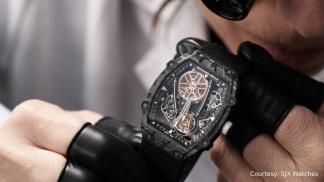
6. The Patek Philippe — When a Watch Is Not a Watch

Official retail price (Nautilus 5711, if you could buy one): $35,000 – $45,000
Shadow price in India: ₹1.2–2.8 crore
The Patek Philippe Nautilus 5711 in stainless steel officially retailed for approximately $35,000 before Patek discontinued it in 2021. It now trades on the secondary market for $150,000–$220,000 globally. In India, where import duty on watches runs at 38.5% on CIF value, and where the grey market commands an additional premium for availability and provenance, the shadow price for a clean example with papers is ₹1.4–2.2 crore.
But the truly expensive element is the portfolio you must build to access allocated Patek pieces through authorised dealers. Top Patek ADs globally operate allocation systems where clients who have purchased steadily across the collection — complications, pocket watches, ladies' pieces — are offered the most desirable references. The spend required to reach the top of an AD's allocation list: typically 3–5 years of purchasing, totalling $80,000–$300,000 in "qualifying" pieces. For broader context on India's growing appetite for premium timepieces, our analysis of why India is a lucrative market for premium watches explains the structural forces driving demand — and why shadow pricing is as high as it is.
The shadow cost stack on a trophy watch: grey market purchase price in India (₹1.4–2.2 crore); annual insurance on agreed value specialist watch policy (₹1.8–2.5 lakh); safe installation and security upgrade (₹4–15 lakh); authentication and service every 5–8 years (₹2.5–5 lakh per service); provenance documentation and storage (₹50,000–₹1.5 lakh per year).
A watch is not a watch. It is an asset class with carrying costs that no watch brand publishes.
7. The Superyacht Charter — Where the Price Has No Floor

Shadow price: Add 40–60% before you've eaten dinner
The Advanced Provisioning Allowance (APA) — the cash deposit required to cover fuel, dockage, food, beverages, water toys, and crew gratuity — is typically 30–40% of the base charter fee. This is the single most consistently underestimated cost in luxury travel.
On a $300,000/week charter: APA ($90,000–$120,000); crew gratuity at industry standard 15–20% ($45,000–$60,000); VAT in EU waters at 13% Greece, 22% Italy ($39,000–$66,000); extras including premium wines, helicopter transfer, port fees ($15,000–$40,000). True cost of one week on a 55m superyacht in the Mediterranean: $490,000–$590,000 for a charter listed at $300,000/week. For Indian clients chartering through Indian-origin brokers operating out of Dubai, there is an additional brokerage layer of 15–20% embedded, not disclosed, in the quoted rate.
Superyacht ownership — the real number for India's ultra-rich: purchase price for a 55m new build ($35–55 million / ₹295–465 crore); annual operating cost (10–15% of purchase price, every year) means a $40m yacht costs $4–6 million per year (₹34–50 crore) before you board once.
8. Private Banking in India — The Product That Costs You Most When You Pay Least
Official cost: "Relationship management fees vary" (actual fee: often zero stated)
Shadow price: 1.2–2.8% of AUM annually, embedded invisibly
India's private banking sector — Kotak Private Banking, HDFC Premia, DSP Private, Edelweiss, Nuvama, plus the Swiss and Singapore-domiciled international desks serving Indian UHNIs — operates on a fee model that is almost never explained in full at relationship inception.
The shadow cost of private banking in India is not the management fee. It is the product distribution commission embedded in every structured product, PMS, AIF, and insurance-linked investment that a relationship manager recommends. On a ₹100 crore AUM relationship: stated relationship management fee (₹0–25 lakh, often zero for top clients); embedded distribution commission on recommended products (₹80 lakh–₹2.2 crore annually); FX spread on currency transactions (₹15–40 lakh annually); advisory fee on real estate transactions brought to the client (0.5–1%).
The genuinely unconflicted private banking experience in India does not yet exist at scale. The closest equivalent — a true multi-family office with fee-only advisory — charges ₹50 lakh–₹1.5 crore per year explicitly, but saves multiples of that in embedded costs eliminated. Shadow cost of private banking (₹100 crore AUM): ₹1.2–2.8 crore per year. What is disclosed to the client: rarely more than 20% of that figure. For those building wealth strategies that include real estate as a core holding, our comprehensive guide for investors and industry experts on India's rising luxury real estate market provides the kind of transparent analysis that private banking desks rarely offer.
9. The Trophy Hotel Suite — What the Rate Card Doesn't Include

Official rate (Presidential Suite, Taj Mahal Palace Mumbai): ₹8–18 lakh per night
Shadow price: ₹13–32 lakh per night
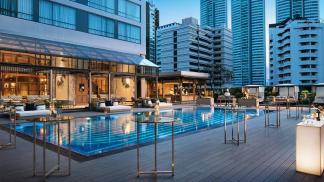
The suite rate is the room. Everything else — and for a genuine luxury guest, everything else is the point — carries a shadow cost that can exceed the room rate itself.
Butler service: included, but appropriate gratuity is ₹10,000–₹25,000 per day. Private dining in-suite at Taj-tier properties: 35–40% surcharge on menu prices, plus service charge, plus GST at 18% (the highest GST bracket for hotel F&B). Private car and chauffeur (hotel-arranged): ₹8,000–₹18,000 per car per day. Spa treatments for a family: ₹1.5–3.5 lakh for a 3-night stay. Laundry at luxury hotel rates: ₹15,000–₹40,000 for a week's clothes.
The shadow price for a 3-night stay in a top Mumbai suite for a family of four, at a property charging ₹12 lakh/night: ₹60–90 lakh all-in.
What the hotel publishes: the nightly rate. What an experienced travel manager budgets: 2.2–2.8x the room rate. For those who want to understand what the very finest Indian hotel experience looks like before encountering the shadow pricing, our deep-dive on the spa at Four Seasons Mumbai where gold, Ayurveda and stillness redefine modern luxury illustrates precisely the kind of experience — and ancillary costs — that a top-tier Mumbai stay now entails.
10. The Luxury Wedding — India's Single Largest Luxury Expenditure
Official budget (top-tier planner's opening estimate): ₹5–15 crore
Shadow price: ₹25–120 crore for a true top-tier Indian wedding
India's luxury wedding industry is the most systematically mispriced category in this entire list. The misquote is not accidental. Top planners quote the operational cost of the wedding. What is not quoted:
Bridal couture (Sabyasachi or Abu-Sandeep at this level is ₹40–80 lakh for the bride's trousseau across all functions; custom pieces for a destination wedding: ₹1.2–2 crore). Jewellery (often ₹10–40 crore and above for a top-family Indian wedding — this is always treated as a separate budget but is a wedding cost). Venue buyout (an Italian castle, a Rajasthan palace, or a private island charges €200,000–€800,000 for a buyout, before catering or décor). Guest accommodation and travel at a destination wedding: ₹3–12 crore. Entertainment (celebrity appearance fees range from ₹80 lakh to ₹12 crore for a single performer). Post-wedding digital content production (photography, film, content): ₹30–80 lakh.
The real number that India's wealthiest families spend on a wedding across all categories: ₹25 crore at the conservative end. ₹80–120 crore for a truly top-tier event.
The planner who quoted ₹8 crore is not wrong. They just quoted one chapter of a much longer book. For those planning at this level, our guide to luxury destination weddings back in demand across India and our definitive list of the best luxury hotels in India for a lavish destination wedding map the destination and venue landscape — before you add the shadow costs.
The Shadow Price Principle — What This List Actually Tells You
The gap between official price and shadow price is not a bug in the luxury system. It is a feature.
Luxury brands benefit from the perception that their products are more accessible than they are. Aspirational consumers spend billions trying to reach a tier that was never designed to be reached by spending alone. The truly wealthy understand that luxury is not priced in rupees — it is priced in relationships, time, discretion, and the willingness to pay costs that are never written down.
The shadow price is the real price. Everything else is marketing. For those who want to understand what it truly means to build a life at this level — across property, travel, automobiles, and lifestyle — our report on ten strategic reasons India's ultra-wealthy are building ultra-luxury real estate empires reveals the investment logic that underpins every shadow cost category in this list.
LuxuryAbode will continue publishing the numbers that nobody else will. Because understanding the true cost of luxury is the beginning of understanding luxury itself.

Comments
No comments yet.
Add Your Comment
Thank you, for commenting !!
Your comment is under moderation...
Keep reading luxury post